What does a lotus flower symbolize in art?
Short answer
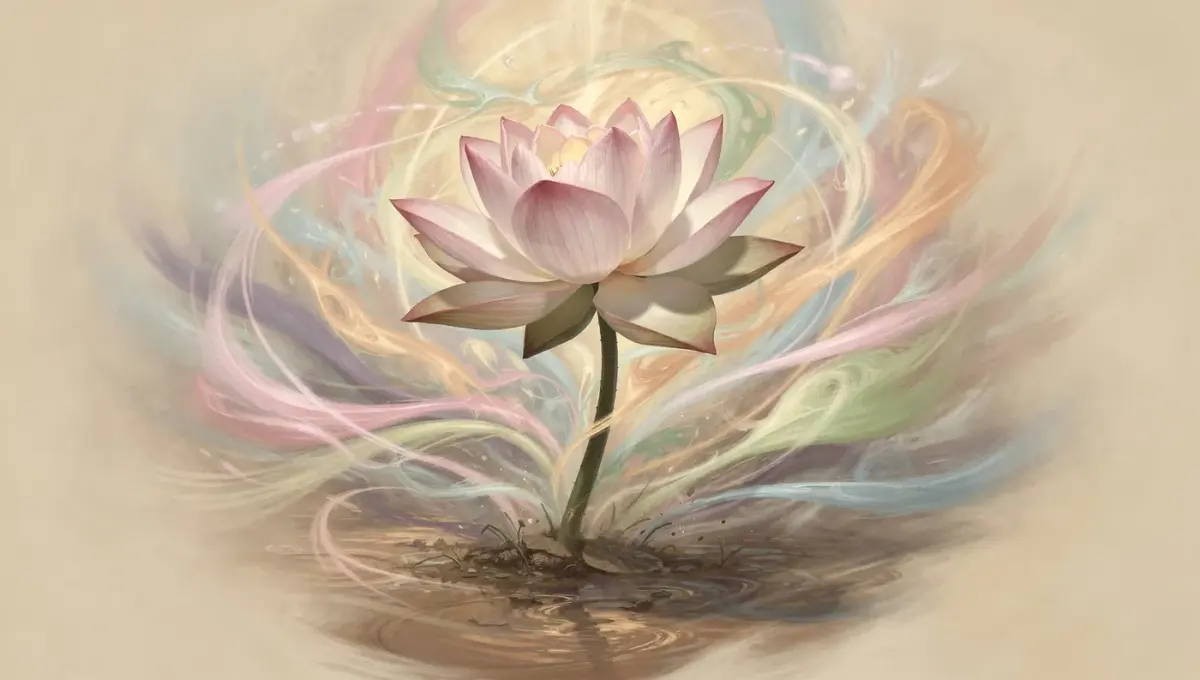
The lotus flower symbolizes spiritual enlightenment, purity, and rebirth across many cultures. Because it roots in muddy water yet blooms pristine above the surface, it represents the soul’s journey from darkness to divine clarity. In art, it serves as a powerful icon of detachment, resilience, and the potential for awakening.
On this page
What does the lotus symbolize in Eastern art?
In Buddhist and Hindu traditions, the lotus is a foundational motif representing the path to enlightenment. The flower’s life cycle mirrors the human experience: it begins in the murky depths of a pond, pushes through the water, and finally opens into a beautiful, unstained blossom. This transformation signifies the ability of a person to transcend worldly suffering and ignorance to achieve spiritual purity.
Artists often depict deities, such as Buddha or Lakshmi, seated upon a lotus throne to signify their transcendence. The color of the flower also carries specific meanings within this artistic tradition:
- White: Represents mental purity and spiritual perfection.
- Pink: Reserved for the highest deities, symbolizing the Buddha himself.
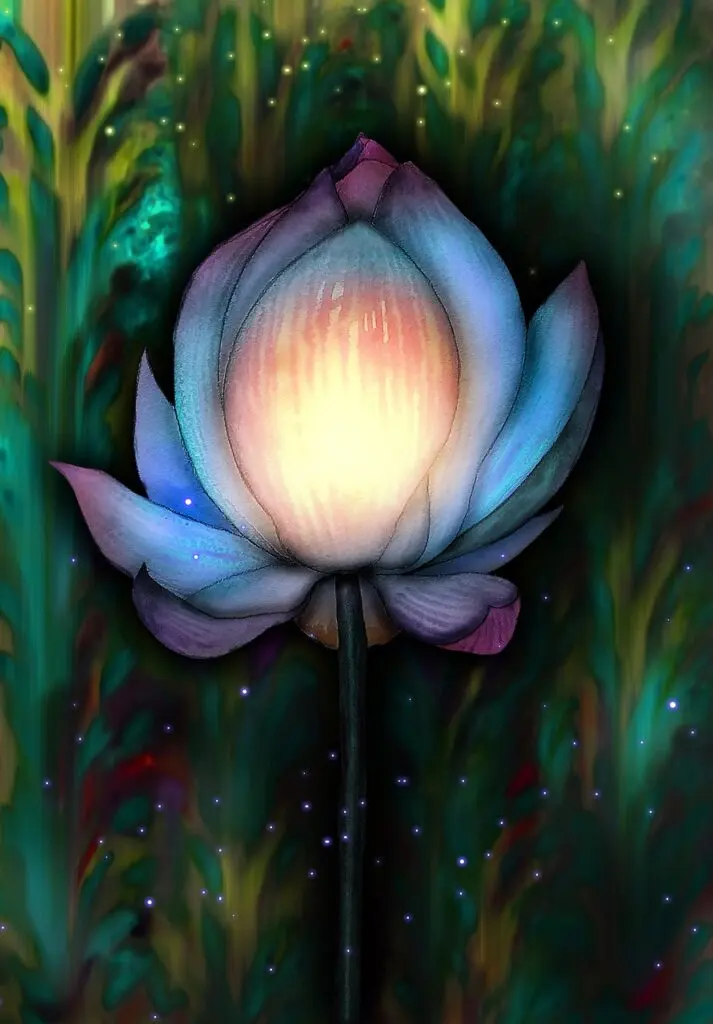
- Blue: Indicates the victory of the spirit over the senses, often shown partially open.
- Red: Associated with the heart, representing love, passion, and compassion.
How is the lotus used in ancient Egyptian art?
Ancient Egyptian artists viewed the lotus, or water lily, as a potent symbol of creation and the sun. Because the flower closes at night and sinks underwater, only to rise and bloom again at dawn, it became linked to the daily cycle of the sun god Ra. It was frequently depicted in tomb paintings, jewelry, and architecture as a sign of rebirth and the afterlife.
The lotus appears in many iconic artistic contexts from the Old Kingdom through the Ptolemaic period:
- Scenes of the deceased offering lotus blossoms to gods to ensure resurrection.
- Architectural columns designed with capitals shaped like open or closed lotus buds.
- Cosmetic vessels carved from stone or faience to resemble the flower, symbolizing eternal youth.
- Funerary amulets placed on mummies to grant the wearer the power of regeneration.
Why do artists choose the lotus for spiritual themes?
Artists select the lotus because it serves as a visual metaphor for non-attachment. Despite growing in mud, the flower’s petals are hydrophobic, meaning water and dirt slide off them, leaving the surface perfectly clean. This physical property makes the lotus a perfect artistic shorthand for a person who lives in the world but remains untouched by its impurities and distractions.
By placing a lotus in a composition, an artist can instantly convey a sense of serenity and divine presence. It acts as a focal point that draws the viewer’s eye toward the subject's spiritual status rather than their physical form. Whether rendered in delicate ink wash paintings or bold stone carvings, the lotus provides a consistent, universally recognized symbol of hope, resilience, and the inherent goodness found within the human spirit.
Common mistakes when interpreting lotus symbolism
A frequent error is assuming that the lotus holds the same meaning in every culture. While it is almost universally positive, the specific nuances vary significantly depending on the region and the era. For example, confusing the lotus with the water lily can lead to misinterpretations, as the two are botanically distinct, though they are often used interchangeably in ancient visual arts.
Another mistake is ignoring the context of the composition. A lotus depicted with a broken stem or wilting petals may suggest a loss of purity or the end of a cycle, rather than the standard themes of growth and enlightenment. Viewers should always examine the surrounding elements, such as the posture of figures or the presence of other flora, to determine if the artist intended to convey a specific narrative or a general spiritual truth.
How to identify lotus motifs in historical art
To identify a lotus in art, look for the characteristic radial symmetry of the petals and the distinct, circular seed pod often found in the center. In many styles, the flower is portrayed in profile or from a top-down perspective, often accompanied by broad, flat leaves that float on the water’s surface. Recognizing these features helps distinguish the lotus from other floral motifs like the rose or chrysanthemum.
When analyzing a piece of art, follow these steps to decode the symbolism:
- Examine the color: Determine if the artist used specific pigments to imply a particular virtue.
- Observe the placement: Note whether the flower is supporting a figure, floating in water, or held in a hand.
- Check the stage of growth: Decide if the bud represents potential or if the full bloom represents realization.
- Consider the medium: Note if the durability of the material, such as gold or granite, reinforces the theme of eternal life.
By applying these observational techniques, you can better appreciate the depth and historical significance that artists have imbued into this ancient symbol for thousands of years.
Key facts
- In Buddhist art, the lotus represents the path to enlightenment, as the flower rises from muddy water to bloom in pristine beauty.
- Egyptian art often depicts the blue lotus, or Nymphaea caerulea, as a symbol of rebirth and the sun god Ra.
- In Hindu iconography, deities such as Lakshmi and Brahma are frequently portrayed seated on lotus thrones to signify divine purity.
- Artists often use the color of the lotus to denote specific meanings, such as white for mental purity or pink for the supreme deity.
- When painting a lotus, ensure the stem is depicted as flexible yet strong to symbolize resilience amidst life's challenges.
- A common mistake in lotus art is neglecting the symmetry of the petals, which are traditionally arranged in concentric, balanced layers.
The bottom line
The lotus flower serves as a profound universal symbol of purity, resilience, and spiritual awakening across diverse cultures. By rising untainted from murky depths, it captures the human desire for transcendence and enlightenment. Whether in ancient religious iconography or contemporary design, the lotus remains a powerful visual shorthand for the triumph of the spirit over material adversity, offering a timeless message of hope and inner peace.
People also ask
Does the lotus flower have different meanings based on its color?
Yes, color symbolism is central to lotus art. White represents spiritual perfection, pink signifies the history of the Buddha, and blue often symbolizes the victory of the spirit over the senses.
Why is the lotus often shown with water in paintings?
The water provides essential context for the flower's symbolic journey. It represents the material world or "muddy" attachments that the enlightened soul must transcend to reach spiritual clarity.
How can I incorporate lotus symbolism into modern design?
Use the lotus as a focal point in minimalist compositions to evoke peace and balance. Focus on clean lines and negative space to emphasize the flower's inherent elegance and simplicity.
Is the lotus flower a common motif in Islamic art?
While less central than in Eastern traditions, the lotus appears in Islamic decorative arts, particularly in Persian miniatures and textiles, often representing paradise or cosmic order.
What is the significance of the closed lotus bud in art?
A closed bud represents potential and the promise of future enlightenment. It suggests that the subject is in the early stages of spiritual growth or hidden wisdom.
Are there specific techniques for drawing a lotus?
Start by sketching a central vertical axis to maintain symmetry. Build the petals in layers, starting from the center and moving outward, ensuring each petal overlaps naturally to create depth.
This answer was created with the help of AI research tools and reference sources. Spotted an error? Let us know — we correct mistakes quickly. See our editorial policy.