What is Aboriginal dot painting?
Short answer
Aboriginal dot painting is a contemporary art style originating from the 1971 Papunya Tula movement in Central Australia. It uses acrylic paint to create intricate patterns of dots, which represent ancestral Dreamtime stories, sacred maps, and cultural knowledge. While visually striking, these works serve as vital conduits for preserving Indigenous Australian heritage.
On this page
How did dot painting begin?
The modern movement of dot painting emerged in 1971 at Papunya, a settlement northwest of Alice Springs. Geoffrey Bardon, a schoolteacher, encouraged local Anmatyerre and Pintupi men to paint their traditional Dreamtime stories onto boards using acrylic paints. These stories, which were historically depicted in sand or on the body for ceremonial purposes, were considered highly sacred and secret.
To protect this sensitive cultural knowledge from outsiders, the artists intentionally obscured the symbols and patterns by covering them with layers of dots. This technique effectively camouflaged the deeper meanings while allowing the artists to share their artistic traditions with the wider world. The movement quickly gained international recognition, transforming Indigenous art into a significant global aesthetic force. Today, it remains a powerful medium for Aboriginal people to assert their identity, maintain cultural continuity, and generate economic independence for remote communities.
What do the symbols and dots mean?
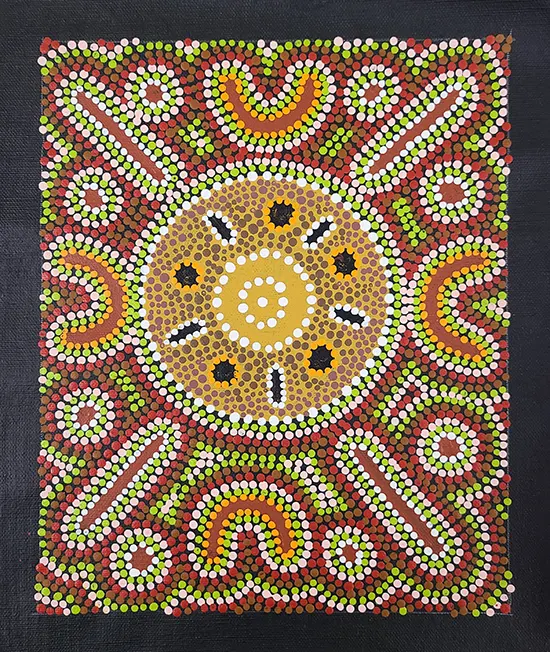
Dot painting acts as a complex visual language that maps the land and the ancestral beings who shaped it. Every painting is a narrative, often representing a "songline" or a specific geographical location significant to the artist's clan. The dots are not merely decorative; they serve as a veil that conceals sacred information from those not initiated into the specific cultural knowledge of the tribe.
Common symbols found within these works include:
- U-shapes representing a person sitting.
- Concentric circles signifying a campsite, waterhole, or ceremonial ground.
- Parallel lines indicating travel paths or spears.
- Animal tracks such as emu or kangaroo prints.
- Wavy lines denoting water, lightning, or sand dunes.
By combining these symbols with dense fields of dots, artists create a topographical view of their country. These paintings function as both artistic expressions and legal documents, affirming the deep connection between the Aboriginal people and their ancestral territories.
How to identify authentic dot paintings
Identifying authentic Aboriginal art requires an understanding of the relationship between the artist and their community. Most legitimate dot paintings are produced through established art centers, which are community-owned organizations that provide materials and support to local artists. These centers ensure that the artist is properly credited and that the proceeds from sales directly benefit the community.
When purchasing a piece, look for the following verification markers:
- A Certificate of Authenticity provided by the art center.
- The artist’s name, language group, and region of origin.
- A detailed story or "provenance" explaining the work’s cultural significance.
- A clear signature or artist code on the back of the canvas.
Avoid works that lack documentation or are sold by third-party retailers without clear ties to specific Aboriginal art centers. Supporting these centers is the most effective way to ensure that the artist is treated ethically and that the cultural integrity of the work is preserved.
Common mistakes when viewing dot art
A frequent error among viewers is assuming that dot painting is a monolithic style practiced by all Aboriginal groups across Australia. In reality, dotting is primarily associated with the Western Desert regions of Central Australia. Other regions, such as Arnhem Land or the Kimberley, utilize entirely different techniques, such as cross-hatching or "rarrk" patterns, which reflect their unique environmental and cultural landscapes.
Another common mistake is misinterpreting the dots as simple aesthetic choices rather than functional elements. Viewers often focus on the color palette, which has evolved from traditional ochre tones to vibrant, modern acrylics, and overlook the structural importance of the dotting. To better appreciate these works, consider these tips:
- Research the specific region the artist comes from to understand their unique stylistic traditions.
- Look for the "shimmer" effect, which is often intended to represent the spiritual energy of the land.
- Recognize that the painting is a living record of history rather than just a static image.
Best practices for beginners to appreciate the art
For those looking to engage with Aboriginal dot painting, the best approach is to visit reputable galleries or museums that specialize in Indigenous Australian art. Engaging with the stories behind the paintings is essential, as the visual beauty is only one layer of the experience. Many galleries offer educational talks or guided tours that provide the necessary context to understand the complex symbolism involved.
If you are interested in starting a collection or simply learning more, follow these steps:
- Visit a public institution like the National Gallery of Australia to see foundational works.
- Read the biographies of prominent artists like Emily Kame Kngwarreye or Clifford Possum Tjapaltjarri.
- Attend exhibitions that focus on specific art centers to understand the regional variations.
- Always prioritize the cultural story over the decorative value of the piece.
By approaching these works with respect and curiosity, you can appreciate the profound depth of a tradition that has survived for tens of thousands of years. Each dot represents a connection to the past, a claim to the land, and a vibrant, ongoing conversation between the artist and their ancestral heritage.
Key facts
- Dot painting originated in the early 1970s at Papunya Tula, an Aboriginal settlement in Australia's Western Desert.
- Artists originally used natural earth pigments like ochre, charcoal, and kaolin, though most modern works use acrylic paints.
- The technique was developed to hide sacred, secret information from uninitiated eyes by obscuring symbols with layers of dots.
- Traditional tools include small sticks, matchsticks, or modern brushes to create consistent, repetitive marks on canvas or board.
- Dot art often depicts "Dreaming" stories, which are complex narratives concerning ancestral beings, land, and cultural law.
- When painting, ensure each dot is distinct; a common mistake is letting dots run together, which destroys the visual texture and clarity of the design.
The bottom line
Aboriginal dot painting is a powerful contemporary art form that emerged from the Western Desert art movement of the 1970s. By using repetitive, rhythmic dots to obscure sacred symbols, artists protect cultural knowledge while sharing ancient Dreaming stories with the world. Whether you are an observer or a practitioner, respecting the cultural origins and the intentionality behind these designs is essential for appreciating this unique Australian heritage.
People also ask
Is dot painting a traditional practice that dates back thousands of years?
No, the specific style of acrylic dot painting on canvas only began in 1971. While the stories and symbols are ancient, the medium and the "dotting" technique were adapted for contemporary art markets.
Can anyone paint Aboriginal dot art?
While anyone can use the technique, it is considered cultural appropriation to use specific sacred symbols or stories belonging to particular Indigenous groups without permission. It is best to focus on personal expression or abstract patterns rather than copying restricted cultural motifs.
What do the dots actually represent in these paintings?
Dots serve multiple functions, including representing stars, sparks, sand, or water droplets. They also act as a visual veil, masking the underlying sacred iconography that is meant only for initiated members of the community.
What materials do I need to start dot painting?
You need a canvas, acrylic paints, and a set of dotting tools or wooden skewers of varying thicknesses. High-quality heavy-body acrylics are preferred because they hold their shape and provide a raised, tactile texture.
How do I choose colors for a dot painting?
Traditional palettes relied on earth tones like red, yellow, black, and white. Modern artists often use vibrant, contrasting colors, but keeping a consistent color scheme helps maintain the visual rhythm of the piece.
How should I clean my dotting tools?
You must wipe your tools clean with a damp cloth after every few dots to prevent paint buildup. Dried paint on the tip will change the size of your dots and make the pattern look uneven.
This answer was created with the help of AI research tools and reference sources. Spotted an error? Let us know — we correct mistakes quickly. See our editorial policy.