What is Thomas Gainsborough known for?
Short answer
Thomas Gainsborough was a preeminent 18th-century English portrait and landscape painter. A founding member of the Royal Academy, he is best known for his fluid brushwork, atmospheric landscapes, and iconic portraits like The Blue Boy. His work bridged the gap between traditional aristocratic portraiture and the burgeoning Romantic movement in British art.
On this page
What defined Gainsborough’s artistic style?
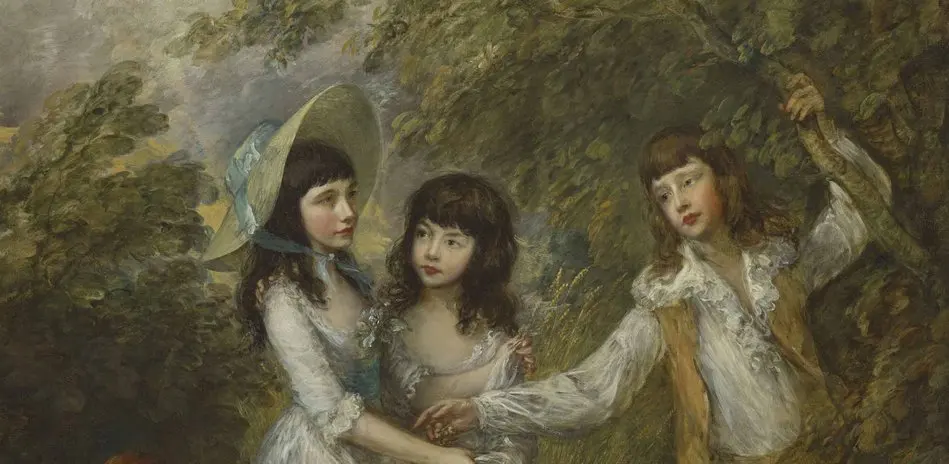
Gainsborough is celebrated for a distinctive, feathery brushwork technique that prioritized mood and color over rigid line work. Unlike his contemporary Joshua Reynolds, who often employed heavy glazes and structured academic compositions, Gainsborough favored a light, rapid application of paint. This approach allowed him to capture the textures of silk, lace, and foliage with remarkable fluidity. His work often reflects a deep emotional connection to the English countryside, which he viewed as his true artistic passion despite the financial necessity of painting portraits.
His stylistic evolution can be categorized by several key characteristics that distinguish him from other masters of the Georgian era:
- A preference for cool, silvery color palettes, particularly in his later works.
- The integration of figures into naturalistic, often idealized, landscape settings.
- A focus on the "character" of the sitter rather than merely their social status or formal attire.
- The use of thin, translucent paint layers to create a sense of ethereal light.
Why is The Blue Boy his most famous painting?
Painted around 1770, The Blue Boy is arguably the most recognizable work in the history of British portraiture. It depicts Jonathan Buttall, the son of a wealthy hardware merchant, dressed in a vibrant, seventeenth-century-style blue satin costume. The painting was a deliberate challenge to the prevailing academic theory of the time, which suggested that cool colors like blue should only be used for backgrounds rather than as a focal point. Gainsborough proved this theory wrong by creating a masterpiece of color harmony and texture.
The painting’s fame has been bolstered by its extensive history and cultural impact. It was purchased by American railroad tycoon Henry Huntington in 1921 for a record-breaking sum, sparking national mourning in Britain before its departure for the United States. Today, it remains a centerpiece of the Huntington Library and Art Museum. Its enduring popularity stems from:
- The technical brilliance of the blue pigment, which remains vivid centuries later.
- The confident, almost aristocratic stance of the young sitter.
- The sophisticated interplay between the figure and the dramatic, shadowed landscape background.
How did his landscapes influence British art?
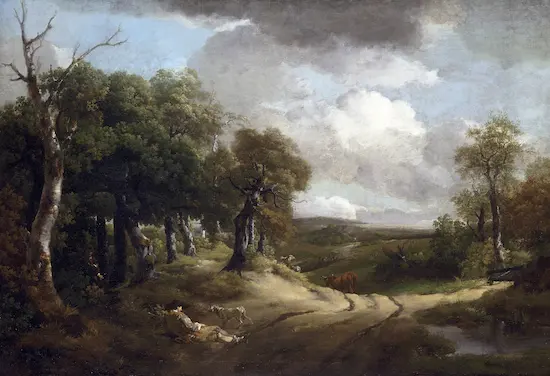
While Gainsborough was a successful portraitist, he considered himself a landscape painter at heart. He often struggled with the "burden" of portrait commissions, which he jokingly referred to as "face-painting." His landscapes were not merely topographical records of the English countryside; they were imaginative, poetic compositions. He frequently built small models of landscapes using cork, coal, and moss in his studio to study the effects of light and shadow before applying them to his canvases.
His approach to landscape painting shifted the focus of British art toward the pastoral and the picturesque. He moved away from the formal, Italianate styles favored by his predecessors, choosing instead to celebrate the wild, unkempt beauty of Suffolk and Bath. His influence can be clearly seen in the works of later landscape masters such as John Constable. By treating nature with the same seriousness as human portraiture, Gainsborough helped elevate the status of landscape painting in the Royal Academy, ensuring it became a respected genre for future generations of artists.
Common mistakes when analyzing Gainsborough’s work
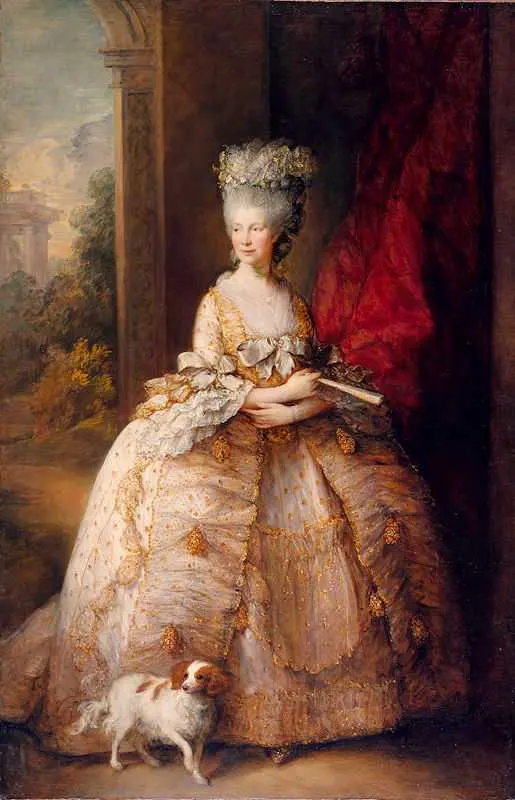
One common error is assuming that Gainsborough’s portraits were purely realistic depictions of his sitters. In reality, he often idealized his subjects, softening features and adjusting proportions to create a more harmonious, aesthetically pleasing image. He was less concerned with photographic accuracy than with capturing the "spirit" or "air" of the person. Viewers who look for clinical precision in his faces will often be disappointed, as his primary goal was the overall impression of the sitter’s personality and elegance.
Another mistake is viewing his portraits and landscapes as entirely separate entities. Gainsborough frequently combined these genres, placing his sitters in natural settings that mirrored their temperaments. To better appreciate his work, consider these steps:
- Observe the background of a portrait to see how the lighting matches the sitter's mood.
- Examine the brushstrokes in the clothing to see how he used speed to suggest texture.
- Compare his early, more detailed work with his later, looser style to see his artistic progression.
- Look for the "Gainsborough touch," which is his signature way of flickering light across a canvas.
Where can you see his paintings today?
Gainsborough’s works are held in major galleries worldwide, reflecting his status as a titan of 18th-century art. The National Gallery in London houses a significant collection, including The Morning Walk, which showcases his ability to combine high-fashion portraiture with an expansive, atmospheric landscape. Additionally, Gainsborough’s House in Sudbury, Suffolk—the artist's birthplace—serves as a dedicated museum that offers an intimate look at his early life and development as an artist.
For those interested in exploring his legacy, visiting these institutions provides a comprehensive view of his career. Whether you are studying his rapid, sketch-like landscapes or his refined, aristocratic portraits, his work remains a vital touchstone for understanding the development of Western art. By studying his techniques and his refusal to be confined by the rigid rules of his time, one gains a deeper appreciation for the man who helped define the visual identity of Georgian England. His contributions continue to inspire artists and historians alike, proving that his eye for color and light remains as compelling today as it was in the eighteenth century.
Key facts
- Thomas Gainsborough (1727–1788) was a founding member of the Royal Academy of Arts in London.
- He is best known for his dual mastery of portraiture and landscape painting.
- His most famous work, The Blue Boy (c. 1770), demonstrates his innovative use of cool color palettes.
- He preferred painting landscapes to portraits, often referring to the latter as his "bread and butter."
- Gainsborough frequently used long-handled brushes to achieve a fluid, sketchy, and feathery application of paint.
- To view his work in person, visit the National Gallery in London or the Huntington Library in California.
The bottom line
Thomas Gainsborough remains a pivotal figure in 18th-century British art, celebrated for his ability to merge elegant portraiture with evocative, atmospheric landscapes. His legacy lies in his fluid brushwork and his rejection of rigid academic traditions in favor of personal, emotional expression. By prioritizing the natural beauty of the English countryside and the unique spirit of his subjects, he transformed the aesthetic landscape of his era.
People also ask
Did Thomas Gainsborough paint historical scenes?
While he occasionally painted mythological or rustic subjects, he largely avoided the "Grand Manner" historical paintings favored by his rival, Sir Joshua Reynolds. He preferred the naturalistic observation of the English countryside and the individual character of his sitters.
What was the relationship between Gainsborough and Joshua Reynolds?
The two men were professional rivals who represented different philosophies of art. Reynolds advocated for intellectual, classical painting, while Gainsborough championed a more intuitive, emotional, and painterly approach.
How did Gainsborough’s painting style evolve?
His early work was characterized by meticulous detail and a tight finish, influenced by Dutch landscape painters. Later in his career, his style became increasingly loose, atmospheric, and expressive, showing a focus on light and movement.
Why are his landscapes considered significant?
Gainsborough helped elevate landscape painting to a respected genre in British art. He moved away from rigid topographical views to create idealized, romanticized scenes that captured the mood of the English environment.
Did he use assistants to finish his paintings?
Unlike many of his contemporaries, Gainsborough largely avoided using studio assistants to complete his portraits. He believed that the specific, delicate brushwork required to capture a subject's likeness had to come from his own hand.
What materials did he use for his drawings?
Gainsborough was a prolific draftsman who experimented with chalk, charcoal, and watercolor. He often combined these mediums to create complex, tonal studies that served as preparation for his larger oil canvases.
This answer was created with the help of AI research tools and reference sources. Spotted an error? Let us know — we correct mistakes quickly. See our editorial policy.