Why is The Garden of Earthly Delights so famous?
Short answer
Hieronymus Bosch’s The Garden of Earthly Delights is famous for its unprecedented visual complexity, surreal moral allegory, and technical mastery. Painted around 1500, this triptych blends medieval religious symbolism with grotesque, imaginative figures. Its enduring popularity stems from the endless interpretative possibilities it offers regarding human folly, temptation, and the consequences of sin.
On this page
What is the history of The Garden of Earthly Delights?
Painted by the Early Netherlandish master Hieronymus Bosch between 1490 and 1510, this oil-on-panel triptych remains one of the most enigmatic works in Western art history. It was commissioned by the House of Nassau, likely for their palace in Brussels, and served as a private conversation piece for the elite. Unlike traditional altarpieces intended for church settings, this work was designed to be studied and debated by educated guests.
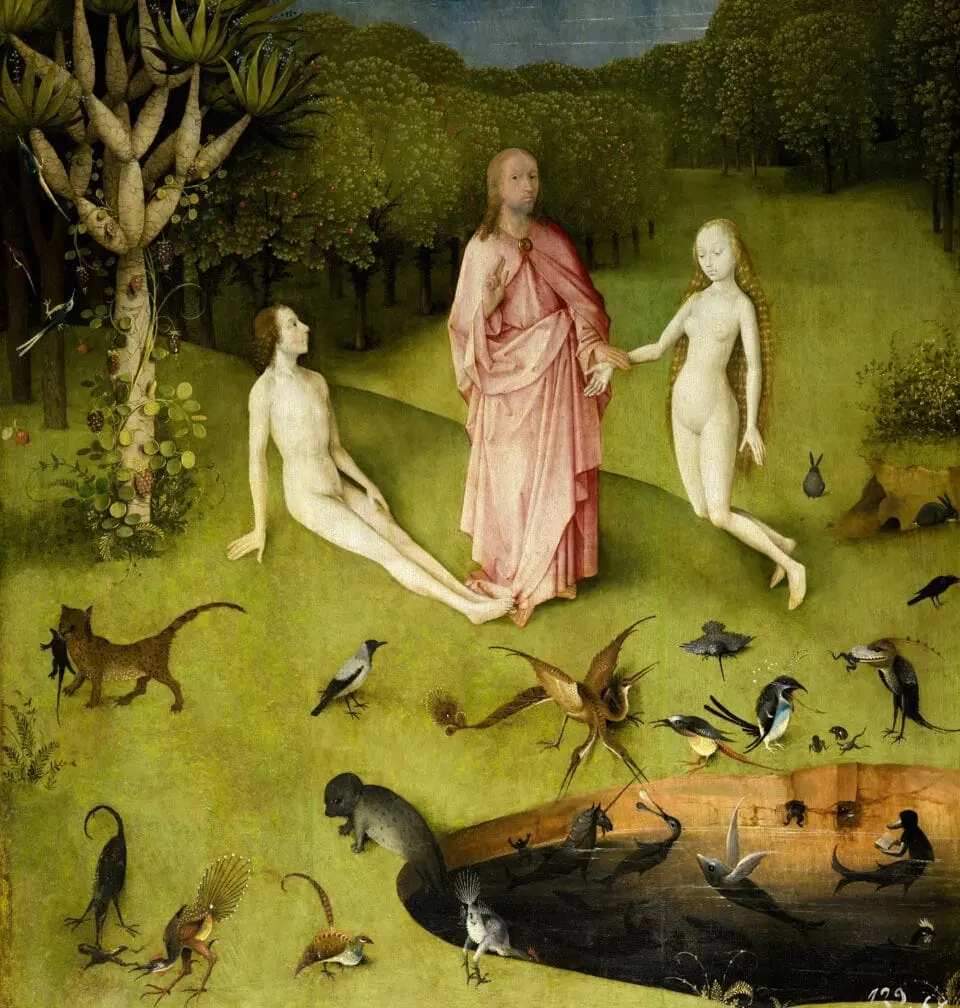
The painting consists of three main panels: the Garden of Eden on the left, the central "earthly" panel, and a harrowing depiction of Hell on the right. When closed, the exterior shutters reveal a grisly, monochromatic view of the world during the biblical flood. This structural format invites viewers to physically engage with the piece, transitioning from the divine creation of humanity to the chaotic excesses of life and, ultimately, the inevitable judgment of the soul.
Why is the imagery so bizarre?
Bosch’s visual language is defined by a unique fusion of medieval folklore, alchemical symbolism, and religious didacticism. He populated his landscapes with hybrid creatures, oversized fruits, and mechanical contraptions that defied the artistic conventions of his time. These surreal elements were not merely decorative; they functioned as a complex visual vocabulary intended to warn viewers against the fleeting nature of worldly pleasures and the dangers of moral corruption.
To understand the symbolism, consider these common motifs found within the panels:
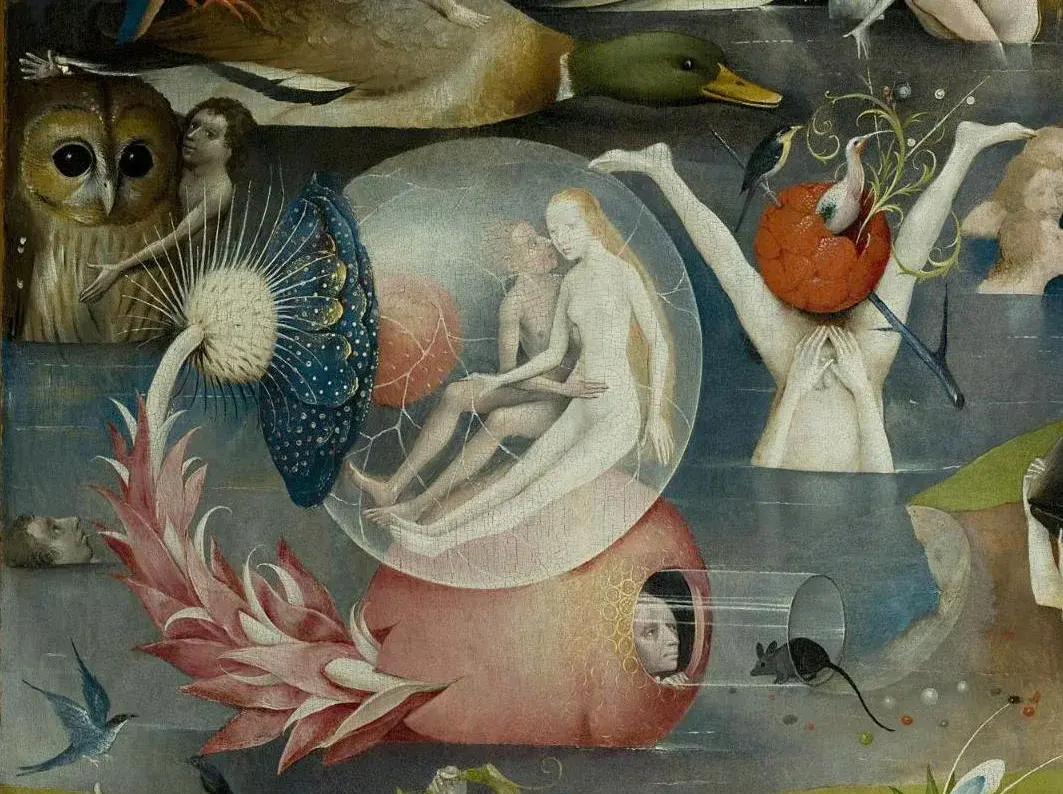
- Giant strawberries and birds: Often interpreted as symbols of fleeting, sugary pleasure and the fragility of innocence.
- Musical instruments: Frequently depicted as torture devices in the Hell panel, reflecting the contemporary association between music, noise, and moral disorder.
- Glass bubbles and spheres: Representing the transparency and instability of human desires.
- Hybrid monsters: Reflecting the "bestial" nature of humans who succumb to their basest instincts.
How do experts interpret the central panel?
The central panel, which gives the triptych its name, depicts a sprawling landscape teeming with nude figures engaging in various activities. For centuries, scholars have debated whether this scene represents a paradise lost, a satirical view of human folly, or a warning against the dangers of lust. The lack of a definitive explanation is precisely why the work remains so famous; it acts as a mirror for the viewer’s own moral anxieties.
The composition is intentionally crowded, forcing the eye to jump between disparate scenes of indulgence and play. While some figures appear to be enjoying a utopian existence, others are clearly entangled in the traps of their own making. By refusing to provide a clear narrative, Bosch forces the viewer to become an active participant, assigning their own meaning to the chaotic spectacle of human behavior.
How to analyze the painting like a critic
When viewing the triptych, it is helpful to follow a systematic approach to avoid getting overwhelmed by the sheer density of the imagery. Start by observing the work in its closed state, which establishes the somber, apocalyptic tone of the piece. Then, open the shutters to view the progression from left to right, which serves as a chronological narrative of humanity’s fall from grace.
- Examine the left panel to identify the specific biblical figures of Adam and Eve in the Garden of Eden.
- Scan the central panel for clusters of activity, noting how the figures interact with the oversized flora and fauna.
- Contrast the bright, saturated colors of the first two panels with the dark, oppressive atmosphere of the Hell panel.
- Look for recurring shapes or patterns that connect the three panels, such as the water features that flow throughout the landscape.
- Reflect on how the transition from the creation of man to the punishment of the damned reflects the artist’s specific religious worldview.
Common mistakes when studying Bosch
A frequent error when analyzing this work is attempting to find a single, unified key to unlock all its mysteries. Because Bosch left no written records explaining his iconography, many theories—ranging from the occult to the satirical—remain speculative. Beginners often try to force modern psychological interpretations onto 15th-century symbols, which can obscure the artist's original intent to communicate through the lens of late medieval Christian morality.
Another mistake is ignoring the technical brilliance of the painting in favor of its bizarre subject matter. Bosch was a master of the alla prima technique, using thin layers of oil paint to achieve luminous, jewel-like colors that have survived for over five centuries. By focusing only on the "weirdness" of the monsters, viewers often miss the sophisticated brushwork and delicate lighting that make this piece a cornerstone of Renaissance art. Always balance your curiosity about the strange figures with an appreciation for the artist's immense technical discipline and structural precision.
Key facts
- Hieronymus Bosch painted this triptych between 1490 and 1510, likely commissioned by the House of Nassau.
- The work is an oil-on-oak panel painting measuring 86.6 inches by 153.1 inches when fully opened.
- It is housed in the Museo del Prado in Madrid, which acquired the piece in 1939.
- The left panel depicts the Garden of Eden, the center shows a surreal landscape of earthly pleasures, and the right panel portrays a nightmarish hellscape.
- When closed, the exterior panels feature a grisaille painting of the world during creation, appearing as a translucent sphere.
- To view the details properly, use a high-resolution digital zoom tool, as the painting contains hundreds of individual, minute figures.
The bottom line
The Garden of Earthly Delights remains famous for its unparalleled imaginative complexity and its departure from traditional religious iconography. By blending grotesque humor with profound moral warnings, Bosch created a visual puzzle that continues to challenge viewers five centuries later. Its enduring appeal lies in the meticulous detail of its surreal landscapes, forcing audiences to confront the consequences of human desire through a haunting, unforgettable lens.
People also ask
What is the meaning of the central panel?
The central panel is widely interpreted as a warning against the dangers of unchecked lust and worldly vanity. It depicts a chaotic landscape filled with oversized fruit, strange creatures, and humans engaging in various hedonistic activities.
Did Bosch intend for this to be a religious work?
While the painting is deeply rooted in medieval Christian morality, it lacks the traditional devotional style of the era. It likely served as a secular conversation piece for an aristocratic audience to discuss ethics and human folly.
Why are the figures in the painting so strange?
Bosch used a technique of visual metaphor to represent moral corruption and the absurdity of sin. By distorting human forms and blending them with animals or mechanical objects, he emphasized the loss of humanity caused by immoral behavior.
Is the painting meant to be read in a specific order?
Yes, the narrative flows from left to right, representing the progression of humanity from creation to corruption and finally to eternal punishment. This chronological structure provides a clear moral arc for the viewer to follow.
What is the significance of the "Tree-Man" in the hell panel?
The Tree-Man is often considered a self-portrait of Bosch, with his face looking back at the viewer from within a hollowed-out torso. It serves as a haunting centerpiece for the hellscape, symbolizing the fragility and eventual decay of the human body.
How should a visitor approach viewing the painting in person?
Start by observing the exterior panels before opening the triptych to see the interior. Spend time focusing on one panel at a time to avoid becoming overwhelmed by the sheer density of the imagery.
This answer was created with the help of AI research tools and reference sources. Spotted an error? Let us know — we correct mistakes quickly. See our editorial policy.