What is Northwest Coast art?
Short answer
Northwest Coast art is the distinctive visual tradition of Indigenous peoples inhabiting the Pacific coast from Southeast Alaska to Northern California. Characterized by sophisticated formline design, stylized animal motifs, and intricate wood carving, this art form serves as a vital record of ancestral lineage, social status, and spiritual connection to the natural world.
On this page
What defines Northwest Coast art style?
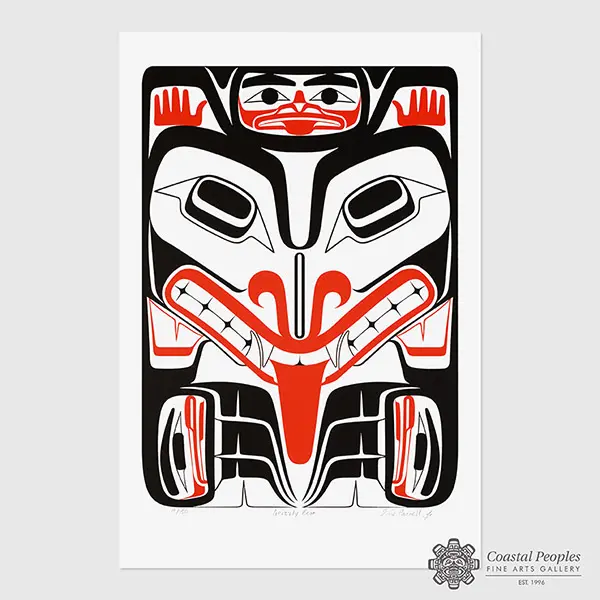
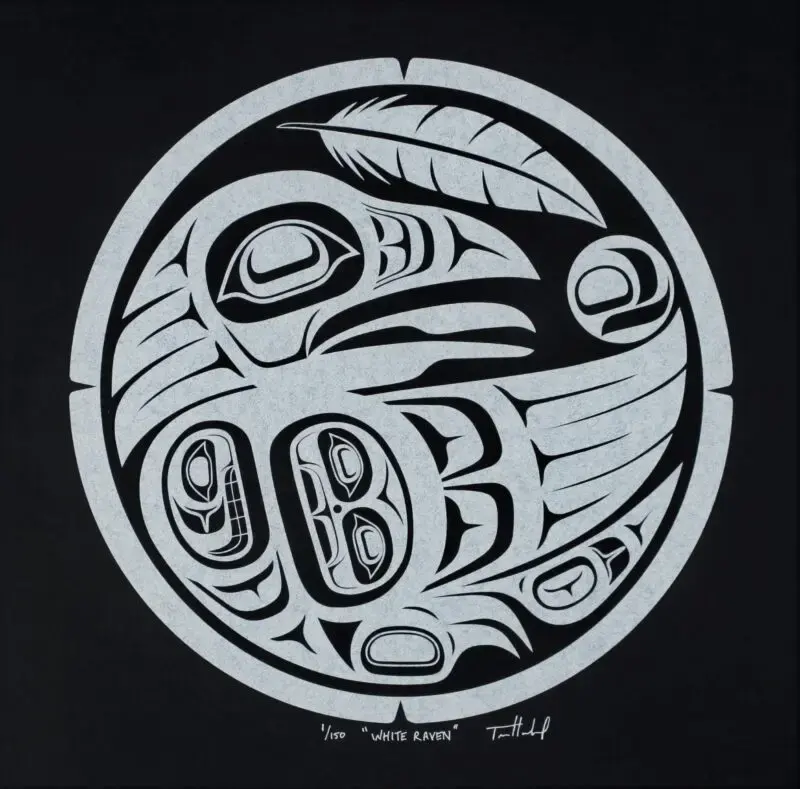
The hallmark of Northwest Coast art is the "formline," a continuous, flowing line that varies in width and color to create complex compositions. Artists primarily use a specific palette of black, red, and sometimes yellow or blue to delineate figures within a structured space. These designs are not merely decorative; they function as a visual language that conveys family crests, historical narratives, and mythological beings.
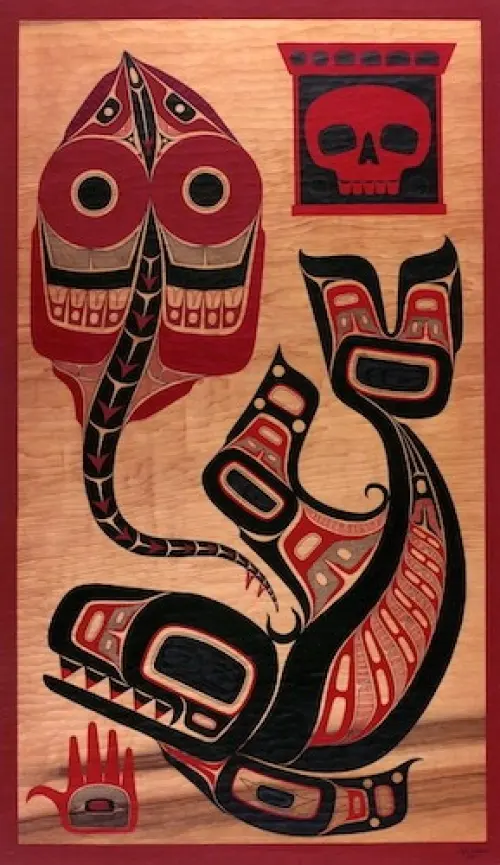
The imagery often utilizes "ovoids," "U-forms," and "S-forms" to represent anatomical features of animals such as ravens, eagles, bears, and salmon. These creatures are frequently depicted in a "split-U" or "x-ray" style, where the artist flattens the subject to fit into a circular or rectangular frame. This approach allows for the representation of complex stories within a single, cohesive image, ensuring that every element contributes to the narrative identity of the piece.
How to identify authentic Indigenous art
Distinguishing authentic Northwest Coast art from mass-produced imitations requires an understanding of the cultural context and artistic labor involved. Authentic works are typically created by artists of Indigenous descent who have been trained in traditional apprenticeships. These pieces often carry a signature or a certificate of authenticity that identifies the tribal affiliation of the creator, such as Haida, Tlingit, Kwakwaka’wakw, or Coast Salish.
When evaluating a piece, look for the following indicators of quality and authenticity:
- Hand-carved textures that show the rhythmic marks of traditional adzes or knives.
- Natural materials, such as red cedar, yellow cedar, or argillite, which have a distinct weight and grain.
- Sophisticated use of formline principles where the proportions of ovoids and U-forms remain consistent and balanced.
- A clear connection to specific crests or stories that are recognized within the artist's community.
Why is wood carving central to the tradition?
Wood carving serves as the foundation for the artistic expression of Northwest Coast peoples, primarily due to the abundance of Western red cedar in the region. For centuries, artists have transformed massive cedar logs into monumental totem poles, house posts, and ceremonial masks. This medium is deeply tied to the environment, as the cedar tree is considered a sacred entity that provides shelter, clothing, and the material for artistic storytelling.
The process of carving is a rigorous discipline that requires years of study to master the use of traditional tools. Artists use specialized adzes, crooked knives, and straight knives to shape the wood, often working with the grain to ensure the longevity of the piece. Beyond the physical act of carving, the work is often finished with natural pigments or, in contemporary contexts, high-quality paints that preserve the wood against the humid coastal climate.
Common mistakes when collecting Northwest Coast art
Collectors often make the mistake of prioritizing the visual aesthetic over the cultural integrity of the object. It is essential to avoid purchasing items that appropriate Indigenous designs without proper attribution or permission from the artist. Buying from reputable galleries that work directly with Indigenous artists is the best way to ensure that the purchase supports the community and respects the intellectual property of the creators.
To avoid common errors, follow these guidelines:
- Research the specific tribal style, as Haida art differs significantly from Coast Salish or Tsimshian styles.
- Ask for the artist’s name and tribal affiliation before making a purchase.
- Avoid "airport art" or mass-produced souvenirs that use generic, non-traditional motifs.
- Verify that the piece is not a reproduction of a sacred object that should remain within the community.
Where can you see Northwest Coast art?
Public museums and cultural centers provide the best opportunities to view historical and contemporary masterpieces in a respectful environment. Institutions such as the Bill Reid Gallery in Vancouver, the Museum of Anthropology at UBC, and the Alaska State Museum house extensive collections that showcase the evolution of the tradition. These spaces often provide educational context, explaining the significance of the crests and the historical challenges faced by Indigenous artists.
Many coastal communities also maintain their own cultural centers where art is displayed in its original context. Visiting these sites allows for a deeper appreciation of the art as a living tradition rather than a static relic of the past. By engaging with these collections, viewers can witness the resilience of Northwest Coast cultures and the ongoing innovation of artists who continue to push the boundaries of their ancestral techniques while maintaining the integrity of their distinct visual heritage.
Key facts
- Northwest Coast art is the traditional visual culture of Indigenous peoples from the Pacific coast of North America, stretching from Southeast Alaska to Northern California.
- The style is defined by "formline" design, which uses continuous, flowing lines of varying thickness to create complex, symmetrical imagery.
- Primary colors traditionally used include black (from graphite or charcoal) and red (from ochre), often accented with blue-green or yellow.
- Totem poles are iconic vertical monuments carved from western red cedar, serving as genealogical records, heraldic displays, or mortuary markers.
- Common motifs include animals such as the raven, eagle, bear, wolf, and killer whale, which often represent clan crests or ancestral spirits.
- When purchasing authentic art, look for the artist's signature or a tribal affiliation mark to avoid mass-produced imitations that misappropriate cultural designs.
The bottom line
Northwest Coast art is a sophisticated visual language rooted in the history, social structure, and spiritual beliefs of Pacific coastal Indigenous nations. Characterized by intricate formline designs and iconic carvings like totem poles, this art form serves as a vital record of ancestral heritage. By prioritizing authenticity and respecting the cultural protocols behind these designs, observers can better appreciate the enduring legacy of these vibrant traditions.
People also ask
What is the significance of the "formline" technique?
Formline is the structural foundation of Northwest Coast two-dimensional design, utilizing ovoids, U-forms, and S-forms to fill space. It ensures that the composition remains balanced and visually harmonious regardless of the surface it covers.
Are all totem poles meant to represent religious deities?
No, most totem poles are not religious idols but rather historical documents or social markers. They function to display family lineage, commemorate significant events, or honor deceased leaders within the community.
What materials do artists traditionally use for carving?
Western red cedar is the most culturally significant material due to its abundance, workability, and resistance to rot. Artists also use yellow cedar, alder, and various types of stone or bone for smaller items like jewelry and bowls.
How can I identify authentic Indigenous art versus tourist souvenirs?
Authentic pieces are typically hand-carved or hand-painted by recognized Indigenous artists and often come with documentation. Avoid items that look identical, are made of resin or plastic, or lack specific information about the artist’s tribal heritage.
Why are animals so prevalent in this art style?
Animals represent the clan system and the deep spiritual connection between Indigenous peoples and their environment. Each creature serves as a crest, identifying the owner’s family history and their specific rights to certain territories or stories.
Is it appropriate for non-Indigenous people to create Northwest Coast style art?
Cultural appropriation is a major concern, as these designs are intellectual and spiritual property of specific nations. It is widely considered inappropriate for non-Indigenous people to mimic these sacred styles for profit or personal gain.
This answer was created with the help of AI research tools and reference sources. Spotted an error? Let us know — we correct mistakes quickly. See our editorial policy.