What is Suprematism?
Short answer
Suprematism is an art movement founded in 1913 by Russian painter Kazimir Malevich. It emphasizes pure geometric abstraction, focusing on basic shapes like squares, circles, and rectangles. By rejecting representational imagery, Suprematists sought to express the "supremacy of pure feeling" in art, prioritizing spiritual and aesthetic experience over depicting the physical world.
On this page
What is the history of Suprematism?
Suprematism emerged in Russia during the early 20th century as a radical departure from traditional representational art. Kazimir Malevich introduced the movement at the 1915 "0,10" exhibition in Petrograd, where he famously displayed his "Black Square" in a corner typically reserved for religious icons. This act signaled a total break from the past, challenging the viewer to find meaning in non-objective forms rather than recognizable subjects.
The movement flourished during the revolutionary atmosphere of the Russian avant-garde, aligning briefly with the social changes following the 1917 Revolution. However, by the late 1920s, the Soviet government began favoring Socialist Realism, which demanded art that served political propaganda. Consequently, Suprematism was marginalized, and many artists were forced to abandon their abstract experimentation. Despite its short lifespan, the movement fundamentally altered the trajectory of modern art by proving that painting could exist independently of the natural world.
Why is Suprematism important today?
Suprematism serves as a foundational pillar for modern graphic design, architecture, and minimalism. By stripping art down to its most essential elements—color, line, and shape—Malevich and his contemporaries paved the way for later movements like De Stijl, Abstract Expressionism, and even the clean aesthetic of modern digital interfaces. It taught future generations that a composition could be balanced and emotionally resonant without needing to depict a landscape or a portrait.
The movement remains relevant because it encourages viewers to engage with art on a purely visceral level. It forces one to consider the relationship between positive and negative space, the weight of a color, and the tension created by a simple diagonal line. Today, the influence of Suprematism can be seen in:
- Minimalist interior design and furniture styles.
- Modern corporate branding and logo design.
- The layout principles of contemporary web and mobile applications.
- Architectural designs that prioritize geometric volumes over ornamentation.
How to identify Suprematist art?
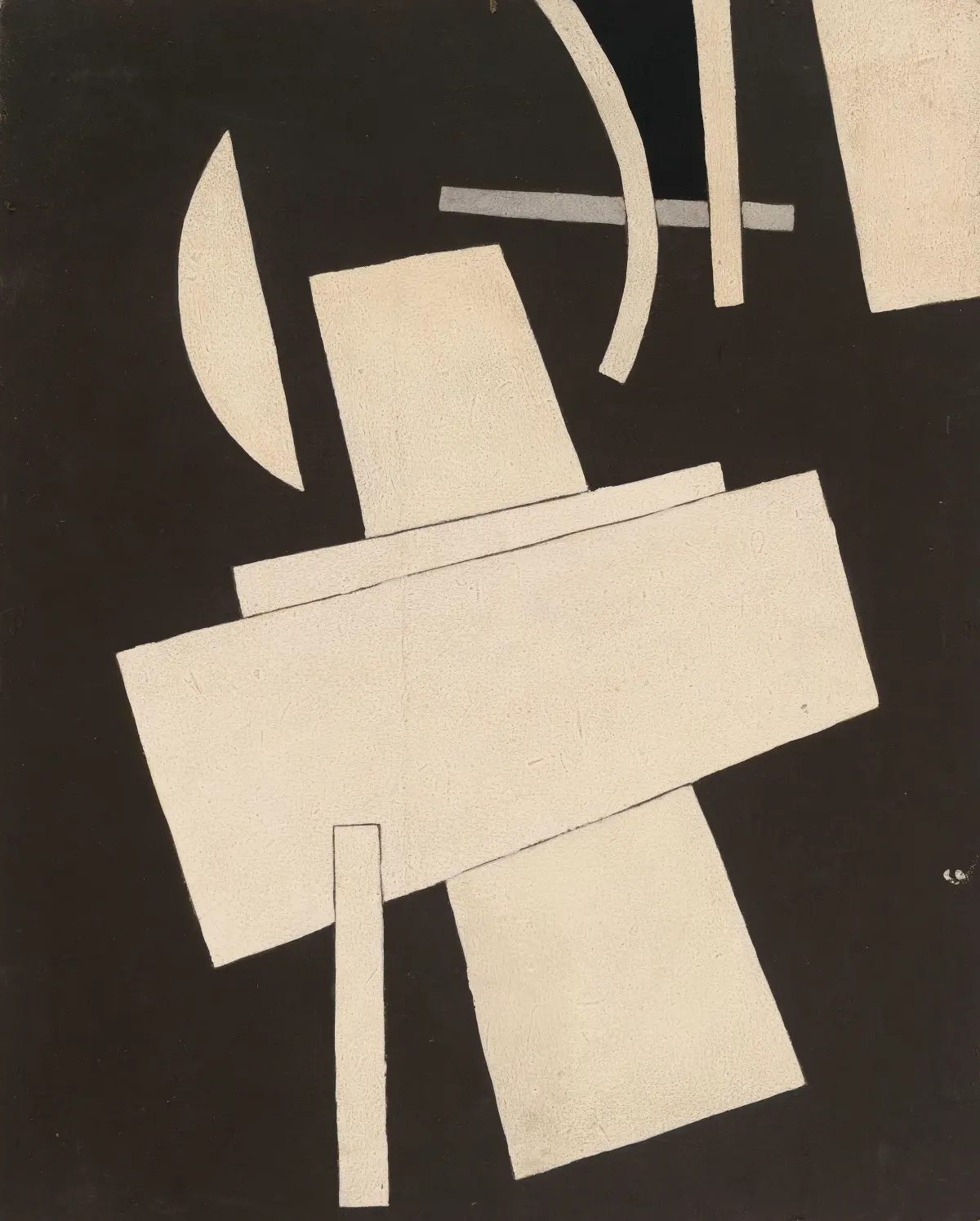
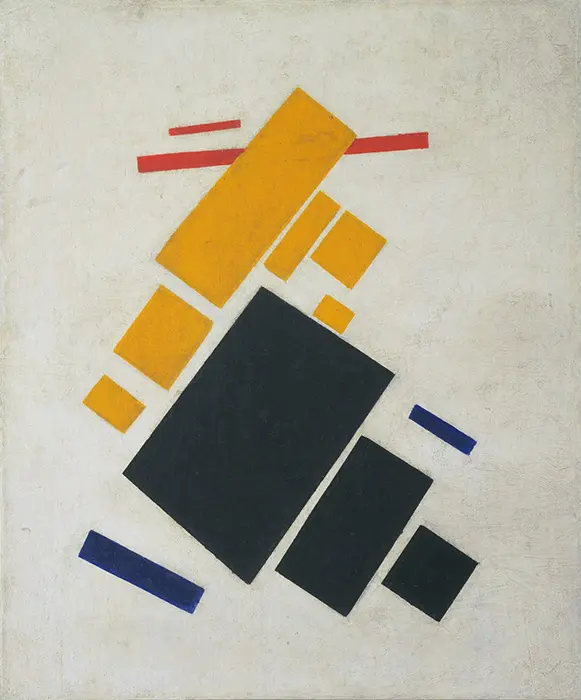
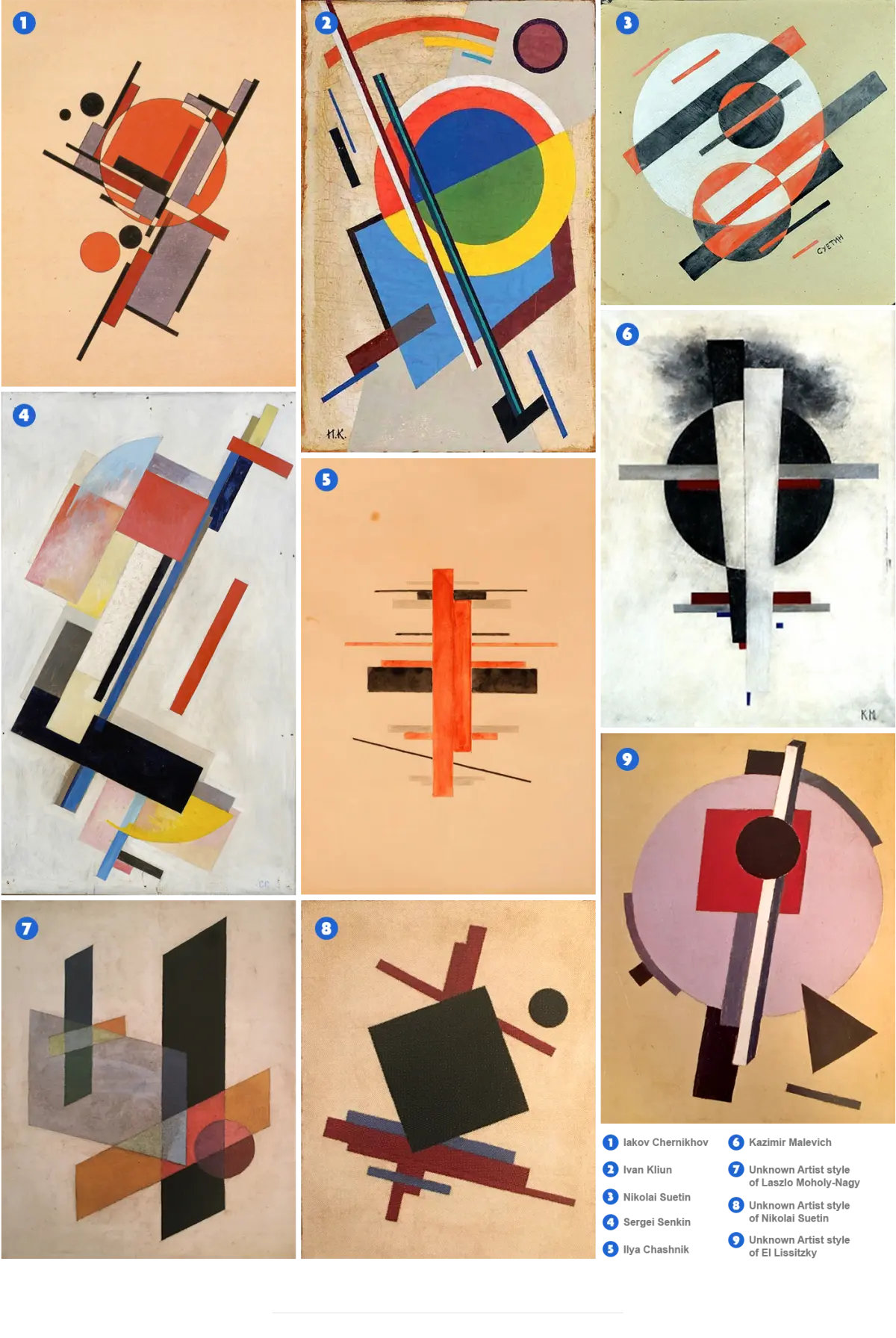
Identifying Suprematist works requires looking for a specific set of visual characteristics. The most prominent feature is the use of geometric primitives, such as squares, rectangles, circles, and triangles. These shapes are often placed against a stark, typically white, background to emphasize their isolation and "supremacy." The color palette is usually restricted to primary colors, black, and white, which prevents the viewer from being distracted by complex shading or realistic textures.
When observing these works, consider these key elements:
- Non-objectivity: The absence of any recognizable object or narrative.
- Dynamic balance: Shapes often appear to be floating, rotating, or colliding on the canvas.
- Flatness: There is no attempt to create the illusion of three-dimensional depth or perspective.
- Economy of means: The artist uses the fewest elements possible to achieve a visual impact.
Common mistakes when analyzing Suprematism
A frequent error is attempting to find a hidden narrative or symbolic story within a Suprematist painting. Because the movement is non-objective, there is no "code" to crack or secret message to decode. Viewers often feel frustrated when they cannot identify a subject, leading them to dismiss the work as meaningless. Instead of searching for what the painting represents, one should focus on how the arrangement of shapes makes them feel.
Another mistake is confusing Suprematism with Constructivism. While both movements emerged from the Russian avant-garde and favored geometric forms, they held opposing philosophies. Constructivists believed art should be functional and serve a social or industrial purpose, often creating sculptures or posters for the state. Suprematists, conversely, believed art should be purely spiritual and detached from practical utility. Recognizing this distinction helps clarify why Suprematism feels more ethereal and isolated, while Constructivism often feels more structural and grounded in reality.
How to create art inspired by Suprematism
Creating your own Suprematist-inspired work is an excellent exercise in composition and balance. Start by choosing a limited palette of colors, such as black, red, and white. Avoid using gradients or complex textures, as these detract from the purity of the geometric forms. Focus on the relationship between the shapes and the empty space surrounding them, ensuring that the composition feels intentional and stable despite the lack of a traditional subject.
Follow these steps to experiment with the style:
- Select three basic geometric shapes of varying sizes to avoid visual monotony.
- Place the largest shape off-center to create a sense of movement or tension.
- Arrange smaller shapes around the primary form, experimenting with overlapping to suggest depth without using perspective.
- Evaluate your composition by rotating the canvas; a successful Suprematist work should maintain its balance regardless of its orientation.
By practicing these techniques, you gain a deeper appreciation for the rigorous discipline required to create art that relies entirely on formal harmony.
Key facts
- Suprematism was founded in 1913 by the Russian avant-garde artist Kazimir Malevich.
- The movement focuses on fundamental geometric forms such as squares, circles, and rectangles.
- It emphasizes the "supremacy of pure artistic feeling" over the depiction of objects from the physical world.
- The iconic 1915 painting "Black Square" is considered the movement's definitive masterpiece and a turning point in modern art.
- Suprematist compositions often use a limited color palette, frequently relying on black, white, and primary colors against a stark background.
- To create a Suprematist work, arrange basic shapes to suggest movement or balance rather than trying to represent a recognizable scene.
The bottom line
Suprematism serves as a radical departure from representational art, championing the power of basic geometric shapes to evoke pure emotion. By stripping away the distractions of the physical world, it invites the viewer to engage with the essential elements of color and form. This movement remains a cornerstone of modern abstraction, offering a timeless framework for artists and designers to explore balance, space, and minimalist visual language.
People also ask
How does Suprematism differ from Constructivism?
While both are Russian avant-garde movements, Constructivism focuses on industrial materials and social utility. Suprematism is purely abstract and prioritizes individual spiritual expression over practical or political application.
What is the significance of the "Black Square"?
Malevich intended this painting to represent the "zero point" of painting, stripping art of all narrative and representation. It challenged viewers to find meaning in pure form rather than traditional subject matter.
Can Suprematism be used in modern design?
Yes, its emphasis on minimalism and geometric balance is a core influence on modern graphic design and architecture. Designers often use its principles to create clean, high-impact visual layouts.
What is a common mistake when creating Suprematist art?
A common error is including too much detail or attempting to create a sense of depth through shading. Suprematism relies on flat, two-dimensional planes to maintain its focus on pure geometric relationships.
Did Suprematism influence other art movements?
It was a major precursor to Minimalism and abstract expressionism in the mid-20th century. Its rejection of traditional perspective paved the way for artists to explore non-objective art globally.
Is Suprematism restricted to painting?
No, Malevich and his followers expanded the style into three-dimensional sculptures called "architektons." These were plaster models that explored how geometric volumes occupy space in an architectural context.
This answer was created with the help of AI research tools and reference sources. Spotted an error? Let us know — we correct mistakes quickly. See our editorial policy.