What is an art degree?
Short answer
An art degree is an academic credential awarded by a college or university upon the completion of a program focused on visual arts, design, or art history. These degrees, such as the Bachelor of Fine Arts (BFA) or Bachelor of Arts (BA), combine intensive studio practice with theoretical study to prepare students for creative careers.

On this page
What is an art degree program?
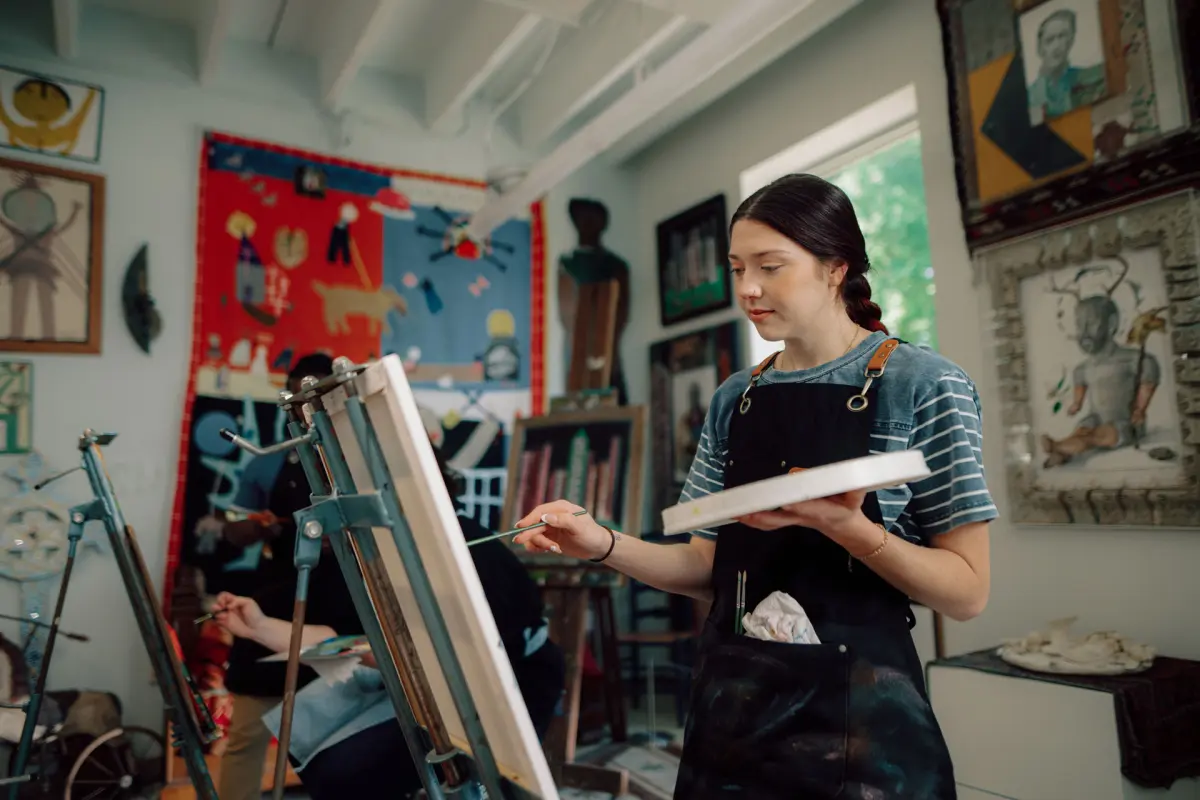
An art degree program is a structured curriculum designed to develop a student’s technical proficiency, critical thinking, and historical understanding of visual culture. Students typically choose between a Bachelor of Fine Arts (BFA), which is a professional degree heavily weighted toward studio work, or a Bachelor of Arts (BA), which offers a broader liberal arts focus. These programs are housed within schools of art, design, or university departments and provide access to specialized facilities like printmaking labs, woodshops, and digital media suites.
The core of any art degree is the "critique." In these sessions, students present their work to peers and professors to receive constructive feedback on concept, execution, and visual impact. Beyond the studio, students study art history to understand the evolution of aesthetic movements and professional practices. This dual approach ensures that graduates are not only capable of creating work but are also able to articulate the intent and context behind their artistic output.
How long does it take to earn an art degree?
Most undergraduate art degrees are designed to be completed in four years of full-time study. A standard BFA program typically requires 120 to 130 credit hours, with a significant portion dedicated to studio courses that meet for longer blocks of time than traditional lecture classes. Accelerated programs exist, but the labor-intensive nature of art production often makes a four-year timeline the standard for mastering technical skills.
- Freshman year: Foundations courses covering color theory, drawing, and basic design principles.
- Sophomore year: Introduction to specific mediums like painting, sculpture, or graphic design.
- Junior year: Advanced studio work and exploration of personal artistic voice.
- Senior year: Development of a thesis project, a professional portfolio, and a final gallery exhibition.
Graduate degrees, such as the Master of Fine Arts (MFA), generally take two to three years to complete. These programs are highly selective and focus almost exclusively on refining a professional body of work for exhibition or industry entry.

What are the career paths for art graduates?
Contrary to the myth that art degrees lead only to unemployment, graduates enter a wide array of professional sectors. The skills acquired during an art degree—such as visual communication, project management, and creative problem-solving—are highly transferable. Many graduates find success in commercial industries where visual literacy is a core requirement for business growth and consumer engagement.
- Graphic Design: Creating visual content for branding, marketing, and digital interfaces.
- Art Education: Teaching visual arts in K-12 schools or community centers.
- Creative Direction: Managing the aesthetic vision for advertising agencies or media companies.
- Museum and Gallery Work: Curating exhibitions, managing collections, or handling art sales.
- Industrial Design: Developing the form and function of consumer products and electronics.
Beyond these roles, many artists pursue freelance careers, working as independent illustrators, photographers, or fine artists. The rise of digital platforms has allowed art graduates to monetize their skills directly through commissions, licensing, and online storefronts.
Common mistakes when choosing an art school
A frequent error is prioritizing a school’s prestige over its specific facilities and faculty expertise. Students often fail to research whether a program aligns with their medium of interest, such as choosing a school focused on digital media when they are passionate about traditional oil painting. It is essential to look at the alumni network and the types of careers graduates from that specific program have pursued after leaving the institution.
Another mistake is ignoring the financial reality of the degree. Art school can be expensive, and students should carefully evaluate the return on investment. Before committing, consider these steps:
- Visit the campus to see the studio spaces and observe student work.
- Review the faculty bios to ensure they are active, exhibiting professionals.
- Examine the career services office to see if they offer internships and job placement support.
- Compare the cost of tuition against the average starting salaries in your intended field.
Why artistic professional development matters
An art degree provides more than just technical training; it offers a professional network that is often vital for long-term success. The creative industry relies heavily on connections, and being part of a university program introduces students to mentors, guest lecturers, and peers who will become future collaborators. These relationships often lead to job referrals, exhibition opportunities, and essential industry insights that are difficult to access as an independent, self-taught artist.
Furthermore, the degree serves as a formal validation of one's skills. In competitive fields like architecture, interior design, or university-level teaching, a degree is often a mandatory prerequisite for employment or licensure. By engaging in a rigorous academic environment, students learn to defend their ideas and adapt to the evolving demands of the global creative market. This combination of technical mastery, professional networking, and academic credentials creates a robust foundation for a sustainable career in the visual arts.
Key facts
- An art degree is an academic credential, typically a Bachelor of Fine Arts (BFA) or Bachelor of Arts (BA), focusing on creative practice and visual theory.
- BFA programs are studio-intensive, often requiring 65% to 80% of coursework to be dedicated to hands-on artistic production.
- BA programs offer a broader liberal arts education, typically dedicating 30% to 50% of credits to studio work with the remainder in general education.
- Specialized tracks include graphic design, illustration, sculpture, painting, photography, and digital media.
- Most programs require a portfolio of original work for admission, which serves as a visual demonstration of technical skill and conceptual development.
- The degree culminates in a senior thesis exhibition, where students present a cohesive body of work to faculty and the public.
The bottom line
An art degree provides a structured environment for developing technical mastery, conceptual depth, and a professional portfolio. While it is not a mandatory requirement for creative work, the program offers essential resources, mentorship, and networking opportunities that are difficult to replicate independently. Ultimately, the value of the degree depends on your commitment to the studio process and your ability to apply those skills to diverse professional industries.
People also ask
Is a BFA degree better than a BA degree for a career in art?
A BFA is generally preferred if you intend to pursue a professional career as a practicing artist or designer because of the rigorous studio training. A BA is better suited for students who want to combine art with another academic discipline, such as marketing, education, or business.
Do I need an art degree to become a professional artist?
You do not legally need a degree to work as an artist, as the field relies heavily on your portfolio and professional network. However, a degree provides structured mentorship, access to expensive equipment, and a community of peers that can accelerate your professional development.
What are the most common mistakes students make when applying to art school?
The most common mistake is submitting a portfolio that lacks variety or fails to show a clear artistic process. Admissions committees look for potential and problem-solving skills, so avoid including only polished finished pieces; include sketches and studies that demonstrate how you arrive at your final ideas.
How much does an art degree typically cost?
Costs vary significantly depending on whether you attend a private art conservatory or a public university. Tuition at private institutions can exceed $50,000 per year, while state universities offer more affordable options, though students should always factor in the high cost of specialized art supplies.
What kind of jobs can you get with an art degree?
Graduates often work as graphic designers, art directors, illustrators, museum curators, or art educators. Many also pursue roles in creative industries like advertising, fashion, film production, and user experience (UX) design.
How long does it take to complete an art degree?
A standard undergraduate art degree takes four years of full-time study to complete. Some intensive conservatory programs may require extra studio hours, but the credit requirements generally align with standard university timelines.
This answer was created with the help of AI research tools and reference sources. Spotted an error? Let us know — we correct mistakes quickly. See our editorial policy.