What is a pottery wheel?
Short answer
A pottery wheel is a mechanical device used by ceramicists to shape clay into symmetrical, circular forms, such as bowls, vases, and plates. It consists of a rotating horizontal disk, or wheel head, powered by a foot pedal or electric motor, allowing the artist to manipulate malleable clay through centrifugal force.
On this page
How does a pottery wheel work?
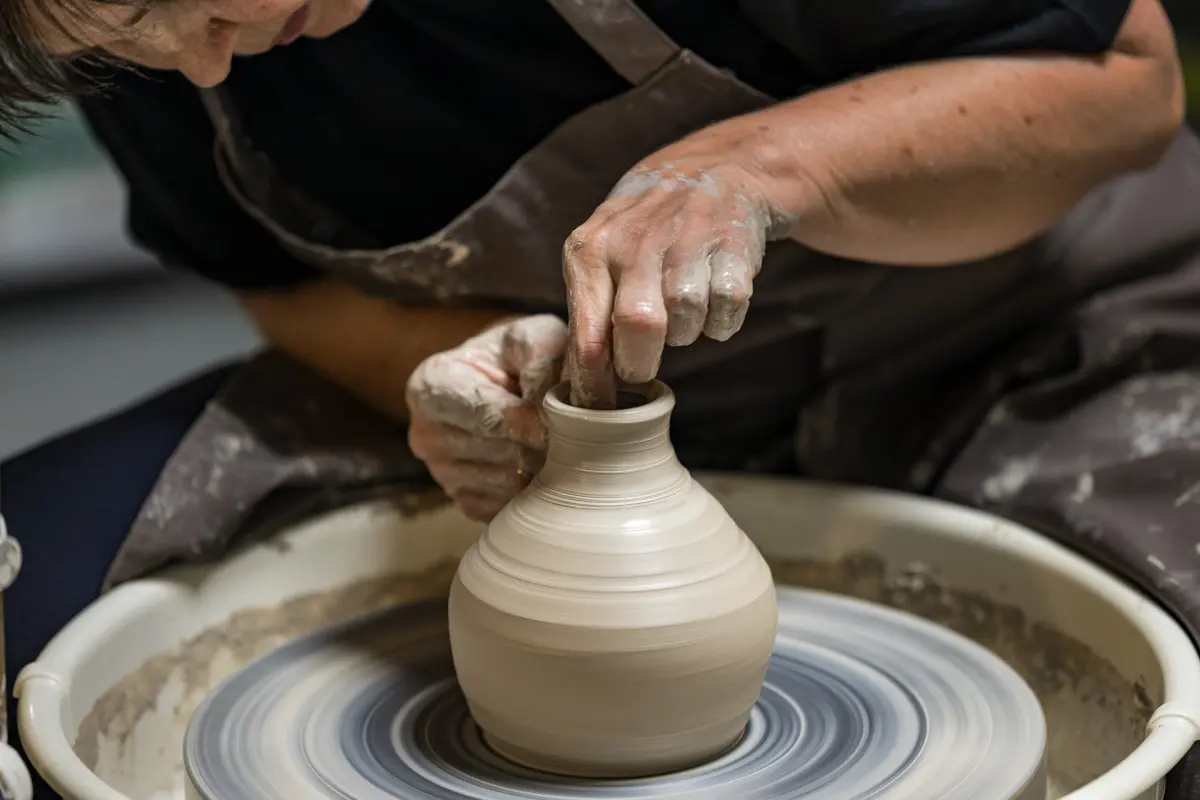
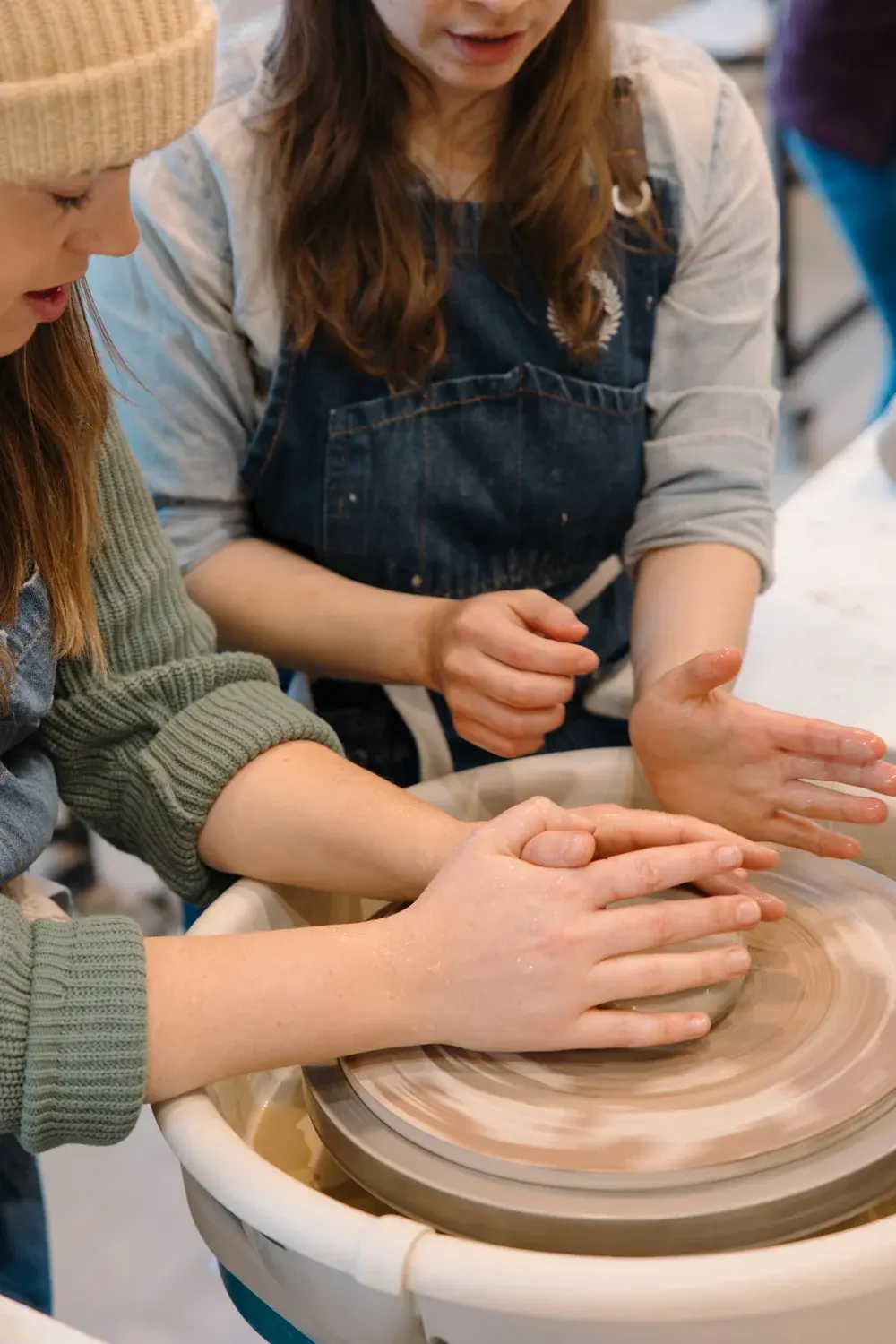
A pottery wheel functions by rotating a lump of clay at a consistent speed, which allows the potter to apply even pressure to the material. As the wheel spins, the artist uses their hands to center the clay, open the middle, and pull up the walls of the vessel. This process relies on centrifugal force, which stabilizes the clay and helps maintain a uniform shape that would be nearly impossible to achieve by hand-building alone.
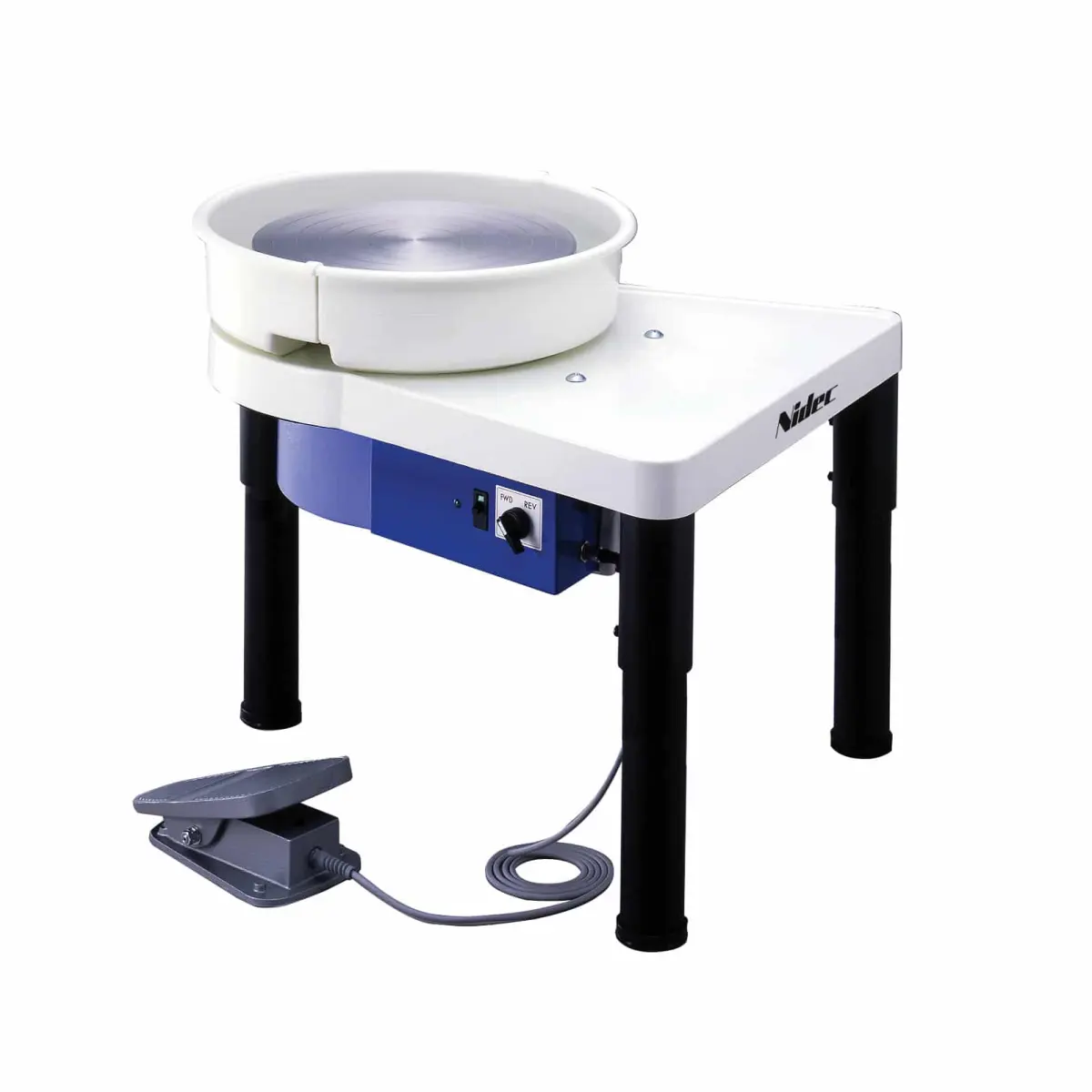
The mechanical components include a motor, a speed controller, and a heavy-duty wheel head. Modern electric wheels are the industry standard, offering variable speeds that range from zero to several hundred revolutions per minute. The potter controls this speed using a foot pedal, leaving both hands free to focus on the delicate shaping of the clay. By adjusting the speed, the artist can transition from the initial high-speed centering phase to the slower, more precise shaping and finishing stages.
How to use a pottery wheel for beginners
Learning to throw on a wheel requires patience and a focus on body mechanics. You must secure your clay to the center of the wheel head before the motor is turned on to ensure stability. Once the wheel is spinning, the goal is to achieve perfect centering, which serves as the foundation for every piece you create.
Follow these steps to begin your first cylinder:
- Secure a ball of wedged clay to the center of the wheel head.
- Wet your hands and the clay to reduce friction.
- Apply firm, steady pressure with your palms to center the clay into a mound.
- Use your thumbs to press into the center, creating the floor of the vessel.
- Gently pull the clay upward between your fingers to create the walls.
- Use a wooden rib tool to smooth the exterior and refine the shape.
What are the different types of pottery wheels?
Pottery wheels are generally categorized by their power source and intended use. The two primary types are kick wheels and electric wheels. Kick wheels are traditional machines that rely on the potter’s physical momentum to spin a heavy flywheel. These are favored by artists who appreciate the tactile, rhythmic connection to the machine and do not require the high-torque precision of electric models.
Electric wheels are the most common choice for modern studios due to their convenience and speed control. They are categorized by their motor power, often measured in horsepower. A wheel with a 1/3 to 1/2 horsepower motor is typically sufficient for hobbyists, while professional studios often invest in 1 horsepower models to handle large, heavy amounts of clay. When choosing a wheel, consider the following factors:
- Weight capacity: How much clay the motor can handle without stalling.
- Noise level: Essential if you are working in a home studio.
- Splash pan design: A removable pan makes cleaning much easier.
- Portability: Some models are lightweight and designed for workshops.
Common mistakes when using a pottery wheel
Many beginners struggle because they do not prepare their workspace or their clay properly. One of the most frequent errors is failing to "wedge" the clay before placing it on the wheel. Wedging removes air bubbles and ensures the clay has a uniform consistency; without this, the clay may collapse or explode during the firing process. Another common mistake is using too much water, which weakens the clay walls and causes them to slump or lose their structural integrity.
Another frequent issue involves poor posture and lack of stabilization. If your elbows are not braced against your thighs or the frame of the wheel, your hands will wobble, leading to uneven wall thickness. Always remember to:
- Keep your feet firmly planted on the floor or pedal.
- Brace your arms against your body to create a steady tripod.
- Use a sponge to remove excess water from the inside of the pot.
- Avoid overworking the clay, which can lead to fatigue and structural failure.
How long does it take to learn pottery?
Mastering the pottery wheel is a journey that can take months or even years of consistent practice. Most beginners can throw a basic, functional bowl within a few weeks of dedicated instruction. However, achieving professional-level consistency, such as creating matching sets of mugs or thin-walled porcelain vases, requires thousands of hours of repetition. Muscle memory is the primary factor in this development, as your hands must learn to react to the subtle shifts of the spinning clay.
Progress is usually measured in stages:
- Weeks 1-4: Learning to center clay and pull basic cylinders.
- Months 2-6: Refining shapes, trimming bases, and attaching handles.
- Year 1+: Developing a personal style and mastering complex forms.
Do not be discouraged by early failures, as even master potters experience collapsed pieces. The key is to analyze why a piece failed—whether due to lack of centering, too much water, or uneven pressure—and apply that knowledge to your next attempt. Consistent practice, even for just a few hours each week, will lead to measurable improvement in your ability to control the clay.
Key facts
- A pottery wheel is a machine used to shape round ceramic objects through the process of throwing clay on a rotating surface.
- The earliest manual wheels, known as kick wheels, were developed in Mesopotamia around 3500 BCE.
- Modern electric wheels use a motor to maintain constant speeds, typically ranging from 0 to 250 revolutions per minute.
- Centering the clay is the most critical first step, as an off-center lump will wobble and collapse during the pulling process.
- Practitioners should always use a splash pan to contain water and clay slurry, which prevents mess and protects the motor from moisture.
- Beginners should avoid using too much water, as excess moisture weakens the clay structure and causes the walls to slump.
The bottom line
The pottery wheel is a foundational tool in ceramics, transforming raw clay into symmetrical vessels through controlled rotation. While mastering the mechanics of centering and pulling requires patience and practice, it remains the most efficient method for creating functional pottery. By maintaining consistent speed and managing water usage, beginners can successfully transition from basic lumps of clay to refined, balanced forms ready for the kiln.
People also ask
What is the difference between a kick wheel and an electric wheel?
A kick wheel relies on the user’s physical momentum to spin a heavy flywheel, providing a tactile, rhythmic experience. An electric wheel uses a motorized foot pedal to control speed, offering more consistency and less physical exertion for long sessions.
Can I use a pottery wheel to make square objects?
You cannot throw a square object directly on a spinning wheel because the centrifugal force naturally creates circular symmetry. Potters typically throw a round vessel on the wheel and then alter its shape by hand once the clay is leather-hard.
What type of clay is best for beginners?
Stoneware clay is widely considered the best choice for beginners because it is plastic, holds its shape well, and is forgiving during the throwing process. Avoid using porcelain, as it is notoriously difficult to center and prone to collapsing under inexperienced hands.
How do I get the clay off the wheel once I am finished?
To remove a piece, slide a thin wire tool or a piece of fishing line horizontally across the wheel head underneath the base of the pot. This cuts through the clay, allowing you to lift the finished piece off carefully using a flat tool or your fingers.
Why does my clay collapse while I am trying to pull the walls?
Collapse usually happens because the clay has become too thin at the base or has absorbed too much water. Ensure your clay is properly wedged before starting and avoid over-working the walls with excessive water, which turns the clay into soft, unmanageable mud.
Is it necessary to trim a pot after it comes off the wheel?
Trimming is essential for refining the shape, thinning the walls, and creating a foot ring on the bottom of the vessel. This process is performed when the clay reaches a leather-hard state, where it is firm enough to be handled but still damp enough to carve.
This answer was created with the help of AI research tools and reference sources. Spotted an error? Let us know — we correct mistakes quickly. See our editorial policy.