How do you draw a ship's wheel?
Short answer
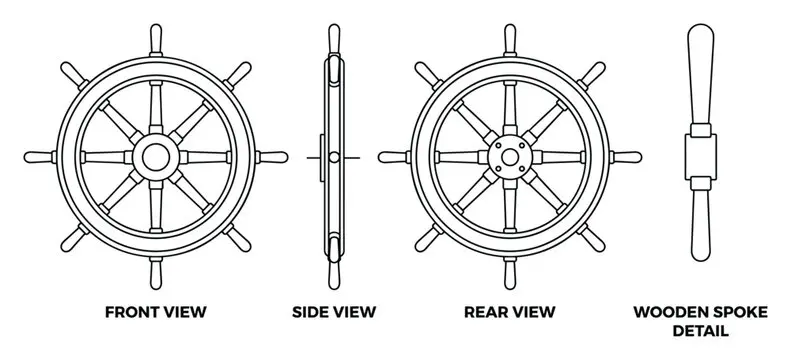
Drawing a ship’s wheel requires constructing a central hub, a circular rim, and a series of evenly spaced handles. By sketching a geometric framework of intersecting lines, you can ensure symmetry and proper proportions. This classic maritime icon relies on precise radial balance to achieve a realistic and professional appearance on paper.
On this page
How to structure the basic geometry of a ship's wheel
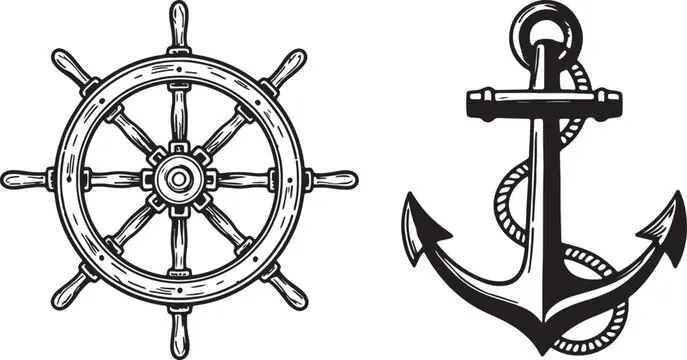
The foundation of a realistic ship's wheel is a perfectly centered structural grid. Start by using a compass to draw two concentric circles: a smaller one for the hub and a larger one for the outer rim. The space between these circles represents the thickness of the wheel’s wooden frame. Once the circles are established, use a ruler to draw light guidelines extending from the center point to the outer edge. These lines act as the axes for your handles, ensuring they are spaced at equal intervals.
For a standard eight-spoke wheel, divide the circle into eight equal segments. You can achieve this by drawing a vertical line, a horizontal line, and two diagonal lines crossing through the center. This framework acts as the skeleton for your drawing, preventing the common issue of lopsided spokes. Keep these initial lines very faint so they can be easily erased or covered by darker ink later. Accuracy at this stage is essential for a balanced final image.
How to draw the spokes and handles
Once your circular framework is ready, focus on the spokes that connect the hub to the rim. Each spoke should be drawn as a narrow rectangle or a tapered cylinder extending from the central hub to the outer rim. Beyond the rim, you must add the handles, which are the iconic grips used by helmsmen. These handles typically feature a rounded knob at the end, often referred to as the "king spoke" or simply the grip.
- Draw two parallel lines along each of your eight guide axes to create the thickness of the spokes.
- Extend these lines slightly beyond the outer circle to create the handle shafts.
- Add a small oval or circle at the end of each shaft to represent the rounded grip.
- Refine the connection points where the spokes meet the hub, adding a slight curve to suggest wood joinery.
Avoid making the handles too thin, as they must look sturdy enough to withstand the pressure of steering a heavy vessel. Consistency in the size of these knobs is vital for maintaining the wheel's visual weight.
How to add texture and depth to the wood
A ship's wheel is traditionally crafted from heavy, polished timber like teak or mahogany. To convey this material, you should incorporate subtle wood grain patterns using long, flowing, and slightly wavy lines along the spokes and rim. Do not overdo the texture; a few strategic lines are enough to suggest the natural material without cluttering the drawing. Adding thin, darker lines at the joints where the spokes meet the hub can also create a sense of depth and structural integrity.
Shading is the most effective way to make your drawing pop off the page. Determine where your light source is coming from and apply shadows to the opposite side of each cylindrical spoke and handle. Use cross-hatching or smooth gradients to transition from light to dark on the rounded surfaces. This technique gives the wheel a three-dimensional appearance, making it look like a physical object rather than a flat silhouette. Remember that the hub should also have a slight shadow to ground it in space.
Common mistakes when drawing a ship's wheel
The most frequent error beginners make is failing to maintain radial symmetry. If one handle is angled differently than its opposite, the entire wheel will look distorted and unstable. Always double-check your angles against the central axis lines before finalizing your ink strokes. Another common mistake is neglecting the thickness of the rim; the wheel should look like a solid, heavy ring rather than a thin, two-dimensional hoop. Ensure the rim has enough width to support the spokes visually.
- Misaligning the spokes so they do not point directly to the center.
- Making the hub too small to realistically hold eight heavy spokes.
- Drawing the handles at inconsistent lengths or varying sizes.
- Forgetting to account for the perspective if the wheel is tilted.
By taking the time to measure your intervals and checking your proportions against the center point, you can avoid these pitfalls. If the wheel looks "off," it is almost always due to a lack of symmetry in the radial layout.
How to refine and finish your nautical sketch
The final stage of the process involves cleaning up your guidelines and adding finishing details that bring the drawing to life. Carefully erase all the pencil marks used for the initial grid, ensuring that you do not smudge your shading. If you are using ink, wait for the lines to dry completely before removing the underlying graphite. You might consider adding a central bolt or a decorative metal plate on the hub to suggest the mechanical nature of the steering gear.
Finally, consider the environment of the wheel. Adding a soft shadow beneath the wheel or a hint of a deck railing behind it can place the object in a realistic context. If you want to add a sense of movement, you can draw subtle motion lines or a slight tilt to suggest the ship is turning. Keep your final strokes confident and clean, as a ship's wheel represents precision and control. With these steps, you have successfully rendered a classic maritime instrument with professional clarity and balance.
Key facts
- A traditional ship’s wheel, or helm, typically features eight wooden spokes radiating from a central hub.
- The outer ring, known as the rim, is connected to the hub by these spokes, which act as handles for the helmsman.
- When drawing, always start with a light pencil cross to ensure the spokes are evenly spaced at 45-degree intervals.
- The "king spoke" is often marked or slightly different in design, indicating the rudder is in the centered position.
- Adding thickness to the rim and spokes creates a three-dimensional effect that prevents the drawing from looking flat.
- Avoid drawing the spokes as simple straight lines; tapering them toward the hub adds realism and structural integrity.
The bottom line
Drawing a ship’s wheel is best approached by establishing a geometric foundation. By using a central cross and concentric circles, you ensure symmetry before adding the eight defining spokes. Focus on tapering the handles and adding subtle wood grain textures to elevate your sketch. With these structural steps, you can create a realistic representation of this iconic maritime tool, balancing both its historical function and aesthetic charm.
People also ask
How many spokes does a standard ship's wheel have?
Most traditional ship's wheels feature eight spokes. This number provides enough leverage for the helmsman while maintaining balance and symmetry.
What is the purpose of the handles on a ship's wheel?
The handles, or spokes, allow the crew to exert significant force to turn the rudder against water resistance. They provide a secure grip during rough sea conditions.
Why are some ship's wheels made of metal instead of wood?
Modern vessels often use metal wheels for increased durability and resistance to harsh marine environments. Wood was historically preferred for its weight and tactile grip.
What is the difference between a helm and a tiller?
A tiller is a simple lever attached directly to the rudder post, while a helm uses a wheel and gear system to multiply force. The wheel allows for easier steering on larger vessels.
How do you make a drawing look like it is made of wood?
Use varied, wavy line patterns to simulate wood grain along the rim and spokes. Adding small knots or imperfections can further enhance the organic texture.
Can I draw a ship's wheel without a compass?
You can use a circular object like a bowl or lid to trace the outer and inner rings. Alternatively, use a piece of string tied to a pencil to create a makeshift compass.
This answer was created with the help of AI research tools and reference sources. Spotted an error? Let us know — we correct mistakes quickly. See our editorial policy.