How do you draw a kraken?
Short answer
To draw a kraken, focus on layering organic, flowing shapes. Begin by sketching a central mantle, then add multiple tentacles radiating outward with varying curves. Use suction cup clusters to add texture and depth. Emphasize scale by placing the creature near a small ship, using dramatic lighting to highlight its massive, monstrous form.
On this page
How to structure a kraken drawing
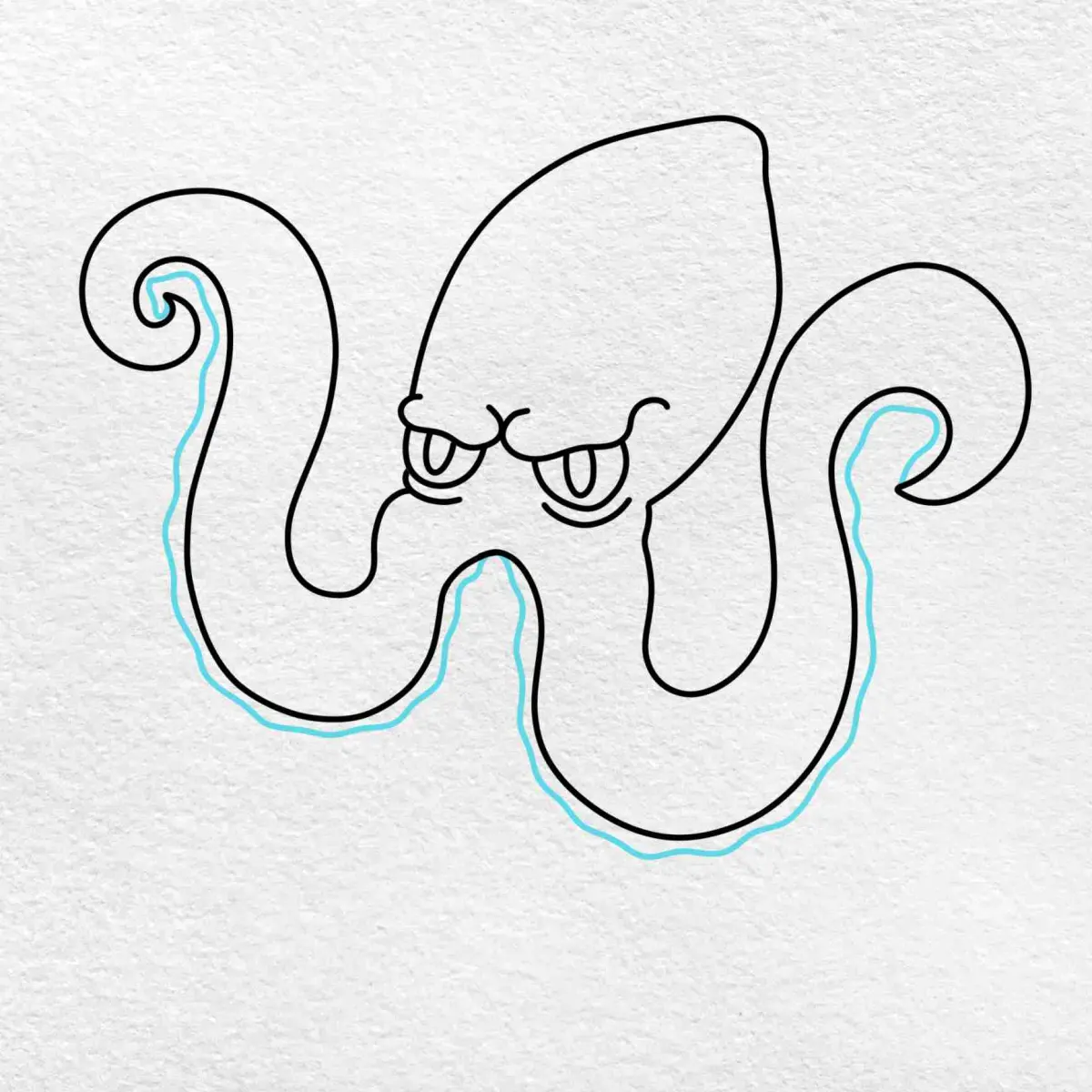
The foundation of a convincing kraken lies in its silhouette. Start by sketching a large, rounded sac-like shape for the mantle, which serves as the creature's head and body. From the base of this shape, map out the tentacles using long, flowing gestural lines. Ensure these lines vary in length and thickness to create a sense of movement and natural asymmetry.
When building the anatomy, follow these structural steps:
- Draw the central mantle as an elongated oval or pear shape.
- Sketch eight to ten primary tentacle paths, curving them in different directions to avoid a symmetrical, stiff appearance.
- Thicken the tentacles near the base, tapering them into fine, whip-like points at the tips.
- Add secondary, smaller tentacles underneath to suggest a dense, writhing mass of limbs.
Avoid drawing all tentacles in a perfect circle, as this makes the creature look like a static starfish rather than a dynamic sea monster.
Best techniques for drawing tentacles
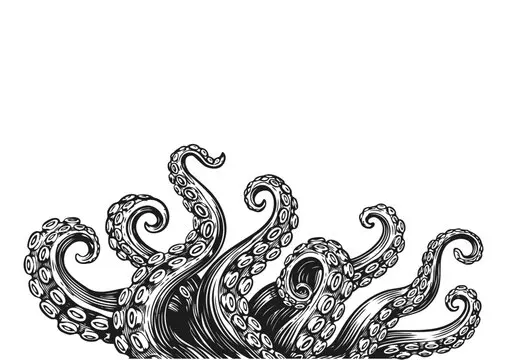
Tentacles are the most recognizable feature of a kraken, so their detail is paramount. Use a tapering technique where the line weight is heavy at the base and light at the tip. To add realism, incorporate "S" curves into each limb, which suggests the creature is actively swimming or grasping at objects.
To create convincing suction cups, consider these details:
- Place suction cups in two parallel rows along the inner side of each tentacle.
- Make the cups larger near the base and progressively smaller as they approach the tip.
- Add small, crescent-shaped shadows inside each cup to give them a three-dimensional, concave appearance.
If the tentacles look too flat, use cross-hatching or stippling to suggest the rounded, muscular volume of the limbs. Keep the texture slightly bumpy to mimic the skin of a deep-sea cephalopod.
How to add scale and perspective
A kraken is defined by its immense size, which is best conveyed through juxtaposition. Draw a small, detailed ship or a few sailors in a rowboat near the tentacles to provide a clear sense of proportion. Placing the kraken’s eye—which should be large and pupil-less—near the water’s surface can also emphasize its colossal scale.
Use atmospheric perspective to enhance the depth of your scene. Objects further away, such as the distant horizon or the tips of distant tentacles, should have less contrast and softer edges. Keep the primary focus sharp and dark, while allowing the background elements to fade into the mist or dark water. This technique forces the viewer’s eye to perceive the kraken as a massive entity emerging from the depths of the ocean.
Why lighting matters for sea monsters
Lighting is essential for creating a moody, atmospheric underwater scene. Since krakens are often depicted in deep, dark waters, use high-contrast lighting to define the creature’s form against the gloom. Imagine a single light source, such as moonlight hitting the surface, and ensure the highlights on the mantle and tentacles are consistent with that direction.
Common mistakes when lighting include:
- Applying highlights uniformly across the entire body, which flattens the form.
- Forgetting to cast shadows from the tentacles onto the mantle or the water surface.
- Using flat, even shading that ignores the way light wraps around rounded, cylindrical limbs.
Focus on creating deep, rich shadows in the crevices between tentacles. Use a bright, sharp highlight on the top of the mantle to contrast with the murky, dark water, which effectively makes the creature appear wet and slimy.
Common mistakes when drawing krakens
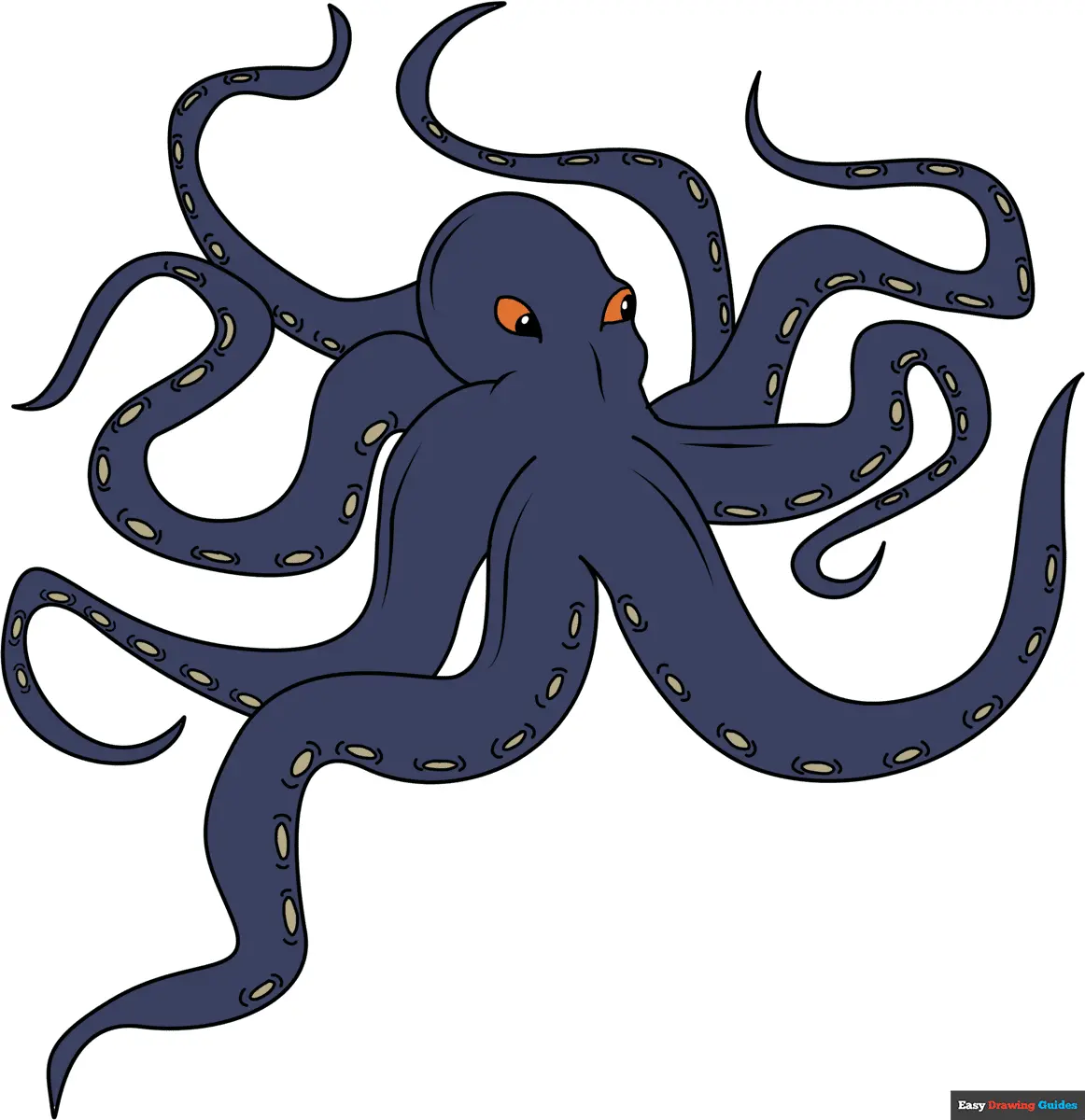
One of the most frequent errors is making the kraken look too much like a standard octopus. While the kraken is cephalopod-inspired, it should possess a more aggressive, monstrous quality. Avoid perfectly smooth skin; instead, add subtle ridges, scars, or barnacles to give the creature a sense of history and age. Another mistake is ignoring the fluidity of the water. Even if you are not drawing the water itself, the tentacles should look like they are being moved by currents or resistance.
When refining your drawing, keep these tips in mind:
- Ensure the tentacles do not cross over each other in a way that creates confusing, tangled lines.
- Vary the thickness of the tentacles to avoid a repetitive, mechanical look.
- Check that the suction cups follow the perspective of the tentacle’s curve.
By focusing on these details and avoiding overly symmetrical patterns, you will create a kraken that feels both biologically plausible and terrifyingly larger than life. Take your time with the final line work to ensure the creature feels heavy and powerful.
Key facts
- The kraken is a legendary sea monster of Scandinavian folklore, often depicted as a giant cephalopod similar to a squid or octopus.
- Start your drawing by sketching a large, rounded mantle (the head) and adding at least eight long, muscular tentacles trailing beneath it.
- Use suction cup patterns on the inner side of the tentacles to add realism and texture to the creature's limbs.
- Incorporate a central, parrot-like beak positioned between the base of the tentacles to emphasize the creature's predatory nature.
- To create a sense of scale, draw the kraken interacting with a small sailing ship or large waves to emphasize its massive size.
- Avoid making the tentacles too symmetrical; natural movement in water is fluid, chaotic, and irregular.
The bottom line
Drawing a kraken requires balancing anatomical detail with dramatic scale. Focus on the fluid, irregular movement of its many tentacles and the imposing size of its mantle. By placing the creature in a turbulent oceanic setting alongside a vessel, you establish a sense of awe and terror. Remember that imperfection in the limbs and complex skin textures will make your illustration appear more lifelike and formidable.
People also ask
What is the historical origin of the kraken?
The kraken first appeared in Scandinavian literature, most notably in the 1752 work The Natural History of Norway by Erik Pontoppidan. It was originally described as being as large as an island and capable of creating dangerous whirlpools.
How many tentacles should a kraken have?
While there is no fixed rule, most artists depict the kraken with eight or ten tentacles. Drawing ten limbs allows for a more dynamic composition, mimicking the anatomy of a giant squid.
What is the best way to show the kraken is underwater?
Use light rays filtering down from the surface, known as god rays, to create depth. Adding bubbles, debris, or silhouettes of smaller fish helps ground the creature in a deep-sea environment.
Should I draw the kraken with eyes?
Yes, giant cephalopods have large, expressive eyes that add a sense of intelligence and menace. Place them on the sides of the mantle to provide a wide field of vision.
How do I make the kraken look scary?
Incorporate sharp, hooked barbs on the suckers and add dark, mottled skin textures. A wide, aggressive pose with tentacles reaching toward the surface creates a more intimidating silhouette.
Are krakens based on real animals?
The legend is likely based on sightings of the giant squid (Architeuthis dux), which can grow up to 40 feet long. Sailors often exaggerated these encounters, transforming the animal into a ship-sinking titan.
This answer was created with the help of AI research tools and reference sources. Spotted an error? Let us know — we correct mistakes quickly. See our editorial policy.