What is wedging clay?
Short answer
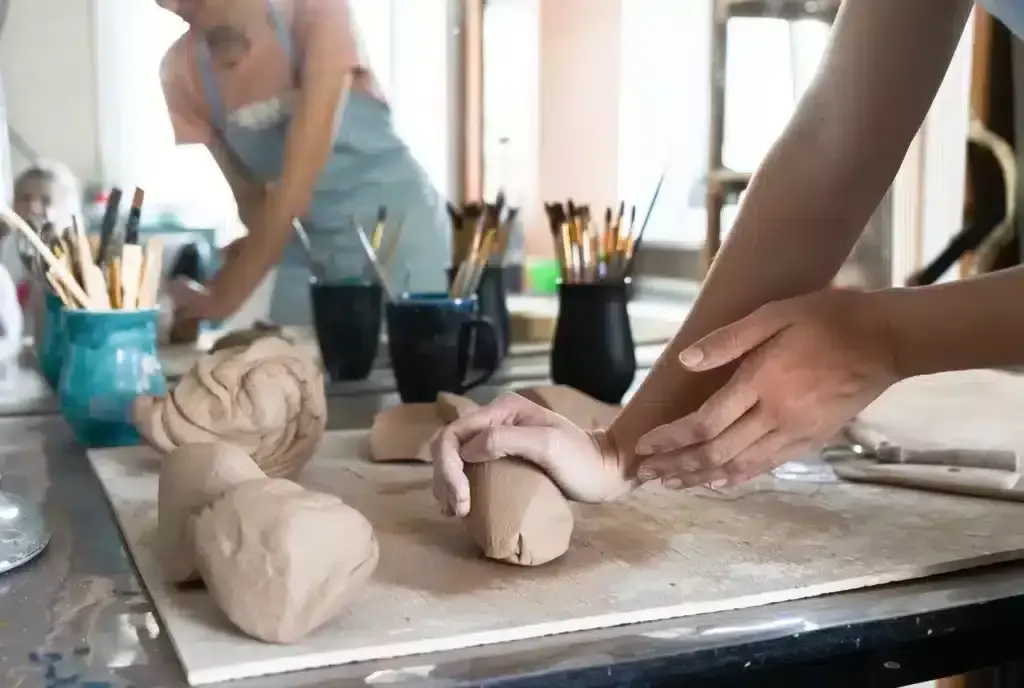
Wedging is the process of kneading clay to remove trapped air bubbles, ensure uniform moisture content, and align clay particles before forming. By manually working the mass, potters prevent structural failures like cracking or exploding in the kiln. It is a fundamental preparatory step essential for successful wheel-throwing and hand-building projects.
On this page
Why is wedging clay important?
Wedging serves as the primary quality-control step for any ceramic project. When clay is stored, moisture often migrates, leaving some areas soft and others stiff. Wedging redistributes this water, creating a consistent texture that behaves predictably on the potter’s wheel. Without this uniformity, the clay may warp during drying or collapse while being shaped.
Furthermore, air pockets are the primary enemy of a ceramic vessel. If air remains trapped within the clay body, it expands rapidly when heated in a kiln. This expansion can cause the piece to crack or, in extreme cases, explode, potentially damaging other works in the firing. Wedging forces these bubbles out, ensuring a dense, solid structure that can withstand the intense heat of the kiln.
How to wedge clay using the spiral method
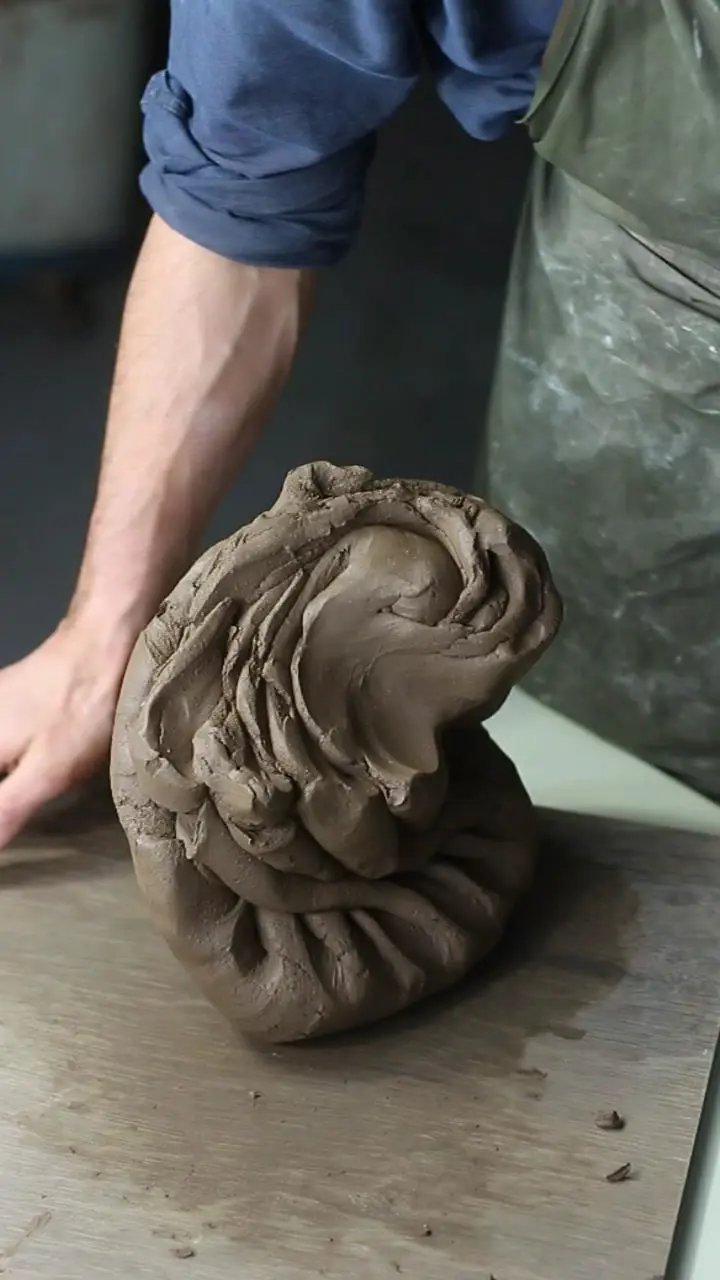
The spiral method, often called the "conch shell" technique, is highly effective for preparing large amounts of clay. It relies on a rhythmic, circular motion that continuously folds the clay over itself. This method is preferred by professional potters because it creates a consistent internal structure with minimal physical strain on the wrists.
Follow these steps to master the spiral technique:
- Place a ball of clay on a porous surface, such as a plaster slab or a wooden wedging board.
- Lean forward, using your body weight to press the clay down and away from you with the heels of your hands.
- Fold the clay back toward your body, rotating it slightly as you pull.
- Repeat this motion continuously, maintaining a steady rhythm until the clay feels smooth and homogeneous.
- Check for consistency by slicing the clay with a wire tool to ensure no air pockets remain.
How long does it take to wedge clay?
The time required to wedge depends heavily on the volume of clay and its initial condition. For a small ball intended for a mug, one to two minutes of active wedging is usually sufficient. Larger masses, such as those intended for a platter or a large vase, may require five to ten minutes of vigorous work to ensure the moisture is perfectly balanced throughout the entire block.
Beginners often underestimate the time required, leading to inconsistent results. A good rule of thumb is to perform at least 50 to 100 compressions for a standard-sized ball of clay. If you are working with recycled clay that has been reconstituted from scraps, you should increase this time significantly. Recycled clay often contains varying levels of moisture and trapped air, requiring extra attention to reach a workable, high-quality state.
Common mistakes when wedging clay
Even experienced potters can fall into bad habits that compromise the integrity of their clay. One of the most frequent errors is using a surface that is not sufficiently absorbent. If the surface is non-porous, such as plastic or sealed wood, the clay will simply slide around rather than being compressed. Always use a surface like plaster, canvas-covered wood, or concrete to draw excess moisture away and provide the necessary friction.
Another common mistake is over-wedging or under-wedging. Under-wedging leaves air bubbles and hard lumps, while over-wedging can cause the clay to dry out too much, making it brittle and difficult to throw. Additionally, many beginners use their fingers to pinch the clay rather than using the heels of their hands. This creates deep grooves in the clay that trap more air, effectively defeating the entire purpose of the process.
Best techniques for beginners
For those new to ceramics, the "bull’s head" or "ram’s head" method is often the easiest to learn. It is less complex than the spiral method and provides excellent feedback on the clay's texture. This technique involves pushing the clay into two symmetrical lobes that resemble the horns of a bull, which helps the potter visualize the internal movement of the clay particles.
To successfully implement the ram's head technique, keep these tips in mind:
- Keep your back straight and use your core strength rather than just your arm muscles to avoid fatigue.
- Maintain a consistent speed; slow, deliberate movements are more effective than fast, erratic ones.
- If the clay begins to stick to your hands, lightly dust your palms with a small amount of cornstarch or dry clay powder.
- Always store your wedged clay in an airtight plastic bag if you are not using it immediately to prevent it from drying out before you begin your project.
By mastering these fundamental techniques, you establish a professional foundation for all your future ceramic endeavors, ensuring that your clay is always ready for the wheel.
Key facts
- Wedging is the process of kneading clay to remove air bubbles, achieve uniform moisture, and improve consistency.
- The two most common techniques are the "ram’s head" method and the "spiral" (or bull’s head) method.
- Air pockets trapped in clay can cause pottery to explode or crack when heated in a kiln.
- You should wedge clay on a porous surface, such as a plaster slab or a heavy canvas-covered board, to prevent sticking.
- A standard session requires 30 to 50 repetitions to ensure the clay is thoroughly homogenized.
- Always wedge clay before throwing on a potter's wheel or hand-building to ensure structural integrity.
The bottom line
Wedging is the essential foundation of successful pottery, acting as the bridge between raw material and a workable medium. By manually kneading the clay, you eliminate dangerous air pockets and ensure a uniform texture, which prevents catastrophic failures during the firing process. Mastering this physical technique provides the consistency needed for precise throwing and hand-building, ultimately allowing your creative vision to take shape without structural interference.
People also ask
How do I know if my clay is sufficiently wedged?
The clay should feel consistent throughout, with no hard or soft spots. If you cut the clay in half with a wire tool, the interior should look smooth and free of visible air holes.
Is it necessary to wedge recycled clay?
Yes, recycled clay must be wedged thoroughly because it often has uneven moisture levels. Reclaiming clay can introduce air bubbles, making the wedging process even more critical than with fresh clay.
Can I over-wedge my clay?
It is difficult to over-wedge clay unless you are working with delicate porcelain, which can become overworked and lose its plasticity. For most stoneware and earthenware, consistent wedging is always beneficial.
What happens if I skip the wedging process?
Skipping this step often leads to structural failure during the drying or firing process. Trapped air expands in the kiln, which can cause your pottery to shatter or develop significant cracks.
Should I wear gloves while wedging?
No, you should wedge with bare hands to maintain better control and sensitivity. Wearing gloves can make it difficult to feel for small air bubbles or inconsistencies in the clay body.
Does wedging make the clay harder or softer?
Wedging generally makes the clay more pliable and easier to work with by distributing moisture evenly. However, if you wedge on a dry plaster slab, the clay will lose some moisture and become firmer.
This answer was created with the help of AI research tools and reference sources. Spotted an error? Let us know — we correct mistakes quickly. See our editorial policy.