How do you make an origami boat?
Short answer
Making an origami boat requires a single rectangular sheet of paper and a series of precise folds. By folding the paper in half, creating corner triangles, and expanding the structure from the center, you transform a flat sheet into a buoyant, three-dimensional vessel capable of floating in shallow water.
On this page
How to make a classic origami boat
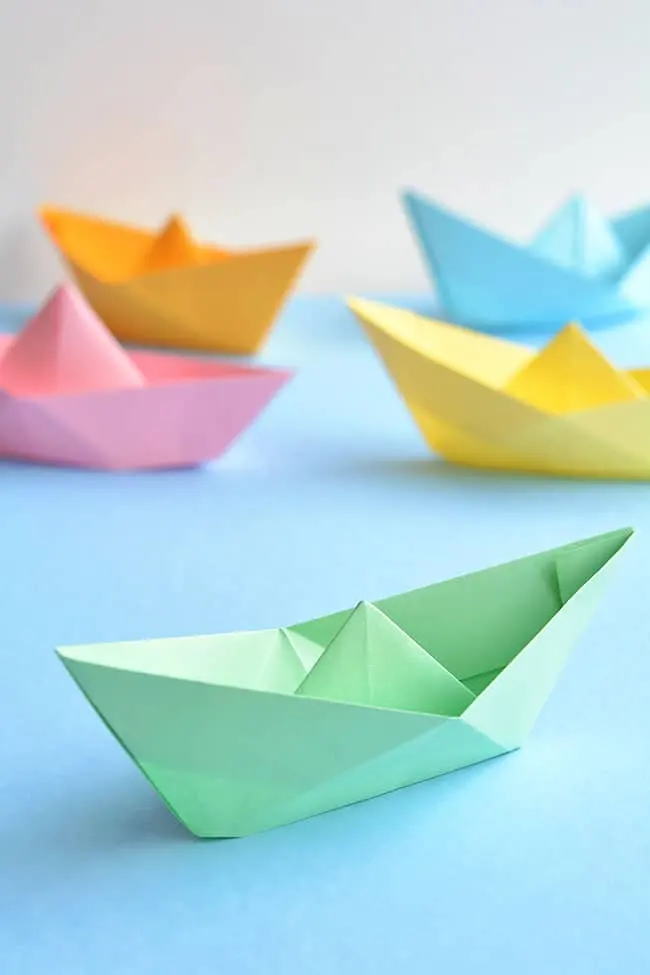
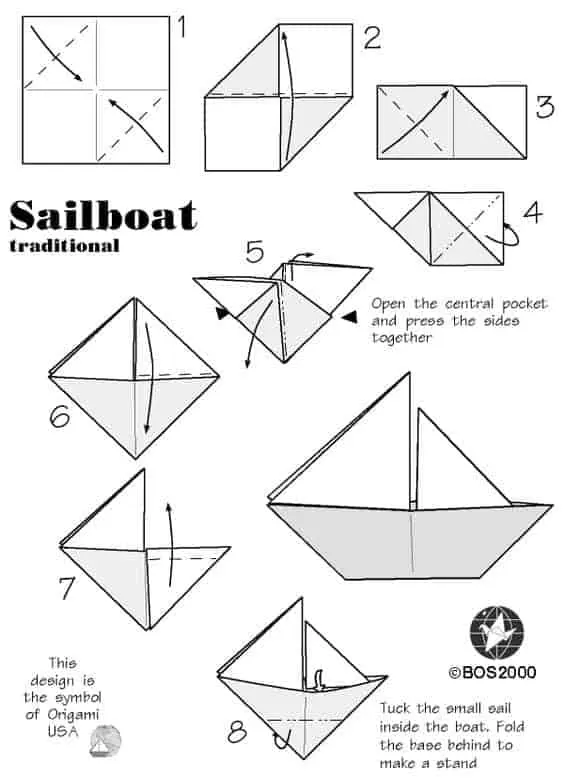
The classic origami boat, often called a paper hat or sailor’s cap, is a traditional design that relies on symmetry and crisp creases. To begin, place a rectangular piece of paper—standard letter size works perfectly—on a flat surface in a vertical orientation. Fold the top edge down to meet the bottom edge, creating a horizontal crease across the center. Keep the folded edge at the top as you proceed to ensure the final structure holds its shape.
Follow these steps to form the base:
- Fold the top corners down to the center crease to form a triangle.
- Fold the bottom rectangular flaps upward on both sides to create a brim.
- Pull the center of the brim apart until the paper collapses into a diamond shape.
- Fold the bottom corners of the diamond upward to the top point.
- Pull the sides outward again to reveal the boat shape.
Best paper types for origami boats
Selecting the right paper is essential for both the ease of folding and the longevity of the boat in water. Standard printer paper is the most common choice because it is readily available and possesses enough structural integrity to hold a crease. However, if you intend to float the boat for an extended period, consider using slightly heavier cardstock or paper coated with a thin layer of wax or plastic. These materials resist saturation, preventing the boat from becoming soggy and sinking prematurely.
Avoid using construction paper, as its fibrous texture makes it difficult to achieve sharp, clean folds. Tissue paper is also unsuitable because it lacks the necessary rigidity to maintain the boat's shape once it is unfolded. If you want a decorative touch, origami paper with patterns on one side can create a visually striking vessel. Regardless of the material, ensure the paper is cut into a perfect rectangle, as any uneven edges will cause the boat to list to one side.
How long does it take to fold a boat
For a beginner, folding an origami boat typically takes between five and ten minutes. The process is straightforward, but the time spent is primarily dedicated to ensuring that each crease is perfectly aligned. Experienced folders who have mastered the muscle memory of the steps can complete a boat in less than a minute. The speed of the process is less important than the precision of the folds, as even a minor misalignment in the early stages can lead to a lopsided or unstable boat.
If you are teaching this craft to children or beginners, allow extra time for demonstration and practice. It is helpful to use a larger sheet of paper for the first attempt, as smaller sheets require more dexterity and patience. Once the basic technique is understood, the time investment diminishes significantly. Focus on the quality of the creases rather than the speed of completion to ensure that the final product is balanced and aesthetically pleasing.
Common mistakes when folding origami
One of the most frequent errors is failing to crease the paper firmly enough. Origami relies on the tension created by sharp folds; if the lines are soft, the boat will lose its shape and collapse during the final expansion step. Use your fingernail or a bone folder to press down on every fold to ensure it remains crisp. Another common mistake is misaligning the corners during the initial triangle fold, which results in an asymmetrical boat that will not sit level on the water.
- Forgetting to alternate the direction of the bottom flaps, which prevents the paper from forming the diamond shape.
- Tearing the paper by folding it too aggressively or using paper that is too thin.
- Pulling the sides apart too quickly, which can cause the internal structural folds to buckle or rip.
- Leaving the paper damp before folding, which weakens the fibers and makes precise creases impossible to maintain.
Why origami boats sink
The primary reason an origami boat sinks is that the paper eventually becomes saturated with water. Once the fibers absorb enough liquid, the structural integrity of the folds fails, causing the boat to lose its shape and take on water. To extend the life of your boat, you can apply a light coat of waterproof sealant or clear spray paint to the exterior. This creates a hydrophobic barrier that keeps the paper dry for a longer duration, allowing for more play time in a basin, pond, or pool.
Another factor contributing to sinking is the weight distribution. If the boat is not perfectly symmetrical, it will tilt, causing one side to dip below the waterline. Once water enters the interior, the weight increases rapidly, leading to a quick descent. To improve stability, ensure the bottom of the boat is pushed out firmly so that it creates a flat base. By maintaining a balance between the weight of the paper and the buoyancy provided by the trapped air, you can create a vessel that remains afloat for a surprisingly long time.
Key facts
- Use a rectangular piece of paper, such as a standard 8.5 by 11-inch sheet, for the best results.
- Crease every fold firmly with your fingernail to ensure the boat holds its structure in water.
- The boat is a variation of a traditional Japanese paper-folding design known as a "samurai hat" base.
- Avoid using glossy or coated paper, as it is difficult to crease and loses shape quickly when wet.
- For a more durable vessel, use wax paper or spray the finished boat with a light coat of clear acrylic sealant.
- The boat's stability depends on the symmetry of the folds; ensure corners align perfectly at every step.
The bottom line
Creating an origami boat is a classic exercise in geometry and patience. By starting with a rectangular sheet and following precise folding sequences, you transform a flat surface into a functional, three-dimensional object. Focus on crisp, symmetrical creases to ensure structural integrity. With the right paper choice and careful handling, this simple project provides a rewarding introduction to the delicate art of paper folding and fluid dynamics.
People also ask
What is the best type of paper for an origami boat?
Standard printer paper is ideal because it is lightweight yet sturdy enough to hold a shape. Avoid heavy cardstock, which is too stiff to fold, and tissue paper, which is too fragile.
Can an origami boat actually float in water?
Yes, a properly folded paper boat can float for several minutes. The buoyancy depends on the paper's thickness and whether you have reinforced the folds to prevent water absorption.
Why does my boat tip over when I put it in water?
This usually happens because the bottom is not fully opened or the sides are uneven. Ensure the center of the boat is pushed out wide enough to create a flat, stable base.
How can I make my boat waterproof?
You can rub a wax crayon over the surface of the paper before folding to create a water-resistant barrier. Alternatively, using parchment paper or thin plastic sheets can significantly increase float time.
Is there a specific size of paper I should use?
While any rectangular paper works, a 1:1.414 ratio, like A4 paper, is mathematically optimal for this design. Smaller paper results in a tighter, more rigid structure, while larger paper is easier for beginners to manipulate.
How do I keep the boat from unfolding?
Use a small piece of clear tape on the interior seams if you intend to keep the boat for a long time. For traditional origami, simply ensuring your creases are sharp and tight is usually sufficient to hold the tension.
This answer was created with the help of AI research tools and reference sources. Spotted an error? Let us know — we correct mistakes quickly. See our editorial policy.