How do you make an origami frog?
Short answer
Creating an origami jumping frog requires a square piece of paper and a series of precise folds. By folding the paper into a rectangle, creating diagonal creases, and forming a triangular head, you build the frog's body. The final step involves folding the back legs to create a spring mechanism for jumping.
On this page
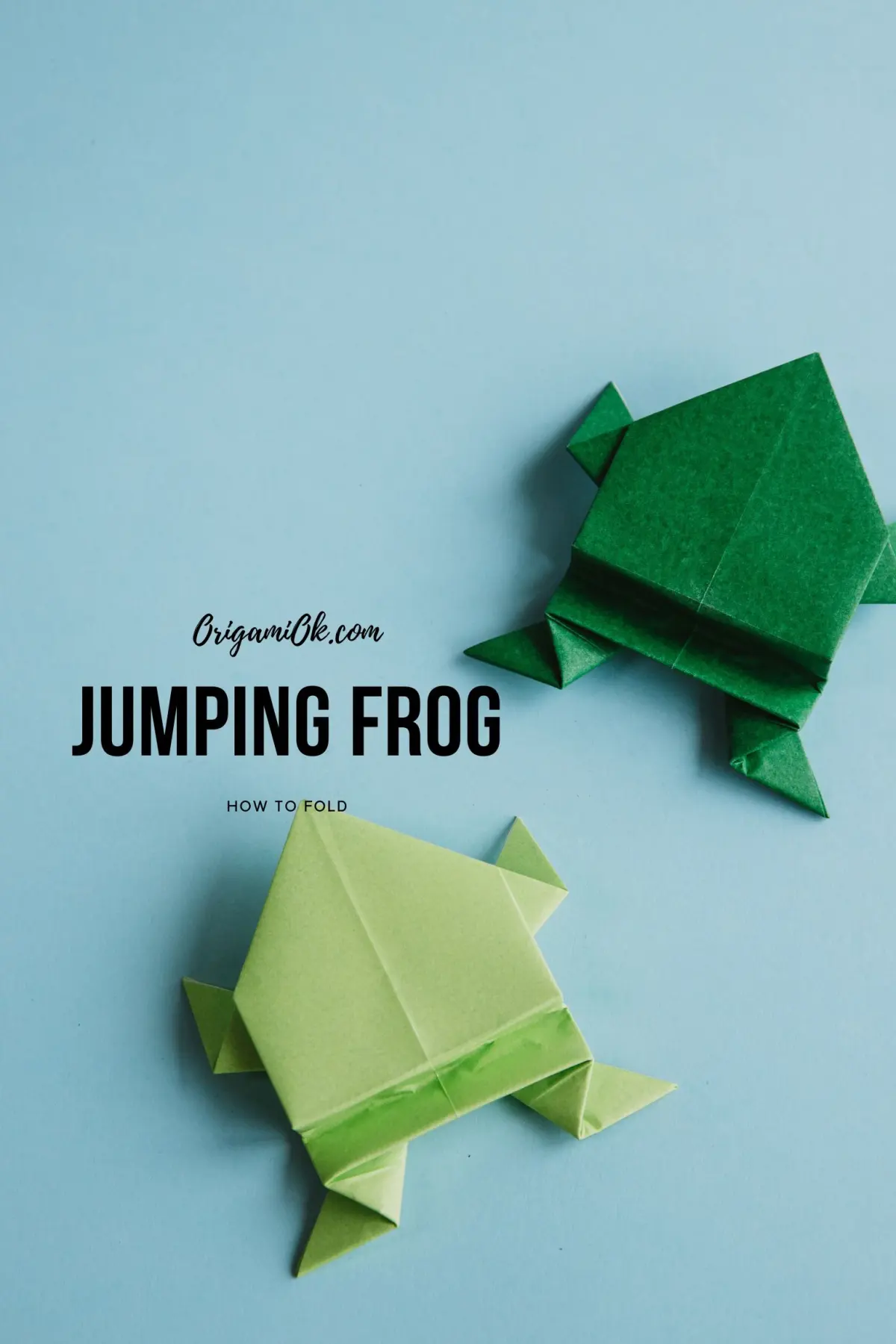
How to fold an origami jumping frog
To begin, place a square piece of paper on a flat surface with the colored side facing down. Fold the paper in half vertically and horizontally to establish central creases, then unfold it. Bring the top corners toward the center line to form a triangle at the top, which will eventually become the frog's head.
Next, fold the bottom section of the paper upward to meet the base of the triangle. Fold the side edges inward toward the center to create a narrow rectangular shape. These folds are essential for establishing the structural integrity of the frog's body. Ensure all creases are sharp and firm, as crisp lines are the foundation of successful origami.
- Start with a square sheet of paper.
- Fold the top corners down to create a triangle.
- Fold the bottom rectangle up to meet the triangle base.
- Fold the side edges toward the center to narrow the body.
- Create the legs by folding the bottom corners outward.
Best paper for origami beginners
For those new to the craft, standard origami paper is the ideal choice because it is thin, lightweight, and holds creases exceptionally well. Unlike heavy cardstock or construction paper, which can be difficult to fold precisely, origami paper is specifically engineered to resist tearing during complex maneuvers. Most packs come in a variety of colors, allowing you to choose a vibrant green to give your frog a realistic appearance.
If you do not have specialized paper, you can use thin printer paper or recycled gift wrap. Avoid using glossy or thick paper, as these materials tend to spring back or crack when you attempt to make sharp, multi-layered folds. If you must use larger sheets, cut them into a perfect square, as even a millimeter of excess paper can throw off the symmetry of the final model.
How long does it take to make a frog
A beginner can typically complete a jumping frog in about ten to fifteen minutes. The process involves roughly twelve to fifteen individual folding steps, depending on the specific variation of the model you are following. As you become more familiar with the sequence of folds, you will find that you can complete the process in under five minutes.
Practice is the primary factor in reducing your assembly time. Once you understand the geometry of the "preliminary base" and how the back legs function as a spring, you will spend less time checking instructions and more time refining your technique. Speed should never be the primary goal, however, as precision is what allows the frog to actually jump. A well-folded frog will consistently outperform a hastily constructed one.
Common mistakes when folding origami
One of the most frequent errors is failing to align the edges perfectly before pressing down a crease. Even a slight misalignment early in the process will compound, leading to a lopsided frog that cannot stand or jump properly. Always take a moment to ensure your corners meet exactly before running your fingernail along the fold line to set it.
Another common issue is using too much force, which can tear the paper at the corners. While you want sharp creases, you should apply pressure evenly rather than focusing on a single point. If you find the paper is becoming too thick to fold, you may be working with a sheet that is too heavy for the model. Remember that origami is a delicate process; if the paper begins to buckle, stop and re-align your layers before continuing.
- Misaligning edges during the initial folds.
- Using paper that is too thick or heavy.
- Applying uneven pressure that tears the corners.
- Skipping the "reversing" of folds, which hinders the spring mechanism.
- Forgetting to flatten the model periodically to keep it compact.
Why the origami frog jumps
The jumping action of an origami frog is a result of kinetic energy stored in the paper's tension. By folding the back section into a "Z" shape, you create a makeshift spring. When you press down on the rear of the frog, you are compressing the paper, storing potential energy that is released the moment you let go.
The efficiency of the jump depends entirely on the tension of the back legs. If the legs are folded too loosely, the frog will simply slide across the surface without gaining any height. Conversely, if the folds are too tight, the paper may lack the flexibility to bounce. Experimenting with the angle of the back leg folds will help you find the "sweet spot" that produces the most impressive, high-arcing jumps for your paper creation.
Key facts
- The traditional jumping origami frog is known in Japan as kaeru, which symbolizes good fortune and returning home.
- Use square paper; if you start with a rectangular sheet, fold one corner to the opposite side and trim the excess to create a perfect square.
- Crease your folds firmly using a fingernail or a bone folder to ensure the frog has enough tension to jump.
- The "spring" mechanism is created by folding the back legs into a Z-shape, which stores kinetic energy when pressed.
- Thinner paper, such as standard 80gsm printer paper, generally performs better for jumping than thick cardstock.
- Symmetry is vital; ensure your edges align perfectly during the initial folds to keep the frog from veering off course when it leaps.
The bottom line
Creating a jumping origami frog is a rewarding project that blends geometry with simple mechanics. By following the folding sequence precisely and focusing on sharp, symmetrical creases, you can transform a simple square of paper into a functional toy. Remember that the secret to the jump lies in the tension of the Z-folded back legs, so take your time to ensure those folds are firm and accurate.
People also ask
What is the best paper size for a beginner?
A 6-inch by 6-inch (15 cm) square is the ideal starting size. It is large enough to manipulate easily but small enough to maintain the structural integrity required for the jumping motion.
Why won't my frog jump?
The most common reason is that the back legs are not folded tightly enough or the paper is too heavy. Ensure the Z-fold on the rear is sharp and the paper is lightweight.
Can I use patterned paper to make the frog?
Yes, using origami paper with a pattern on one side and a solid color on the other creates a vibrant appearance. Place the colored side face down at the start to ensure the final frog shows the pattern.
How do I make the frog jump higher?
Press down on the very back edge of the frog with your finger and release quickly. A shorter, snappier release typically results in a more energetic jump than a slow push.
Is this model considered difficult to fold?
The jumping frog is classified as an intermediate-level model because it requires precise alignment of multiple layers. Beginners can master it with patience and careful attention to the crease lines.
Should I use glue to hold the frog together?
Traditional origami does not use glue or scissors. If you fold the model correctly, the tension of the paper will hold the frog in its shape without any adhesives.
This answer was created with the help of AI research tools and reference sources. Spotted an error? Let us know — we correct mistakes quickly. See our editorial policy.