How do you draw a watermelon?
Short answer
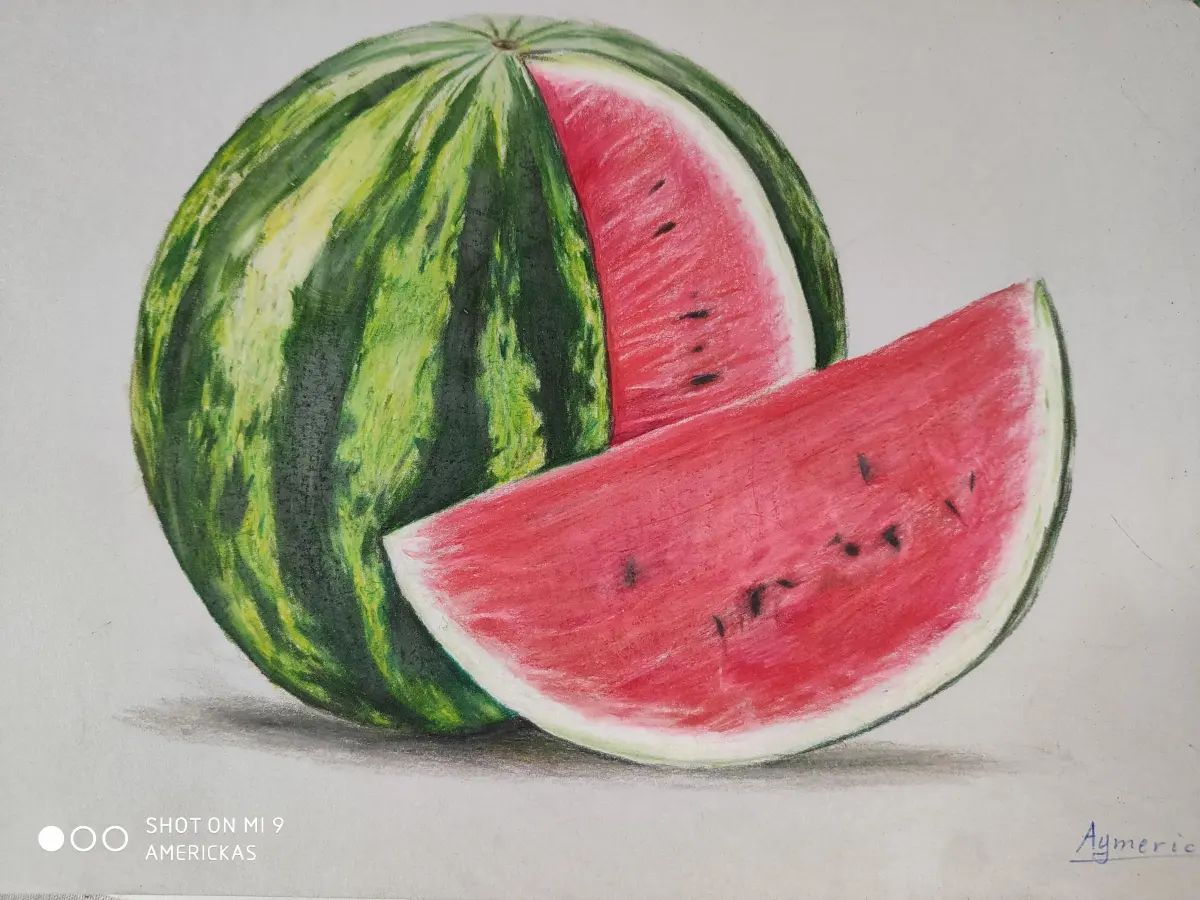
Drawing a watermelon involves sketching a basic semicircle or wedge shape, adding a thick rind, and detailing the interior with seeds and texture. By layering shades of green for the exterior and vibrant pink or red for the flesh, you can create a realistic representation of this iconic summer fruit.
On this page
How to draw a watermelon step by step
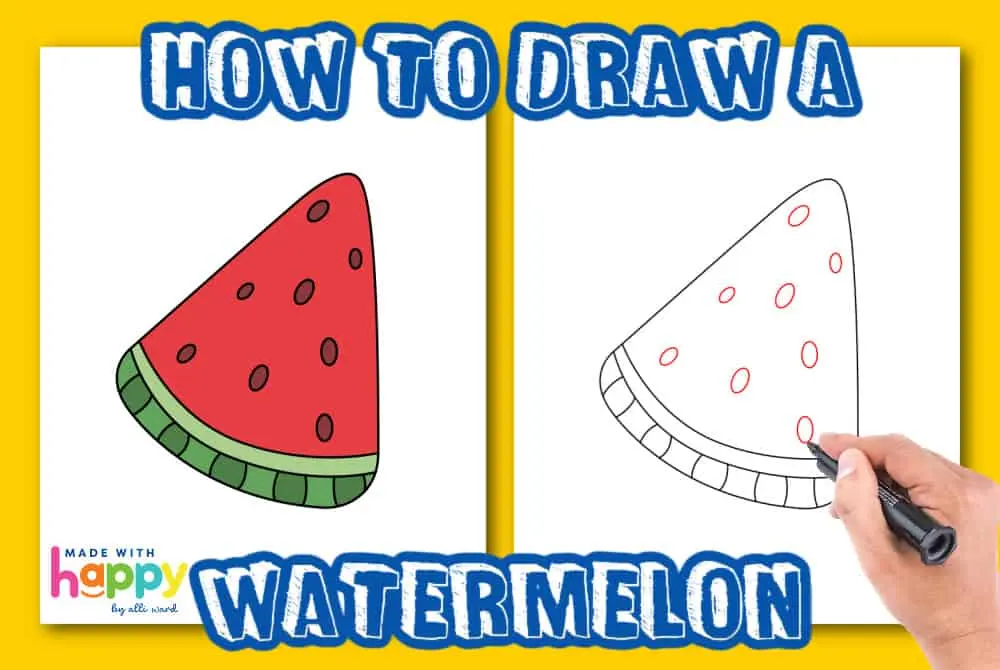
To draw a classic watermelon slice, start by sketching a large arch or a wide "U" shape to form the outer rind. Below this, draw a smaller, parallel curved line to create the thickness of the green skin. Connect the ends of these lines with a straight horizontal line to form the top of the slice. Once the base shape is established, you can refine the curves to make the fruit look more organic and less like a rigid geometric shape.
- Draw a large semicircle for the main body of the slice.
- Add a thin, curved strip along the bottom edge to represent the rind.
- Place small, teardrop-shaped marks across the surface to serve as seeds.
- Define the boundary between the light-colored pith and the red flesh.
- Apply shading to the rind to give it a rounded, three-dimensional appearance.
Best tools for drawing watermelons
For beginners, a set of graphite pencils ranging from 2H to 6B provides the necessary contrast to define shadows and highlights. Using a 2H pencil allows for light initial sketches that are easily erased, while a 6B pencil is ideal for darkening the seeds and the deep green stripes of the rind. If you prefer color, watercolor pencils are excellent because they mimic the juicy, translucent quality of watermelon flesh when blended with a damp brush.
For those focusing on digital or marker-based art, alcohol-based markers offer smooth, streak-free coverage that is perfect for the bright red interior. Pair these with a fine-liner pen to add sharp, clean edges to the seeds. Regardless of the medium, keep a kneaded eraser nearby to lift excess graphite and create subtle highlights on the fruit's surface, which helps suggest a shiny, wet texture.
How to add texture and detail
The secret to a realistic watermelon lies in the details of its rind and flesh. The exterior skin is rarely a solid, flat color; it usually features dark green mottled stripes or jagged patches. Use short, flicking motions with your pencil or brush to replicate these irregular patterns. When coloring the flesh, leave small white gaps near the seeds to suggest the natural moisture of the fruit, which adds depth and prevents the red from appearing too flat.
- Use stippling or small dots to add texture to the rind.
- Vary the size and orientation of the seeds to avoid a uniform, artificial look.
- Add a light, white highlight along the top edge of the rind to show where light hits the curved surface.
- Use a cross-hatching technique in the darkest areas to create a sense of weight.
Common mistakes when drawing watermelons
A frequent error is drawing the seeds in a perfectly straight, symmetrical line. In nature, watermelon seeds are scattered randomly throughout the flesh, often following the curve of the fruit but never in a rigid grid. Another common mistake is making the rind too thin or too thick. The rind should generally occupy about ten percent of the total height of the slice; if it is too wide, the watermelon will look distorted and unnatural.
Avoid using a single, flat shade of red for the entire interior. Real watermelon flesh has subtle gradients, ranging from a pale, almost white pink near the rind to a deep, saturated crimson in the center. By ignoring these color transitions, the drawing will lack the vibrancy that defines the fruit. Always check your proportions against a reference image to ensure the curve of the slice looks balanced and believable.
How to shade for a 3D effect
Shading is essential for transforming a flat drawing into a convincing object. Identify a single light source, such as the top-left corner, and ensure that all highlights and shadows remain consistent with that direction. The bottom of the watermelon slice should be the darkest area, as it is furthest from the light, while the top edge should receive the most illumination. Use a soft blending stump or a clean tissue to smooth out your pencil strokes for a seamless transition between light and shadow.
- Determine the light source location before beginning any shading.
- Apply a light base layer of color or graphite across the entire slice.
- Gradually build up darker tones on the side opposite the light source.
- Add a cast shadow beneath the slice to ground it on the surface.
- Use a white gel pen or eraser to add sharp highlights on the rind to simulate a waxy, wet finish.
By following these techniques, you will successfully capture the essence of a watermelon on paper.
Key facts
- A watermelon is essentially a large, modified berry known as a pepo that features a thick, hard rind.
- Start your drawing by sketching a simple semi-circle or a wedge shape to establish the basic geometry.
- Use a dark green for the rind and a lighter, mottled green for the stripes to create a realistic texture.
- Watermelon flesh is vibrant red or pink, which provides a high-contrast visual against the dark green exterior.
- Black or dark brown teardrop shapes effectively represent the seeds scattered throughout the red flesh.
- Avoid using perfectly straight lines for the rind; natural watermelons have slight irregularities and organic curves.
The bottom line
Drawing a watermelon is an excellent exercise in observing organic shapes and color contrast. By starting with a simple geometric foundation—either a wedge or a round cross-section—you can build complexity through layering textures and highlights. Focus on the transition between the dark rind, the pale mesocarp, and the vibrant red flesh to achieve a realistic result that captures the refreshing essence of this iconic fruit.
People also ask
Should I use colored pencils or markers to draw a watermelon?
Colored pencils are ideal for layering and blending the subtle gradients of green on the rind. Markers provide bold, saturated colors that work well for the bright red interior but offer less control for blending.
How do I make the watermelon look three-dimensional?
Add a soft shadow beneath the fruit and use a slightly lighter shade on one side to mimic a highlight. This creates the illusion of volume and prevents the drawing from appearing flat on the page.
What is the best way to draw the texture of the rind?
Use short, jagged brushstrokes or pencil marks to create the characteristic stripes. Vary the pressure of your hand to ensure the stripes look organic rather than uniform or mechanical.
How many seeds should I include in a slice?
There is no set number, but placing them in a scattered, uneven pattern makes the fruit look more natural. Avoid placing them in perfectly straight lines, as this often makes the drawing look artificial.
Can I draw a watermelon without seeds?
Yes, seedless varieties are common in modern agriculture and are frequently depicted in art. Simply omit the teardrop shapes and focus on the texture of the red pulp instead.
How do I draw the white layer between the rind and the red flesh?
Leave a thin, blank strip of paper between the green rind and the red fruit. This represents the pale, firm layer of the watermelon known as the mesocarp.
This answer was created with the help of AI research tools and reference sources. Spotted an error? Let us know — we correct mistakes quickly. See our editorial policy.