What is Claude Monet known for?
Short answer
Claude Monet was a French painter and a founder of Impressionism, a 19th-century art movement characterized by capturing the fleeting effects of light and atmosphere. He is best known for his series paintings, such as the Haystacks and Water Lilies, which explore how changing light alters the appearance of a single subject.
On this page
Why is Claude Monet famous?
Claude Monet is celebrated as the central figure of Impressionism, a movement that revolutionized Western art by rejecting the rigid standards of the French Academy. Instead of focusing on historical or mythological subjects, Monet prioritized the immediate sensory experience of a scene. He utilized rapid, broken brushstrokes and a vibrant palette to capture the essence of a moment rather than its precise photographic detail. His approach fundamentally changed how artists perceived color and shadow, suggesting that shadows are not merely black or gray, but composed of reflected colors from the surrounding environment.
His influence stems from his relentless experimentation with light. By painting the same subject at different hours of the day or during different seasons, he proved that reality is subjective and constantly shifting. This dedication to "en plein air" (outdoor) painting allowed him to observe nature directly, leading to a style that prioritized atmosphere over form. His work remains a cornerstone of modern art history because it shifted the focus of painting from storytelling to the act of seeing.
What are Monet's most famous paintings?
Monet’s career was defined by his obsession with seriality. Rather than painting one-off landscapes, he often worked on multiple canvases simultaneously to document the subtle changes in light and weather. His most iconic works include:
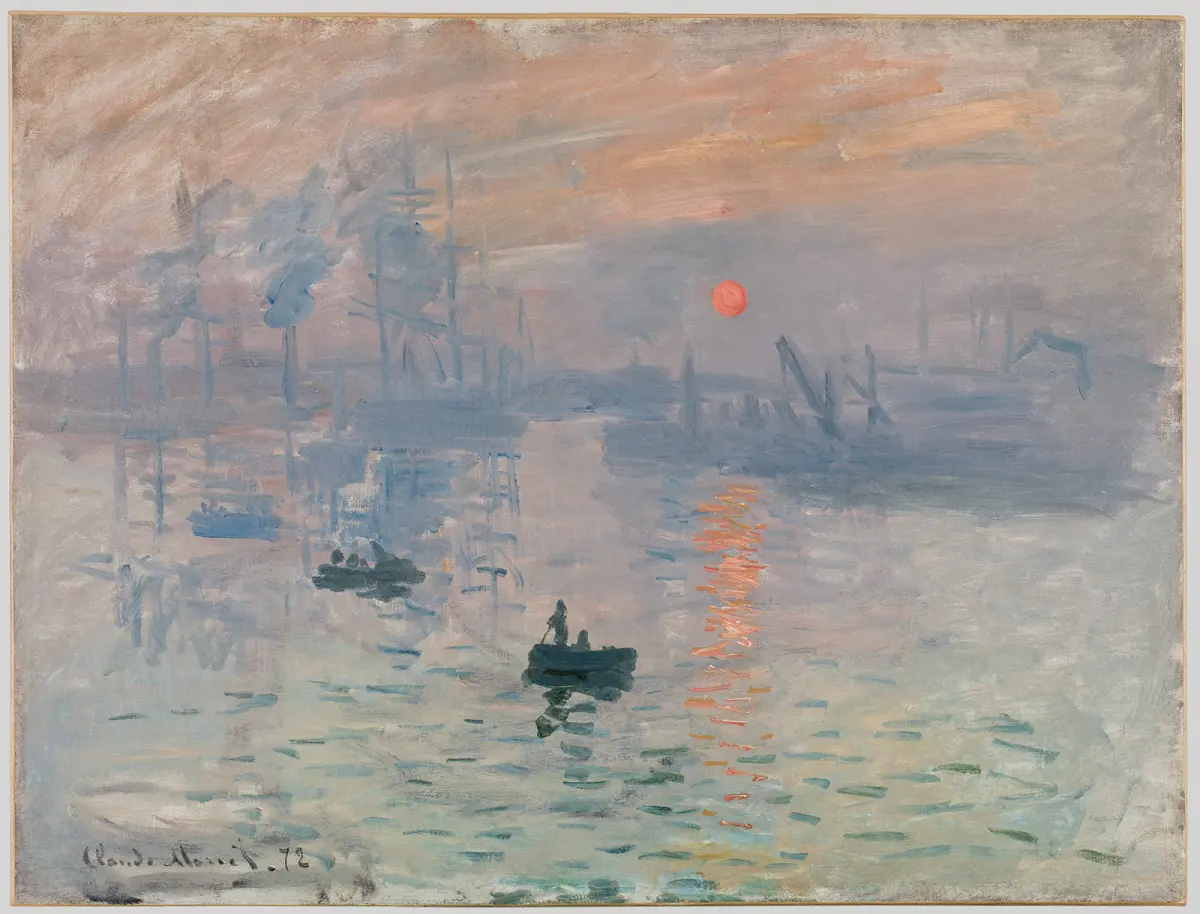
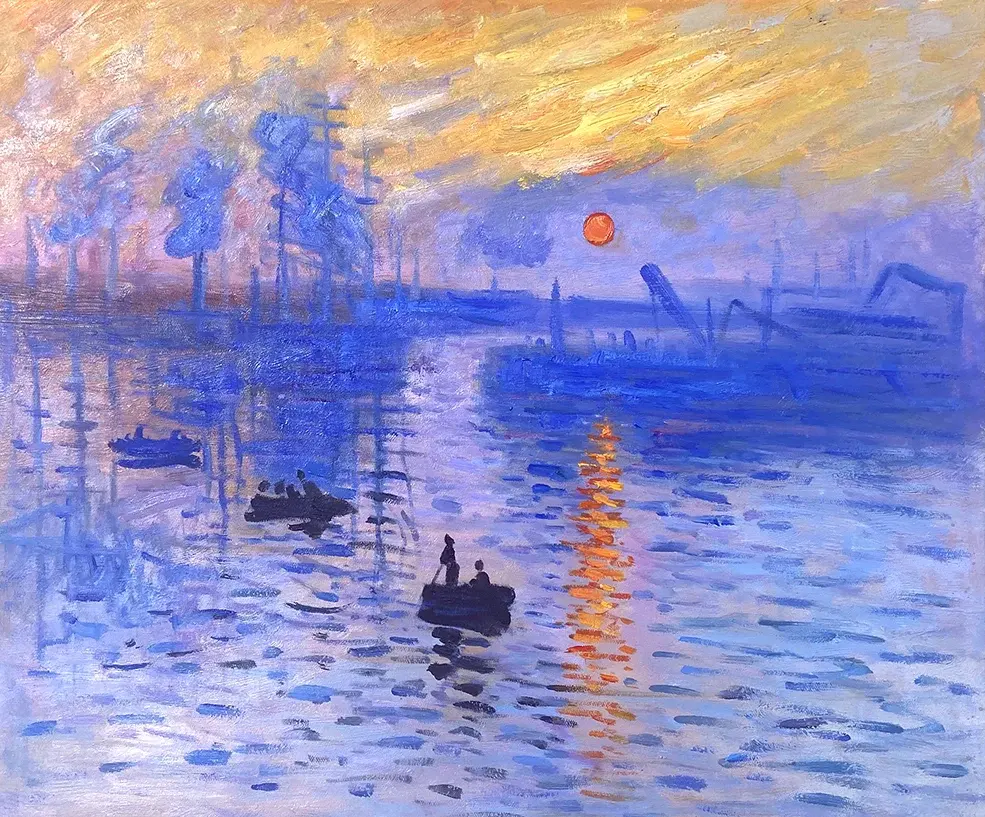
- Impression, Sunrise (1872): The painting that gave the Impressionist movement its name.
- Haystacks series (1890–1891): A collection of 25 canvases depicting wheat stacks in varying light.
- Rouen Cathedral series (1892–1894): Studies of the cathedral’s facade at different times of day.
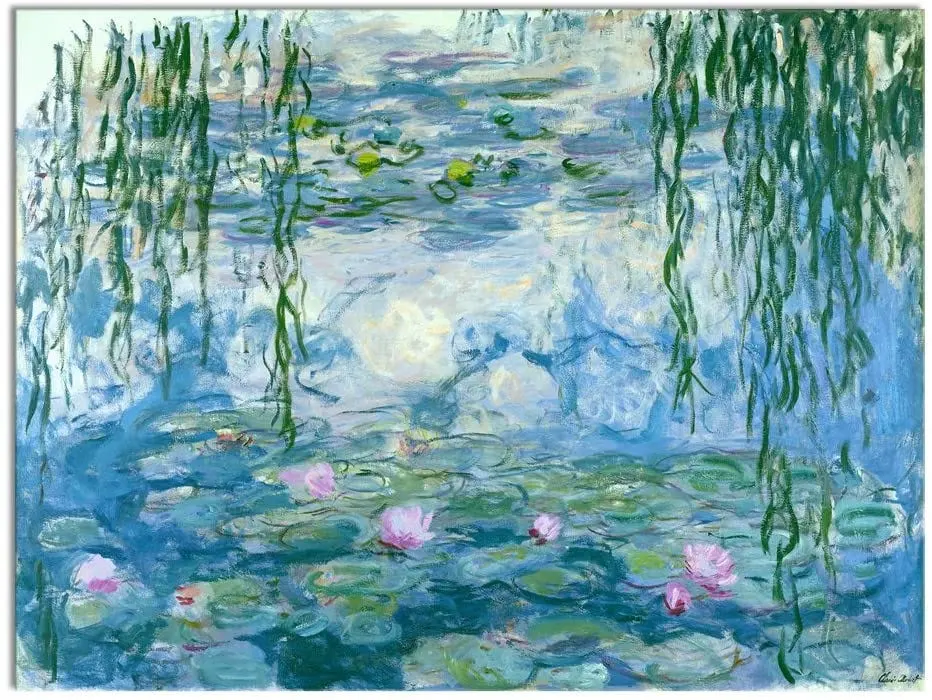
- Water Lilies (Nymphéas) (1896–1926): A massive series of approximately 250 oil paintings featuring his garden in Giverny.
The Water Lilies series represents the culmination of his career. During his final decades, Monet focused almost exclusively on his pond, moving toward abstraction. These works, some of which are mural-sized, dissolve the horizon line and focus entirely on the interplay of water, reflections, and floating foliage.
How to identify an Impressionist painting?
Identifying a Monet or a work by his contemporaries requires looking beyond the subject matter to the technique. Impressionist works are rarely smooth; they are textured and immediate. If you are viewing a painting and want to determine if it aligns with Monet’s style, look for these specific characteristics:
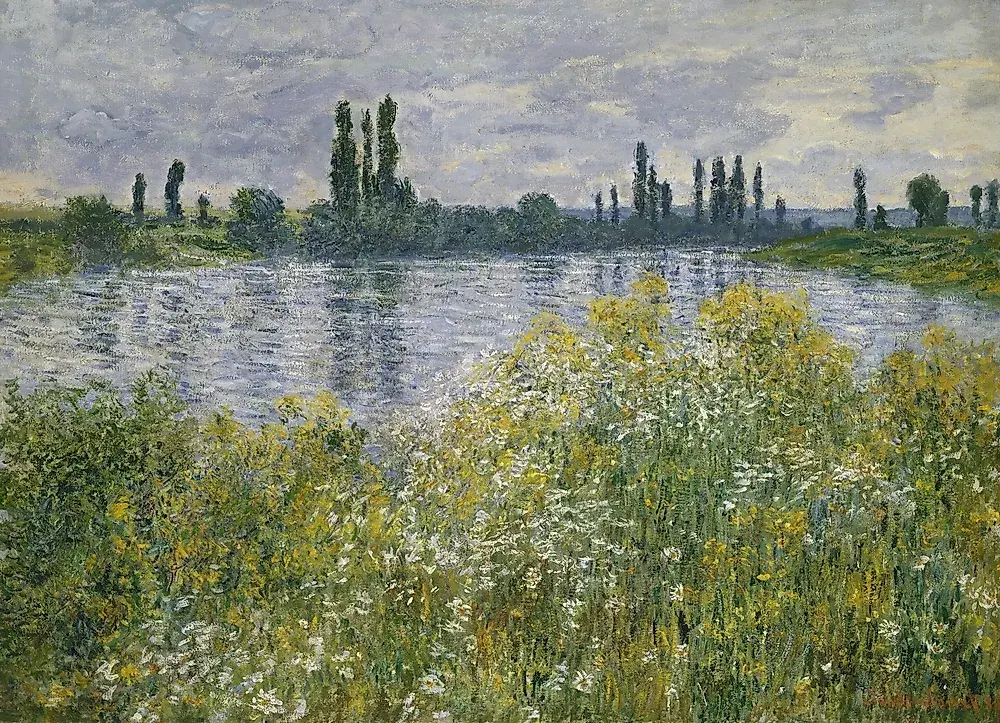
- Observe the brushwork: Look for short, thick, and visible strokes that suggest the movement of light rather than the texture of the object itself.
- Check the color palette: Impressionists avoided mixing colors on the palette. Instead, they applied pure, unblended colors side-by-side on the canvas, allowing the viewer's eye to blend them from a distance.
- Examine the shadows: In traditional art, shadows are dark. In Monet’s work, shadows are often painted in blues, purples, or violets to reflect the cool light of the sky.
- Look for the absence of outlines: You will rarely find hard, black lines defining shapes, as the artist preferred to let forms emerge from the interaction of color.
How to visit Monet’s garden in Giverny?
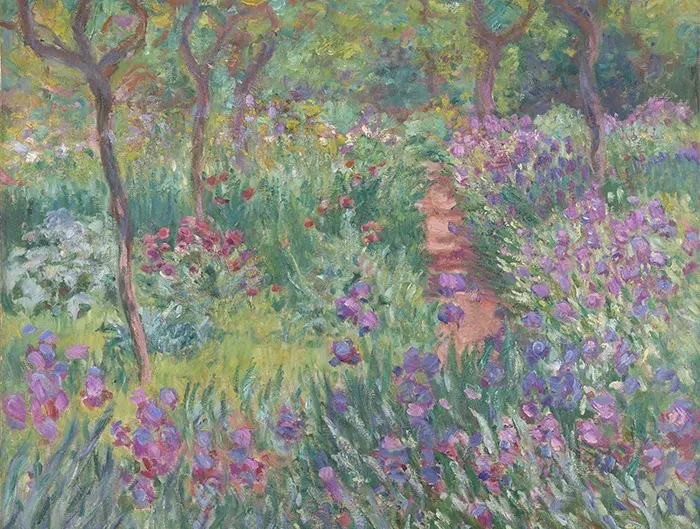
For those wishing to see the inspiration behind his greatest works, visiting Giverny is an essential experience. Monet lived there from 1883 until his death in 1926. The property includes his pink house, the Clos Normand flower garden, and the famous Japanese-inspired water garden. To make the most of your trip, follow these guidelines:
- Book tickets well in advance, as the site is extremely popular and often sells out during the spring and summer months.
- Arrive early in the morning to avoid the largest crowds, which typically peak between 11:00 AM and 3:00 PM.
- Wear comfortable walking shoes, as the paths around the lily pond are uneven and can be muddy.
- Bring a camera, but remember that the garden’s beauty is best appreciated by spending time sitting quietly near the pond to observe the light as Monet did.
The garden is most vibrant between April and October, with the wisteria blooming in May and the water lilies peaking in late June and July.
Common mistakes when studying Monet’s art
A frequent error when studying Monet is assuming his work was always universally praised. In reality, his early exhibitions were met with harsh criticism from the art establishment, who viewed his loose brushwork as "unfinished" or "sloppy." Understanding this context is vital; he was a radical innovator, not a traditional landscape painter. Another mistake is ignoring his later, more abstract works. Many viewers focus solely on his early, recognizable landscapes and overlook the profound transition he made toward the end of his life.
Finally, do not make the mistake of viewing his paintings only through digital screens. Because Monet used thick applications of paint, known as impasto, the physical texture of the canvas is a crucial element of the work. The way light hits the raised paint creates a depth that cannot be replicated in a photograph. To truly understand his genius, you must view the physical canvases in person to see how the colors vibrate and change as you move your perspective.
Key facts
- Claude Monet was a founder of French Impressionism, a movement named after his 1872 painting Impression, Sunrise.
- He famously painted the same subjects, such as haystacks or cathedrals, at different times of day to study changing light.
- His Water Lilies series consists of approximately 250 oil paintings created during the final 30 years of his life.
- Monet lived and worked at his home in Giverny, France, where he designed an elaborate water garden that served as his primary studio.
- To achieve his signature style, he used short, thick brushstrokes to capture the "essence" of a subject rather than fine details.
- When viewing his work, step back several feet; the colors blend optically in your eyes to create a cohesive, vibrant image.
The bottom line
Claude Monet fundamentally changed art history by shifting the focus from rigid realism to the subjective experience of light and color. By observing nature directly and painting in series, he captured the transient beauty of the world. His legacy endures through his innovative brushwork and his ability to transform ordinary gardens and landscapes into timeless, atmospheric masterpieces that continue to inspire viewers across the globe today.
People also ask
Why did Monet paint the same subject multiple times?
Monet wanted to document how shifting atmospheric conditions and light affected the appearance of a single object. By painting the Rouen Cathedral or haystacks repeatedly, he proved that color is not fixed but changes based on the time of day and weather.
What is the defining characteristic of Impressionist art?
Impressionism focuses on capturing a fleeting moment or a sensory "impression" rather than a precise, realistic representation. Artists typically use bright, unmixed colors and loose brushwork to prioritize the quality of light over sharp outlines.
Did Monet ever paint portraits?
While he is best known for landscapes, Monet painted many portraits, particularly of his wife Camille and his children. These early works often featured more traditional compositions before he fully committed to his signature outdoor, light-focused style.
Where can I see Monet’s paintings today?
Major collections are housed at the Musée d'Orsay in Paris, the Musée de l'Orangerie, and the Metropolitan Museum of Art in New York. The Musée de l'Orangerie is specifically famous for its oval rooms designed to display his massive Water Lilies murals.
How can I replicate Monet's technique at home?
Use a palette of vibrant colors and apply paint in quick, broken strokes without blending them fully on the canvas. Focus on the light hitting your subject rather than the specific details, and avoid using black paint to create shadows, opting for dark blues or purples instead.
What was the biggest mistake Monet made in his artistic process?
Monet often struggled with self-doubt and was known to destroy paintings he felt did not meet his standards. He famously slashed dozens of canvases in frustration to prevent them from being seen by the public, viewing his work as a constant, imperfect experiment.
This answer was created with the help of AI research tools and reference sources. Spotted an error? Let us know — we correct mistakes quickly. See our editorial policy.