Can AI art be copyrighted?
Short answer
Under current United States law, images created entirely by generative software without significant human intervention cannot be copyrighted. The U.S. Copyright Office maintains that copyright protection requires human authorship. While human-arranged prompts or edited outputs may receive limited protection, the raw machine-generated content remains in the public domain and ineligible for registration.
On this page
Can I copyright images made by software?
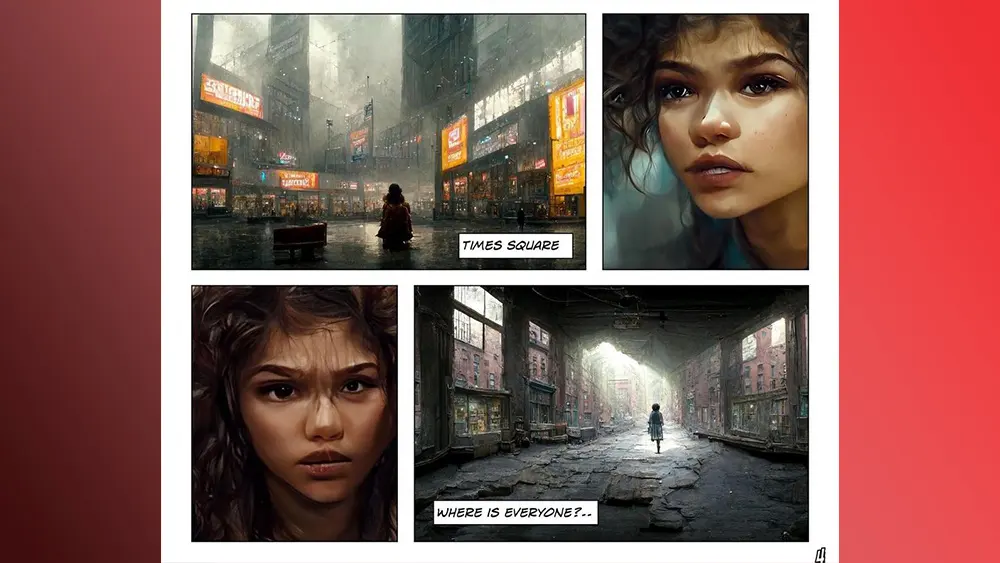
The U.S. Copyright Office has established a clear stance: copyright protection is reserved exclusively for works created by human beings. In several high-profile rulings, including the rejection of a copyright application for the graphic novel Zarya of the Dawn, the office determined that images generated solely through text prompts lack the "human authorship" necessary for protection. Because the software, rather than the user, determines the specific arrangement of pixels and colors, the law views the machine as the creator.
However, the law does not categorically reject all works involving technology. If a human can demonstrate that they exercised significant creative control over the final output, they may secure protection for those specific elements. This distinction is vital for artists who use digital tools as part of a broader creative process. If you are seeking to protect your work, you must be prepared to prove that your personal artistic choices—rather than the software’s autonomous generation—defined the final appearance of the image.
How to prove human authorship in digital art
To increase the likelihood of obtaining copyright protection, you must document the creative process behind your final image. The Copyright Office examines whether the human user exerted "creative control" over the traditional elements of authorship, such as composition, lighting, and color selection. Simply typing a prompt is generally considered insufficient, as it is viewed as giving instructions to a tool rather than performing the creative act itself.
Consider these strategies to establish your role as the primary author:
- Maintain a detailed log of your iterative process, including sketches, mood boards, and early drafts.
- Use software to heavily modify, paint over, or composite generated elements into a larger, original work.
- Keep records of how you adjusted parameters, layers, and filters to achieve a specific aesthetic goal.
- Disclose the use of generative tools in your application, as failing to do so may lead to the cancellation of your registration.
Common mistakes when applying for copyright
Many applicants mistakenly believe that the complexity of a prompt grants them ownership over the resulting image. A common error is submitting an application for an image that was generated with a single click and minimal subsequent editing. When the Copyright Office reviews these applications, they often issue requests for more information or outright denials, citing the lack of human creative input.
Another frequent mistake is failing to distinguish between the generated components and the human-authored components of a project. If you submit a work that contains both, you must explicitly exclude the machine-generated portions from your claim. Failing to provide this clarity can lead to legal complications, as you may be claiming ownership over material that is technically in the public domain. Always consult with an intellectual property attorney if you are unsure about what portions of your work are eligible for protection.
Why is AI art considered public domain?
The legal rationale for denying copyright to machine-generated content rests on the constitutional requirement that copyright exists to incentivize human creativity. Since machines do not possess consciousness or intent, they cannot be considered "authors" in the legal sense. If the law allowed machines to hold copyrights, it would fundamentally alter the balance of intellectual property rights, potentially flooding the system with millions of automated, non-human works that do not serve the public interest.
Furthermore, the lack of predictability in generative tools complicates the concept of authorship. Because the software often produces results that the user did not explicitly intend or foresee, the human cannot be said to have "fixed" the work in a tangible medium of expression through their own volition. This unpredictability creates a legal void where no human can claim to be the author of the specific, pixel-by-pixel arrangement of the final image.
What are the limits of copyright protection?
Even if you successfully register a work that incorporates digital tools, your copyright protection will be narrow. It will only cover the specific, human-authored elements you added, not the underlying generative output. This means that if someone else uses the same software to generate a similar image, you likely cannot sue them for infringement, as they did not copy your specific human contributions.
- Assess whether your contribution involves significant manual editing or composition.
- Clearly separate your original, human-made additions from the base generated image.
- Apply for copyright registration specifically for the human-authored layers or modifications.
- Monitor how your work is used, keeping in mind that the base image remains freely available for others to use.
Understanding these boundaries is essential for any professional creator today. By focusing on your unique artistic input and documenting your workflow, you can secure the maximum possible protection for your creative efforts while navigating the evolving landscape of intellectual property law.
Key facts
- The U.S. Copyright Office maintains that works created entirely by machines without human creative input cannot be copyrighted.
- To qualify for protection, a human must demonstrate "significant creative control" over the final output, such as through complex arrangement or editing.
- Simply providing a text prompt to a generator is generally considered insufficient to establish human authorship under current legal standards.
- In 2023, the Copyright Office canceled a registration for a comic book, Zarya of the Dawn, because the images were generated by software rather than human hands.
- Courts currently treat generated images as public domain unless the human user can prove they exercised substantial artistic influence over the specific visual elements.
- Always keep documentation of your creative process, including sketches, iterative edits, and manual adjustments, to support future claims of authorship.
The bottom line
Current legal standards require significant human creative input for a work to receive copyright protection. Because machines generate images based on prompts, the output is typically ineligible for federal registration. To maximize your chances of securing rights, you must treat generated content as a starting point, applying substantial manual edits and original creative choices that demonstrate your unique artistic control over the final visual product.
People also ask
Can I copyright a logo I made using a generator?
Generally, no. Because the machine generates the core visual elements, the Copyright Office views the output as lacking the necessary human authorship required for protection.
Does editing a generated image make it copyrightable?
It depends on the extent of your changes. If you significantly modify, arrange, or supplement the image with your own original creative work, the new elements may be eligible for protection.
Who owns the copyright to an image if the platform's terms say I do?
Terms of service are private contracts between you and the company, but they do not override federal copyright law regarding authorship. You may own the rights by contract, but you cannot necessarily enforce them against third parties in court.
Can I use generated images for commercial projects?
You can usually use them, but you may not be able to stop others from using the exact same images. Since they are often considered public domain, you lack the legal standing to sue for infringement.
Are there any countries where generated art is definitely copyrightable?
Some jurisdictions have more flexible interpretations of "author," but most major legal systems currently mirror the U.S. requirement for human creative intent. Laws are evolving rapidly, so check local regulations before relying on protection.
What is the biggest mistake people make regarding copyright and these tools?
The most common error is assuming that paying a subscription fee grants you full legal ownership of the output. Ownership of the service does not equate to ownership of the intellectual property created by the software.
This answer was created with the help of AI research tools and reference sources. Spotted an error? Let us know — we correct mistakes quickly. See our editorial policy.