How do you paint a rainbow with acrylic paint?
Short answer
To paint a rainbow with acrylics, prepare your surface with white gesso and organize your palette with primary colors plus white. Use a fan brush or a flat brush to apply the colors in the sequence of red, orange, yellow, green, blue, indigo, and violet, blending the wet edges to create smooth transitions.
On this page
What supplies do you need to paint a rainbow?
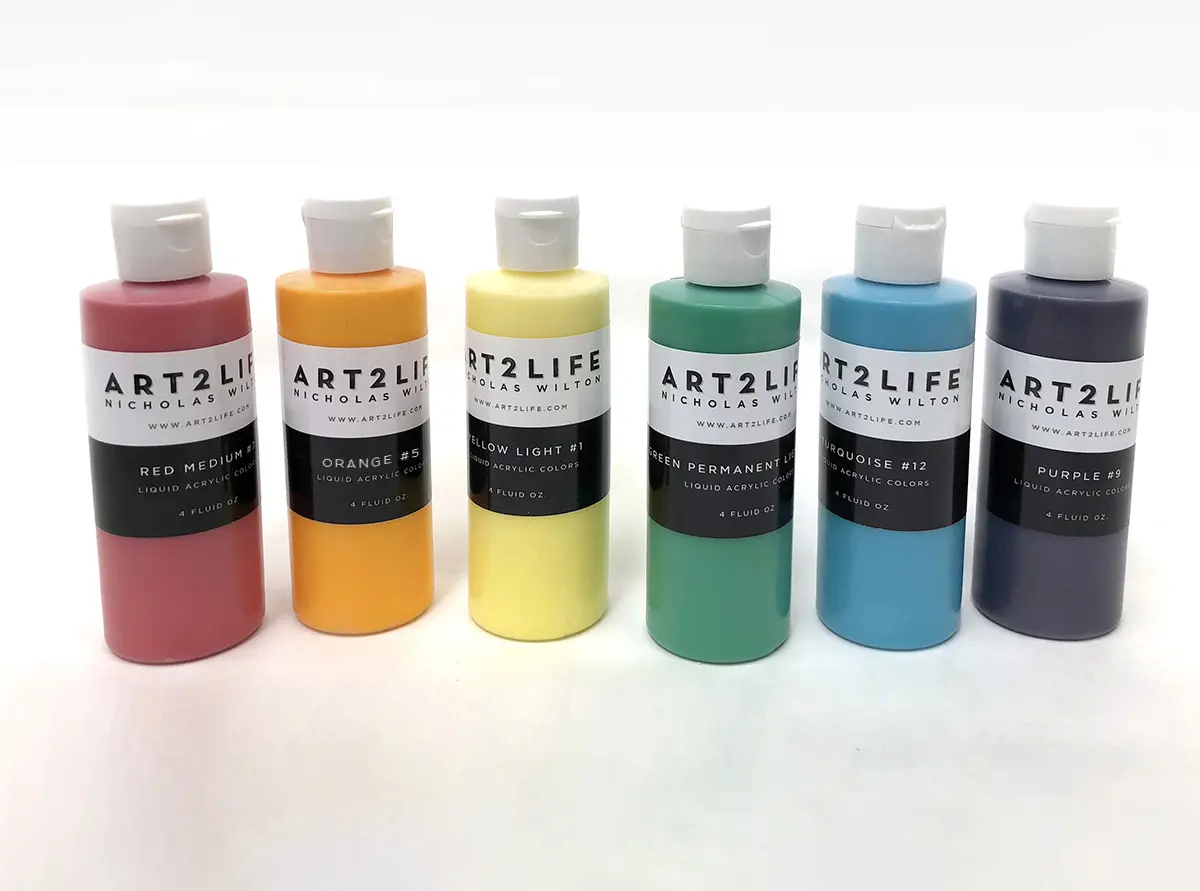
Creating a professional-looking rainbow requires high-quality acrylic paints that offer strong pigmentation and opacity. You should select a set that includes at least the three primary colors—cadmium red, cadmium yellow, and ultramarine blue—along with titanium white for lightening shades. While you can purchase pre-mixed secondary colors, mixing your own allows for better control over the vibrancy and hue of your rainbow.
Beyond paint, your selection of brushes is critical for achieving the characteristic arc of a rainbow. A medium-sized flat brush or a soft-bristle fan brush works best for laying down wide, consistent bands of color. You will also need a sturdy canvas or heavy-duty watercolor paper, a palette for mixing, and a container of water for rinsing brushes between color applications.
- Heavy-body acrylic paints for better texture and coverage.
- A set of synthetic brushes in various widths.
- A palette knife for efficient color mixing.
- A spray bottle filled with water to keep the paint workable.
- A piece of chalk or a light pencil for sketching the initial arc.
How do you mix colors for a rainbow?
Painting a realistic rainbow involves more than just using colors straight from the tube. You must create the secondary and tertiary colors by blending your primaries. Start by placing your primary colors on your palette, leaving ample space between them to prevent accidental muddying. Use your palette knife to combine small amounts of red and yellow to create a vibrant orange, and yellow and blue to form a bright, clean green.
For the transition colors like indigo and violet, mix blue with varying amounts of red. Adding a touch of white to your blue and red mixtures will help you achieve the soft, ethereal look often associated with rainbows. Always mix more paint than you think you will need, as matching a specific custom shade later can be difficult once the first layer begins to dry.
- Mix red and yellow to create a warm, saturated orange.
- Blend yellow and blue until you achieve a crisp, leaf-like green.
- Combine blue and red to create a deep, rich violet.
- Add a tiny amount of white to your violet to create a lighter indigo shade.
- Test each color on a scrap piece of paper before applying it to your main canvas.
How do you paint the rainbow arc?
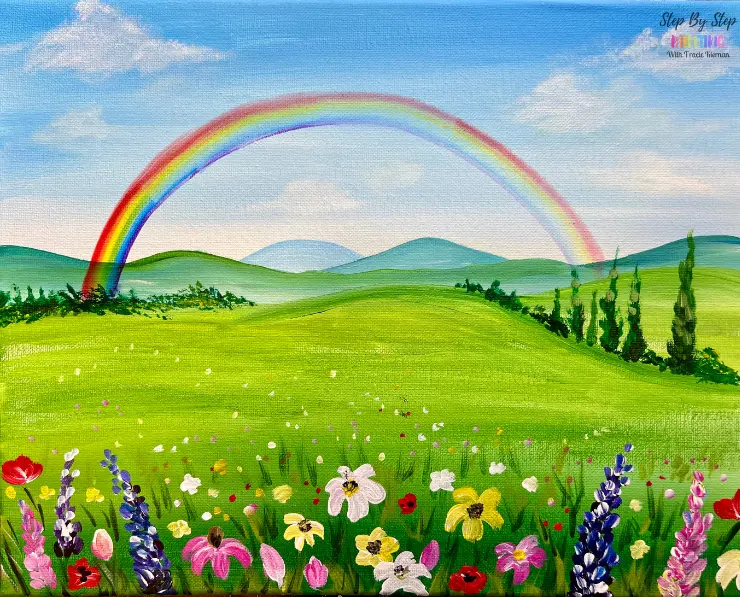
The structure of a rainbow is defined by its concentric, semi-circular bands. Before applying paint, use a piece of chalk to lightly sketch the arc on your canvas. Start from the inner curve and work outward, or begin with the outermost red band to establish the shape. Keep your brush strokes long and fluid, following the curve of your sketch to ensure the bands remain parallel and symmetrical.
When applying the paint, ensure your brush is sufficiently loaded so that the color covers the surface in a single pass. If the paint feels too tacky or drags on the canvas, lightly mist the area with water. This extends the drying time of the acrylics, allowing you to manipulate the edges of each color band before they set permanently.
- Keep your brush perpendicular to the canvas for clean, sharp edges.
- Overlap the edges of adjacent colors slightly while the paint is still wet.
- Use a clean, dry brush to gently buff the seam between colors for a smooth gradient.
- Maintain a consistent pressure throughout the stroke to keep the band width uniform.
How do you blend colors for a smooth transition?
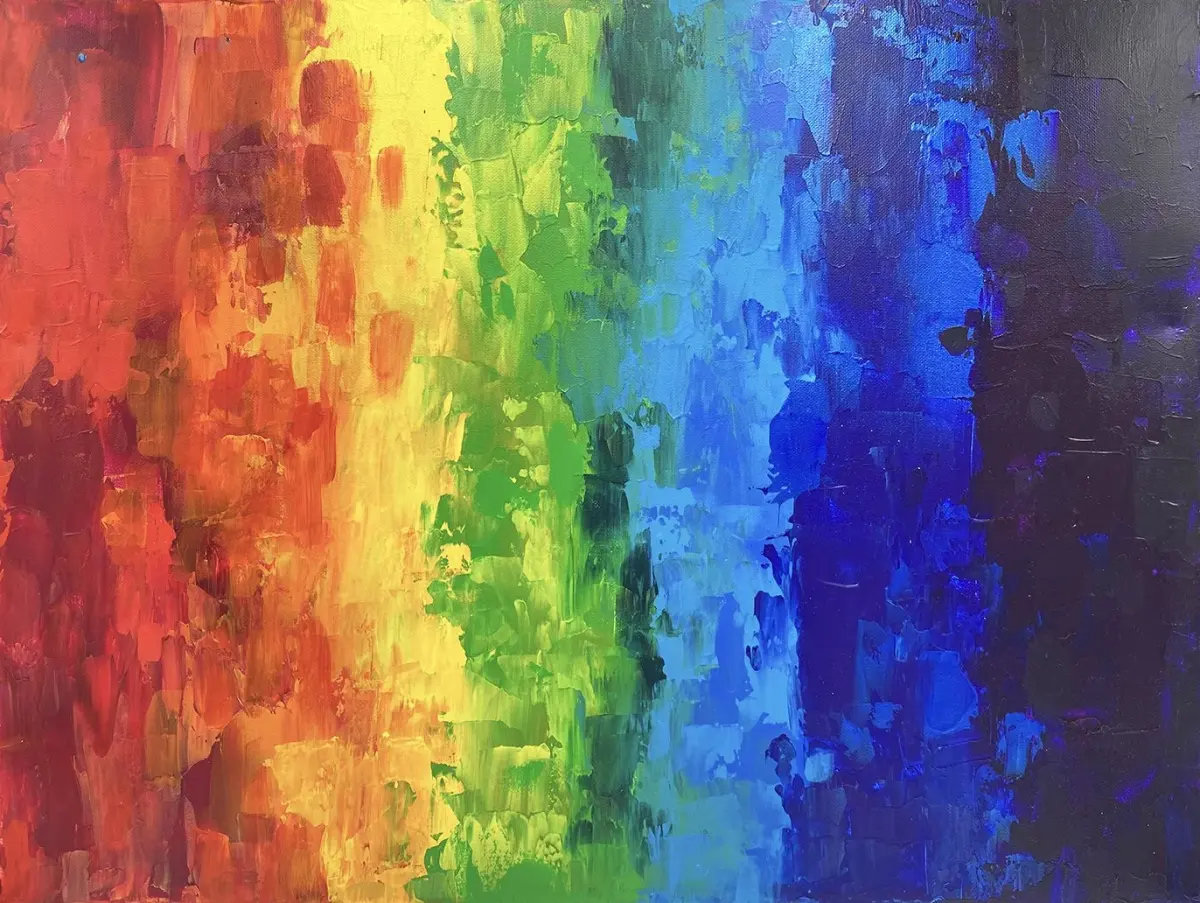
Achieving a seamless transition between the colors of the rainbow is the hallmark of a skilled painter. Because acrylics dry quickly, you must work in small sections or use a retarder medium to slow the drying process. Apply the first color, then immediately apply the next color band right next to it. Before either color dries, use a clean, damp brush to lightly sweep across the boundary where the two colors meet.
Avoid over-blending, which can result in a muddy, brownish appearance rather than a vibrant spectrum. If you find the colors are not blending well, add a small amount of glazing medium to your paint. This increases the transparency and flow, making it significantly easier to create soft, atmospheric transitions that mimic the natural diffusion of light through raindrops in the sky.
- Apply the red band, then immediately apply the orange band next to it.
- Use a soft, dry brush to lightly flick back and forth over the junction.
- Rinse your brush frequently to prevent the colors from becoming contaminated.
- If a section dries too quickly, apply a thin glaze of the original color to refresh the surface.
Common mistakes when painting a rainbow
One of the most frequent errors is failing to prepare the surface properly, which can lead to uneven paint absorption. Always apply a coat of white gesso to your canvas before you begin, as this creates a smooth, non-porous ground that allows the acrylics to glide effortlessly. Another common mistake is using too much water, which can break down the binder in the acrylic paint and make the colors look thin, chalky, or washed out.
Finally, many beginners struggle with color order. Remember the standard sequence: red is on the outside of the arc, followed by orange, yellow, green, blue, indigo, and violet on the inside. If you reverse this order or mix the sequence, the rainbow will look unnatural to the viewer. By taking your time to plan the layout and maintaining a clean palette throughout the process, you will achieve a professional result.
Key facts
- A standard rainbow consists of seven colors: red, orange, yellow, green, blue, indigo, and violet.
- Use a "wet-on-wet" technique to blend colors directly on the canvas while the acrylic paint is still moist.
- Acrylic paint dries very quickly, so work in small sections to prevent hard, uneven lines between color bands.
- Use a flat, medium-sized synthetic brush to apply smooth, consistent arcs across your surface.
- Mix a small amount of white paint into your colors to create lighter tints or increase opacity on dark backgrounds.
- Clean your brush thoroughly between each color to prevent muddying your palette and maintaining color vibrancy.
The bottom line
Creating an acrylic rainbow requires patience and careful color management due to the medium's rapid drying time. By preparing your surface with a white base, utilizing a compass for precise arcs, and blending colors while they remain wet, you can achieve a professional finish. Remember to clean your brushes frequently and use a retardant medium to ensure smooth transitions between the seven distinct spectral bands.
People also ask
How do I prevent acrylic paint from drying too fast while blending?
You can mix a retardant medium into your paint to extend its drying time significantly. Alternatively, lightly misting your canvas with water using a spray bottle keeps the surface workable for longer.
What is the best way to draw a perfect rainbow arc?
Use a piece of string tied to a thumbtack at the center of your canvas to act as a makeshift compass. Move the pencil in a steady arc to ensure each band maintains a consistent width and curve.
Should I paint the background before or after the rainbow?
It is generally easier to paint the background first and let it dry completely. This allows you to layer the rainbow on top without worrying about smearing the surrounding area.
How do I fix a mistake if the colors become muddy?
Allow the area to dry fully, then paint a layer of opaque white gesso or titanium white over the error. Once that layer is dry, you can repaint the rainbow colors on top.
Do I need to use expensive brushes for this project?
Synthetic brushes are ideal for acrylics because they are durable and handle the medium well. You do not need professional-grade tools, but avoid cheap brushes that shed bristles into your wet paint.
How can I make my rainbow colors look brighter?
Apply a base coat of white paint to the area where the rainbow will go before adding your colors. This white underlayer prevents the canvas texture from absorbing pigment and makes the hues appear more luminous.
This answer was created with the help of AI research tools and reference sources. Spotted an error? Let us know — we correct mistakes quickly. See our editorial policy.