What is the easiest way to draw a beetle?
Short answer
The easiest way to draw a beetle is to use a simplified geometric approach. By breaking the insect’s body into three distinct ovals representing the head, thorax, and abdomen, you establish a balanced foundation. Once these basic shapes are connected, you can easily refine the contours and add essential anatomical details.
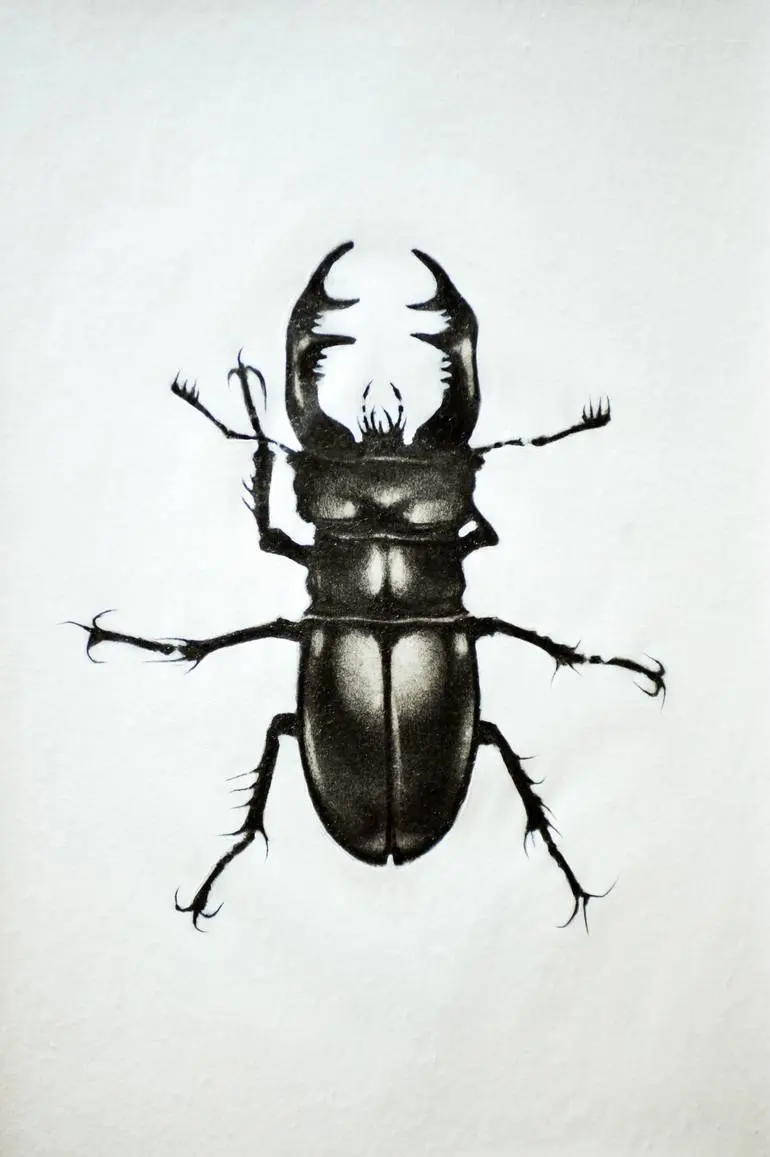
On this page
How to draw a beetle step by step
Drawing a beetle begins with understanding its segmented anatomy. Most beetles, such as the common stag beetle or ladybug, follow a consistent body plan that is highly symmetrical. By utilizing basic shapes, you can bypass the complexity of individual features and focus on the overall silhouette first.
- Draw a small circle for the head.
- Place a larger, slightly flattened oval directly below it for the thorax.
- Sketch a much larger, elongated oval at the base to represent the abdomen.
- Connect these shapes with smooth, flowing lines to create the outer shell.
- Add two thin lines on each side of the thorax to indicate where the legs will attach.
Following this sequence ensures that your proportions remain accurate throughout the process. Once the frame is set, you can easily add the elytra, which are the hard wing cases characteristic of the order Coleoptera.
Best drawing tools for beginners
For those new to sketching insects, starting with graphite pencils is highly recommended. A standard HB pencil is ideal for initial light sketching, while a 2B or 4B pencil allows for darker, more defined lines once the structure is finalized. Using a kneaded eraser is also beneficial because it lifts graphite without damaging the paper surface.
- Use smooth-finish drawing paper to allow for precise line work.
- Keep a sharpener nearby to maintain fine points for the beetle's antennae and legs.
- Use a blending stump or a soft tissue to smooth out the shading on the shell.
- Consider using a fine-liner pen to trace your final lines for a clean, professional look.
Avoid heavy pressure during the early stages of your drawing. Light, feathery strokes are much easier to adjust if you notice a misalignment in the beetle's body symmetry.
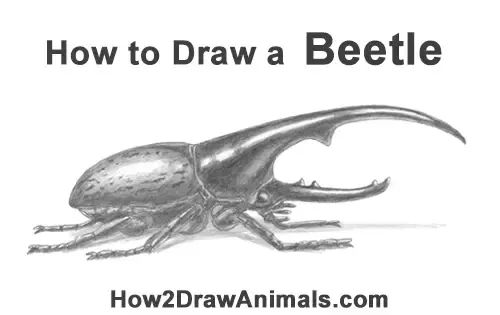
Why beetle symmetry is important
Beetles are renowned for their bilateral symmetry, meaning the left side of the insect is a mirror image of the right. When drawing, failing to maintain this balance can make the creature look distorted or unnatural. To ensure symmetry, draw a faint vertical center line down the middle of your page before you begin sketching your shapes.
If you are struggling to keep the legs and antennae aligned, use your center line as a reference point for measuring distances. For example, ensure that the leg joints on the left side are positioned at the same height as those on the right. This methodical approach helps you avoid common pitfalls like lopsided wing covers or uneven limb placement.
Practicing this technique on simple beetles like the scarab will help you internalize the concept of balance. Once you master the basic symmetrical frame, you can move on to more complex, asymmetrical poses.
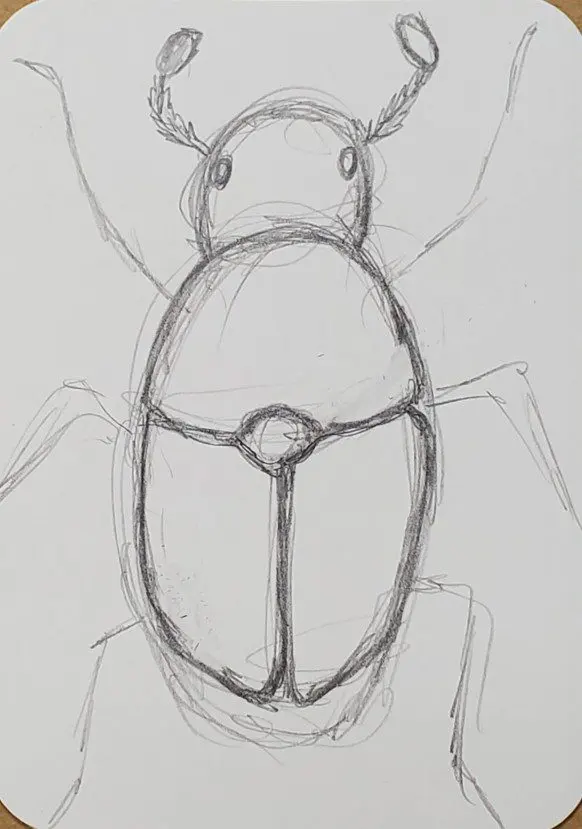
Common mistakes when drawing beetles
A frequent error beginners make is neglecting the "gap" between the thorax and the abdomen. Many artists draw the body as one solid, continuous shape, which strips the drawing of its biological accuracy. Remember that the thorax and abdomen are distinct sections; maintaining a clear separation between them is vital for a realistic appearance.
Another common mistake is drawing the legs too thin or failing to include the correct number of segments. Beetles have six legs, each typically consisting of several parts including the femur and tibia. If you draw the legs as simple, single-line sticks, the beetle will lose its structural integrity.
- Always ensure the legs originate from the thorax, not the abdomen.
- Avoid making the antennae too thick; they should be delicate and tapered.
- Do not forget the small triangular scutellum located between the wing cases.
- Watch out for "floating" legs that do not appear to touch the ground or surface.
How to add texture and detail
Once the structure is complete, adding texture brings your beetle to life. Beetles often have shiny, chitinous shells that reflect light. To achieve this look, leave small, irregular white patches on the back of the elytra to represent highlights. Use darker shading around the edges of the body to create a sense of volume and roundness.
You can also add fine details like hairs on the legs or microscopic pitting on the shell. Use quick, short strokes for hair and tiny dots for texture. Remember that the light source should dictate where your shadows fall. If the light comes from the top left, the shadows should be concentrated on the bottom right of the beetle's body. By layering your graphite and carefully managing your highlights, you can transform a simple geometric sketch into a detailed, realistic illustration of an insect.
Key facts
- Beetles belong to the order Coleoptera, characterized by two pairs of wings, with the front pair hardened into protective covers called elytra.
- Start your drawing by sketching three distinct body segments: the head, the thorax, and the abdomen.
- Use a symmetrical oval shape for the abdomen to ensure the beetle looks balanced and anatomically plausible.
- Always connect the legs to the thorax, not the abdomen, as this is a common anatomical error in amateur illustrations.
- Most beetles have six legs, each consisting of five distinct segments, which you can simplify as slightly bent lines for a basic sketch.
- Adding highlights to the elytra creates the appearance of a shiny, chitinous shell, which is a hallmark of beetle anatomy.
The bottom line
Drawing a beetle is most successful when you prioritize its three-part body structure and correct leg placement. By focusing on the symmetry of the elytra and the distinct division of the thorax, you can create a recognizable insect with minimal effort. Practice these basic geometric proportions first, then add fine details like antennae and shell texture to refine your work and achieve a professional, accurate result.
People also ask
How many segments should I draw on a beetle's leg?
While a real beetle leg has five segments, you can simplify this to three segments—the femur, tibia, and tarsus—to maintain a realistic look without overcomplicating your drawing.
Should I draw the antennae straight or curved?
Antennae vary greatly by species, but drawing them with a slight curve or a clubbed end adds a sense of movement and biological accuracy to your sketch.
Why do my beetle drawings look like spiders?
This usually happens because the legs are attached to the abdomen instead of the thorax. Ensure all six legs originate from the middle body segment to fix this issue.
How do I make the wings look realistic?
Draw a straight line down the center of the back to represent the division between the two elytra. This seam is essential for identifying the insect as a beetle.
What is the best pencil grade for sketching insects?
Use an HB pencil for light construction lines and a 2B or 4B pencil to add darker shading and texture to the shell, which adds depth.
Do all beetles have the same body shape?
No, beetles come in diverse forms, ranging from long, slender shapes to round, dome-like structures. Look at reference photos of ladybugs versus stag beetles to see these variations.
This answer was created with the help of AI research tools and reference sources. Spotted an error? Let us know — we correct mistakes quickly. See our editorial policy.