What is Indian miniature painting?
Short answer
Indian miniature painting is a traditional art form characterized by highly detailed, small-scale compositions produced on paper, palm leaves, or cloth. Flourishing between the 10th and 19th centuries, these works often depict religious narratives, courtly life, and nature. They are renowned for their vibrant mineral pigments, intricate brushwork, and sophisticated decorative borders.
On this page
What defines Indian miniature painting?
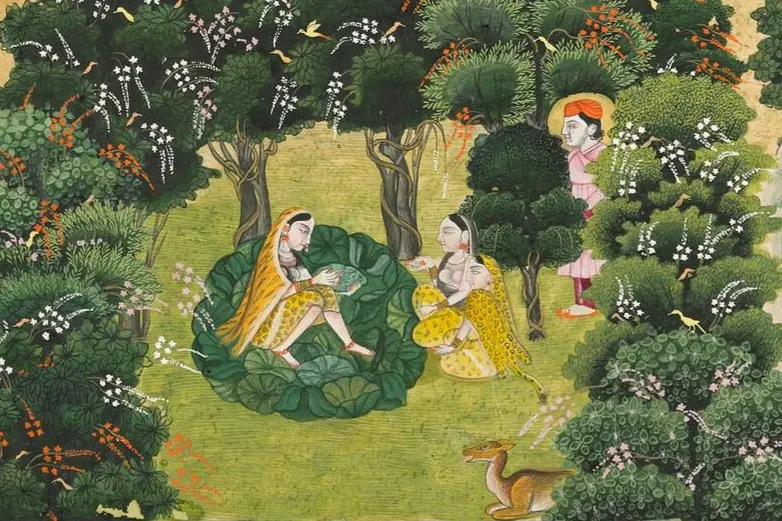
Indian miniature painting is defined by its meticulous attention to detail and intimate scale, often measuring no larger than a standard notebook page. Unlike Western easel paintings, these works were traditionally intended to be held in the hand or stored in albums, allowing for close-up viewing of delicate lines and complex patterns. The aesthetic emphasizes two-dimensional perspective, bold color palettes, and stylized figures that convey emotional depth through subtle gestures and symbolic poses.
The medium relies heavily on the quality of the support and the preparation of the surface. Artists typically used handmade paper, often burnished with a stone to create a smooth, ivory-like finish that prevents ink from bleeding. This preparation allows for the signature "hair-line" brushwork, where artists utilize brushes made from squirrel or mongoose hair to achieve extraordinary precision. The result is a visual language that balances narrative clarity with ornamental richness, serving as a hallmark of South Asian artistic heritage.
How are Indian miniature paintings made?
The creation of a miniature painting is a rigorous, multi-step process that requires patience and specialized materials. Artists traditionally prepare their own boards and pigments, ensuring that every element of the composition aligns with historical techniques.
- Prepare the surface by layering paper or cloth with a thin coat of white gesso.
- Burnish the surface using an agate stone until it achieves a high, reflective polish.
- Sketch the initial composition using light charcoal or red ochre lines.
- Apply base colors using natural mineral pigments, such as lapis lazuli for blue or malachite for green.
- Execute the fine line work and facial features using a single-hair brush.
- Apply gold leaf or liquid gold for decorative accents and jewelry.
This sequence ensures the longevity of the colors, which remain vibrant for centuries. The use of organic binders, such as gum arabic, allows the pigments to adhere firmly to the burnished surface without cracking or fading over time.
Which schools of Indian miniature painting exist?
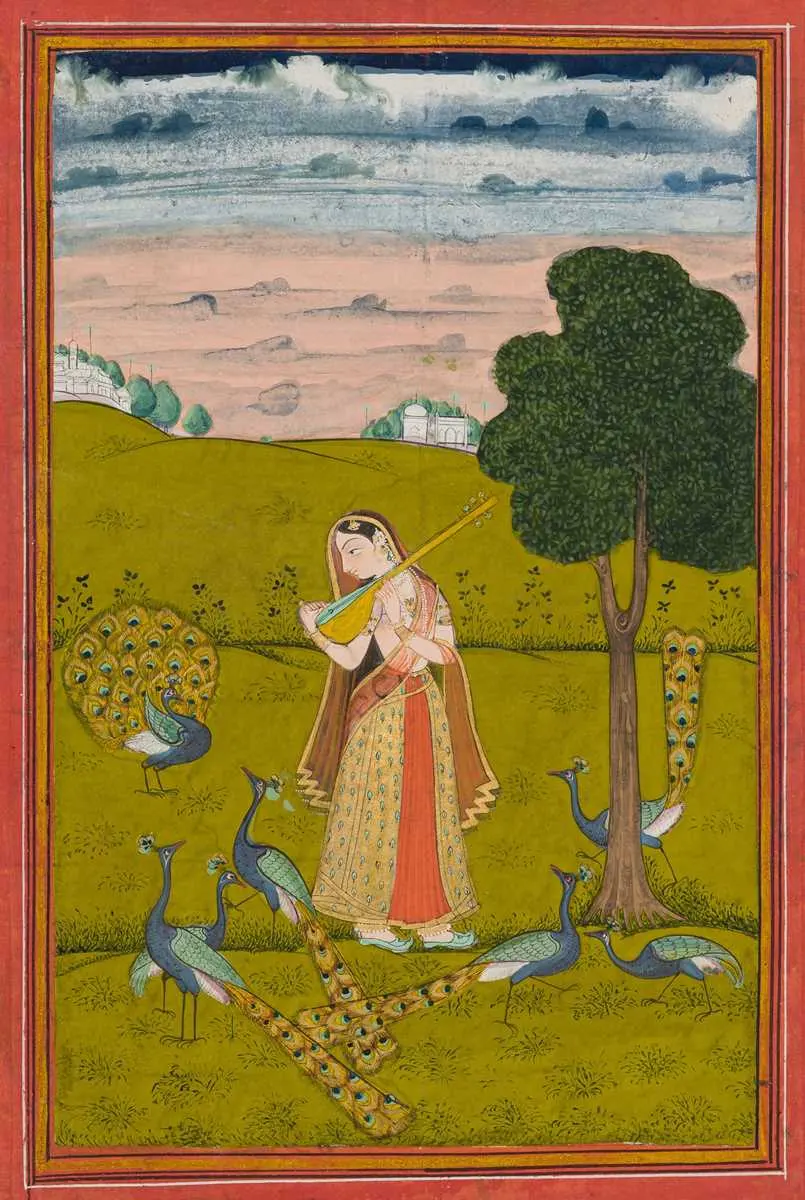
Indian miniature painting is categorized into several distinct regional and stylistic schools, each reflecting the political and cultural climate of its time. These schools evolved under the patronage of royal courts, ranging from the Islamic-influenced Mughal Empire to the diverse Hindu kingdoms of Rajasthan and the Punjab Hills.
- The Mughal School: Known for naturalism, portraiture, and historical documentation, heavily influenced by Persian aesthetics.
- The Rajasthani School: Characterized by bold, flat colors and themes centered on Hindu mythology, particularly the life of Krishna.
- The Pahari School: Originating in the Himalayan foothills, known for lyrical, romantic landscapes and soft, graceful lines.
- The Deccani School: Distinguished by its rich, jewel-toned palette and a unique blend of Persian, Turkish, and local Indian influences.
These schools were not static; they frequently exchanged techniques and motifs through trade and royal marriages. This cross-pollination created a fluid artistic landscape where regional identity remained strong while benefiting from broader stylistic innovations.
Common mistakes when identifying authentic miniatures
Collectors and enthusiasts often struggle to distinguish between genuine historical miniatures and modern reproductions. A common mistake is focusing solely on the subject matter while ignoring the physical construction of the piece. Authentic miniatures exhibit "age-appropriate" wear, such as slight oxidation of pigments or subtle yellowing of the paper edges. Conversely, modern fakes often use synthetic dyes that appear unnaturally bright or uniform under magnification.
Another frequent error is failing to examine the reverse side of the painting. Historical miniatures often feature calligraphic inscriptions, seal marks of royal libraries, or specific paper watermarks that provide provenance. If a painting appears too perfect, lacks the texture of hand-burnished paper, or shows signs of machine-cut edges, it is likely a modern souvenir. Always inspect the brushwork for hesitation; a master artist’s lines are fluid and confident, whereas a copyist’s lines often appear shaky or overly thick due to a lack of experience with traditional tools.
How to preserve Indian miniature paintings
Preserving these delicate works requires a controlled environment, as the natural pigments and organic binders are highly sensitive to external factors. The primary goal is to minimize exposure to light, humidity, and physical handling, which can cause the pigments to flake or the paper to warp over time.
- Store paintings in acid-free, archival-quality folders or boxes to prevent chemical degradation.
- Keep the environment at a stable temperature, ideally between 65 and 70 degrees Fahrenheit.
- Maintain relative humidity levels below 50 percent to prevent mold growth and paper expansion.
- Avoid direct sunlight or high-intensity artificial lighting, which causes rapid fading of mineral pigments.
- Use archival-grade glass or acrylic if framing, ensuring the artwork does not touch the surface directly.
By following these guidelines, you ensure that the integrity of the paint layer remains intact. Regular, gentle inspections are recommended to check for signs of insect damage or pigment loss, allowing for professional restoration before any significant deterioration occurs.
Key facts
- Miniature paintings are small-scale, highly detailed artworks historically created on paper, palm leaves, or cloth.
- The tradition flourished in India between the 10th and 19th centuries, spanning Buddhist, Jain, Mughal, and Rajput schools.
- Artists traditionally used natural pigments derived from minerals, vegetables, precious stones, and gold or silver leaf.
- A hallmark of the style is the "fine brush" technique, often utilizing brushes made from squirrel hair for extreme precision.
- Common themes include epic narratives from the Ramayana and Mahabharata, courtly life, and the romantic legends of Radha and Krishna.
- To avoid common mistakes, maintain a steady hand by resting your wrist on a bridge and always apply colors in thin, translucent layers rather than thick globs.
The bottom line
Indian miniature painting is a refined art form defined by its meticulous detail, vibrant use of natural pigments, and rich cultural storytelling. Spanning centuries of diverse regional styles, these small-scale masterpieces offer a window into the spiritual and historical narratives of the subcontinent. Whether depicting divine love or royal court life, the tradition remains a testament to the extraordinary precision and patience of Indian classical artists.
People also ask
What materials were traditionally used for the canvas?
Early Indian miniatures were painted on palm leaves, but paper became the standard medium after its introduction by the 14th century. Artists often prepared the surface with a thin layer of starch or glue to prevent the pigments from soaking into the fibers.
How did the Mughal influence change these paintings?
Mughal miniatures introduced a more realistic, secular style influenced by Persian art, focusing on portraits, historical events, and natural history. Unlike earlier religious manuscripts, Mughal works often emphasized three-dimensional depth and intricate architectural backgrounds.
Are these paintings done with modern watercolors?
While they resemble watercolors, traditional miniatures use opaque pigments bound with gum arabic or animal glue. This creates a matte, dense finish that allows for the fine, jewel-like details characteristic of the genre.
What is the significance of the borders in these paintings?
Borders were often as elaborate as the central image, featuring floral motifs, calligraphy, or intricate geometric patterns. They served to frame the narrative and protect the edges of the delicate paper from wear.
How can I identify a genuine antique miniature?
Genuine pieces often show signs of oxidation in the metallic paints and slight discoloration on the handmade paper. Modern reproductions frequently use synthetic dyes that lack the depth and subtle tonal shifts of natural mineral pigments.
Why are they called "miniatures" if they depict large scenes?
The term refers to the scale of the work rather than the subject matter, as these paintings were intended for private viewing in albums or manuscripts. They were designed to be held in the hand, allowing the viewer to inspect minute details up close.
This answer was created with the help of AI research tools and reference sources. Spotted an error? Let us know — we correct mistakes quickly. See our editorial policy.