Why is The Kiss by Klimt so famous?
Short answer
Gustav Klimt’s The Kiss is famous for its revolutionary fusion of eroticism, Byzantine-inspired ornamentation, and the lavish use of gold leaf. Painted between 1907 and 1908, it captures a universal moment of intimacy. Its iconic status stems from its decorative aesthetic, emotional accessibility, and its role as the pinnacle of Art Nouveau.
On this page
Why is The Kiss so famous?
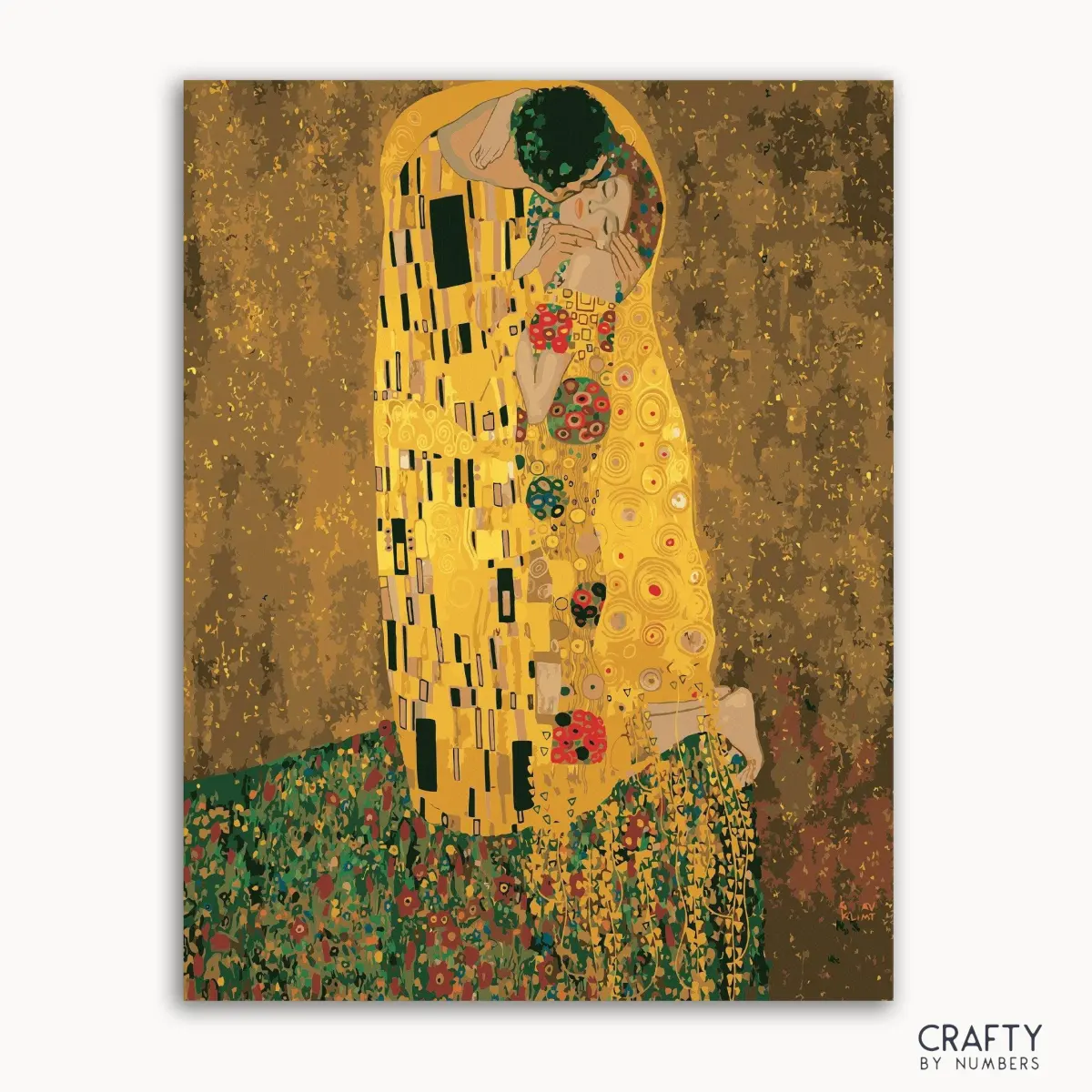
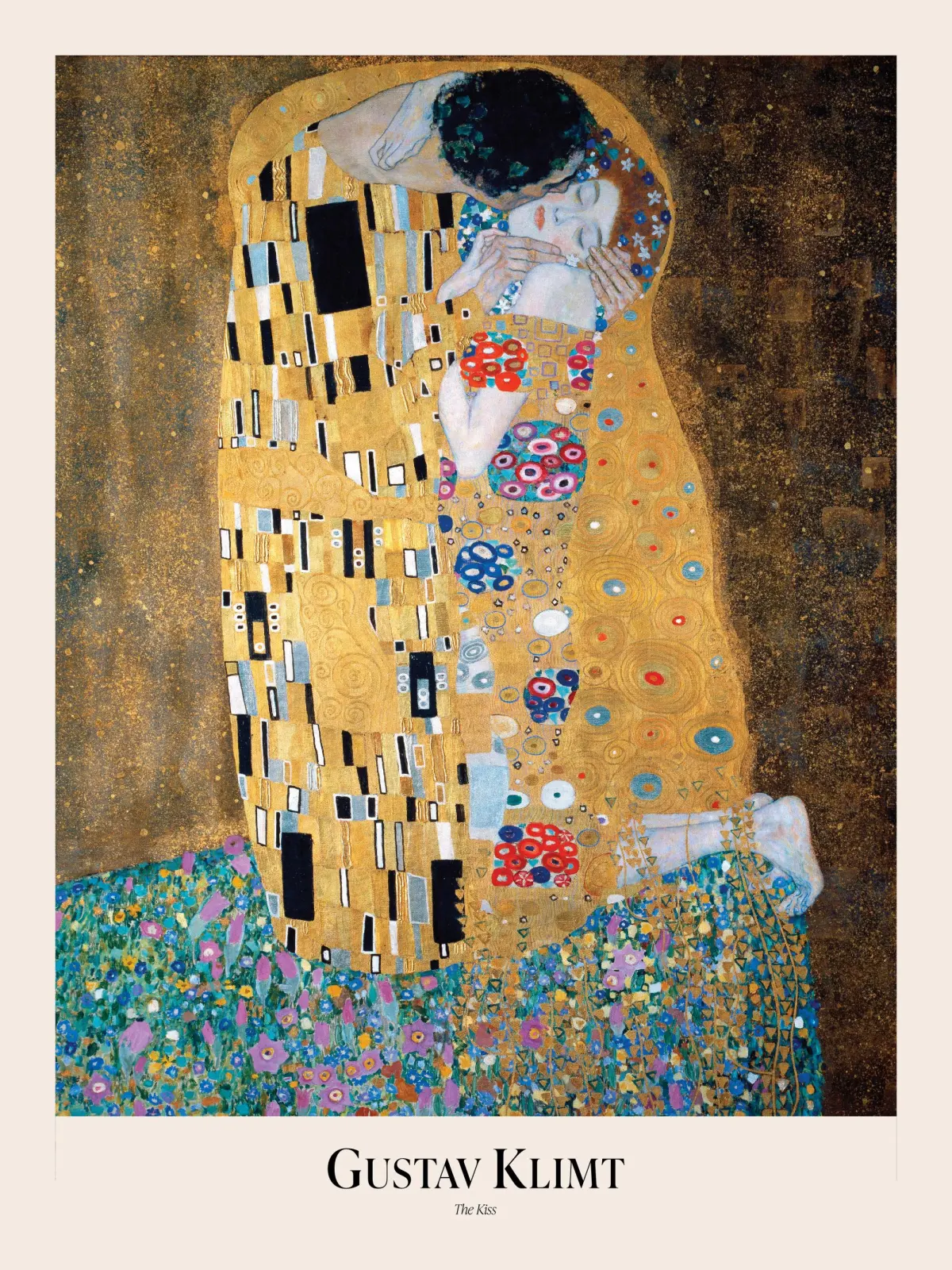
The fame of The Kiss rests on its unique visual language, which bridged the gap between traditional academic painting and modern abstraction. Klimt, a central figure of the Vienna Secession, broke away from conservative artistic norms to create a work that felt both ancient and radically new. By enveloping the lovers in a shimmering, gold-leaf cocoon, he transformed a private embrace into a timeless, almost religious icon of human connection.
This painting remains one of the most recognizable images in Western art because it balances complex symbolism with a simple, relatable theme. While the figures are grounded in a realistic style, their environment is entirely flattened and decorative. This contrast draws the viewer’s eye, making the figures appear to float in a dreamlike space. Its enduring popularity is also bolstered by its frequent reproduction, which has cemented it as a global symbol of romantic love.
What are the key features of the painting?
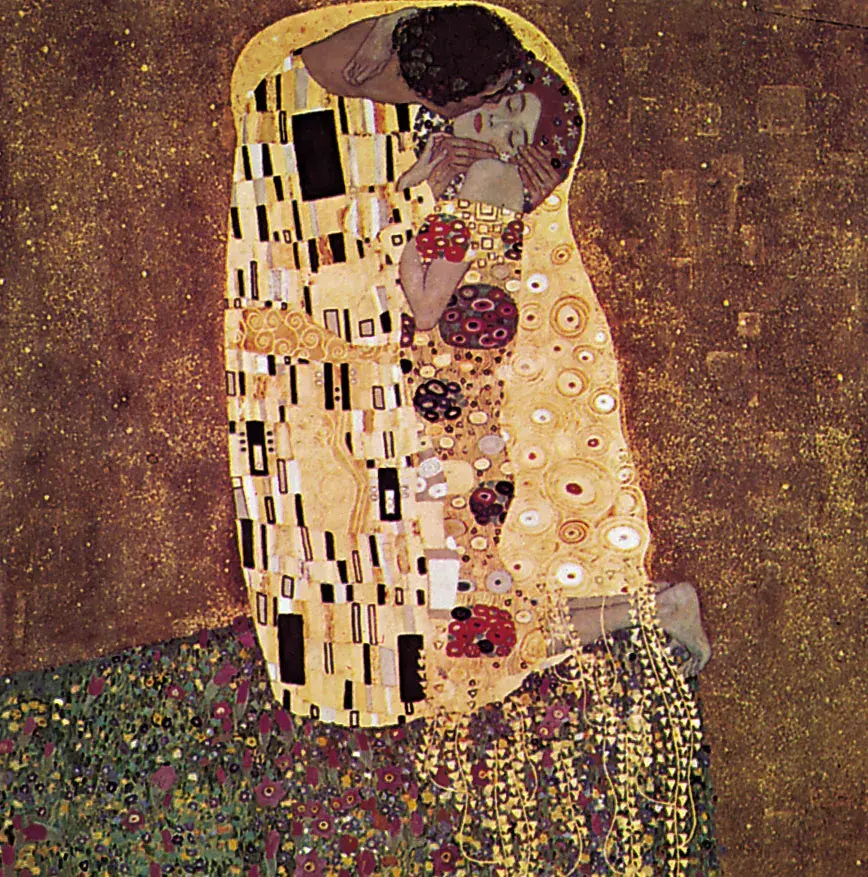
The painting is defined by its stark contrast between the naturalistic depiction of the lovers and the geometric, stylized patterns of their garments. Klimt utilized a variety of techniques to create this texture, including the application of gold and silver leaf, which gives the work its signature luminous quality. This technique was inspired by the Byzantine mosaics he observed in Ravenna, Italy.
The composition follows a clear, symbolic structure that guides the viewer’s focus:
- The male figure is adorned with rectangular, masculine shapes in black, white, and grey.
- The female figure is decorated with soft, floral, and circular patterns in vibrant colors.
- The lovers are positioned on a precipice, suggesting a fragile balance between earthly passion and spiritual transcendence.
- The gold background acts as a halo, isolating the couple from the rest of the world.
How can you analyze the symbolism?
To understand the depth of the painting, one must look beyond the surface beauty of the gold. Many art historians argue that the work represents the union of opposites, symbolized by the distinct shapes on the robes of the man and woman. The man represents the active, rigid force, while the woman represents the receptive, organic force. Together, they form a unified whole, suggesting that love is the ultimate synthesis of humanity.
When analyzing the painting, consider these elements:
- The posture: The man holds the woman’s head with a firm, protective grip, while she leans into him with total surrender.
- The setting: The meadow beneath their feet is filled with flowers, grounding the ethereal figures in nature.
- The gaze: The woman’s eyes are closed, emphasizing her internal experience of the moment rather than an external performance.
- The frame: The lack of a clear horizon line creates an infinite, private universe for the couple.
What are common mistakes when viewing the painting?
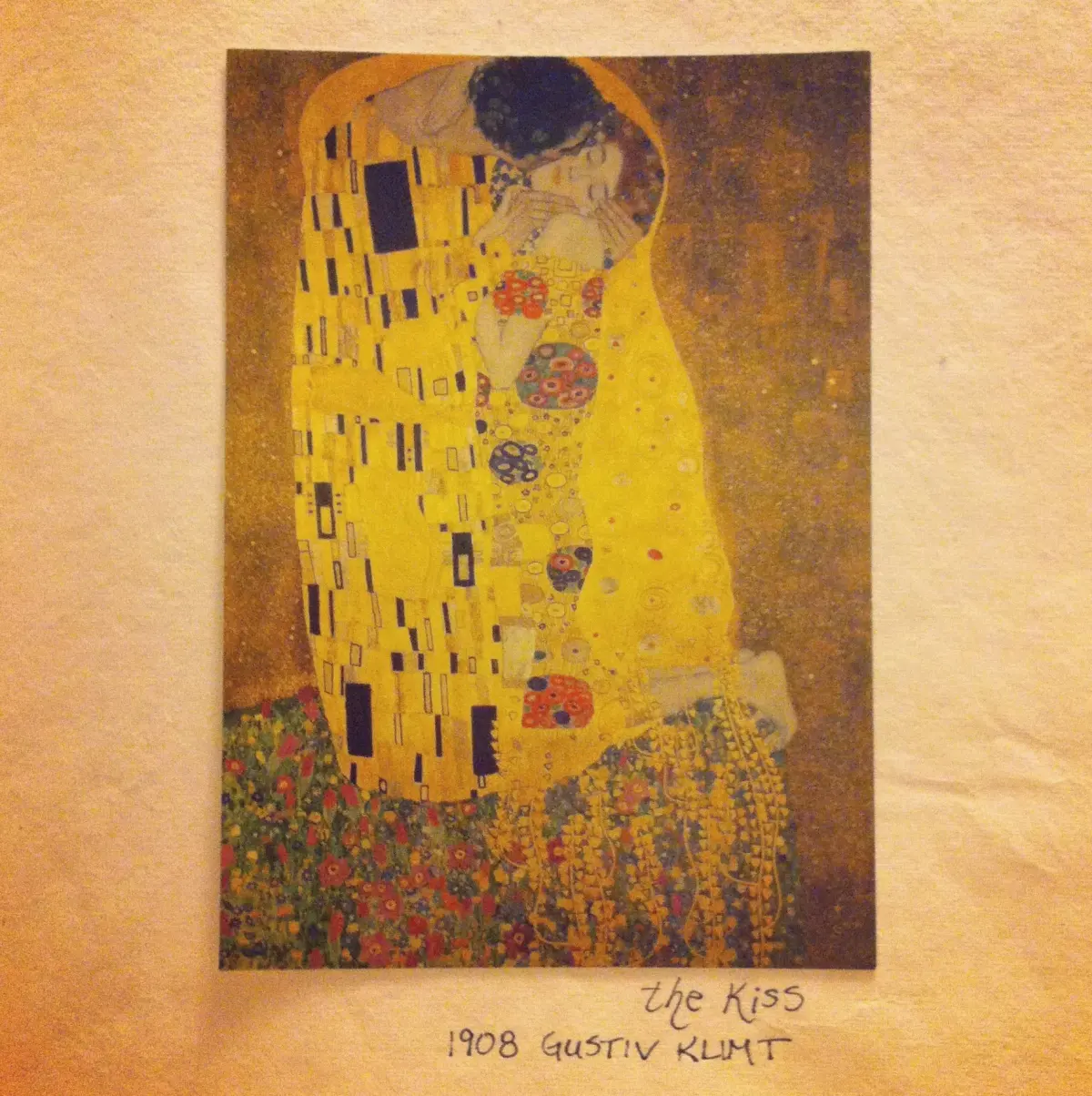
A frequent mistake is viewing The Kiss solely as a romantic portrait without considering its historical context. Some viewers assume the figures are specific people, yet they are intentionally generalized to represent the universal experience of love. By assuming the painting is a simple illustration of a couple, one misses the underlying tension between the figures and the heavy, ornamental robes that seem to consume them.
Another error is ignoring the influence of the Vienna Secession movement. This group sought to break down the barriers between "high art" and "applied art," such as jewelry and textiles. If you view the painting only as a canvas, you overlook how it functions as a decorative object. To truly appreciate the work, you must recognize that Klimt intended for the gold to reflect light in a way that makes the painting change depending on the viewer's position in the room.
Where can you see the original work?
The original oil-on-canvas painting is housed in the Upper Belvedere Museum in Vienna, Austria. It is part of a permanent collection that showcases the largest assembly of Klimt’s work in the world. Because the painting is considered a national treasure, it rarely travels, making the Belvedere the primary destination for those wishing to see the intricate details of the gold leaf in person.
If you plan to visit the museum, keep these tips in mind to get the most out of your experience:
- Visit during weekday mornings to avoid the largest crowds in the gallery.
- Use the museum’s audio guide, which provides essential context on the Secessionist movement.
- Take time to stand at different angles to observe how the gold leaf catches the light.
- Observe the scale of the painting, which is nearly six feet square, as it is much larger than most prints suggest.
By visiting the museum, you can witness the sheer physical presence of the work, which remains the only way to fully understand its immense cultural impact and technical brilliance.
Key facts
- Gustav Klimt painted The Kiss between 1907 and 1908 during his "Golden Phase."
- The painting measures 180 by 180 centimeters, making it a perfect square.
- It is housed permanently at the Österreichische Galerie Belvedere in Vienna, Austria.
- Klimt applied genuine gold leaf to the canvas, a technique inspired by Byzantine mosaics.
- The work depicts a couple embracing in a meadow, with their bodies obscured by elaborate, geometric robes.
- To view the painting properly, stand at least three feet back to appreciate how the light reflects off the gold surfaces.
The bottom line
The Kiss remains famous because it perfectly synthesizes erotic intimacy with opulent, decorative abstraction. By blending the human form into a sea of shimmering gold and intricate geometric patterns, Klimt created a universal symbol of love that transcends time. Its enduring appeal lies in this delicate balance between the physical reality of the couple and the ethereal, dreamlike world they inhabit within the frame.
People also ask
Who are the figures depicted in the painting?
While never officially confirmed, many historians believe the figures represent Klimt himself and his companion, Emilie Flöge. Others suggest the woman is Adele Bloch-Bauer, a frequent subject of his work.
Why did Klimt use so much gold in his paintings?
Klimt was deeply influenced by the shimmering religious icons he saw during a trip to Ravenna, Italy. He used gold to elevate his subjects, giving them a sense of timeless, spiritual importance.
Is the painting considered a part of the Art Nouveau movement?
Yes, it is a quintessential example of the Vienna Secession, an offshoot of Art Nouveau. The style is defined by its decorative patterns, organic lines, and rejection of traditional academic art standards.
What do the different patterns on the robes signify?
The male figure is adorned with hard, rectangular shapes, while the female figure features soft, circular, and floral motifs. This contrast was Klimt’s way of visually representing masculine and feminine energies.
Can I buy a print of The Kiss?
Because the painting is in the public domain, high-quality prints are widely available. When purchasing, look for versions that attempt to replicate the metallic sheen of the original gold leaf.
Why is the painting square-shaped?
Klimt intentionally chose a square format to create a sense of harmony and balance. This shape keeps the viewer’s focus centered entirely on the embrace rather than the surrounding environment.
This answer was created with the help of AI research tools and reference sources. Spotted an error? Let us know — we correct mistakes quickly. See our editorial policy.