What is the history of graffiti?
Short answer
Graffiti is the practice of marking public or private surfaces with writing or drawings. Its history spans from ancient cave paintings and Roman inscriptions to the modern hip-hop-influenced street art movement. While historically used for communication and protest, it has evolved into a complex global art form and a contentious legal issue.
On this page
How did graffiti start in ancient times?
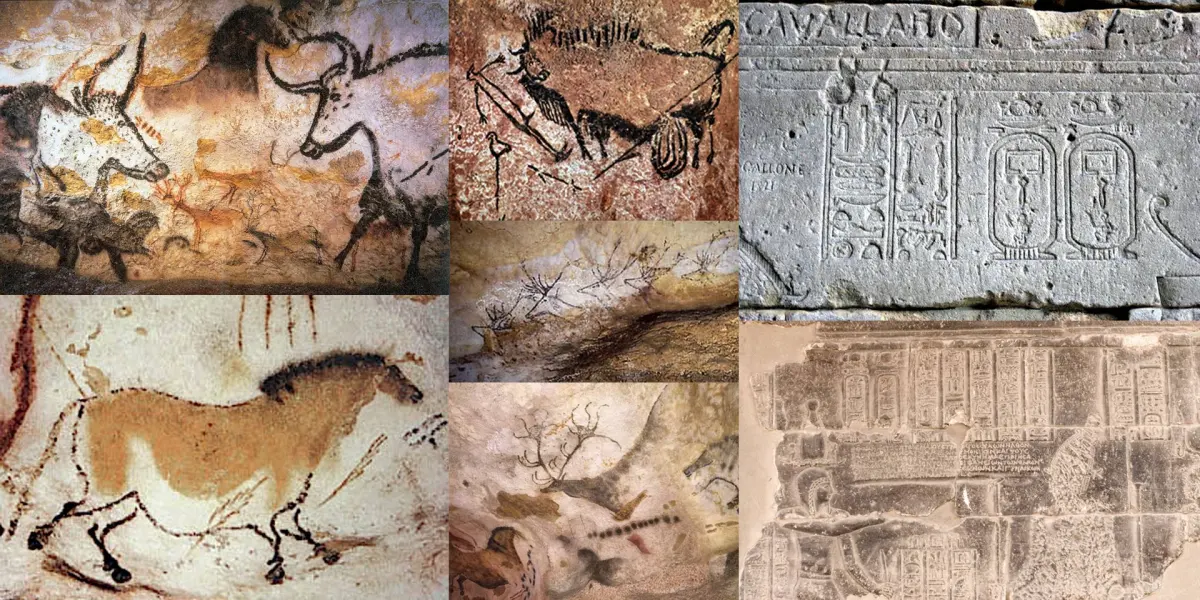
The impulse to mark surfaces is as old as human civilization. Prehistoric humans created cave paintings in locations like Lascaux, France, dating back over 30,000 years. These early images served as symbolic communication or ritualistic expressions long before the invention of formal writing systems.
In the classical era, graffiti became a common feature of urban life. Archaeologists have uncovered extensive examples in Pompeii, where citizens scratched political slogans, romantic declarations, and insults into walls. These inscriptions offer a rare, unfiltered look at the daily lives and sentiments of ancient Romans. Unlike modern spray paint, these markings were typically etched into stone or plaster using sharp implements.
- Ancient Egyptian tombs featured hieroglyphic graffiti left by visitors.
- Viking explorers carved runes into the Hagia Sophia in Constantinople.
- Medieval pilgrims often scratched their names into church walls as a record of their journey.
Why did modern graffiti emerge in the 1970s?
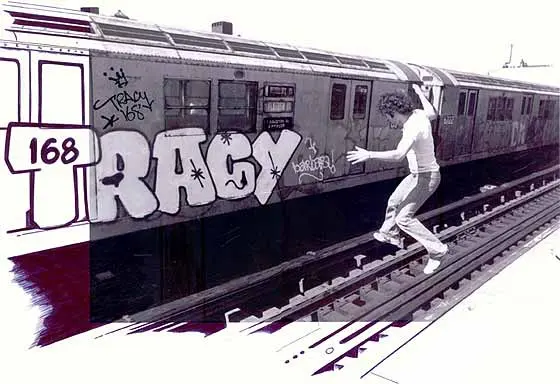
Modern graffiti culture originated in New York City during the late 1960s and early 1970s. It began with "tagging," where individuals used markers to write their names or pseudonyms on public surfaces. A teenager known as Taki 183 became famous for his prolific tagging throughout the city, which inspired others to compete for visibility and status.
The movement quickly shifted from simple markers to spray paint, allowing for larger and more intricate designs. Writers began targeting subway trains, which acted as moving canvases that carried their work across the entire city. This era established the foundational aesthetics of modern graffiti, including the use of bold outlines, vibrant colors, and stylized lettering known as "wildstyle."
- Writers formed "crews" to collaborate on complex murals.
- The "throw-up" style was developed for speed to avoid detection.
- Pieces became larger and more artistic to gain respect within the subculture.
What is the difference between graffiti and street art?
While the terms are often used interchangeably, there is a distinct difference in intent and technique. Graffiti is traditionally rooted in the subculture of writing one's name or crew identifier. It is often characterized by coded lettering that is intended to be read by other writers rather than the general public. It frequently prioritizes fame and territorial presence.
Street art, by contrast, emerged later and often focuses on visual imagery, social commentary, or decorative aesthetics. Street artists frequently use stencils, wheatpaste, and stickers to create recognizable characters or political statements. While graffiti is often viewed as an act of rebellion against the status quo, street art is increasingly integrated into urban design and sanctioned public art programs.
- Graffiti often uses complex, illegible fonts.
- Street art typically features figurative images or icons.
- Graffiti is often site-specific to the writer’s territory.
- Street art is often designed for broad public appeal.
How do artists create graffiti legally?
Many cities now designate specific walls or zones where graffiti is permitted to encourage artistic expression. To participate in these legal spaces, artists must follow established social protocols and local regulations. Engaging with the community and property owners is the most effective way to secure a location for a mural or piece.
If you are interested in legal graffiti, follow these steps to get started:
- Research local ordinances to identify permitted walls or "legal zones."
- Seek written permission from private property owners before painting.
- Design your piece in a sketchbook to refine your color palette and composition.
- Prepare the surface by cleaning it to ensure paint adhesion.
- Use high-quality artist-grade spray paint to ensure longevity and vibrant color.
Common mistakes when starting graffiti
Beginners often focus too much on complex pieces before mastering the basics of line control. A common error is failing to understand how different spray paint caps affect the width and pressure of the line. Using low-quality paint can lead to drips and fading, which undermines the quality of the work.
Another significant mistake is ignoring the importance of safety and legality. Painting in unauthorized areas can lead to severe legal consequences, including fines and criminal records. Furthermore, beginners often neglect the "buff," which is the process of cleaning graffiti. Understanding that your work may be painted over by others is a fundamental part of the culture’s ephemeral nature. Always prioritize safety, respect local property laws, and focus on developing your unique style through consistent practice and observation of established techniques.
Key facts
- The word "graffiti" originates from the Italian word "graffiato," meaning "scratched," referring to ancient inscriptions carved into walls.
- Ancient Romans left political slogans and personal messages on the walls of Pompeii, preserved by the eruption of Mount Vesuvius in 79 CE.
- Modern graffiti culture emerged in Philadelphia and New York City during the late 1960s and early 1970s, pioneered by writers like Cornbread and Taki 183.
- To create a basic tag, use a high-flow chisel-tip marker; the key is to maintain a consistent angle to ensure a smooth, uniform line width.
- Avoid "tagging" on private property, historical landmarks, or places of worship, as this is illegal and often considered vandalism rather than artistic expression.
- When practicing, use legal walls or designated graffiti parks to avoid legal repercussions and to learn techniques from more experienced artists in a safe environment.
The bottom line
Graffiti has evolved from ancient, informal inscriptions into a complex global subculture defined by artistic innovation and social tension. While its roots lie in illicit public marking, it has increasingly gained recognition as a legitimate contemporary art form. Understanding the history and techniques of this medium requires balancing the desire for creative expression with a deep respect for legal boundaries and community property standards.
People also ask
What is the difference between graffiti and street art?
Graffiti is traditionally rooted in the act of writing one's name or "tag" to gain recognition within a subculture. Street art often focuses on imagery, characters, or social commentary intended for a broader public audience.
How did the "wildstyle" graffiti lettering emerge?
Wildstyle developed in the 1970s as artists began interlocking letters and adding complex arrows, spikes, and 3D effects. It was designed to be difficult for outsiders to read, emphasizing technical skill and artistic complexity.
Why do some cities remove graffiti while others promote it?
Cities often remove graffiti to combat perceptions of urban decay and criminal activity. Conversely, some municipalities promote mural programs to revitalize neighborhoods, support local artists, and deter unauthorized tagging.
What are the most common tools used by graffiti artists?
Aerosol spray paint is the primary medium, often used with specialized caps to control line thickness. Markers, mops, and stencils are also frequently employed for quick tags or detailed graphic work.
Is graffiti considered a form of vandalism?
Legally, graffiti applied without the owner's permission is classified as vandalism and is punishable by fines or jail time. However, the cultural perception shifts when the work is commissioned or placed in sanctioned artistic spaces.
How can I start learning graffiti lettering?
Start by sketching simple block letters on paper to understand structure and spacing. Once you master the basics, experiment with overlapping letters and adding highlights to create depth before moving to spray paint.
This answer was created with the help of AI research tools and reference sources. Spotted an error? Let us know — we correct mistakes quickly. See our editorial policy.