What is the history of the camera obscura?
Short answer
The camera obscura is a natural optical phenomenon where light passing through a small aperture projects an inverted image of the external scene onto a surface. Its history spans millennia, evolving from ancient philosophical observations in China and Greece to a vital tool for Renaissance artists and the precursor to modern photography.
On this page
Who discovered the camera obscura?
The earliest recorded descriptions of the camera obscura date back to the 5th century BCE in China. The philosopher Mozi observed that light passing through a pinhole into a darkened room created an inverted image of an object. He correctly identified that light travels in straight lines, forming the foundation for optical science.
Centuries later, Greek thinkers including Aristotle and Euclid explored similar concepts regarding vision and light. However, the most significant early scientific advancement came from the 11th-century Arab scholar Ibn al-Haytham. In his "Book of Optics," he provided a rigorous mathematical explanation of how light rays converge through a small opening. His work proved that the image is formed by light reflecting off objects, effectively debunking earlier theories that the eye emitted rays to see.
How was the camera obscura used in art?
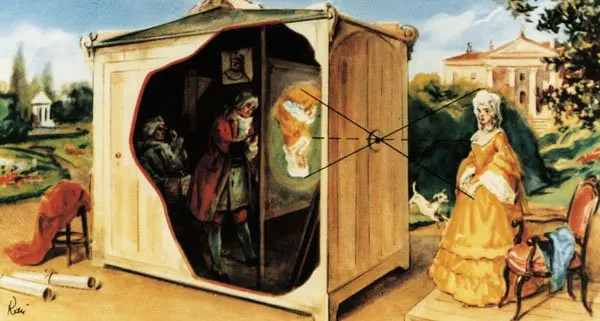
By the Renaissance, the camera obscura had become a standard tool for European painters. Artists discovered that by projecting a scene onto a canvas, they could trace the outlines with extreme precision. This allowed for perfect perspective and accurate proportions, which were highly valued during the 15th and 16th centuries.
Many famous masters, including Johannes Vermeer and Canaletto, are believed to have utilized these devices to achieve their signature realism. The camera obscura transformed from a scientific curiosity into a practical instrument for composition. To use it for drawing, an artist would typically set up the device in a darkened room or a portable tent.
- Position the lens or aperture toward the desired subject.
- Place a translucent screen or paper at the focal point inside the box.
- Trace the projected image directly onto the surface.
- Add color and detail based on the live projection.
Why did the camera obscura evolve into photography?
The transition from the camera obscura to the camera as we know it today required the invention of a way to fix the image permanently. For centuries, the device could only project a fleeting, temporary image. Inventors spent decades searching for light-sensitive chemicals that could capture the light patterns projected by the aperture.
In the early 19th century, Joseph Nicéphore Niépce successfully used a camera obscura fitted with a pewter plate coated in bitumen of Judea. After an exposure lasting several hours, the light-sensitive surface hardened, leaving a permanent, albeit grainy, image. This breakthrough marked the birth of heliography and eventually modern photography. The camera obscura provided the essential optical mechanism—the "camera" or "chamber"—while chemistry provided the memory.
- The aperture size determines the sharpness versus the brightness of the image.
- A smaller pinhole increases focus but reduces the amount of light entering.
- A larger hole makes the image brighter but significantly blurrier.
How to build a simple camera obscura at home
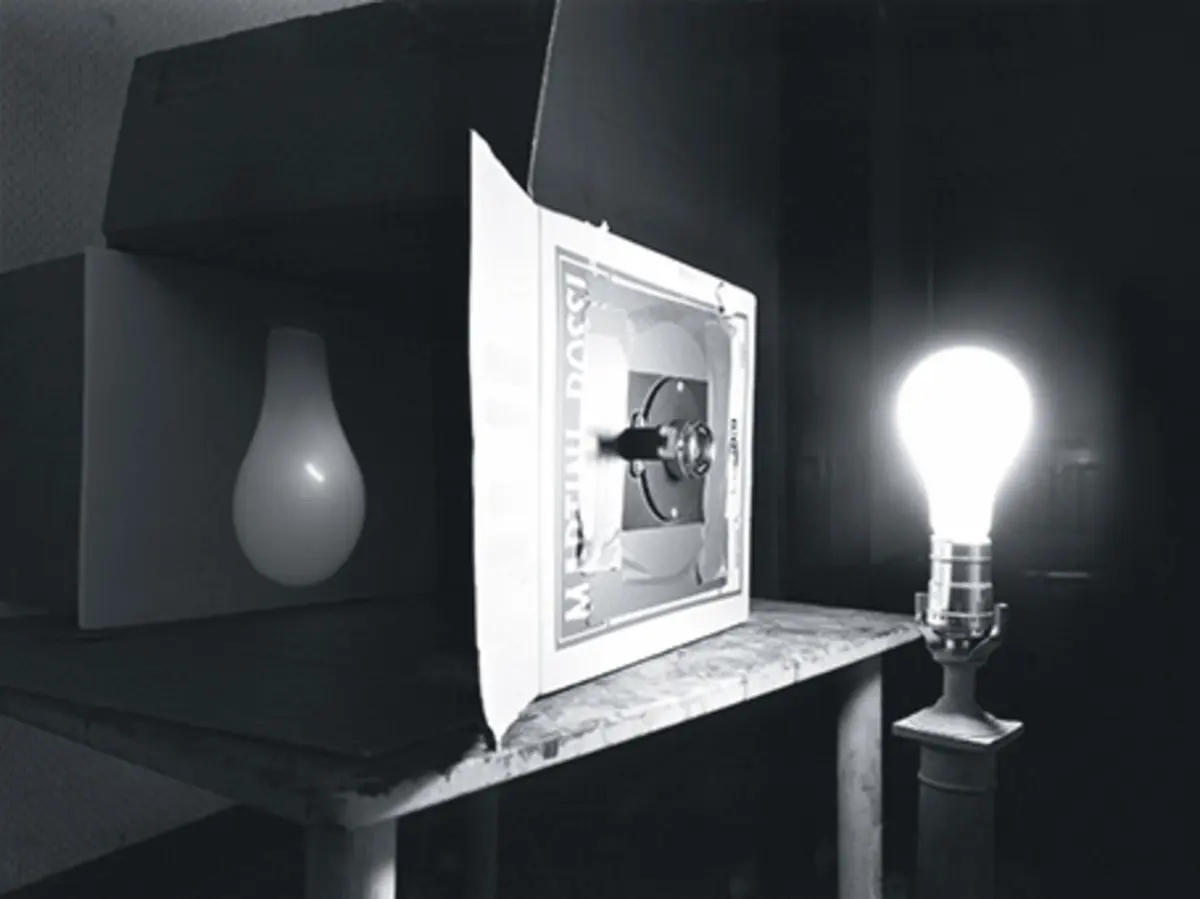
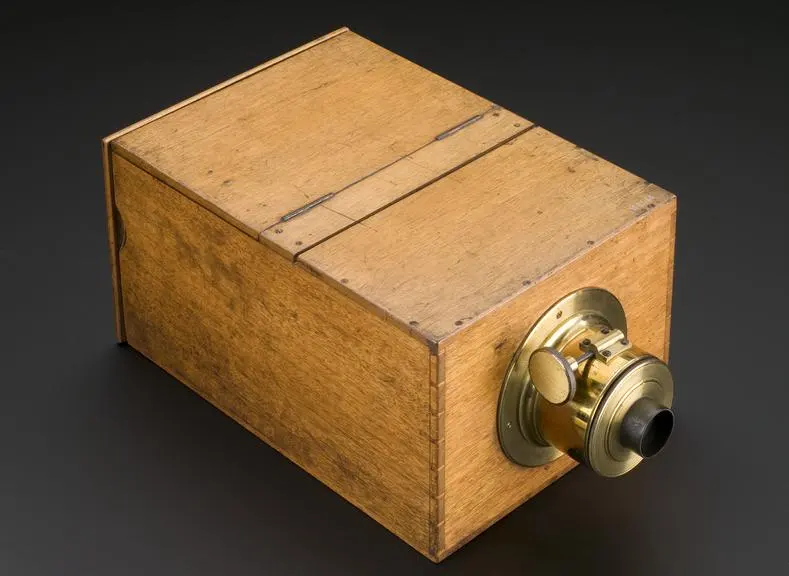
Building a basic camera obscura is a rewarding project that demonstrates the physics of light using common household materials. You can create one using a cardboard box, a sheet of paper, and a bit of tape. This simple setup helps visualize how the outside world is inverted by the pinhole.
To construct your own, follow these steps:
- Select a sturdy cardboard box and seal all seams with tape to ensure it is light-tight.
- Cut a small square hole in one side and cover it with aluminum foil.
- Poke a tiny, clean hole in the center of the foil using a needle.
- Place a piece of white tracing paper or vellum inside the box opposite the pinhole.
- Point the pinhole toward a bright, sunny scene and observe the projection on the paper.
Common mistakes when using a camera obscura
One of the most frequent errors is creating an aperture that is too large. If the hole is too wide, the light rays overlap excessively, resulting in a blurry, unrecognizable projection. It is better to start with a very small pinhole and gradually enlarge it if the image is too dark.
Another common mistake is failing to block out all ambient light in the viewing area. Even small leaks around the edges of the box or room will wash out the projected image, making it difficult to see the details. Ensure your workspace is completely dark, allowing your eyes to adjust to the low-light conditions. Finally, remember that the image will always be inverted and reversed. Beginners often find this disorienting, but it is an inherent characteristic of the device. By carefully controlling the light and the size of the aperture, you can achieve a remarkably clear and vivid projection of the world outside your window.
Key facts
- The term "camera obscura" is Latin for "dark chamber."
- Chinese philosopher Mozi recorded the first known description of the phenomenon around 400 BCE.
- Ibn al-Haytham, an 11th-century scientist, provided the first clear mathematical explanation of how light travels in straight lines to form an image.
- A pinhole produces a sharper image than a large aperture, but requires a longer exposure time for the human eye to adjust.
- You can build a simple camera obscura by darkening a room and covering a window with foil, leaving only a tiny pinhole.
- Always ensure the room is completely light-tight; even small gaps around a door will wash out the projected image.
The bottom line
The camera obscura is a foundational optical phenomenon that has fascinated thinkers for millennia. By demonstrating how light travels in straight lines to project inverted images, it bridged the gap between natural philosophy and artistic practice. From ancient observations to the development of modern photography, this simple "dark chamber" remains a vital tool for understanding the physics of vision and the mechanics of image capture.
People also ask
Does the image inside a camera obscura appear upside down?
Yes, because light rays travel in straight lines and cross as they pass through the small aperture. This causes the top of the outside scene to be projected onto the bottom of the interior surface.
Can I use a camera obscura to take permanent photographs?
A camera obscura is an optical device for projection, not a recording medium. To capture the image, you must place light-sensitive film or a digital sensor at the focal plane, which effectively turns the device into a pinhole camera.
Why is the projected image often dim?
The image is dim because only a small amount of light can pass through the tiny pinhole. Increasing the hole size makes the image brighter but causes it to become blurry and out of focus.
Did artists actually use this device to paint?
Many Renaissance and Baroque artists, including Johannes Vermeer, are believed to have used the camera obscura as a tracing aid. It allowed them to achieve precise perspective and realistic lighting effects in their compositions.
What is the difference between a camera obscura and a camera lucida?
A camera obscura projects an image onto a surface inside a dark room or box. A camera lucida is a portable optical device that uses a prism to overlay a virtual image of a subject onto a drawing surface.
Is it safe to look directly at the sun through a camera obscura?
You should never look directly at the sun through any optical device, including a camera obscura. Projecting the sun onto a white screen is a safe way to observe solar eclipses without risking permanent eye damage.
This answer was created with the help of AI research tools and reference sources. Spotted an error? Let us know — we correct mistakes quickly. See our editorial policy.