What is Hilma af Klint known for?
Short answer
Hilma af Klint was a Swedish artist and mystic recognized as a pioneer of abstract art. Decades before Wassily Kandinsky, she created non-representational works influenced by spiritualism and science. Her vast body of work, largely kept private during her lifetime, has redefined the history of modernism and the origins of abstraction.
On this page
Who was Hilma af Klint?
Hilma af Klint (1862–1944) was a classically trained Swedish painter who graduated from the Royal Swedish Academy of Fine Arts in 1887. While she initially gained recognition for her traditional landscapes and botanical illustrations, her artistic trajectory shifted dramatically toward the end of the 19th century. Deeply involved in spiritualist circles, she sought to visualize dimensions of reality beyond the physical world.
This spiritual quest led her to abandon figurative representation in favor of complex, symbolic abstraction. Between 1906 and 1915, she produced her most famous cycle, "The Paintings for the Temple," which consists of 193 works. These pieces utilized geometric shapes, bold colors, and rhythmic patterns to map spiritual evolution. Despite her prolific output, she remained largely unknown to the international art establishment until the late 20th century, as she stipulated that her work not be shown until twenty years after her death.
Why is her work considered the first abstract art?
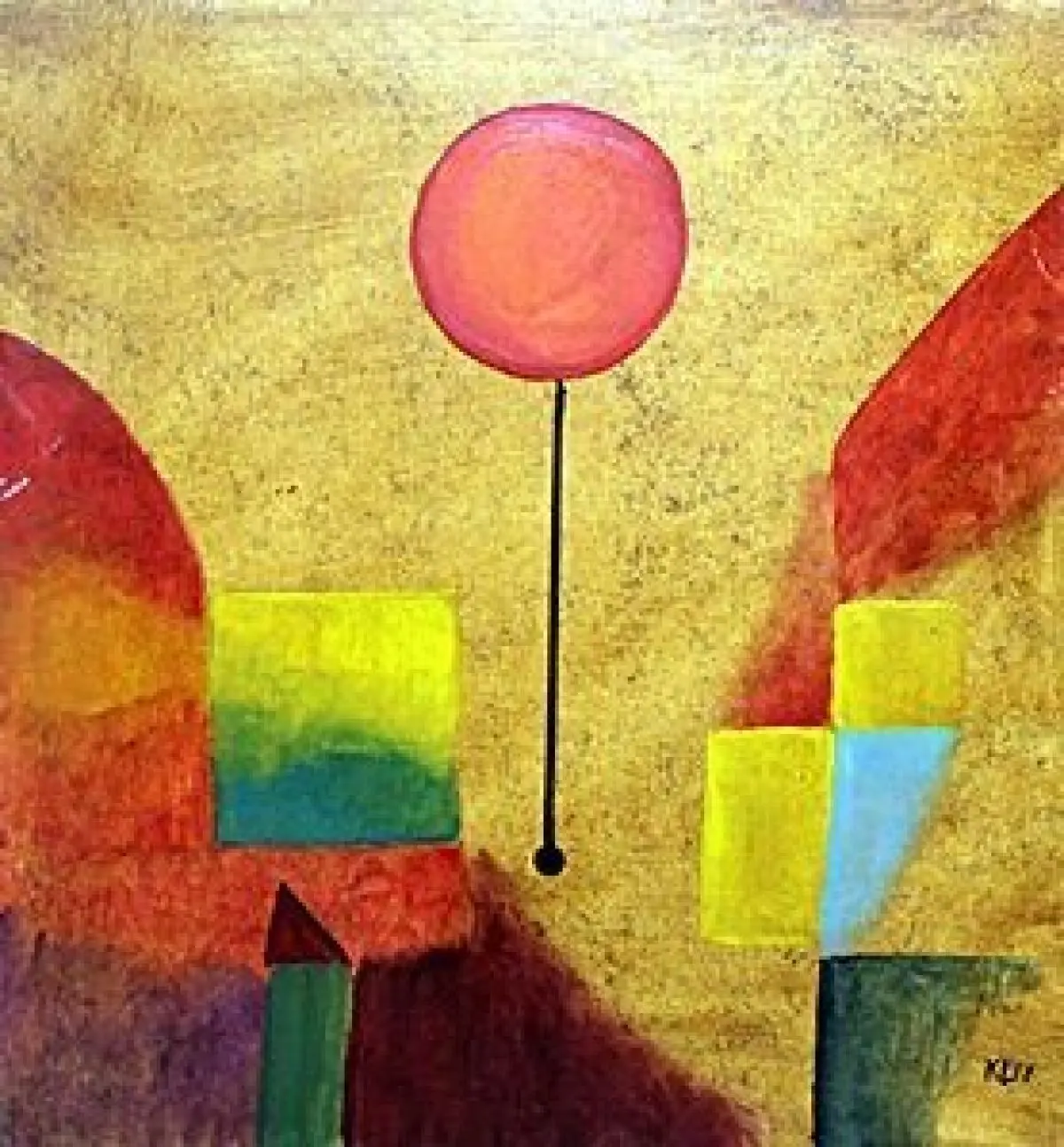
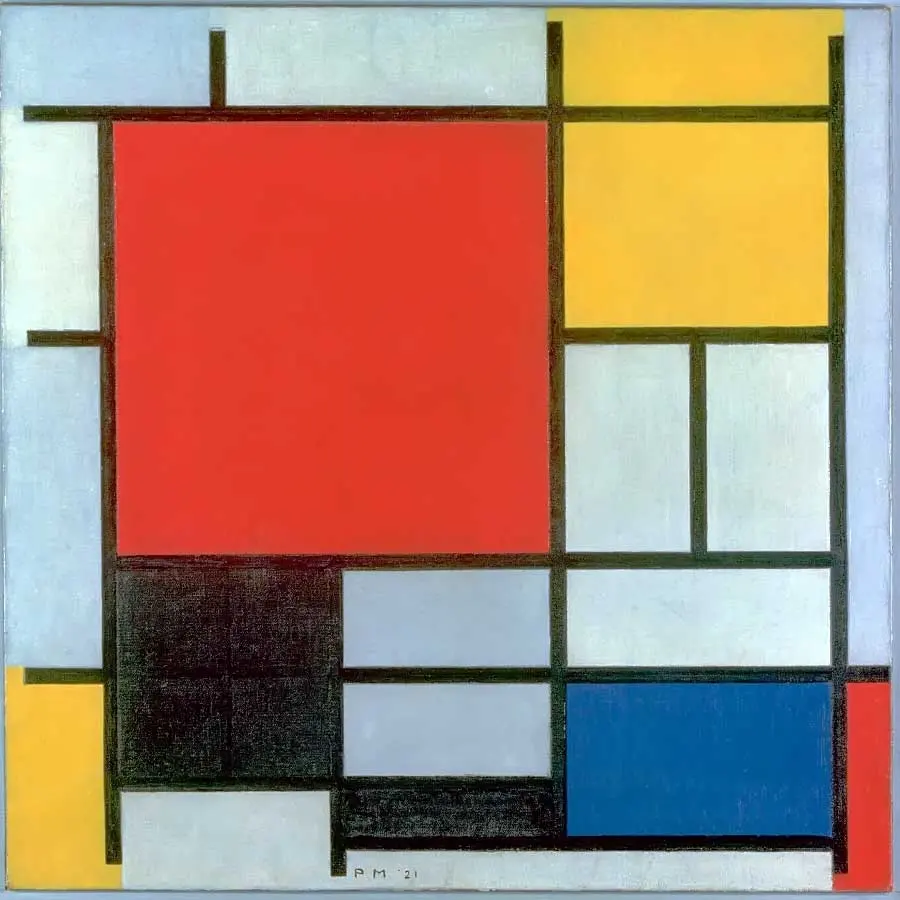
Art historians traditionally credited male artists like Wassily Kandinsky, Piet Mondrian, and Kazimir Malevich with inventing abstract art around 1910. However, af Klint began producing abstract compositions as early as 1906, significantly predating these figures. Her work was not a stylistic experiment but a systematic attempt to translate spiritual communication into visual form.
Her approach was grounded in a unique synthesis of scientific discovery and occult philosophy. She was fascinated by the recent discovery of X-rays, radioactivity, and the expansion of the universe, which she interpreted as evidence of unseen forces. By blending these modern scientific concepts with Theosophy and Anthroposophy, she created a visual language that was entirely her own. Her primary contributions include:
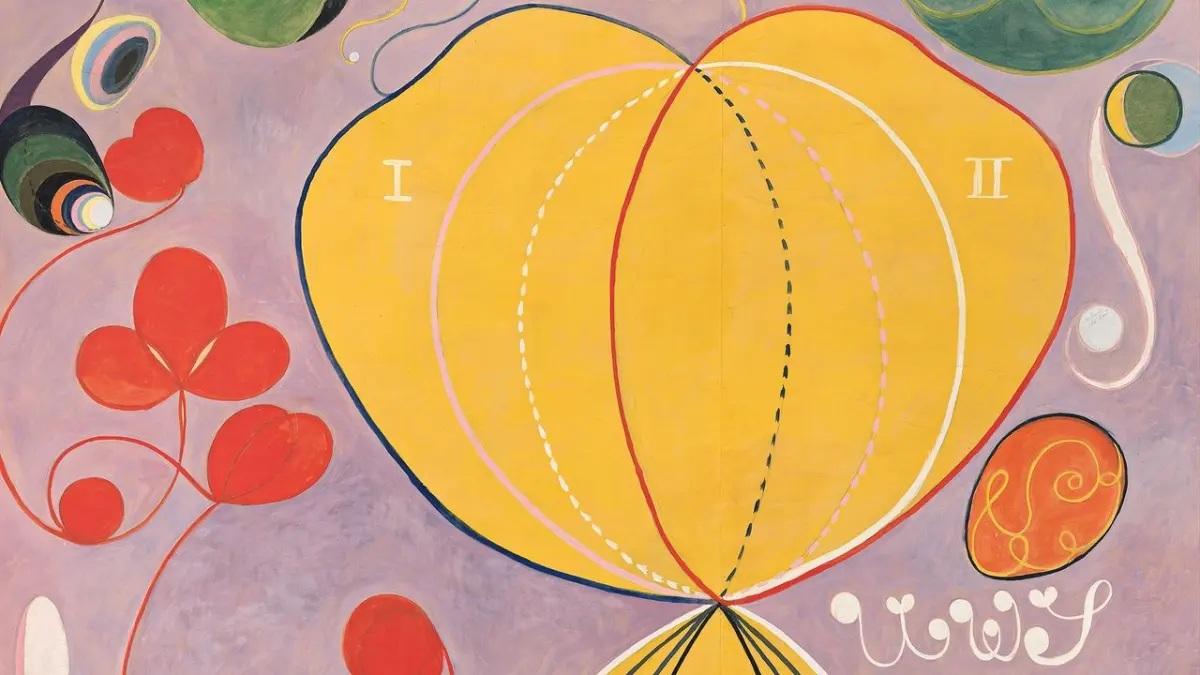
- The use of spiral motifs to represent growth and evolution.
- A distinctive color-coding system where yellow represented the masculine and blue the feminine.
- The integration of scientific diagrams with mystical geometry.
How to understand her symbolic language
Decoding af Klint’s work requires an understanding of her belief that she was a medium for higher powers. She often claimed that her paintings were "commissioned" by spiritual beings, whom she referred to as "The High Masters." Rather than viewing her art as personal expression, she saw herself as a conduit for a universal truth that humanity was not yet ready to perceive.
To appreciate her complex compositions, consider the following thematic elements:
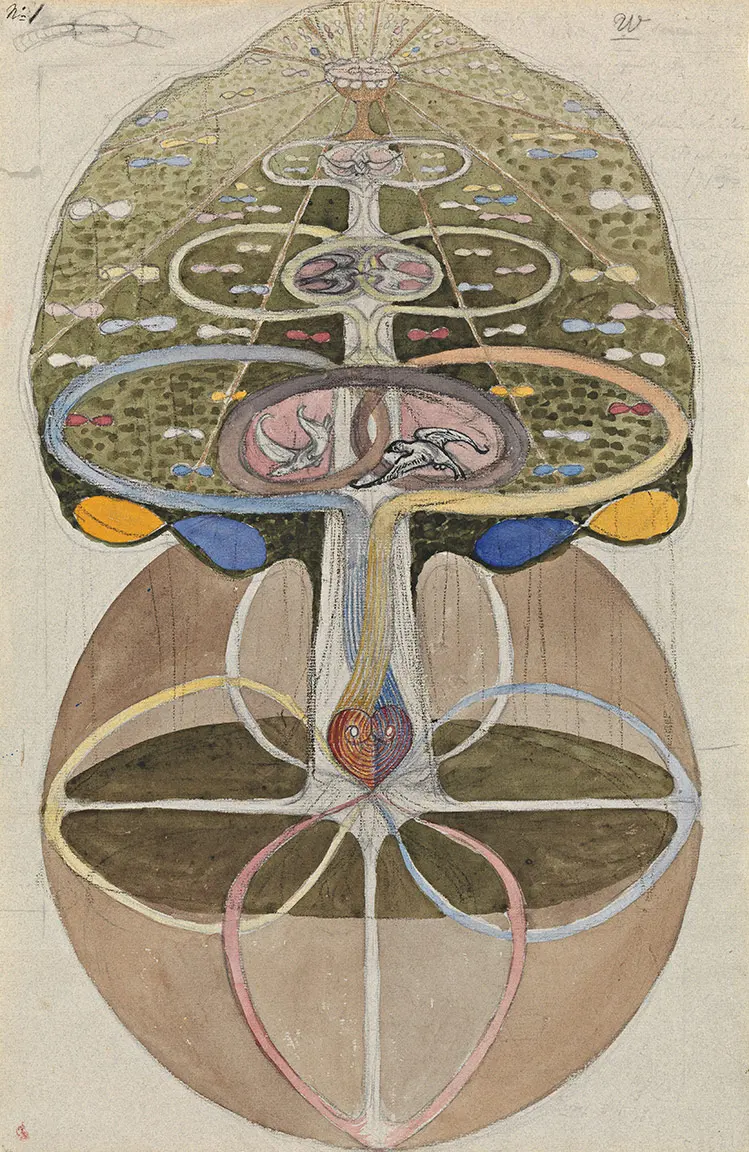
- Identify the recurring shapes, such as circles, spirals, and triangles, which signify cycles of life and cosmic unity.
- Observe the contrast between organic, fluid forms and rigid, mathematical structures, reflecting the balance between spirit and matter.
- Look for the inclusion of text, as she often incorporated titles and poetic descriptions directly into her paintings to guide the viewer.
- Note the scale of the works, as many were designed to be housed in a spiral-shaped temple that was never built.
Common mistakes when interpreting her art
One common mistake is viewing af Klint’s work solely through the lens of 20th-century modernism. While her visual style resembles later abstract movements, her intent was fundamentally different. She was not interested in the "art for art’s sake" philosophy prevalent in the European avant-garde; instead, she viewed her art as a pedagogical tool for spiritual enlightenment.
Another error is assuming her work was entirely isolated from the artistic trends of her time. Although she worked in relative privacy, she was well-versed in the theories of Goethe and contemporary scientific developments. Observers often overlook the fact that her early, traditional training provided the technical foundation for her later, more radical experiments. To avoid these pitfalls, keep the following in mind:
- Do not ignore her extensive notebooks, which contain thousands of pages of commentary explaining her symbols.
- Avoid labeling her work as "outsider art," as she was a highly educated professional artist who understood the art market of her era.
- Recognize that her gender and her spiritual interests caused her work to be dismissed by her contemporaries, which contributed to her long period of obscurity.
How to explore her legacy today
Since her "discovery" by the international art world in the 1986 exhibition The Spiritual in Art, af Klint’s reputation has grown exponentially. Major museums, including the Guggenheim in New York and the Tate Modern in London, have held record-breaking retrospectives of her work. Her paintings have challenged the patriarchal narrative of art history, forcing scholars to rewrite textbooks to include her as a foundational figure.
If you are interested in engaging with her legacy, start by looking at high-resolution digital archives of her "Paintings for the Temple." Because her work is vast and deeply interconnected, reading her journals provides the best context for understanding her specific color theories and geometric logic. Her influence is now seen in contemporary art, design, and even popular culture, as her vibrant, optimistic, and deeply humanistic vision continues to resonate with modern audiences seeking meaning in an increasingly complex world.
Key facts
- Hilma af Klint was a Swedish artist who created pioneering abstract paintings years before the recognized founders of the movement.
- She produced a massive cycle of 193 works titled The Paintings for the Temple between 1906 and 1915.
- Her work was deeply influenced by spiritualism, Theosophy, and Anthroposophy, which she believed guided her brush.
- She requested that her collection remain hidden for at least 20 years after her death, fearing the public was not ready to understand it.
- Her art features complex geometric shapes, vibrant color palettes, and symbolic diagrams that predate the work of Wassily Kandinsky.
- Collectors and curators often mistake her early works for mid-century modernism due to their remarkably contemporary aesthetic.
The bottom line
Hilma af Klint is now recognized as a visionary pioneer who fundamentally reshaped the history of Western art. By prioritizing spiritual exploration over mainstream trends, she developed a unique visual language that anticipated modern abstraction by decades. Her legacy serves as a powerful reminder that history is often incomplete and that true artistic innovation can emerge from the most unexpected and deeply personal places.
People also ask
Did Hilma af Klint consider herself an abstract artist?
No, she viewed herself as a medium who channeled messages from higher spiritual planes. She believed her paintings were visual representations of complex metaphysical truths rather than abstract experiments.
Why was she ignored by art history for so long?
Her decision to keep her work private for decades meant she missed the critical window to influence early 20th-century art movements. Because she was a woman working outside the male-dominated gallery system, her contributions were largely overlooked until the late 1980s.
What techniques did she use to create her paintings?
She utilized automatic drawing, a technique where the artist allows their hand to move unconsciously to bypass rational thought. She also experimented with large-scale canvases and intense, non-representational color schemes.
How many paintings did she leave behind?
Af Klint left a vast archive consisting of more than 1,200 paintings and thousands of pages of notebooks. These documents detail her spiritual philosophy and the specific meanings behind her cryptic symbols.
Where can I see her work today?
The majority of her collection is managed by the Hilma af Klint Foundation in Stockholm. Her works frequently tour major international museums, including the Guggenheim in New York and the Tate Modern in London.
What is the most common mistake when interpreting her art?
Many viewers assume her work is purely decorative or formalist. To truly understand her art, one must consider her spiritual intent, as every shape and color choice was intended to communicate a specific cosmic concept.
This answer was created with the help of AI research tools and reference sources. Spotted an error? Let us know — we correct mistakes quickly. See our editorial policy.