What art style did Gustav Klimt use?
Short answer
Gustav Klimt was a central figure of the Vienna Secession, an art movement characterized by the synthesis of Symbolism, Art Nouveau, and the Arts and Crafts movement. His distinct style evolved from academic realism to a decorative, erotic, and highly ornamental aesthetic, famously defined by his extensive use of gold leaf.
On this page
What defines the Vienna Secession style?
The Vienna Secession was formed in 1897 by a group of Austrian artists, including Klimt, who resigned from the Association of Austrian Artists. They sought to break away from the conservative, tradition-bound academic art of the time, which emphasized historical painting and rigid realism. Instead, they embraced a modern, international approach that prioritized individual expression and the total integration of art into daily life.
This movement was closely aligned with Art Nouveau, known in Austria as Jugendstil. It favored flowing, organic lines and stylized natural forms over the heavy, ornate decorations of the past. Klimt’s work during this period became increasingly flat and two-dimensional, rejecting traditional perspective in favor of complex, mosaic-like patterns. This allowed him to create a dreamlike atmosphere where the subject often seemed to float within a decorative void.
- Rejection of academic conservatism.
- Emphasis on the "total work of art" (Gesamtkunstwerk).
- Integration of architecture, painting, and design.
- Focus on psychological depth and symbolic meaning.
How did Klimt use gold leaf?
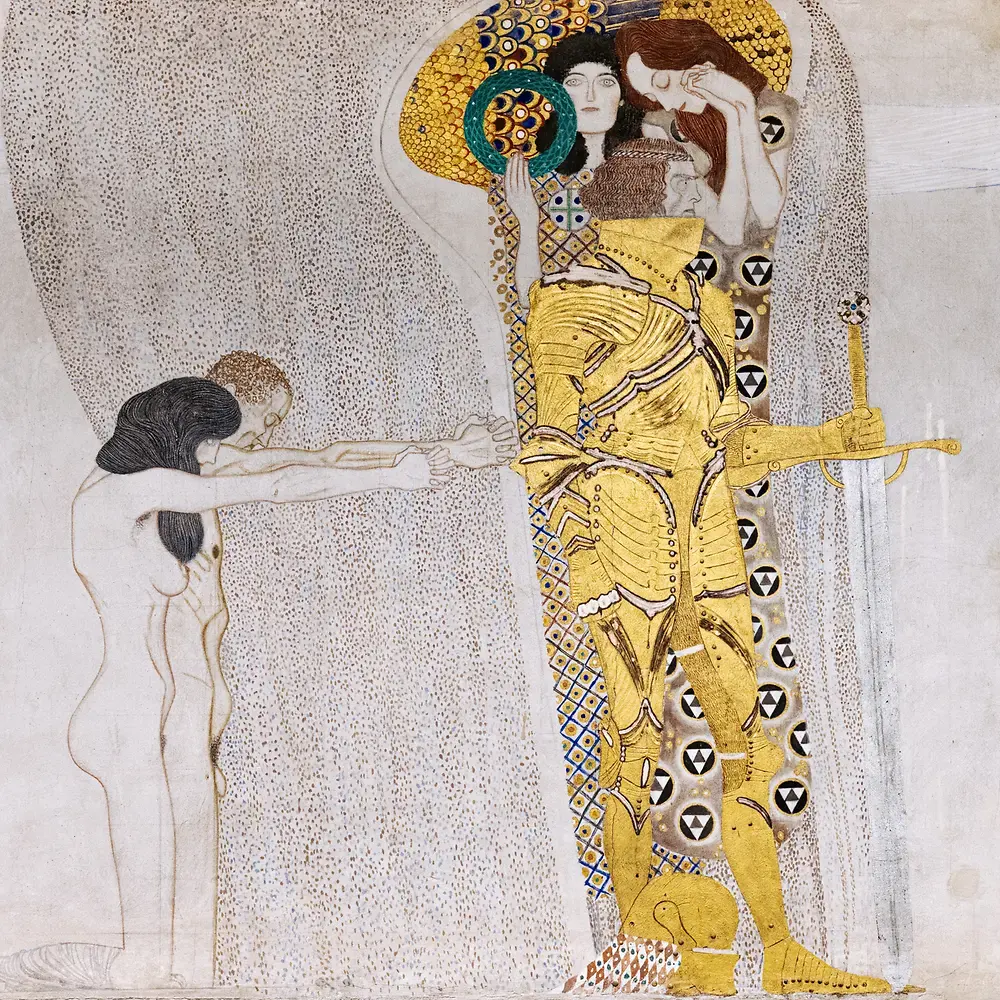
Klimt’s "Golden Phase," spanning roughly from 1899 to 1910, is his most recognizable period. During these years, he utilized genuine gold and silver leaf to create shimmering, ethereal backgrounds and garments. This technique was inspired by his travels to Ravenna, Italy, where he encountered Byzantine mosaics. The gold served to elevate his subjects, often women, into icons of beauty, divinity, or eroticism.
The application of gold leaf was not merely decorative; it functioned as a spiritual or transcendental element. By flattening the space with gold, Klimt removed his figures from any specific time or place, placing them in a realm of pure aesthetic experience. This technique required immense precision, as the delicate metal sheets were applied over gesso and paint to create varying textures and light reflections.
- Prepare the canvas with a smooth, non-porous gesso ground.
- Apply a thin layer of adhesive, known as size, to the specific areas intended for gilding.
- Carefully place the gold leaf sheets using a gilder's tip or soft brush.
- Burnish the surface to achieve a high-gloss, reflective finish.
Why did Klimt focus on female subjects?
Women were the primary focus of Klimt’s artistic output, serving as vessels for his exploration of desire, fertility, and the subconscious. He frequently portrayed them as femme fatales—mysterious, powerful, and sometimes dangerous figures. This fascination mirrored the broader intellectual climate of Vienna at the turn of the century, particularly the emerging psychoanalytic theories of Sigmund Freud regarding human sexuality.
His portraits were rarely simple likenesses; they were highly stylized interpretations of the sitter’s personality and social status. By combining realistic faces and hands with highly abstracted, patterned clothing, he created a tension between the physical reality of the person and the symbolic nature of the artwork. This approach allowed him to explore complex themes of life, death, and regeneration without relying on traditional narrative storytelling.
- Focus on the cycle of life and human mortality.
- Exploration of eroticism and repressed desire.
- Use of complex, symbolic patterns to represent personality traits.
- Contrast between realistic anatomy and abstract ornamentation.
How to identify a Klimt painting?
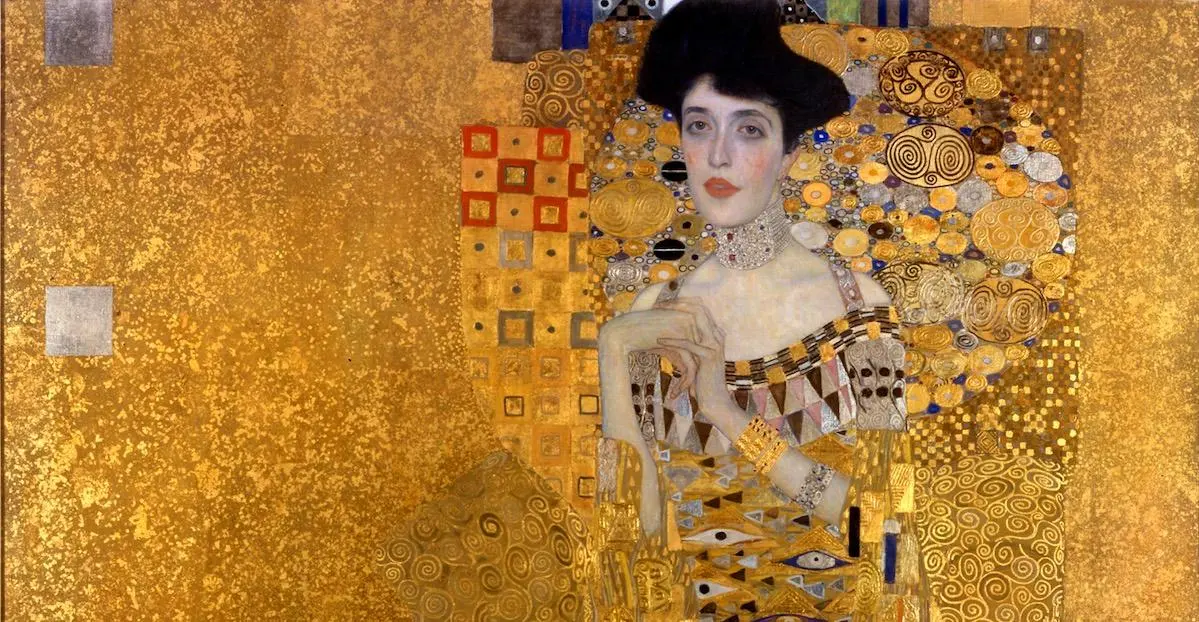
Identifying a Klimt work involves looking for specific visual markers that distinguish his mature style from his contemporaries. The most obvious sign is the presence of intricate, geometric, or floral patterns that consume the canvas. These patterns often create a sharp contrast with the soft, naturalistic rendering of the subject’s skin, creating a visual "push and pull" effect that is unique to his compositions.
Beyond the patterns, look for his signature color palette. While he is famous for gold, he also utilized vibrant, jewel-toned colors like emerald green, deep crimson, and sapphire blue. His compositions are often asymmetrical, with figures pushed to one side or cropped in unconventional ways. This framing technique, influenced by Japanese woodblock prints, adds a sense of immediacy and modernity to his work, making his paintings feel as relevant today as they were over a century ago.
- Look for the "Golden Phase" shimmering backgrounds.
- Identify the contrast between realistic faces and abstract, patterned garments.
- Seek out the influence of Byzantine mosaic art.
- Observe the use of unconventional, asymmetrical cropping of figures.
Common mistakes when studying Klimt
A frequent error is assuming that Klimt’s decorative style was purely superficial or meant only for aesthetic pleasure. In reality, every pattern, symbol, and color choice was deeply calculated to convey philosophical or psychological meaning. Observers often overlook the darker, more melancholic themes present in his work, such as the inevitability of aging and the fragility of human existence, which are hidden behind the opulent gold surfaces.
Another mistake is failing to recognize the influence of the Arts and Crafts movement on his work. Klimt did not just paint; he designed furniture, jewelry, and interior spaces, viewing all these elements as part of a unified artistic vision. To truly understand his style, one must look beyond the canvas and consider the entire environment he sought to create. By ignoring the broader context of the Vienna Secession, one misses the revolutionary intent behind his beautiful, shimmering surfaces.
Key facts
- Gustav Klimt was a founding member and the first president of the Vienna Secession, a movement that broke away from traditional academic art.
- His signature "Golden Phase" (1899–1910) is defined by the extensive use of gold leaf, inspired by Byzantine mosaics he saw in Ravenna, Italy.
- Klimt’s style is primarily classified as Art Nouveau, characterized by organic, flowing lines and intricate, decorative patterns.
- He often incorporated symbolic, erotic, and psychological themes, reflecting the influence of Sigmund Freud’s theories on the subconscious.
- To emulate his style, prioritize flat, two-dimensional backgrounds contrasted with highly detailed, jewel-toned ornamental figures.
- A common mistake is focusing only on the gold; Klimt’s work also relied heavily on precise, realistic facial features to anchor his abstract, decorative compositions.
The bottom line
Gustav Klimt was a pivotal figure in the Vienna Secession, known for blending traditional realism with decorative Art Nouveau aesthetics. His mastery of gold leaf and intricate, symbolic patterns created a unique visual language that challenged the conservative art standards of his era. By focusing on the interplay between flat ornamentation and human emotion, Klimt remains one of the most recognizable and influential painters in modern history.
People also ask
What is the most famous painting by Gustav Klimt?
His most iconic work is The Kiss (1907–1908), which depicts a couple embracing in a field of flowers. It perfectly encapsulates his Golden Phase with its elaborate, shimmering robes and romantic symbolism.
Why did Klimt use so much gold in his paintings?
Klimt was fascinated by the spiritual and luxurious quality of Byzantine religious art. He used gold leaf to elevate his subjects, creating a sense of timelessness and sacredness that transcended everyday reality.
Was Klimt considered a controversial artist during his lifetime?
Yes, his work often drew criticism for its overt eroticism and rejection of traditional academic standards. His "Faculty Paintings" for the University of Vienna were famously rejected for being too scandalous and pessimistic.
How did Klimt’s style change over his career?
He began as a successful painter of traditional, academic murals and portraits. Over time, he moved toward a more stylized, decorative, and symbolic approach that prioritized individual expression over historical narrative.
What materials did Klimt use to create his textures?
Beyond traditional oil paints, he applied actual gold and silver leaf to his canvases. He also used a variety of mixed media, including mosaic glass, semi-precious stones, and intricate stenciling techniques.
How can I identify a Klimt painting?
Look for a combination of highly realistic, expressive faces set against flat, highly patterned, and geometric backgrounds. His work frequently features elongated figures, floral motifs, and a distinct lack of traditional perspective.
This answer was created with the help of AI research tools and reference sources. Spotted an error? Let us know — we correct mistakes quickly. See our editorial policy.