How do you draw an octopus step by step?
Short answer
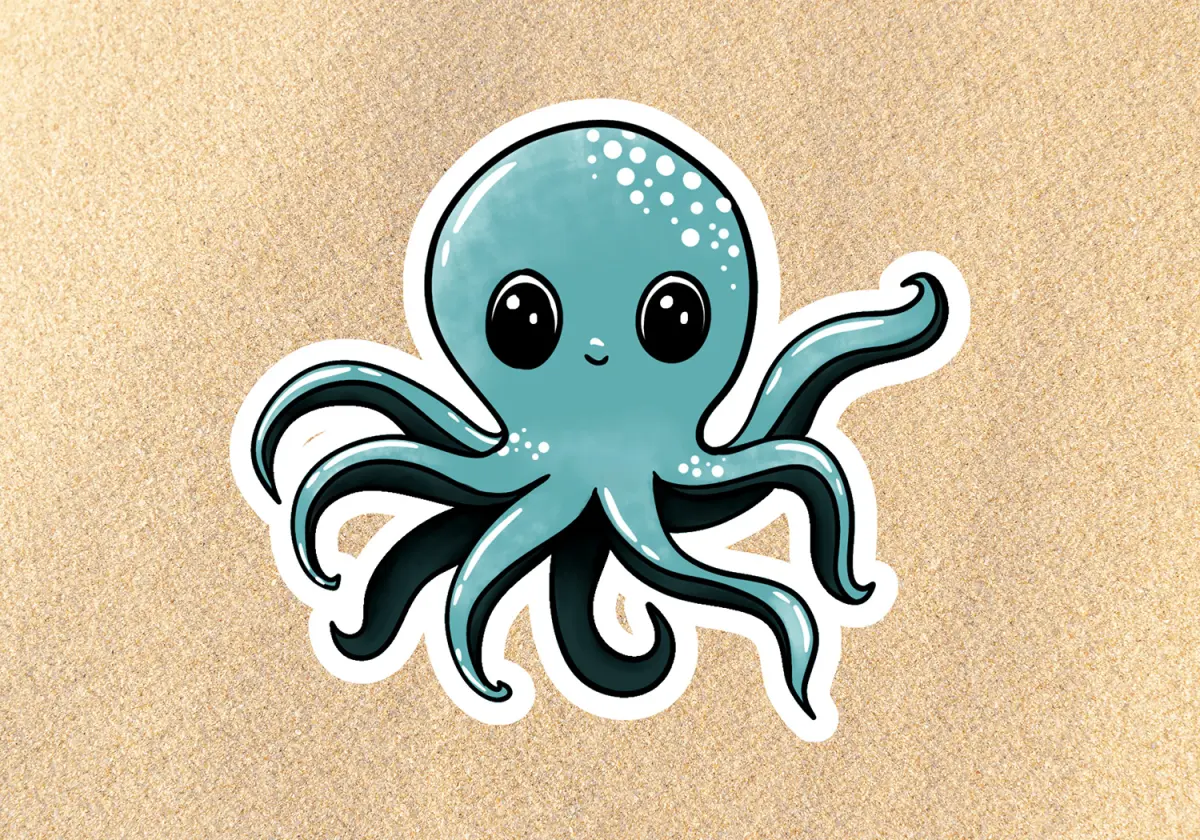
Drawing an octopus involves sketching a rounded mantle, adding eight flowing tentacles, and detailing the suction cups. Start with simple geometric shapes to establish the creature's posture. By layering organic curves and varying the thickness of the arms, you can create a realistic, dynamic cephalopod that appears to be swimming gracefully.
On this page
How to draw an octopus step by step
To begin your drawing, focus on the anatomy of the mantle, which is the large, bulbous head section of the octopus. Lightly sketch an oval or a slightly pear-shaped form near the top of your paper. This serves as the anchor for the entire body. Once the mantle is set, draw a horizontal line beneath it to represent the base where the arms attach.
From this base, extend eight lines radiating outward in different directions to act as skeletons for the tentacles. Keep these lines fluid and curved rather than rigid, as octopuses are highly flexible invertebrates. Vary the lengths of these lines to create a sense of depth and movement. If you want the octopus to appear as if it is swimming, curve several tentacles upward and let others drape downward toward the bottom of the page.
Best drawing tools for beginners
For those just starting, a standard HB graphite pencil is the most versatile tool. It allows for light initial sketches that are easy to erase if you make a mistake. You should also have a kneaded eraser, which is excellent for lifting away graphite without damaging the paper’s surface. Using a smooth, medium-weight drawing paper will help your pencil strokes glide more naturally.
As you progress toward refining your drawing, consider using a set of fine-liner pens or darker pencils such as 2B or 4B. These tools are perfect for adding contrast and defining the texture of the skin. If you are working on a larger piece, a charcoal stick can help you achieve deep, dramatic shadows. Keep your tools sharp to ensure that the fine details of the suckers remain crisp and legible against the softer body parts.
How to add realistic texture and suckers
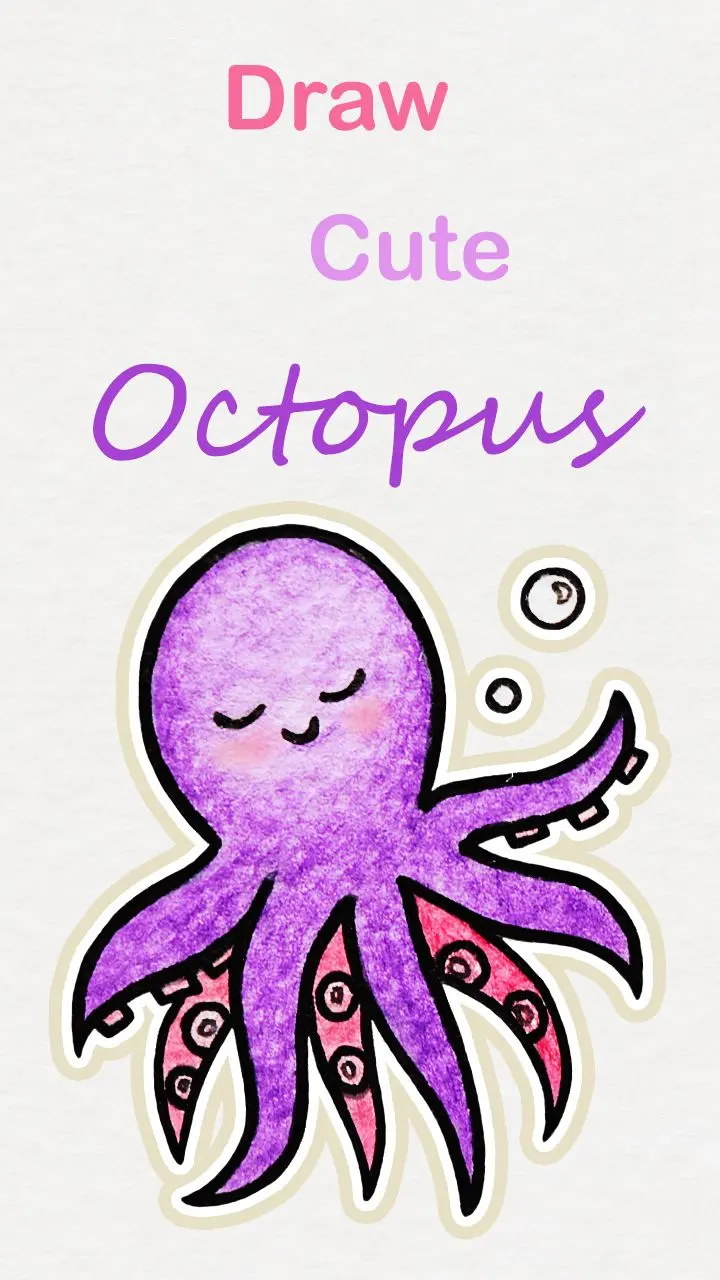
The most iconic feature of an octopus is the row of suckers lining the underside of each arm. To draw these accurately, start by thickening your skeleton lines into tapered, fleshy tubes. On the underside of these tubes, draw small, evenly spaced circles or ovals. As the tentacle curves away from the viewer, make these circles appear flatter or partially hidden to create a three-dimensional perspective.
- Draw the primary shape of the arm as a tapered cylinder.
- Sketch a series of small, overlapping circles along the inner curve of the arm.
- Add a small dot or a crescent shape inside each circle to represent the hollow cavity of the sucker.
- Vary the size of the suckers, making them larger near the base of the arm and smaller toward the tip.
- Use soft shading around the base of each sucker to give it a raised, realistic appearance.
Why proportions matter in cephalopod art
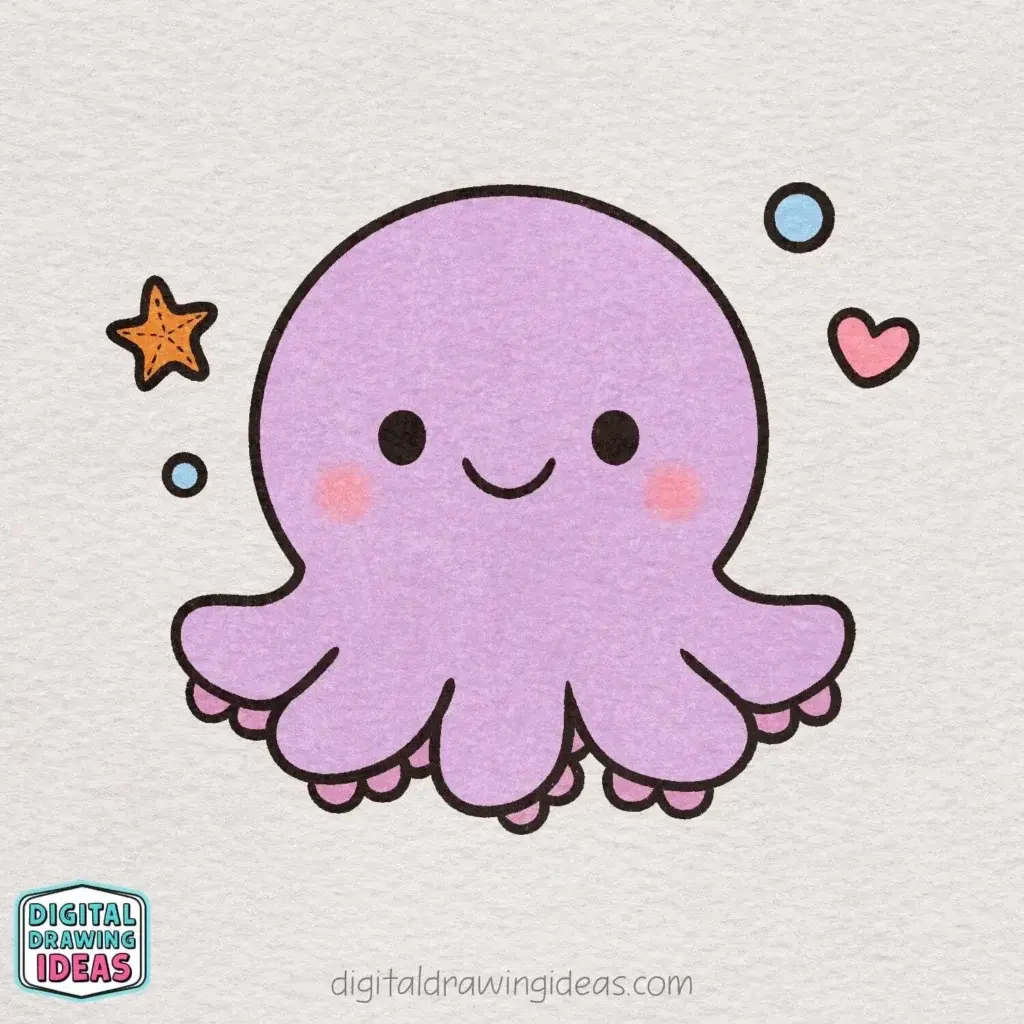
Maintaining correct proportions is essential to making your octopus look authentic rather than cartoonish. A common observation in marine biology is that the mantle should be roughly one-third to one-half the total length of the creature. If the head is too large, the octopus loses its sleek, predatory look; if it is too small, the tentacles will appear disproportionately heavy. Always check the balance of your drawing by stepping back and looking at the overall silhouette.
- Keep the mantle rounded but not perfectly circular to mimic natural anatomy.
- Ensure the arms taper significantly toward the points to suggest elegance.
- Balance the distribution of the tentacles so the drawing does not look lopsided.
- Use negative space between the arms to prevent the drawing from looking like a solid, messy blob.
- Remember that the eyes are located on the sides of the mantle, usually represented as small, dark ovals.
Common mistakes when drawing octopuses
One frequent error is drawing the tentacles as stiff, uniform sticks. In reality, octopus arms are muscular hydrostats that can bend, twist, and coil in any direction. Avoid drawing perfectly straight lines; instead, use "S" curves and overlapping arcs to show the flexibility of the limbs. Another mistake is ignoring the tapering effect, where the arm should be thickest near the mantle and very thin at the tip.
Finally, many beginners forget to add skin texture, leaving the octopus looking like a smooth balloon. You can remedy this by adding subtle bumps or wrinkles, especially near the eyes and along the tops of the arms. Avoid over-detailing the entire surface, as this can make the drawing look cluttered. Focus your texture work on the areas where light hits the body, using light cross-hatching to suggest the mottled, color-changing skin typical of these intelligent creatures. By focusing on these specific details, you will create a professional and accurate representation of an octopus.
Key facts
- Octopuses have a rounded mantle, which is the main body section containing their organs.
- An octopus possesses eight arms, not tentacles, which are lined with suckers.
- The eyes of an octopus are large and positioned on the sides of the head.
- When drawing, start with a simple oval for the mantle to establish the scale.
- Vary the curves of the arms to create a sense of fluid underwater movement.
- Avoid drawing perfectly symmetrical arms, as they naturally twist and taper toward the tips.
The bottom line
To draw an octopus, begin by sketching a rounded mantle and adding eight tapering arms that flow outward. Focus on creating organic, asymmetrical curves to mimic their natural movement. By adding suckers along the underside of each arm and placing large eyes on the head, you can achieve a recognizable and accurate illustration. Remember that fluid, non-rigid lines are essential for capturing the unique anatomy of these cephalopods.
People also ask
How many hearts does an octopus have?
An octopus has three hearts. Two hearts pump blood to the gills, while the third circulates blood to the rest of the body.
Do octopuses have bones?
No, octopuses are invertebrates. This lack of a skeletal structure allows them to squeeze through extremely tight spaces.
What is the difference between an arm and a tentacle?
Octopuses have eight arms covered in suckers from base to tip. Squids and cuttlefish have two specialized tentacles used for grabbing prey, which are distinct from their eight arms.
How do I make an octopus look like it is swimming?
Draw the mantle pointing in one direction with the arms trailing behind it. Adding motion lines or bubbles can further emphasize the creature's movement through water.
Should I draw suckers on every arm?
Yes, but keep them smaller as they get closer to the tip of the arm. Drawing them as simple circles or ovals along the underside of the limb provides realistic detail.
Why do octopuses change color?
They use specialized cells called chromatophores to change color and texture. This helps them camouflage against rocks or communicate with other octopuses.
This answer was created with the help of AI research tools and reference sources. Spotted an error? Let us know — we correct mistakes quickly. See our editorial policy.