What is Utagawa Hiroshige known for?
Short answer
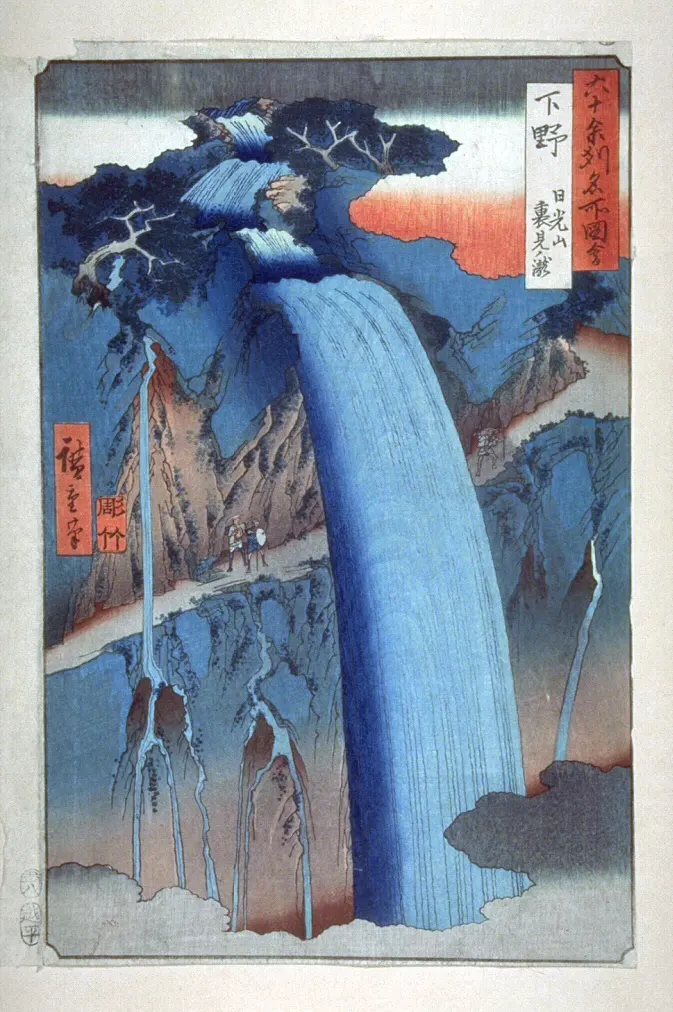
Utagawa Hiroshige was a master of the Japanese ukiyo-e woodblock print tradition, celebrated for his evocative landscapes and atmospheric depictions of nature. He is best known for his series The Fifty-three Stations of the Tōkaidō and One Hundred Famous Views of Edo, which revolutionized landscape art through innovative compositions and masterful use of color.
On this page
Why is Utagawa Hiroshige famous?
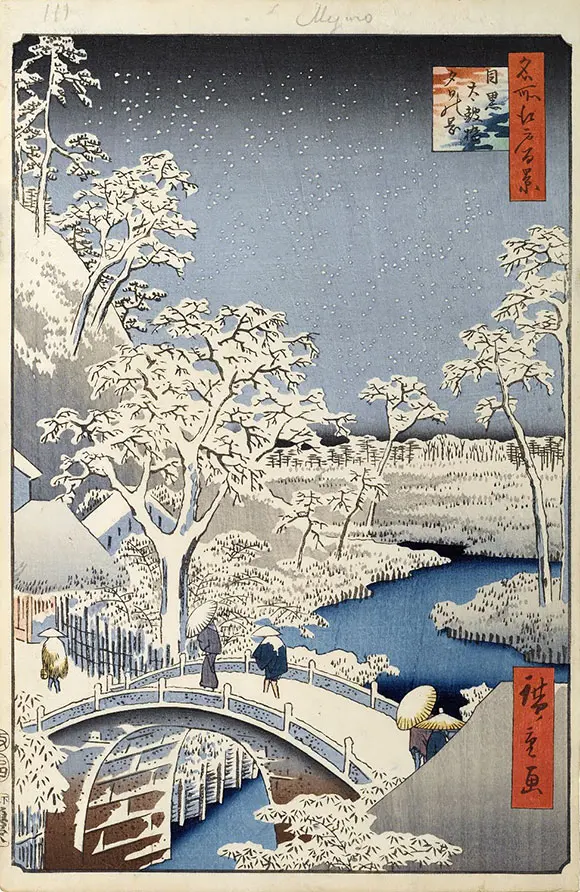
Hiroshige, born Ando Tokutaro in 1797, is regarded as one of the final great masters of the ukiyo-e genre. While his contemporaries often focused on glamorous portraits of kabuki actors or beautiful women, Hiroshige shifted the artistic focus toward the natural world and the travel experiences of ordinary citizens. His work captured the fleeting beauty of Japan’s changing seasons, from the soft fall of snow in a quiet village to the intense, humid atmosphere of a summer rainstorm.
His fame rests largely on his ability to evoke deep emotional resonance through landscape. By utilizing a unique perspective and a sophisticated color palette—most notably the distinct pigment known as "Hiroshige blue"—he transformed standard travel scenes into poetic visual narratives. His prints were not merely maps or documentation; they were personal interpretations of the Japanese landscape that resonated with both local residents and, later, international audiences.
What are his most famous works?
The artist produced thousands of prints throughout his career, but two specific series define his legacy. His breakthrough came in 1833 with The Fifty-three Stations of the Tōkaidō, a set of prints depicting the journey along the major road connecting Edo (modern-day Tokyo) and Kyoto. This series was an immediate commercial success, as it allowed people who could not afford to travel to experience the majesty of the Japanese countryside vicariously.
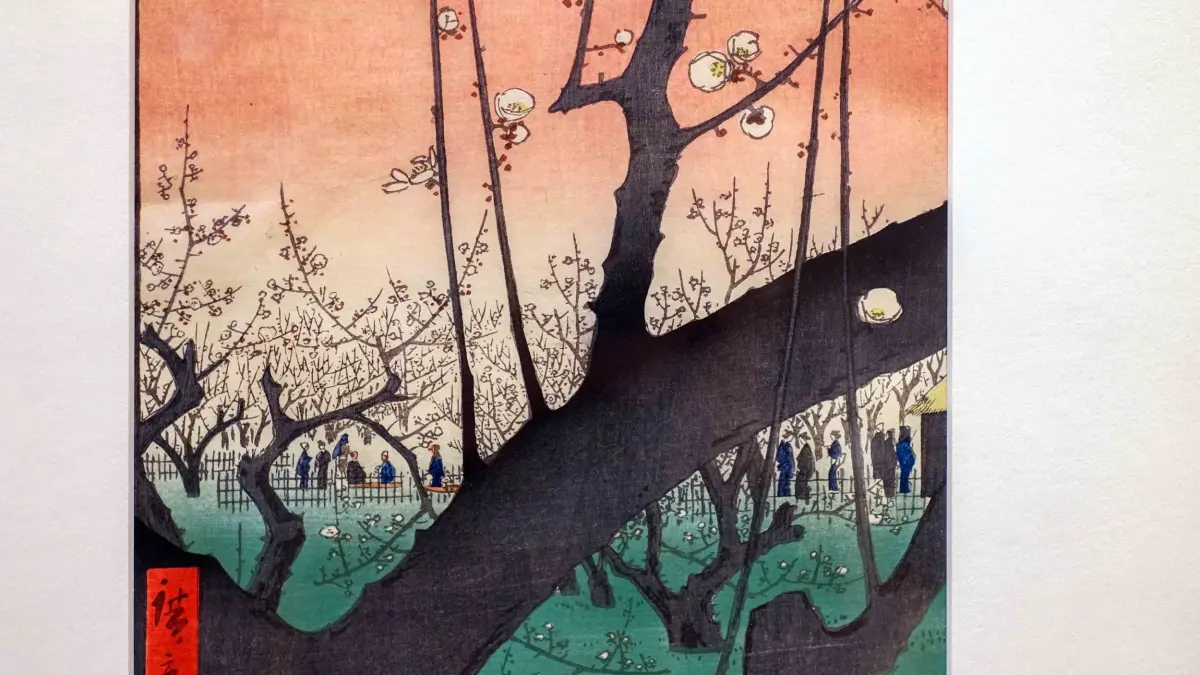
In his later years, Hiroshige created One Hundred Famous Views of Edo, a monumental project that showcased the rapid modernization and urban beauty of the capital. These prints are characterized by bold cropping and extreme foreground elements, which challenged traditional artistic norms. Some of his most celebrated individual prints include:
- Sudden Shower over Shin-Ōhashi Bridge and Atake
- Plum Park in Kameido
- Evening Snow at Kambara
- Night Snow at Kanbara
How did his style influence Western art?
Following the opening of Japanese ports to international trade in the mid-19th century, Hiroshige’s prints flooded European markets. His work became a primary catalyst for the movement known as Japonisme, which profoundly influenced the trajectory of Western modernism. Impressionist and Post-Impressionist painters were particularly drawn to his unconventional compositions, which often featured asymmetrical framing and flat areas of color that ignored traditional European perspective.
Vincent van Gogh was a notable admirer, famously creating oil-painted copies of Hiroshige’s prints to study his technique. The influence is evident in the works of artists like Claude Monet and Edgar Degas, who adopted Hiroshige’s practice of emphasizing atmospheric effects, such as mist, rain, and moonlight. By breaking away from the rigid realism of the Western academic tradition, Hiroshige helped pave the way for the development of modern art movements that prioritized subjective experience over literal representation.
How to appreciate woodblock prints for beginners
If you are new to viewing Hiroshige’s work, start by examining the technical craftsmanship involved in the production of these prints. Each image required a collaborative effort between the artist, the woodcarver, and the printer. To properly appreciate these pieces, follow these steps:
- Look for the "key block" lines, which define the composition, and observe how the colors were applied in layers to create depth.
- Examine the "bokashi" technique, where the printer manually applied varying amounts of pigment to the woodblock to create a smooth, gradient effect in skies or water.
- Consider the narrative context of the print, such as the time of day or the season, to understand the specific mood the artist intended to capture.
Avoid the mistake of viewing these prints as simple photographs or historical records. While they depict real locations, Hiroshige intentionally altered landscapes to improve the artistic balance of his compositions. Focus instead on the harmony between human activity and the natural environment, which remains the hallmark of his genius.
Common mistakes when studying Hiroshige
A frequent error among novice students is assuming that all prints bearing Hiroshige's signature are original, first-edition impressions. Because woodblocks were made of cherry wood and eventually wore down during the printing process, later editions often lack the crisp detail and vibrant color saturation of early prints. Collectors and scholars must look for specific markers, such as the quality of the paper and the presence of publisher seals, to determine if a print is a genuine period piece or a later reproduction.
Another common mistake is ignoring the collaborative nature of ukiyo-e. While Hiroshige is the credited artist, the final result was a team effort. The skill of the carver in rendering delicate lines and the printer’s ability to manage moisture levels in the paper were equally vital to the final aesthetic. By acknowledging the contributions of these artisans, you gain a more accurate understanding of how these masterpieces were created and why they remain so visually striking centuries after their initial publication.
Key facts
- Utagawa Hiroshige (1797–1858) was a master of the ukiyo-e woodblock print tradition, famous for his lyrical landscapes.
- He is best known for his series The Fifty-three Stations of the Tōkaidō, published around 1833, which captured the journey between Edo and Kyoto.
- Unlike his contemporary Hokusai, Hiroshige focused on capturing the atmospheric moods of weather, such as rain, snow, and moonlight.
- He pioneered the use of "bold cropping," where foreground objects like tree branches or lanterns frame the distant scenery.
- His work deeply influenced European Impressionist and Post-Impressionist artists, including Vincent van Gogh and Claude Monet.
- To appreciate his prints, look for the "Hiroshige blue," a distinct, vibrant pigment known as Prussian blue that he utilized to create depth.
The bottom line
Utagawa Hiroshige remains one of the most influential figures in Japanese art, celebrated for his ability to transform ordinary landscapes into evocative, poetic experiences. By mastering atmospheric conditions and innovative framing techniques, he redefined the ukiyo-e genre. His legacy persists through his profound impact on Western modernism, proving that his delicate, observant approach to nature continues to resonate with audiences across the globe today.
People also ask
How did Hiroshige's style differ from Hokusai's?
While Hokusai often depicted heroic, monumental subjects, Hiroshige favored intimate, poetic scenes of everyday life and nature. His compositions are generally softer and more focused on emotional atmosphere rather than dramatic action.
What are the most famous prints by Hiroshige?
His most iconic works are found in The Fifty-three Stations of the Tōkaidō and One Hundred Famous Views of Edo. Specific prints like "Sudden Shower over Shin-Ōhashi Bridge and Atake" are globally recognized masterpieces.
Did Hiroshige only paint landscapes?
While primarily a landscape artist, he also produced kacho-ga (bird-and-flower prints) and bijin-ga (portraits of beautiful women). However, his landscapes remain his most significant contribution to art history.
How can I identify an authentic Hiroshige print?
Authentic woodblock prints from his era feature specific publisher seals and censor marks. Collectors should look for the texture of the paper and the slight registration shifts inherent in hand-carved woodblocks.
Why are his prints often called "Japonisme"?
The term refers to the craze for Japanese art in Europe during the late 19th century. Hiroshige’s unique perspectives and flat color planes fundamentally changed how Western artists approached composition.
What common mistake should I avoid when viewing his work?
Do not mistake modern digital reproductions for original woodblock prints. Always check for the presence of wood grain patterns in the ink, which indicate a genuine hand-printed historical artifact.
This answer was created with the help of AI research tools and reference sources. Spotted an error? Let us know — we correct mistakes quickly. See our editorial policy.