What is Jacob Lawrence known for?
Short answer
Jacob Lawrence was a seminal 20th-century American painter celebrated for his "dynamic cubism" style and his profound visual narratives documenting the African American experience. He is best known for the Migration Series, a collection of 60 panels depicting the Great Migration of Black Southerners to the industrial North during the early 1900s.
On this page
Why is Jacob Lawrence famous?
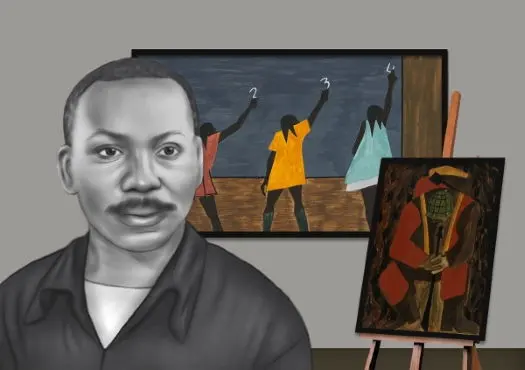
Jacob Lawrence gained national prominence for his ability to synthesize social history with a distinct, modernist aesthetic. Unlike many of his contemporaries who focused on abstract expressionism, Lawrence remained committed to figurative art that told stories of struggle, resilience, and community. His work captured the dignity of everyday life in Harlem, where he moved as a teenager and developed his artistic voice under the influence of the Works Progress Administration.
His fame is largely anchored in his narrative cycles, which function like visual literature. By creating series of paintings rather than isolated works, he provided a comprehensive look at historical events. His influence extended beyond the canvas as he became the first African American artist to be represented by a major New York gallery, breaking significant barriers in the art world. His legacy continues to inspire artists who seek to use visual media as a tool for social commentary.
What is the Migration Series?
The Migration Series stands as Lawrence’s most significant achievement, completed between 1940 and 1941 when he was just 23 years old. The series consists of 60 small tempera panels on hardboard that chronicle the mass movement of millions of African Americans from the rural South to the urban North. Each panel is accompanied by a caption written by Lawrence, providing a rhythmic, poetic context to the imagery.
The series is characterized by a flattened perspective and a bold, restricted color palette that emphasizes the urgency of the journey. The paintings document various aspects of the migration, including:
- The harsh conditions of sharecropping in the South.
- The hope and excitement of boarding trains bound for Northern cities.
- The challenges of segregation and labor exploitation in cities like Chicago and New York.
- The creation of vibrant, new communities in the urban landscape.
How to identify Jacob Lawrence's style
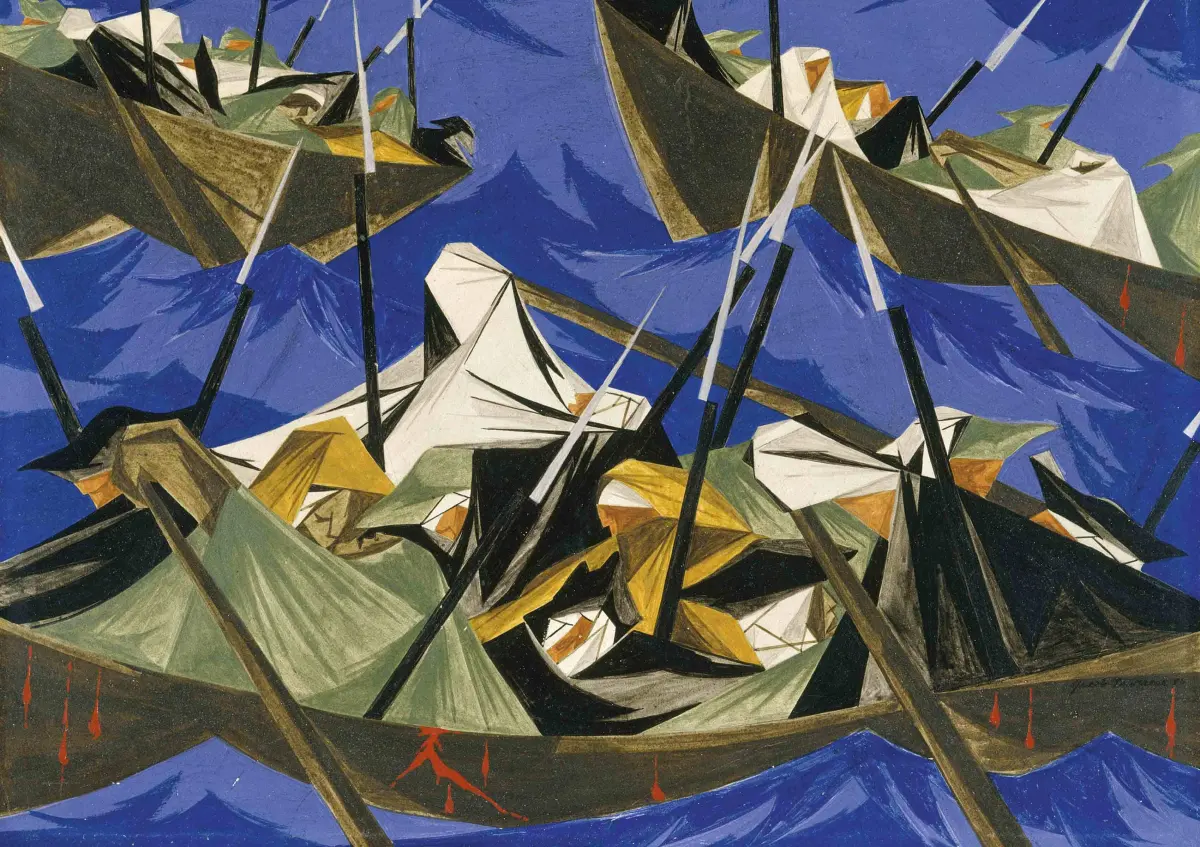
Lawrence’s style is often described as "dynamic cubism," a term he used to describe the energy and movement within his compositions. He utilized sharp, angular shapes and a vibrant, often primary color palette to create tension and rhythm. His figures are frequently stylized and simplified, focusing on the collective experience rather than individual portraiture. This approach allowed him to depict large crowds and complex historical scenes with clarity and emotional weight.
When viewing his work, look for these specific technical elements:
- Flat, two-dimensional space that avoids traditional vanishing points.
- Repetitive patterns in clothing or architecture that create a sense of mechanical or social movement.
- High-contrast colors that guide the viewer’s eyes across the narrative flow.
- A focus on the hands and tools of laborers, symbolizing the dignity of work.
Common mistakes when interpreting his art
A frequent error when viewing Lawrence’s work is assuming that his simplified, almost folk-art aesthetic implies a lack of technical training. In reality, Lawrence was a highly disciplined student of art history who studied the works of Renaissance masters and contemporary European modernists. His simplification was a deliberate choice to prioritize clarity and emotional impact over realism. Another mistake is viewing his paintings as purely historical documents rather than artistic interpretations.
While the Migration Series is factual, it is also deeply personal and stylized. Viewers should avoid:
- Overlooking the captions, which are essential to the artist's intended narrative.
- Focusing only on the suffering in his work while ignoring the themes of joy, music, and community.
- Assuming his style remained static throughout his career, as he experimented with different media and themes over six decades.
- Interpreting his work solely through the lens of political protest, as he also explored themes of universal human struggle.
How to appreciate his legacy today
To truly appreciate Jacob Lawrence, one must view his work in the context of the Harlem Renaissance and the Civil Rights Movement. His career spanned over 60 years, during which he taught at the University of Washington and continued to produce powerful works until his death in 2000. His influence is evident in the work of contemporary figurative painters who use art to address social justice. To engage with his legacy, visit major collections such as the Museum of Modern Art or the Phillips Collection, which house the two halves of the Migration Series.
Engaging with his art requires an active, patient approach:
- Read the captions aloud to experience the rhythmic cadence of his storytelling.
- Observe how he uses color to create a sense of mood, such as the somber blues of a factory scene versus the vibrant yellows of a street celebration.
- Consider how his depictions of historical labor and migration mirror current discussions regarding social equity and displacement.
- Research his later works, such as the Struggle series, to see his evolution in technique and subject matter.
Key facts
- Jacob Lawrence was a prominent 20th-century American painter known for his "dynamic cubism" style and vibrant use of primary colors.
- He is most famous for his 60-panel series, The Migration Series (1940–1941), which depicts the movement of African Americans from the rural South to the urban North.
- Lawrence focused on themes of African American history, social justice, and the everyday struggles and triumphs of Black life in America.
- To study his technique, observe how he used flat, simplified shapes and strong silhouettes to create emotional intensity without relying on realistic shading.
- When viewing his work, look for the recurring motifs of tools, hands, and architectural elements that emphasize the dignity of labor and community.
- A common mistake is interpreting his work as purely documentary; instead, view it as a narrative art form that blends personal experience with historical research.
The bottom line
Jacob Lawrence remains a definitive figure in American art, celebrated for his ability to synthesize historical narrative with a distinct, modernist aesthetic. By documenting the Great Migration and the lives of Black Americans, he transformed personal and collective history into powerful visual storytelling. His legacy serves as a vital reminder of how art can effectively communicate social truths while maintaining a bold, unique artistic vision.
People also ask
What medium did Jacob Lawrence primarily use?
Lawrence primarily worked with tempera paint on hardboard panels. This medium allowed him to apply bold, flat colors that dried quickly and maintained their brightness over time.
Did Jacob Lawrence have a formal art education?
Yes, he attended classes at the Harlem Art Workshop and the American Artists School in New York City. He was heavily influenced by the cultural environment of the Harlem Renaissance during his youth.
Where are the panels of The Migration Series located?
The series is split between two institutions: the Museum of Modern Art in New York City and The Phillips Collection in Washington, D.C. They are occasionally reunited for major exhibitions.
What was the significance of the Harlem Renaissance to his career?
The Harlem Renaissance provided Lawrence with a community of Black intellectuals and artists who encouraged his focus on African American history. This environment shaped his commitment to social storytelling through visual art.
Did he hold a teaching position?
Lawrence taught at the University of Washington in Seattle for 15 years, starting in 1971. He was a dedicated educator who mentored many students throughout his career.
How did he choose his subjects?
He often researched historical figures and events in libraries, such as the Schomburg Center for Research in Black Culture. He frequently selected subjects that highlighted the resilience and collective spirit of the Black community.
This answer was created with the help of AI research tools and reference sources. Spotted an error? Let us know — we correct mistakes quickly. See our editorial policy.