What is Albrecht Dürer known for?
Short answer
Albrecht Dürer was a German Renaissance polymath renowned for revolutionizing printmaking, elevating the status of the artist, and mastering human proportion. His intricate woodcuts, copper engravings, and self-portraits bridged Northern European Gothic traditions with Italian Renaissance techniques, establishing him as one of history's most influential draftsmen and theorists of visual art.
On this page
Why is Albrecht Dürer famous?
Albrecht Dürer is considered the greatest artist of the Northern Renaissance. Born in Nuremberg in 1471, he transformed the medium of printmaking from a simple craft into a sophisticated fine art form. Before Dürer, prints were often viewed as secondary to painting, but his technical precision and complex compositions brought them international acclaim.
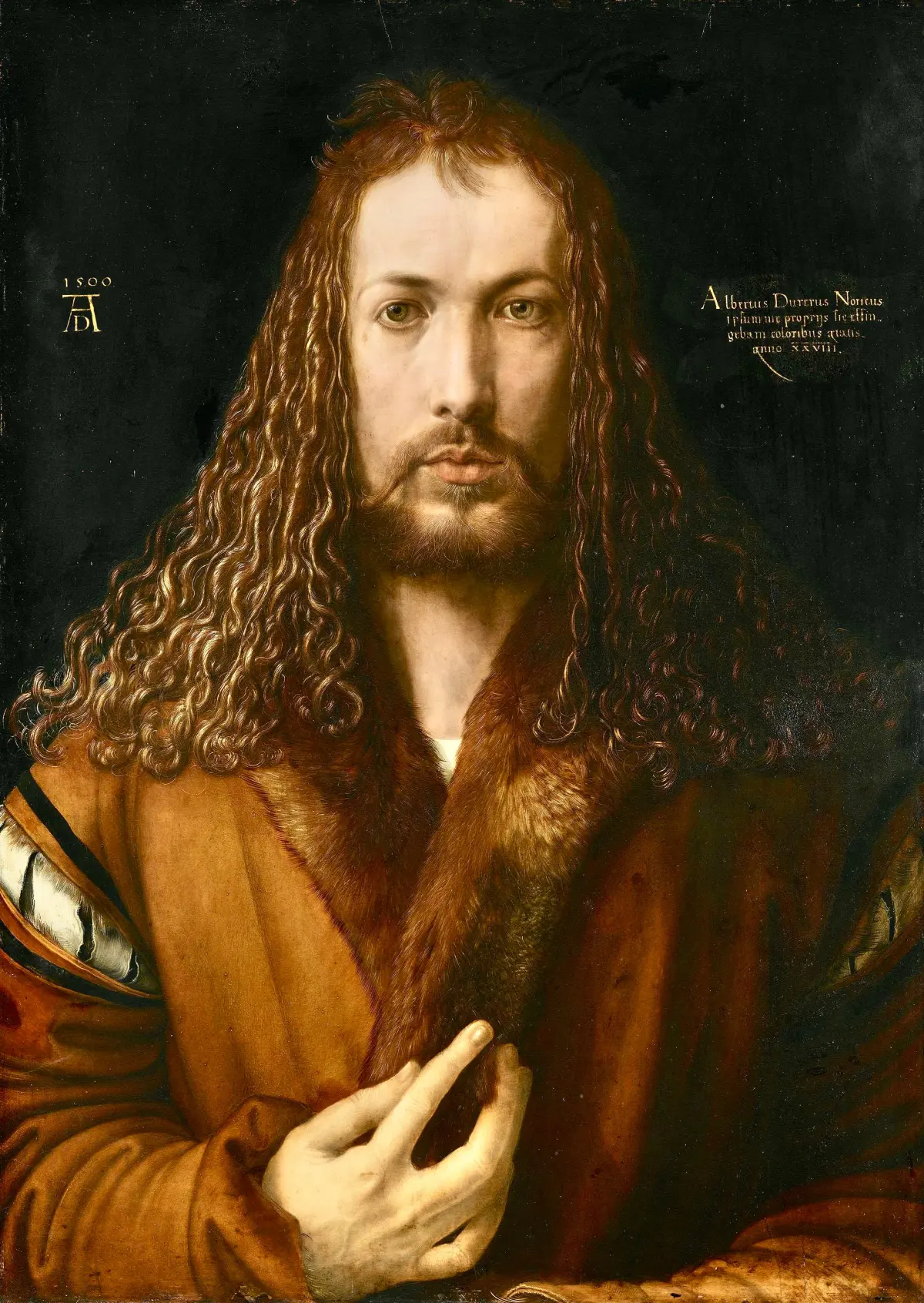
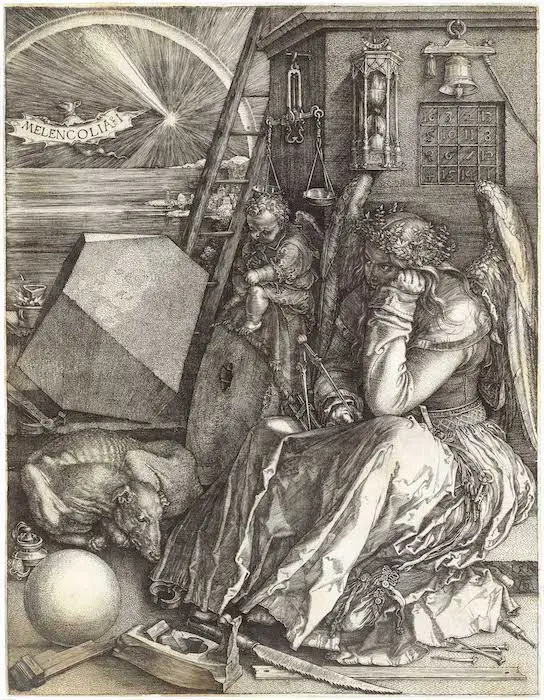
He was a master of both woodcut and copper engraving, producing iconic works like "Melencolia I" and "Knight, Death and the Devil." Beyond his technical skill, Dürer was a pioneer in self-portraiture. He was one of the first artists to document his own life and appearance with such psychological depth, famously depicting himself in a Christ-like pose in his 1500 self-portrait.
- He traveled extensively to Italy, bringing back new ideas about perspective.
- He wrote treatises on geometry and human proportion for artists.
- He successfully marketed his own prints, becoming one of the first artists to achieve global fame during his lifetime.
How did Dürer change printmaking?
Dürer’s influence on printmaking cannot be overstated. He pushed the limits of the woodcut by introducing subtle tonal variations through dense hatching and cross-hatching, which had previously been impossible to achieve. By collaborating with highly skilled block cutters, he ensured his intricate designs were preserved with remarkable accuracy.
His copper engravings, such as "St. Jerome in His Study," demonstrate an unprecedented level of detail and light manipulation. By using a burin to carve fine lines into metal, he created textures that mimicked the appearance of fabric, stone, and fur. This technical mastery allowed his prints to be reproduced and sold across Europe, effectively democratizing art for a wider audience.
- Prepare the metal plate by polishing it until it is perfectly smooth.
- Carefully carve the design using a sharp steel burin.
- Apply ink to the plate, ensuring it fills the grooves.
- Use a high-pressure press to transfer the image onto damp paper.
What are Dürer’s most famous works?
While Dürer produced hundreds of works, several stand out for their historical and artistic significance. His "Apocalypse" series, published in 1498, brought him immediate fame and showcased his ability to handle complex, dramatic themes. These woodcuts are characterized by their intense energy and innovative use of space.
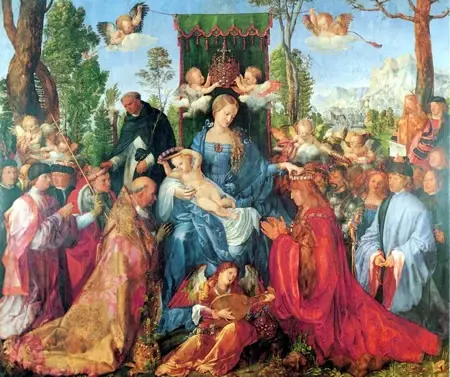
In addition to his prints, his paintings remain cornerstones of art history. Works like the "Four Apostles" demonstrate his mastery of oil painting and his deep engagement with the religious debates of the Reformation. His watercolors, particularly his nature studies like "The Large Turf," show a scientific interest in the natural world that was years ahead of his contemporaries.
- "The Rhinoceros": An iconic woodcut based on a written description of the animal.
- "Melencolia I": A complex engraving filled with symbolic geometric objects.
- "Self-Portrait at Twenty-Eight": A bold work showcasing his artistic identity.
How to study Dürer’s art techniques?
To understand Dürer’s approach, one must look closely at his use of line and perspective. He was obsessed with the mathematical foundations of beauty, spending years studying the proportions of the human body. He believed that art should be based on scientific principles, a belief he documented in his four-volume work, "Four Books on Human Proportion."
If you are interested in analyzing his style, focus on how he uses light to create volume. Dürer rarely relied on flat color; instead, he used a system of lines to suggest depth and weight. This analytical approach is what separates him from the more intuitive artists of his time. By examining his preparatory sketches, you can see how he meticulously planned every element before committing to the final print.
- Observe how he uses cross-hatching to create shadows.
- Look for the "AD" monogram, which he used to protect his intellectual property.
- Compare his early woodcuts with his later, more refined engravings.
Common mistakes when analyzing Dürer
One common mistake is viewing Dürer’s work solely through the lens of modern art, ignoring the religious and social context of the 16th century. His prints were often deeply tied to the political instability of the Reformation and the humanist movement in Germany. Without this context, the symbolic meaning of his complex engravings can be easily misinterpreted.
Another error is assuming that Dürer worked in isolation. In reality, he was a savvy businessman who operated a busy studio and maintained a vast network of international contacts. He was deeply influenced by Italian masters like Leonardo da Vinci and Andrea Mantegna, and his work represents a synthesis of these diverse influences. When studying him, avoid focusing only on the aesthetics; consider how his work functioned as a commercial product and a vehicle for his intellectual ideas. By avoiding these pitfalls, you can gain a much clearer understanding of his enduring legacy.
Key facts
- Albrecht Dürer (1471–1528) was the most influential German artist of the Northern Renaissance, excelling in painting, printmaking, and theoretical writing.
- He revolutionized printmaking by elevating woodcuts and copper engravings to the status of fine art through unprecedented detail and complex shading.
- His famous 1504 engraving Adam and Eve demonstrates his obsession with anatomical precision and the mathematical study of human proportions.
- Dürer was the first Northern European artist to travel to Italy, where he integrated Renaissance perspective and classical ideals into his work.
- He produced a series of highly detailed self-portraits, including his 1500 work that famously depicted himself with the solemnity of a religious icon.
- When studying his prints, use a magnifying glass to appreciate his "cross-hatching" technique, which creates depth and volume without using color.
The bottom line
Albrecht Dürer remains a titan of art history because he mastered the technical precision of engraving while embracing the intellectual rigor of the Renaissance. By blending Northern craftsmanship with Italian theory, he transformed printmaking into a sophisticated medium. His legacy endures through his iconic self-portraits, anatomical studies, and his role as an early pioneer of artistic branding, which forever changed how artists produced and marketed their work.
People also ask
Why is Dürer considered a bridge between the Middle Ages and the Renaissance?
Dürer combined the meticulous, realistic detail of Northern Gothic art with the scientific perspective and humanism he studied in Italy. This synthesis helped spread Renaissance ideals across Northern Europe.
What is the significance of Dürer’s monogram?
He was one of the first artists to consistently use a signature monogram, "AD," to brand his work. This helped protect his intellectual property and established his personal reputation as a master craftsman.
Did Dürer paint religious subjects?
Yes, he was deeply religious and produced significant works like the Apocalypse woodcut series. These images were widely distributed and helped shape visual interpretations of biblical events for centuries.
What was Dürer’s contribution to art theory?
He wrote influential books on geometry, perspective, and human proportions. These texts were designed to teach other artists how to construct balanced, mathematically sound compositions.
How did Dürer influence the printing industry?
By producing high-quality, reproducible prints, he made art accessible to the middle class. His business model allowed him to achieve financial independence and international fame beyond his home city of Nuremberg.
What is a common mistake when viewing Dürer’s prints?
Many viewers overlook the physical texture of the paper and the pressure of the ink. To truly understand his skill, look for the subtle indentations on the back of original prints, which confirm they were pressed from hand-carved plates.
This answer was created with the help of AI research tools and reference sources. Spotted an error? Let us know — we correct mistakes quickly. See our editorial policy.