How do you draw a black hole?
Short answer
To draw a black hole, focus on the accretion disk and the event horizon. Use high-contrast shading to depict the glowing, swirling gas surrounding the central darkness. Incorporate gravitational lensing by distorting background star fields. By layering deep blacks against bright, fiery colors, you create the illusion of intense, light-bending cosmic gravity.
On this page
How to draw a black hole step by step
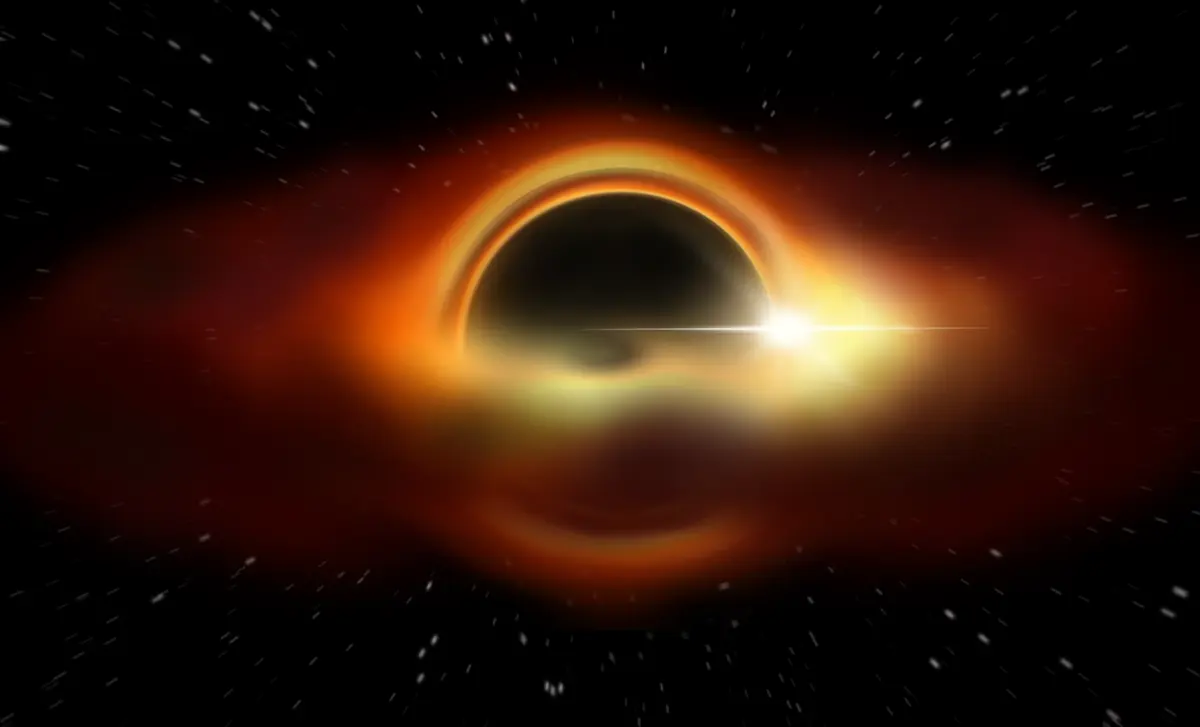
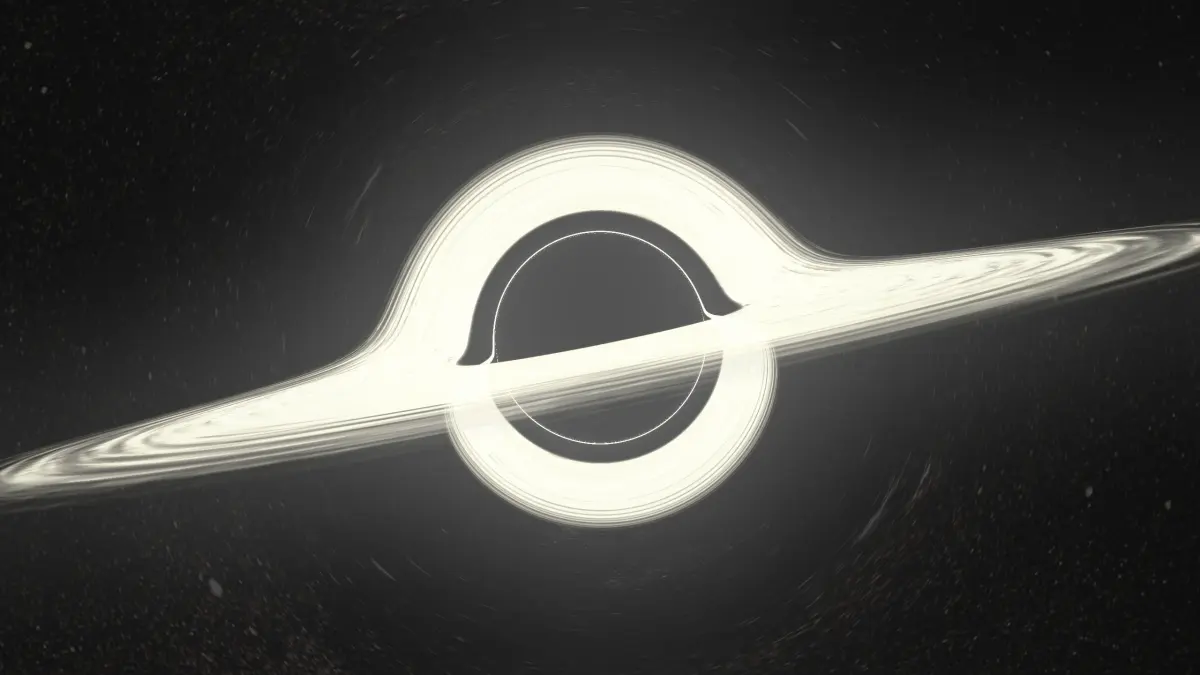
Drawing a black hole requires a balance between absolute darkness and radiant light. Begin by sketching a central, perfectly circular void, which represents the event horizon where light cannot escape. Surround this void with an elliptical ring, the accretion disk, which consists of superheated gas and dust spiraling inward at relativistic speeds. Use a compass to ensure the central circle is precise, as symmetry is vital for a realistic look.
Once the basic structure is set, follow these steps to add depth:
- Sketch the accretion disk with a slight tilt to provide a three-dimensional perspective.
- Draw the "top" portion of the disk brighter and more detailed than the bottom, as it is tilted toward the viewer.
- Add a thin, glowing ring of light—the photon sphere—immediately hugging the edge of the central darkness.
- Use a blending stump or soft charcoal to create a gradient from the bright inner disk to the darker outer edges.
What materials are best for drawing space
For the most striking results, you need materials that can achieve deep, matte blacks and vibrant highlights. Graphite pencils often leave a reflective sheen that ruins the illusion of an infinite void, so charcoal or carbon-based pencils are superior. A high-quality black pastel or a soft charcoal stick will allow you to fill large areas of the event horizon without leaving visible pencil strokes.
Pair these dark mediums with high-contrast tools for the accretion disk. White gel pens, opaque gouache, or a kneaded eraser are essential for pulling light out of the darkness. You should work on heavy-weight, cold-press illustration board or textured charcoal paper. The texture helps catch the pigment, allowing for smoother transitions between the intense heat of the disk and the cold, empty vacuum of the surrounding space.
Why black holes look the way they do
The visual appearance of a black hole is dictated by the intense warping of spacetime, a phenomenon known as gravitational lensing. As light from stars behind the black hole travels toward the observer, the gravity bends the light rays, creating a distorted, halo-like effect. This is why you see a bright ring of light even though the center itself is invisible. The light you draw is essentially the "echo" of everything trapped in the hole's vicinity.
When depicting this, remember that the "top" of the accretion disk should appear to wrap over the top of the black hole. Similarly, the "bottom" portion is bent upward, creating a visual effect where the disk appears to loop around the sphere. This is not artistic license but a direct result of Einstein’s theory of general relativity. By including these distortions, you move your drawing from a simple circle to a scientifically grounded representation of a singularity.
Common mistakes when drawing black holes
A frequent error is drawing the accretion disk as a flat, two-dimensional ring. In reality, the disk is a massive, rotating structure that should have thickness and volume. Avoid making the edges of the disk too sharp; instead, use soft, feathered edges to suggest the gaseous, fluid nature of the material. If the transition between the disk and the background is too abrupt, the drawing will look like a cutout rather than a celestial object.
Another common mistake is neglecting the background. A black hole does not exist in isolation, and it should be framed by the environment it consumes. Consider these elements to improve your composition:
- Avoid placing the black hole in a completely empty white space, which makes it look like a black dot rather than a massive force.
- Do not make the surrounding stars perfectly round; distort them slightly near the event horizon to mimic the effect of light bending.
- Ensure the light source on the accretion disk is consistent, as the gas glows primarily due to friction and intense heat.
How to add realistic cosmic effects
To finalize your drawing, focus on the atmosphere surrounding the disk. Black holes are often surrounded by jets of plasma that shoot out from the poles, perpendicular to the accretion disk. You can add these by using a fine-tipped eraser to pull thin, wispy lines of light away from the center of the sphere. These jets add a sense of motion and immense power to the otherwise static image.
Finally, add a subtle "glow" to the outer edges of the entire structure. Use a soft brush to apply a very light dusting of charcoal around the disk, then blend it outward into the darkness of the paper. This creates a soft halo effect, representing the radiation being emitted into space. By carefully controlling the contrast between the absolute black of the hole and the soft, glowing fringes, you create a professional, awe-inspiring image that captures the mystery of the cosmos.
Key facts
- A black hole is not a hole but a massive object with gravity so strong that even light cannot escape.
- The "event horizon" is the spherical boundary beyond which nothing can return once it crosses.
- The "accretion disk" is a glowing, flattened ring of superheated gas and dust swirling around the center.
- Light bends around a black hole due to gravitational lensing, creating a distorted halo effect.
- Use a dark, circular void for the center and bright, warm colors like orange and white for the disk.
- Avoid drawing a simple flat circle; remember that a black hole is a three-dimensional sphere.
The bottom line
To draw a black hole accurately, focus on the contrast between the absolute darkness of the event horizon and the brilliant, swirling light of the accretion disk. Remember that you are depicting a massive, spherical object that warps the light around it. By incorporating the distorted halo effect and a glowing, textured disk, you can create a scientifically grounded representation of these mysterious cosmic phenomena.
People also ask
Why do black holes look like they have a ring around them?
The ring is an accretion disk consisting of matter being pulled toward the black hole. As this matter accelerates and heats up, it emits intense radiation that glows brightly.
Can you see a black hole directly?
You cannot see the black hole itself because it reflects no light. Astronomers observe them by looking at the way their gravity affects nearby stars and the light from the surrounding disk.
What is the "shadow" of a black hole?
The shadow is the dark, circular region at the center caused by light being captured by the event horizon. It is significantly larger than the actual physical size of the black hole.
Why does the top of the ring look brighter than the bottom?
This is caused by the Doppler effect and gravitational lensing. Light from the side of the disk rotating toward the observer appears brighter, while the light from the back is bent over the top.
Should I use a black or white background for my drawing?
A black background is best to represent the vacuum of space. This allows the bright, glowing gases of the accretion disk to stand out with high contrast.
Is a black hole a funnel or a sphere?
Despite common illustrations, black holes are spherical objects in three-dimensional space. The funnel shape is often used in diagrams to represent the curvature of spacetime, not the physical object.
This answer was created with the help of AI research tools and reference sources. Spotted an error? Let us know — we correct mistakes quickly. See our editorial policy.