What is Dada art?
Short answer
Dada was an avant-garde art movement that emerged in Zurich around 1916 as a reaction to the horrors of World War I. Characterized by absurdity, irrationality, and anti-establishment sentiment, Dadaists rejected traditional aesthetics and logic. They utilized techniques like collage, readymades, and performance to challenge the definition of art itself.
On this page
What were the origins of Dada art?
The Dada movement began at the Cabaret Voltaire in Zurich, Switzerland, in February 1916. A group of poets, writers, and artists—including Hugo Ball, Tristan Tzara, and Jean Arp—sought to protest the nationalism and bourgeois values they believed led to the devastation of the First World War. They viewed the prevailing cultural norms as hypocritical and fundamentally broken, choosing to respond with nonsense, satire, and chaos.
The name "Dada" was chosen by chance, reportedly by stabbing a knife into a dictionary. While the term has no specific meaning, it symbolized the movement's rejection of traditional logic and its embrace of the infantile and the irrational. By operating outside the boundaries of conventional art, the group aimed to shock the public into questioning the stability and morality of modern society.
How do you identify Dada art?
Dadaist works are defined by their rejection of craftsmanship and their focus on conceptual intent. Because the artists sought to destroy the "aura" of the masterpiece, their pieces often appear intentionally crude or unfinished. You can identify the movement by looking for these recurring characteristics:
- The use of "readymades," which are mass-produced objects selected by the artist and designated as art.
- Photomontage, which involves cutting up and rearranging photographs from newspapers and magazines to create new, often jarring, narratives.
- The presence of chance and randomness, such as dropping paper scraps onto a surface to determine the composition of a work.
- Anti-art slogans and irreverent, nonsensical text that mocks political or religious authority.
These works were never intended to be aesthetically pleasing in the traditional sense. Instead, they function as visual provocations designed to disrupt the viewer's expectations and force a confrontation with the absurdity of the human condition.
Who were the most famous Dada artists?
The movement quickly spread from Zurich to other major cities, including Berlin, Cologne, Paris, and New York. Each region developed its own unique flavor of Dada, ranging from the highly political works of the Berlin group to the more conceptual pieces produced in America. Key figures who defined the movement include:
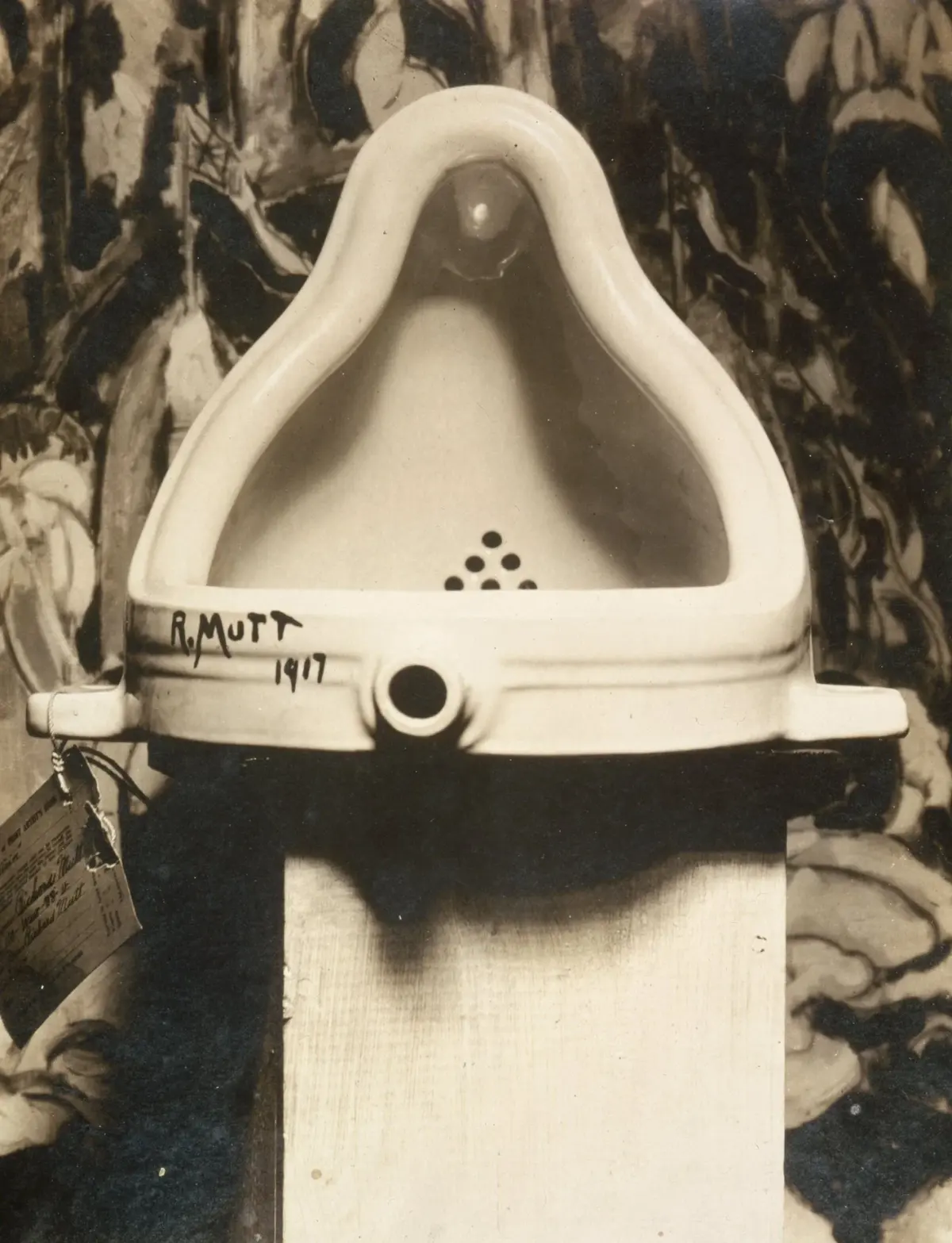
- Marcel Duchamp: Famous for his "readymades," such as Fountain (1917), a porcelain urinal signed with a pseudonym.
- Hannah Höch: A pioneer of photomontage who used her work to critique gender roles and the political climate of the Weimar Republic.
- Man Ray: A versatile artist known for his experimental photography and "rayographs," which were created without a camera.
- Francis Picabia: Known for his complex, mechanical-looking drawings that satirized the obsession with technology.
These artists moved between mediums with ease, often collaborating on manifestos, journals, and public performances that blurred the line between art and life. Their collective influence fundamentally altered the trajectory of 20th-century creative expression.
How to create art in the Dada style?
If you wish to experiment with the Dadaist approach, you must prioritize concept over technical skill. The goal is to bypass conscious control and allow the irrational to guide your creative process. Follow these steps to engage with the philosophy of the movement:
- Select a mundane, everyday object and place it in a context where it does not belong to see if it gains new meaning.
- Cut out headlines and images from a newspaper, shuffle them, and glue them onto a page in the order they land to create a "chance poem."
- Create a collage using materials that typically do not go together, such as industrial waste combined with delicate lace or classical portraiture.
- Write a manifesto that outlines your frustrations with current societal norms, focusing on irony and contradiction.
By removing the pressure to produce something "beautiful," you open yourself up to the raw, unfiltered expression that defined the Dadaists. The objective is to provoke thought rather than to decorate a wall.
Common mistakes when studying Dada art?
A frequent error is assuming that Dada was merely a joke or a meaningless prank. While the movement utilized humor, its underlying motivation was deeply serious and rooted in political trauma. Dismissing Dada as "just nonsense" ignores the intellectual rigor required to dismantle the artistic conventions of the time. Another mistake is expecting a unified style; because Dada was decentralized, it looked different depending on the city and the artist’s specific grievances.
Furthermore, do not make the mistake of viewing Dada in isolation from its historical context. Without the backdrop of the First World War, the movement's intense cynicism and its desire to "kill" art lose their primary significance. Always consider the social environment of the 1910s and 1920s when analyzing these works. By understanding the anger and confusion that fueled the movement, you will gain a much clearer picture of why Dada remains a vital and revolutionary chapter in the history of modern art.
Key facts
- Dada emerged in 1916 at the Cabaret Voltaire in Zurich, Switzerland, as a protest against the horrors of World War I.
- The movement rejected traditional aesthetics, logic, and bourgeois values, favoring nonsense, irrationality, and intuition instead.
- Marcel Duchamp’s "Fountain" (1917), a signed porcelain urinal, remains the most iconic example of a "readymade" art object.
- To create a Dadaist poem, Tristan Tzara suggested cutting words from a newspaper, shaking them in a bag, and pasting them in the order they emerge.
- Dadaism directly paved the way for Surrealism, Pop Art, and the conceptual art movements of the late 20th century.
- Avoid trying to make "pretty" or "meaningful" art; the goal is to challenge the viewer's expectations and disrupt conventional artistic standards.
The bottom line
Dada was a radical, international anti-art movement that surfaced during World War I to challenge the societal norms that led to global conflict. By embracing absurdity, irony, and the use of everyday objects, Dadaists dismantled the traditional boundaries of creative expression. Ultimately, the movement proved that art does not require aesthetic beauty or technical perfection, leaving a lasting legacy that continues to influence contemporary conceptual art today.
People also ask
Why is it called Dada?
The name was chosen randomly by founders Hugo Ball and Tristan Tzara by stabbing a knife into a French-German dictionary. It is a nonsensical word that implies a childlike, meaningless state, fitting the movement's rejection of intellectualism.
What is a readymade?
A readymade is an ordinary, mass-produced object selected by an artist and presented as art. By removing the item from its functional context and placing it in a gallery, the artist challenges the definition of creativity.
Was Dada an organized art style?
No, Dada was an anti-art movement that intentionally lacked a cohesive style or manifesto. It relied on spontaneity, performance, and provocation rather than technical mastery or formal rules.
Who were the most influential Dada artists?
Key figures included Marcel Duchamp, Hannah Höch, Man Ray, Francis Picabia, and Hans Arp. Each artist brought unique approaches, ranging from photomontage and collage to performance and experimental film.
How did Dada influence modern art?
Dada introduced the idea that the concept behind an artwork is more important than the physical craft. This philosophy became the foundation for conceptual art, performance art, and multimedia installations seen in galleries today.
Can anyone create Dadaist art?
Yes, because Dada celebrates the amateur and the absurd over professional skill. Anyone can use found objects or random techniques to create work that questions the status quo of the art world.
This answer was created with the help of AI research tools and reference sources. Spotted an error? Let us know — we correct mistakes quickly. See our editorial policy.