What is a traditional tattoo?
Short answer
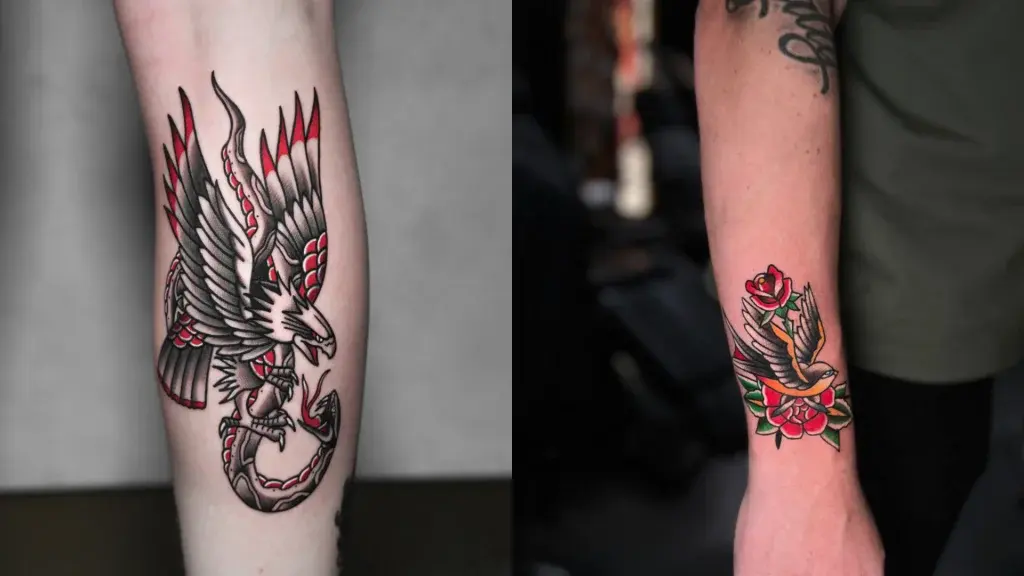
Traditional tattooing, often called American Traditional or Old School, is a distinct style defined by bold black outlines, a limited color palette of red, yellow, green, and black, and iconic, two-dimensional imagery. Rooted in early 20th-century maritime culture, it emphasizes durability, clarity, and timeless symbolism that remains legible on the skin for decades.
On this page
What defines the traditional tattoo style
The American Traditional style emerged in the early 1900s, popularized by legendary tattooists like Sailor Jerry Collins and Bert Grimm. These artists focused on high-contrast designs that could be applied quickly and remain vibrant as the skin aged. The aesthetic is characterized by heavy, solid black linework that acts as a structural frame for the image.
Colors in this style are intentionally restricted to a primary palette. Artists typically use deep reds, bright yellows, forest greens, and occasionally blue or brown. Shading is minimal and usually consists of solid black gradients rather than soft, realistic transitions. This approach ensures the tattoo retains its shape and impact long after the initial healing process is complete.
Common symbols and their meanings
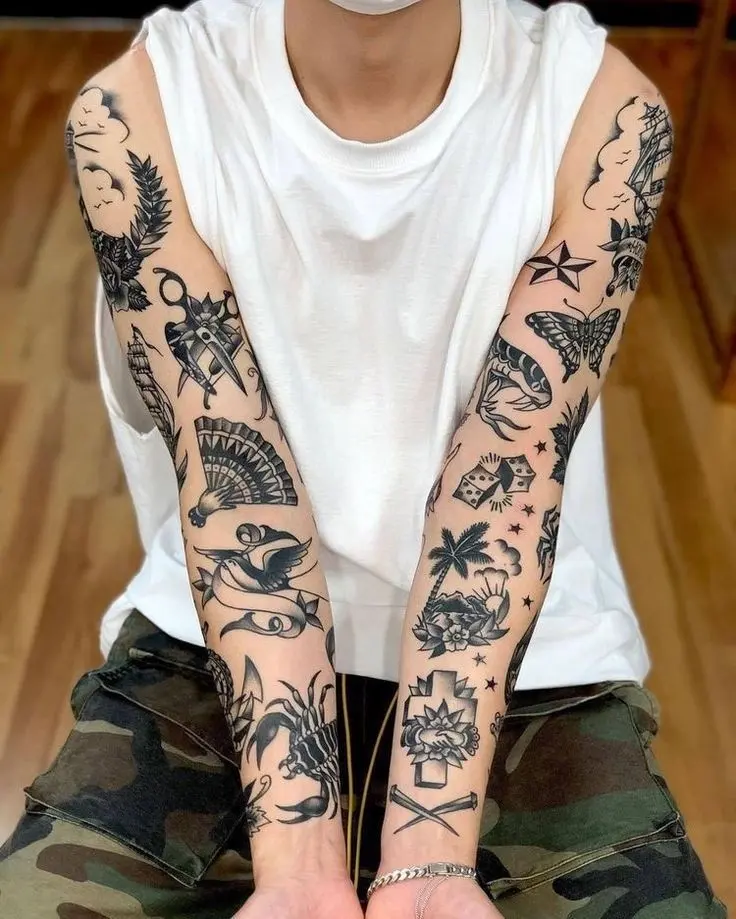
Traditional tattoos rely on a specific lexicon of imagery that evolved from nautical and military traditions. These icons were often chosen as talismans or reminders of travels, hardships, and personal values. While modern interpretations exist, the core motifs remain deeply tied to the history of the craft.
- Anchors: Represent stability, safety, and a connection to the sea.
- Swallows: Historically signifying that a sailor had traveled 5,000 miles.
- Eagles: Symbols of patriotism, strength, and freedom.
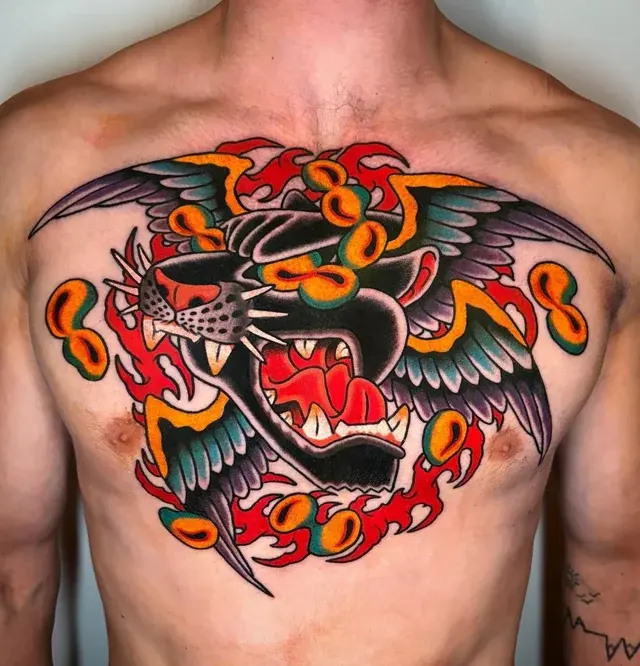
- Panthers: Often depicted in a stalking pose to represent power and aggression.
- Daggers: Frequently paired with hearts or snakes to symbolize betrayal or protection.
- Roses: Classic emblems of love, beauty, and the cycle of life.
These symbols are rarely altered significantly, as their cultural weight and visual simplicity are what define the genre's enduring appeal.
How to prepare for a traditional tattoo
Getting a traditional tattoo requires selecting an artist who specializes in the style's specific technical requirements. Because the bold lines and solid color packing are unforgiving, you must review an artist's portfolio to ensure they can pull a clean, consistent line. Do not settle for a generalist if you want a classic, crisp result.
- Research artists who specifically list "American Traditional" as their primary focus.
- Schedule a consultation to discuss your placement and size requirements.
- Eat a substantial meal before your appointment to keep your blood sugar stable.
- Wear loose, comfortable clothing that allows easy access to the area being tattooed.
- Hydrate thoroughly in the days leading up to your session to ensure your skin is supple.
Avoid drinking alcohol or taking blood-thinning medications for 24 hours before your appointment, as these can increase bleeding and make it difficult for the artist to pack ink effectively.
Common mistakes when getting traditional tattoos
One frequent error is choosing a design that is too small for the level of detail requested. Traditional tattoos rely on bold lines that need space to breathe; if a design is compressed, the ink may blur over time as the skin naturally regenerates. Always listen to your artist if they suggest increasing the size for better longevity.
Another mistake is failing to follow the aftercare instructions provided by the studio. Traditional tattoos involve heavy saturation, which can lead to significant scabbing if not properly cared for. Avoid the following:
- Submerging the tattoo in pools, hot tubs, or baths during the first two weeks.
- Exposing the healing skin to direct sunlight, which can fade the bold colors.
- Picking or scratching at the scabs, which can pull out the ink and cause scarring.
- Applying thick, scented lotions that can clog pores and lead to irritation.
Why traditional tattoos age better than other styles
The longevity of a traditional tattoo is primarily due to its technical construction. Unlike fine-line or hyper-realistic tattoos that rely on subtle shading and delicate needles, traditional work uses thicker needles and deep, solid pigment application. This density of ink creates a permanent mark that resists the fading effects of ultraviolet light and cellular turnover better than lighter styles.
Furthermore, the simplicity of the design prevents the tattoo from becoming an illegible blur as the skin ages. Because the outlines are so prominent, the image remains recognizable even as the colors soften over decades. This durability is the hallmark of the style, making it a favorite for those who view tattoos as a lifelong commitment rather than a temporary trend. By choosing a design with high contrast and clear, bold imagery, you ensure that your tattoo remains a striking piece of body art for the rest of your life.
Key facts
- Traditional tattoos, often called "American Traditional" or "Old School," are defined by bold black outlines and a limited color palette of red, yellow, green, and black.
- The style gained prominence in the early 20th century, popularized by iconic artists like Norman "Sailor Jerry" Collins in Honolulu.
- Designs typically feature recurring motifs such as anchors, swallows, roses, daggers, eagles, and nautical themes.
- These tattoos are designed for longevity; the thick lines and solid color saturation prevent the image from blurring as the skin ages.
- When getting a traditional tattoo, ensure your artist has a portfolio specifically showcasing clean, consistent line work and solid color packing.
- Avoid intricate, hyper-realistic shading or fine-line details, as these are not characteristic of the traditional style and may age poorly.
The bottom line
Traditional tattooing remains a foundational pillar of body art, celebrated for its timeless aesthetic and remarkable durability. By prioritizing bold, iconic imagery and a restricted color scheme, this style ensures that designs remain clear and vibrant throughout a person's life. Whether you choose a classic anchor or a rose, selecting a skilled artist who respects these traditional techniques guarantees a high-quality, long-lasting piece of permanent art.
People also ask
How long do traditional tattoos take to heal?
Most traditional tattoos take two to four weeks to heal on the surface, though deeper skin layers may take longer. Proper aftercare, such as keeping the area clean and moisturized, is essential to prevent infection and color loss.
Are traditional tattoos more painful than other styles?
Pain levels are subjective and depend on the placement of the tattoo rather than the style itself. However, because traditional tattoos often require solid color packing, the artist may go over the same area multiple times, which can increase discomfort.
Can traditional tattoos be done in color or only black and gray?
While they can be done in black and gray, the traditional style is most famous for its vibrant, primary-color aesthetic. Using a limited, bold color palette is what gives the style its signature look and high-contrast appeal.
Why are traditional tattoo designs often simple?
The simplicity of the designs stems from the technical limitations of early 20th-century tattooing equipment and the desire for high visibility. These designs were meant to be easily readable from a distance and to remain distinct even as the ink settled over decades.
Is it okay to get a small traditional tattoo as a first tattoo?
Yes, small traditional pieces are excellent for beginners because they are manageable in size and time. Their bold nature ensures that even a small design remains legible and visually striking on the skin.
Do traditional tattoos fade faster than modern styles?
They generally fade slower than other styles because the heavy black outlines act as a frame that holds the color in place. The high contrast and solid saturation are specifically engineered to endure the natural aging process of human skin.
This answer was created with the help of AI research tools and reference sources. Spotted an error? Let us know — we correct mistakes quickly. See our editorial policy.