What are good sketchbook ideas?
Short answer
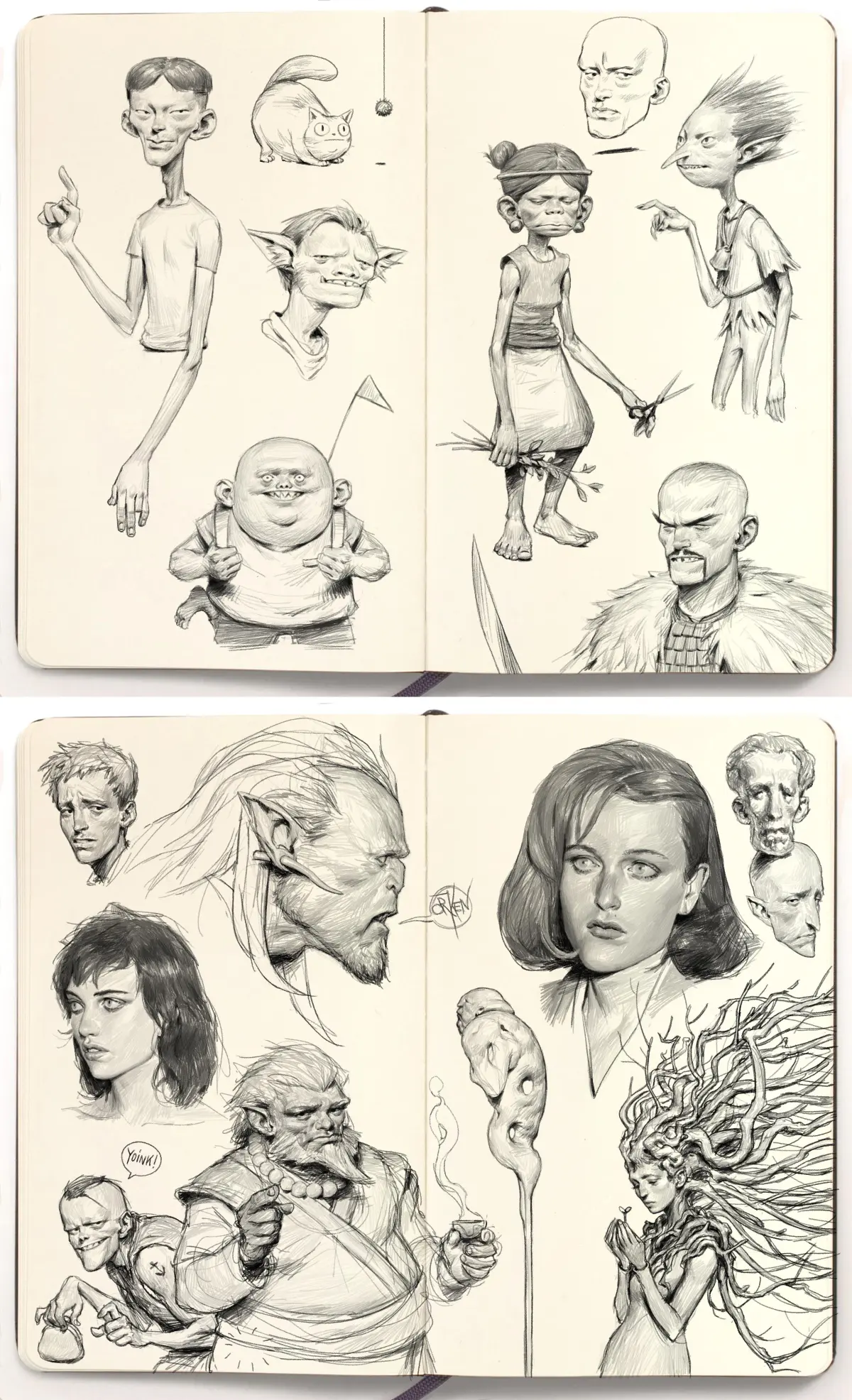
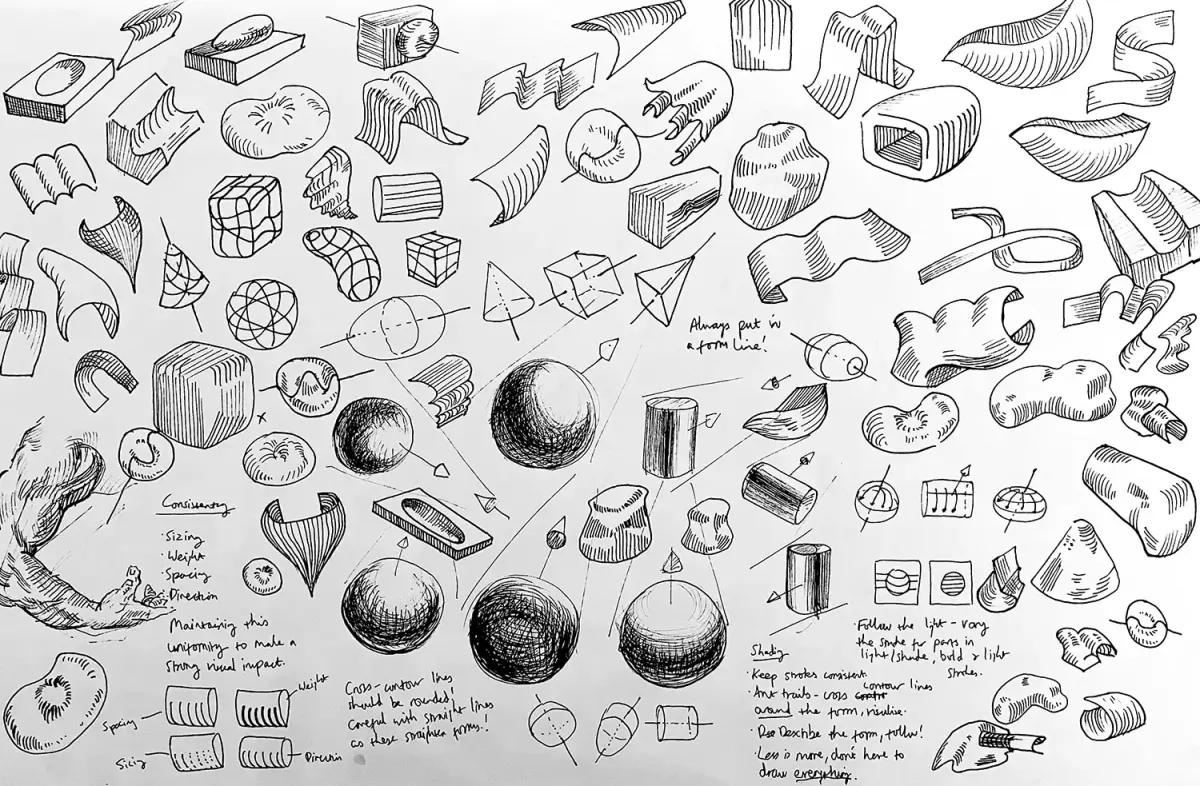
Effective sketchbook ideas focus on low-pressure habits, observational practice, and creative experimentation. You can fill pages by documenting daily life, exploring new mediums, or using structured prompts to overcome creative blocks. The goal is to prioritize consistent practice and personal expression over achieving a polished, gallery-ready result on every single page.
On this page
How to start a daily sketchbook habit
The most effective way to build a sketchbook habit is to lower the barrier to entry. Many artists fail because they attempt to create a masterpiece on every page, which leads to creative paralysis. Instead, commit to a "low-stakes" approach where you focus on quantity and consistency rather than individual quality. Keep your sketchbook in an accessible location, such as a bedside table or a backpack, so you can reach for it whenever you have five minutes of downtime.
To maintain momentum, consider these strategies for daily engagement:
- Set a timer for ten minutes and draw whatever is currently in your field of vision.
- Use a single medium, like a graphite pencil or a ballpoint pen, to eliminate decision fatigue.
- Dedicate specific pages to "doodles" or "warm-ups" that do not require complex planning or composition.
- Date every entry to track your progress and provide a sense of accomplishment over time.
Best sketchbook ideas for beginners
Beginners often struggle with the "blank page syndrome," where the vastness of a white sheet feels intimidating. To overcome this, use your sketchbook as a repository for observational studies rather than complex illustrations. Focus on the mundane objects surrounding you, such as a coffee mug, a pair of shoes, or the view from your window. These subjects are readily available and allow you to practice fundamental skills like perspective, shading, and line quality without the pressure of creating a narrative.
If you find yourself stuck, try these structured exercises to build confidence:
- Draw the same object three times from different angles to understand its three-dimensional form.
- Practice contour drawing by tracing the edges of an object without looking down at your paper.
- Create a color palette study by swatching the colors you see in a photograph or a magazine clipping.
- Write a short list of things you saw today and sketch one item from that list.
Why sketchbook experimentation is important
A sketchbook serves as a laboratory for artistic growth, providing a safe space to fail without consequences. Experimentation is vital because it allows you to test new techniques, such as watercolor washes, cross-hatching, or collage, before applying them to professional projects. When you limit your sketchbook to one style, you stifle your potential for development. By intentionally trying methods that feel uncomfortable or unfamiliar, you expand your technical vocabulary and discover unique stylistic preferences that define your personal artistic voice.
Beyond technical practice, experimentation also involves exploring different conceptual themes. Use your pages to map out ideas for future paintings, write down poetry, or paste in tickets and receipts that inspire you. This multidisciplinary approach transforms your sketchbook from a simple drawing pad into a comprehensive visual diary. By treating the book as a playground, you remove the fear of making mistakes, which is often the greatest obstacle to creative progress.
Common mistakes when keeping a sketchbook
The most frequent error is the "perfectionist trap," where artists avoid sketching because they fear the result will look amateurish. Remember that a sketchbook is a tool for learning, not a final product for public consumption. Another common mistake is using paper that is incompatible with your chosen medium. For example, using heavy wet media like markers or watercolors on thin, low-quality paper will cause bleeding and buckling, which can be discouraging. Always match your paper weight to your intended tools.
To avoid these common pitfalls, keep these guidelines in mind:
- Do not tear out pages if you dislike a drawing; keeping your "bad" work helps you see how far you have come.
- Avoid comparing your early work to the polished portfolios of professional artists on social media.
- Do not feel obligated to fill every inch of space; white space can be a powerful design element.
- Ensure your sketchbook size is portable enough to encourage frequent use in various environments.
How to use prompts to stay motivated
When your own ideas run dry, external prompts provide the necessary structure to keep your pencil moving. Prompts act as a creative constraint, and constraints often force the brain to think more innovatively. You can find daily drawing challenges online, or you can create your own list of themes, such as "things that are blue," "architectural details," or "emotions." By removing the need to decide what to draw, you can devote all your mental energy to the act of drawing itself.
If you prefer a more systematic approach, try these methods to generate fresh content:
- Use a random word generator to pick a subject and sketch it within a fixed time limit.
- Choose a theme for the week, such as "nature" or "mechanical parts," and dedicate seven pages to that topic.
- Copy a small section of a masterwork painting to learn about composition and brushwork.
- Combine two unrelated objects into a single, surreal drawing to practice creative problem-solving and visual storytelling.
Key facts
- Dedicate the first page to a "warm-up" drawing to lower the pressure of starting a new book.
- Use a 15-minute timer daily to build a consistent habit of observation rather than aiming for perfection.
- Carry a pocket-sized sketchbook (A6 or A5) to capture fleeting ideas while commuting or waiting.
- Experiment with mixed media by taping scraps of paper, ticket stubs, or dried leaves directly onto pages.
- Focus on drawing negative space around objects to improve your accuracy and understanding of form.
- Date every entry to track your progress and artistic evolution over the course of the book.
The bottom line
A sketchbook serves as a vital tool for documenting your creative journey and refining your observational skills. By prioritizing consistent practice over technical perfection, you transform the book into a low-pressure space for experimentation. Whether you focus on daily life or abstract concepts, the key is to keep the process engaging. Embrace mistakes as essential evidence of your growth and continue filling pages to sharpen your artistic vision.
People also ask
Should I use a pencil or ink for sketching?
Pencils allow for easy corrections, making them ideal for beginners or complex anatomical studies. Ink forces you to commit to your lines, which helps develop confidence and prevents over-erasing.
How do I overcome the fear of a blank page?
Start by scribbling randomly or sketching the messy contents of your desk to remove the intimidation factor. Remember that a sketchbook is a private laboratory for failure and exploration, not a gallery for finished art.
What is the best paper weight for a sketchbook?
Look for paper that is at least 100 gsm if you plan to use pens or light markers to prevent bleeding. If you intend to use watercolors, choose paper labeled specifically for wet media, usually 300 gsm or higher.
How can I find inspiration when I feel uninspired?
Look at the work of masters like Leonardo da Vinci or contemporary urban sketchers for composition ideas. Alternatively, try drawing a single household object from three different angles to focus on lighting and perspective.
Is it better to draw from life or from photos?
Drawing from life is superior for understanding depth, color, and texture in three-dimensional space. Photos are useful for reference, but they flatten images and can lead to a loss of spatial awareness.
How many pages should I finish in a week?
There is no set quota; the goal is consistency rather than volume. Even one small sketch per day is more effective for long-term skill development than completing ten pages in a single frantic session.
This answer was created with the help of AI research tools and reference sources. Spotted an error? Let us know — we correct mistakes quickly. See our editorial policy.