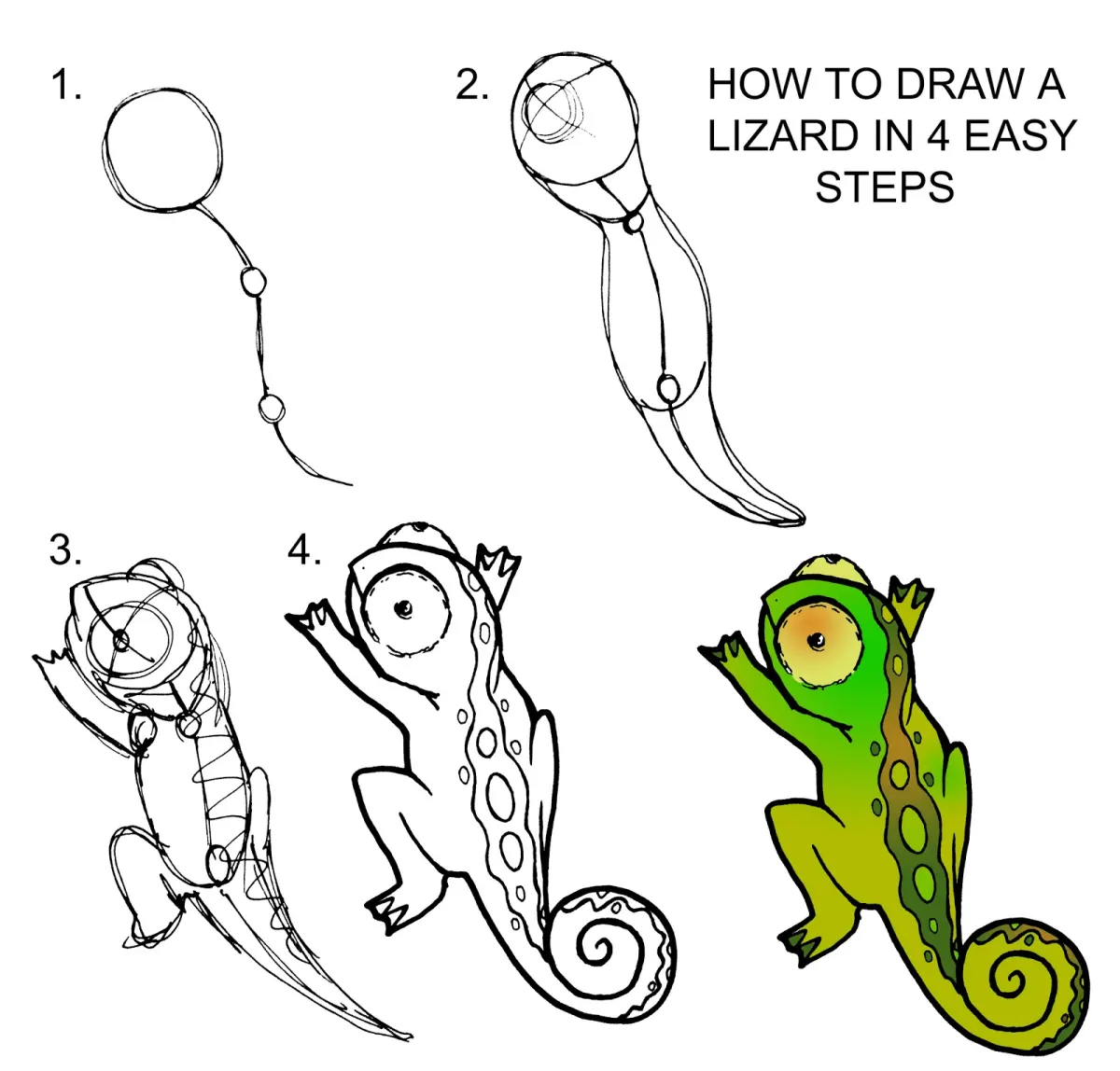
How do you draw an alien?
Short answer
Drawing an alien involves blending familiar biological features with imaginative, otherworldly traits. Start by establishing a unique silhouette, then layer on non-human characteristics like extra limbs, unusual skin textures, or sensory organs. Focus on consistent lighting and anatomy to make your creature feel grounded, believable, and distinct within your chosen artistic style.
On this page
How to design a unique alien creature
Designing a compelling alien begins with the concept of "speculative biology." Instead of simply adding antennas to a human, consider how the creature’s environment dictates its physical form. If an alien lives on a high-gravity planet, it might be short and squat with dense limbs. If it lives in a gas giant, it might be spindly or translucent. Researching real-world animals like deep-sea fish or insects can provide a foundation of realism that makes your design feel authentic rather than arbitrary.
To build your creature, follow these foundational steps:
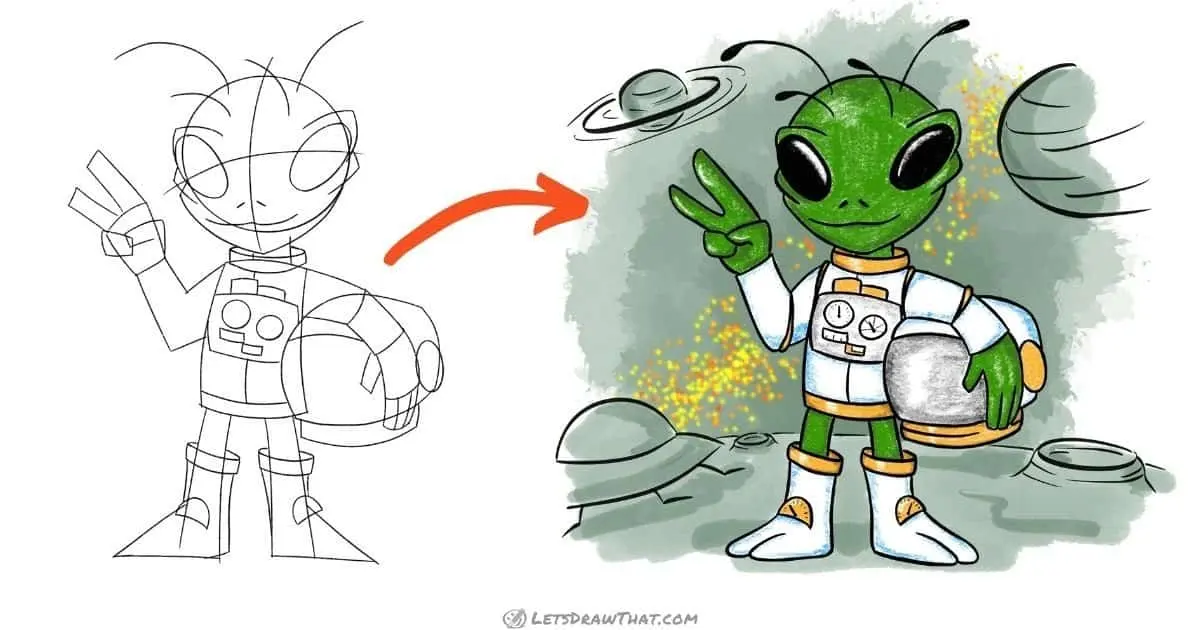
- Sketch a basic gesture line to determine the creature's pose and movement.
- Build the volume using simple geometric shapes like spheres, cylinders, and cones.
- Define the silhouette, ensuring it is recognizable even if the drawing were turned into a solid black shape.
- Add specific biological details, such as scales, bioluminescent patches, or specialized appendages, to emphasize its environment.
Best drawing techniques for beginners
For those new to creature design, starting with "shape language" is the most effective approach. Sharp, angular shapes often communicate aggression or speed, while soft, rounded shapes suggest friendliness or sluggishness. By combining these, you can create a character that tells a story through its form alone. Practice by drawing silhouettes of common animals and then modifying one or two features to make them look alien.
When refining your sketch, focus on the following elements to improve your technique:
- Anatomy: Even if the creature is alien, it should follow a logical internal structure to support its weight.
- Texture: Use varied line weights to distinguish between smooth skin, rough armor, or soft fur.
- Lighting: Establish a clear light source early to give the creature three-dimensional depth and volume.
- Proportions: Experiment with extreme proportions, such as oversized eyes or elongated necks, to create an immediate sense of "otherness."
Why alien anatomy looks strange
The "uncanny valley" is a psychological phenomenon where a creature looks almost human but possesses subtle, incorrect features that trigger unease. To avoid this, artists often lean into either extreme stylization or complete biological divergence. By moving away from the standard two-eyed, two-armed bipedal model, you can bypass human expectations entirely. Incorporating multiple sets of eyes, sensory tentacles, or non-traditional joints adds to the feeling that the creature evolved on a completely different evolutionary path.
Consider how the creature interacts with its world. If it lacks hands, how does it manipulate objects? Perhaps it uses telekinesis, specialized mouthparts, or suction cups. These functional adaptations provide a "why" behind the alien appearance, making the design feel purposeful. When you understand the biological function of a feature, you can draw it with more confidence and clarity, ensuring the creature feels like a living, breathing entity rather than a collection of random parts.
Common mistakes when drawing aliens
One of the most frequent errors is over-complicating the design by adding too many disparate features. A creature with wings, scales, fur, three heads, and six tails often lacks a cohesive visual identity. Focus on a primary "hook"—a single, striking feature—and let the rest of the body support that element. Another common mistake is neglecting the creature's center of gravity. If the alien looks like it would fall over when standing still, the viewer will subconsciously perceive it as poorly constructed.
Avoid these pitfalls to maintain high-quality results:
- Cluttered details: Avoid scattering small, meaningless markings across the entire body.
- Lack of focal points: Ensure the viewer’s eye is drawn to the most important part of the creature first.
- Ignoring scale: Without a reference point, such as a rock or a plant, it is impossible for the viewer to tell if your alien is the size of a mouse or a mountain.
- Copying tropes: Relying too heavily on classic "grey" aliens or bug-eyed monsters can make your work feel derivative rather than original.
How to add color and texture
Color is a powerful tool for defining the environment and temperament of your alien. Bright, neon colors in nature often serve as a warning sign of toxicity, which can be a great way to communicate danger to the viewer. Conversely, muted, earthy tones suggest a creature that relies on camouflage to survive. When applying color, consider how light would interact with the surface. A metallic, insect-like carapace will have sharp, bright highlights, while soft, porous skin will have more diffused, matte lighting.
To finish your drawing, focus on the transition between different materials on the creature's body. Use cross-hatching or stippling to create the illusion of texture, and don't be afraid to use high-contrast shadows to make the form pop off the page. Remember that the goal is to make the alien feel like it belongs in its own ecosystem. By consistently applying these principles of light, texture, and anatomy, you will create a believable visitor from another world that resonates with your audience.
Key facts
- Use asymmetrical shapes to make a creature look truly non-terrestrial and unsettling.
- Incorporate sensory organs that differ from human eyes, such as heat-sensing pits or bioluminescent patches.
- Study deep-sea creatures like the giant squid or anglerfish for inspiration on alien anatomy.
- Avoid the "humanoid trap" by experimenting with non-bipedal limb configurations like tripod or insectoid legs.
- Focus on environmental adaptation, such as thick hides for high-pressure worlds or translucent skin for low-light environments.
- Use a limited color palette to suggest a specific evolutionary history tied to the alien's home planet.
The bottom line
Drawing a compelling alien requires moving beyond human-centric anatomy. By focusing on environmental adaptation, unique sensory organs, and non-traditional limb structures, you create creatures that feel biologically plausible. Start with a clear silhouette, emphasize functional design over mere decoration, and look to Earth’s own extreme organisms for inspiration. The most memorable aliens are those that suggest a complex, alien evolutionary history through their physical form.
People also ask
Should an alien always have a head?
Not necessarily. While heads centralize sensory organs, an alien could have distributed sensors across its body to detect vibrations or chemical changes in its environment.
How can I make an alien look friendly rather than scary?
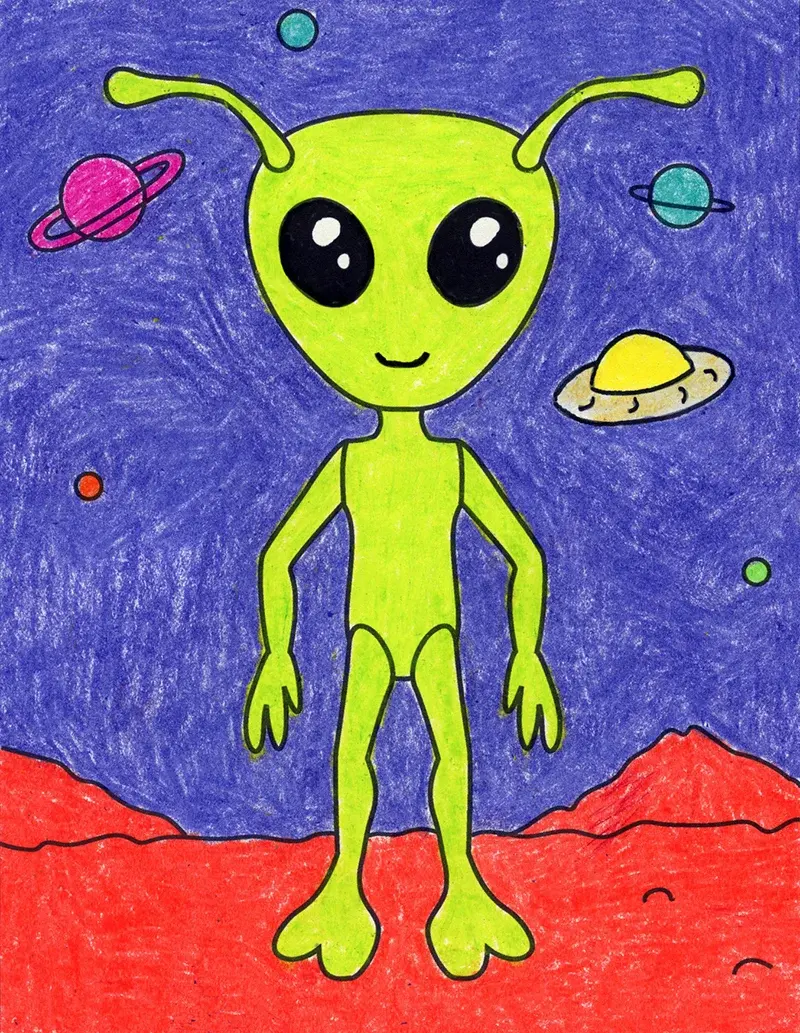
Use softer, rounded shapes and larger, forward-facing eyes to trigger human empathy. Avoid sharp angles, spikes, or dark, jagged color patterns.
Do aliens need to breathe oxygen?
No, life on other planets might rely on methane, ammonia, or sulfur-based respiration. Designing an alien to match its atmosphere adds scientific realism to your drawing.
Is it better to draw aliens in black and white or color?
Start with black and white to focus on anatomy, silhouette, and texture. Once the structure is solid, add colors that reflect the lighting conditions of the alien’s native star system.
How many limbs should a realistic alien have?
There is no set limit, but consider how the creature moves. A hexapedal (six-legged) design often provides more stability than a bipedal one for heavy-gravity planets.
What is the most common mistake when drawing aliens?
The most frequent error is simply adding antennae to a human figure. True alien design requires rethinking basic biological functions like digestion, locomotion, and perception.
This answer was created with the help of AI research tools and reference sources. Spotted an error? Let us know — we correct mistakes quickly. See our editorial policy.