What is the Guggenheim known for?
Short answer
The Solomon R. Guggenheim Museum is world-renowned for its pioneering collection of modern and contemporary art and its iconic spiral architecture designed by Frank Lloyd Wright. Located in New York City, it serves as a global cultural institution that redefined the museum experience by integrating avant-garde exhibitions within a continuous, flowing gallery space.
On this page
Why is the Guggenheim building famous?
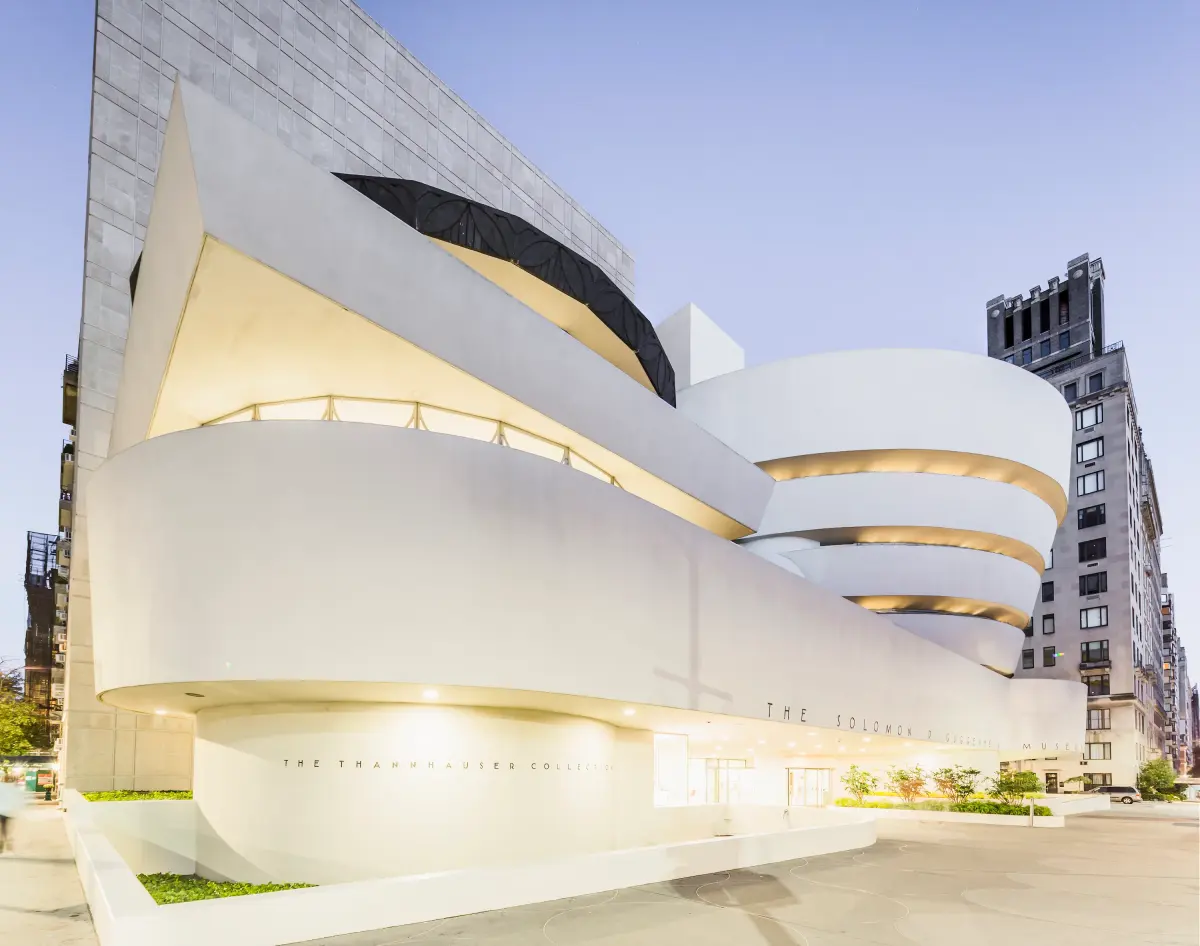
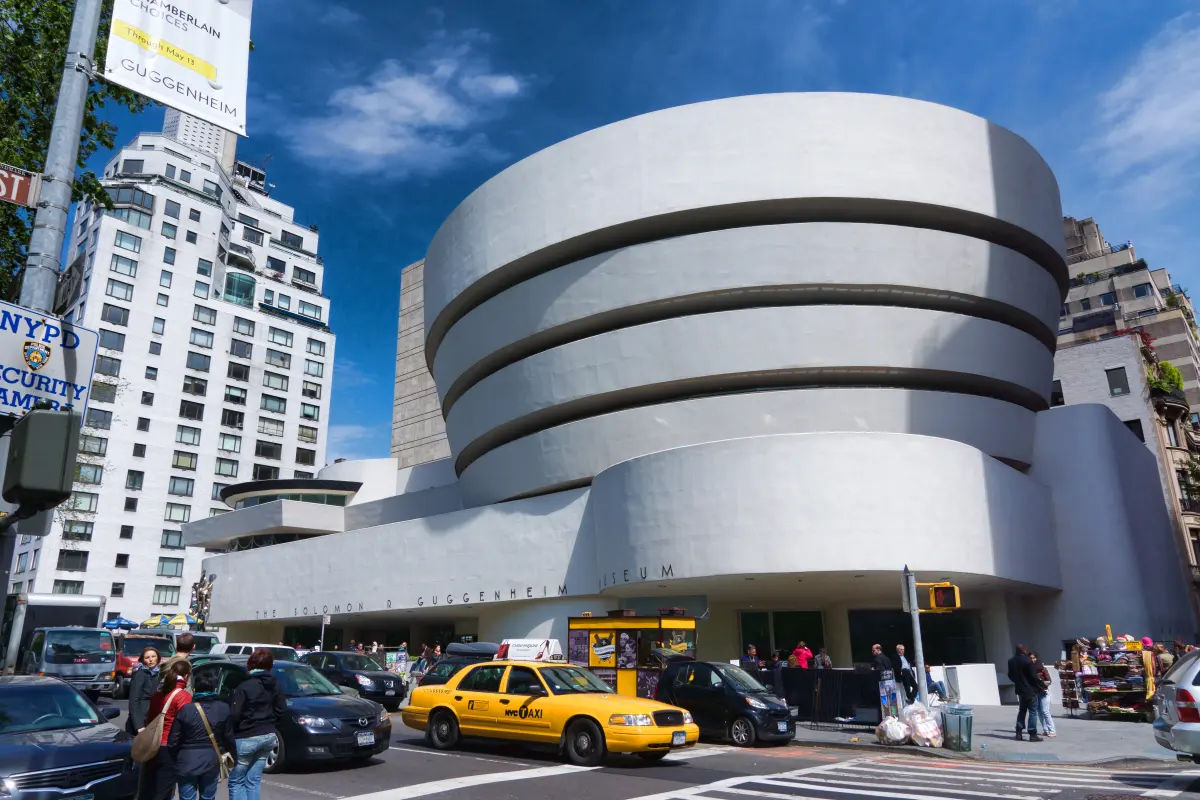
The Solomon R. Guggenheim Museum, located on Fifth Avenue in New York City, is primarily recognized for its revolutionary architecture. Completed in 1959, the building was the final major project of architect Frank Lloyd Wright. Its design features a distinctive concrete spiral, or ziggurat, that widens as it rises toward a large glass dome. This structure broke away from the traditional museum format of partitioned rooms, instead offering a single, continuous ramp that guides visitors through the galleries.
The building is considered a masterpiece of organic architecture, intended to harmonize with the natural environment and the human experience. By eliminating the need for visitors to navigate separate, disconnected halls, Wright created a fluid journey that allows art to be viewed in a sequence of unfolding perspectives. This design remains a subject of architectural study and a significant landmark of 20th-century urban design.
What is in the Guggenheim collection?
The museum’s collection focuses on modern and contemporary art, tracing the development of abstract and non-objective painting and sculpture. It holds significant works by foundational artists who shaped the 20th century, including Wassily Kandinsky, Pablo Picasso, and Piet Mondrian. The collection is particularly noted for its depth in the works of early modernists, reflecting the personal vision of the museum’s founder, Solomon R. Guggenheim.
Beyond its historical roots, the institution actively expands its holdings to include contemporary pieces that challenge traditional artistic boundaries. The collection is organized into several key areas of focus:
- Early Modernism: Featuring the largest collection of Kandinsky paintings in the United States.
- Impressionist and Post-Impressionist works: Including notable pieces by Manet, Cézanne, and Gauguin.
- Contemporary installations: Large-scale works that utilize the museum’s unique ramp space.
- Global perspectives: Recent acquisitions that highlight artists from Latin America, Asia, and the Middle East.
How to plan a visit to the Guggenheim
Visiting the museum requires a bit of strategy to ensure you can fully appreciate both the architecture and the current exhibitions. The museum is generally open daily, though hours can fluctuate depending on the season and special events. It is highly recommended to book tickets online in advance, as the museum often reaches capacity during weekends and peak tourist seasons.
To make the most of your visit, consider these steps:
- Check the official website for current exhibition schedules to see if there are specific galleries you want to prioritize.
- Arrive early in the day to avoid the largest crowds, which typically peak between midday and mid-afternoon.
- Use the free audio guide, which provides excellent context for both the history of the building and the specific artworks on display.
- Take the elevator to the top of the ramp and walk down, which allows you to view the art while descending at a comfortable, leisurely pace.
Common mistakes when visiting the Guggenheim
One of the most frequent errors visitors make is rushing through the ramp without stopping to look back at the architecture. Because the building is a continuous spiral, the perspective changes constantly as you descend. Many people become so focused on the wall-mounted art that they miss the way the building itself frames the interior space. It is essential to pause at various points along the ramp to look toward the center atrium.
Another mistake is failing to account for the physical demands of the ramp. While the incline is gentle, walking the entire length of the building can be tiring for those who are not prepared. Avoid wearing uncomfortable footwear and ensure you leave enough time to sit in the public areas. Additionally, visitors often overlook the smaller, side galleries that branch off the main ramp, which frequently house hidden gems or smaller, intimate collections that are just as significant as the larger displays.
Where are the other Guggenheim locations?
The Solomon R. Guggenheim Foundation operates a network of museums beyond the flagship location in New York. The most famous of these is the Guggenheim Museum Bilbao in Spain, designed by architect Frank Gehry. Opened in 1997, the building is celebrated for its titanium-clad exterior and its role in the "Bilbao Effect," where a single cultural institution revitalized the economy and image of an entire city.
The foundation has also expanded its reach through various partnerships and projects globally:
- Venice, Italy: The Peggy Guggenheim Collection, located in the Palazzo Venier dei Leoni, features a premier collection of European and American art.
- Abu Dhabi: A major museum project currently under development, intended to further the foundation’s commitment to global contemporary art.
- Berlin, Germany: A former partnership project that hosted numerous exhibitions, demonstrating the foundation's long-standing interest in international cultural exchange.
These institutions collectively share the goal of fostering an appreciation for modern art through innovative exhibitions and educational programming, ensuring that the Guggenheim legacy continues to influence the global art world.
Key facts
- The Solomon R. Guggenheim Museum in New York City is housed in a building designed by architect Frank Lloyd Wright, opened in 1959.
- The museum is famous for its unique spiral ramp that allows visitors to view art while walking along a continuous, gently sloping floor.
- Its permanent collection focuses heavily on Impressionist, Post-Impressionist, early Modern, and contemporary art.
- The Guggenheim Foundation operates a global network of museums, including major locations in Bilbao, Venice, and Abu Dhabi.
- When visiting the New York location, arrive early in the morning to avoid the longest lines, as the spiral path can become crowded by midday.
- Avoid attempting to view the entire collection in one hour; the building is designed for a slow, immersive experience that requires at least two to three hours.
The bottom line
The Guggenheim is globally renowned for merging avant-garde architecture with a world-class collection of modern art. Whether through Frank Lloyd Wright’s iconic New York spiral or the titanium curves of the Bilbao branch, the institution prioritizes the relationship between space and creativity. Visitors should prioritize comfortable footwear and advanced booking to fully appreciate how these landmark buildings transform the experience of viewing art in the 21st century.
People also ask
Who founded the Guggenheim Museum?
The museum was founded by Solomon R. Guggenheim, a wealthy businessman and art collector. He established the Solomon R. Guggenheim Foundation in 1937 to foster the appreciation of modern art.
Why is the architecture of the New York building considered controversial?
Many critics at the time felt the building's bold, circular design overshadowed the artwork displayed inside. Artists even signed a letter protesting the curved walls, arguing that paintings would look distorted or difficult to hang.
What is the significance of the Guggenheim Bilbao?
Opened in 1997, the Bilbao branch is famous for its titanium-clad exterior designed by Frank Gehry. It is often credited with the "Bilbao Effect," where a single iconic museum building successfully revitalizes a city's economy and tourism.
Can you take photographs inside the museums?
Photography is generally permitted for personal, non-commercial use in most galleries, though flash and tripods are strictly prohibited. Always check for specific signs near special exhibitions, as some loaned works may be restricted from photography.
Is the Guggenheim collection only focused on modern art?
While its core identity is rooted in modern and contemporary works, the foundation also manages historical collections. The Peggy Guggenheim Collection in Venice, for example, features significant surrealist and abstract pieces housed in a historic 18th-century palace.
Do I need to book tickets in advance?
Yes, it is highly recommended to purchase timed-entry tickets online before your visit. This guarantees your entry and helps you avoid long wait times at the admissions desk during peak tourist seasons.
This answer was created with the help of AI research tools and reference sources. Spotted an error? Let us know — we correct mistakes quickly. See our editorial policy.