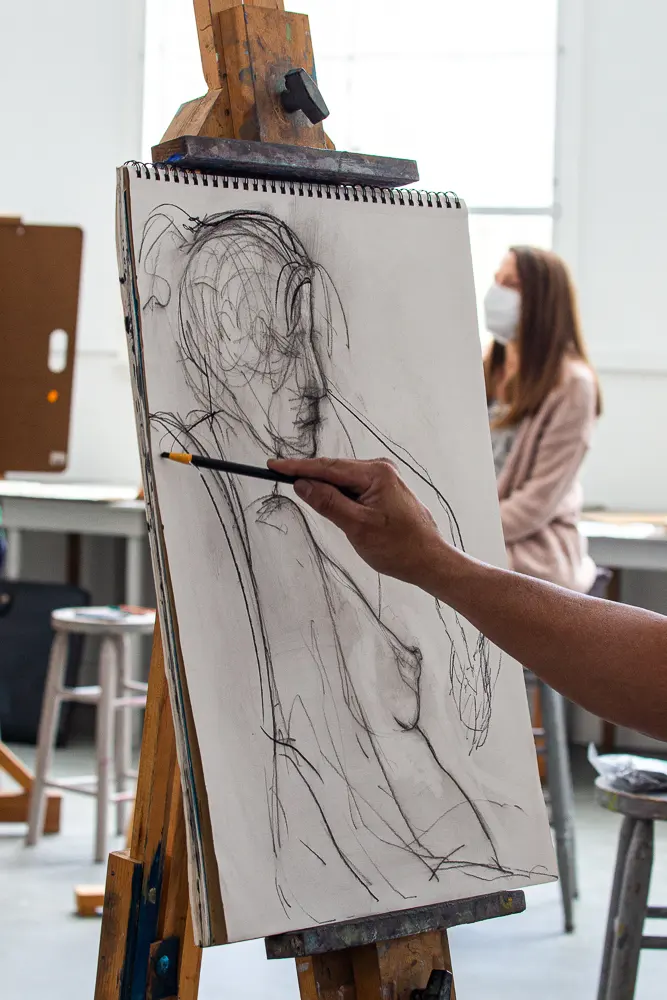
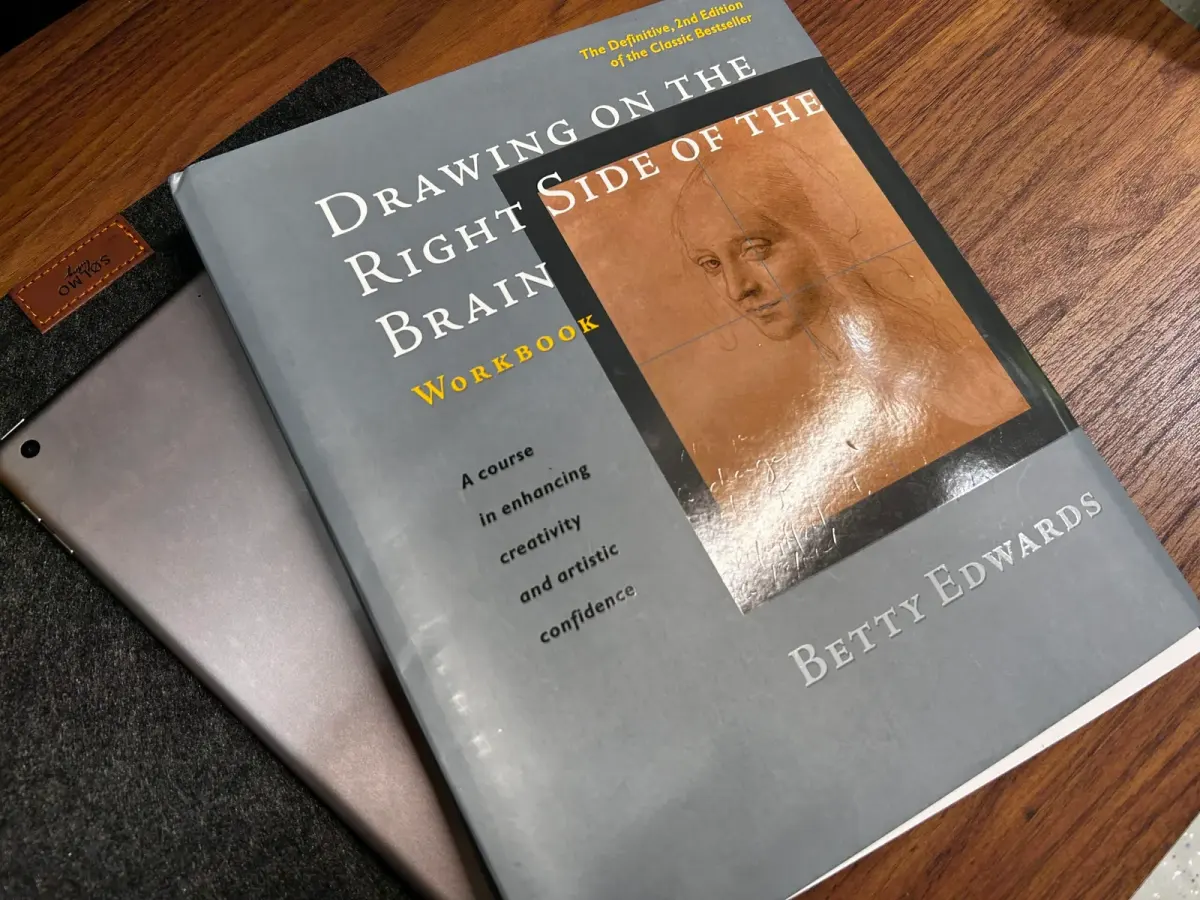
Is it too late to learn to draw?
Short answer
It is never too late to learn to draw. Artistic skill is a learned motor and cognitive ability, not an innate gift reserved for the young. Adults often possess greater patience, focus, and analytical capacity than children, allowing them to grasp complex concepts like perspective and anatomy with surprising speed and efficiency.
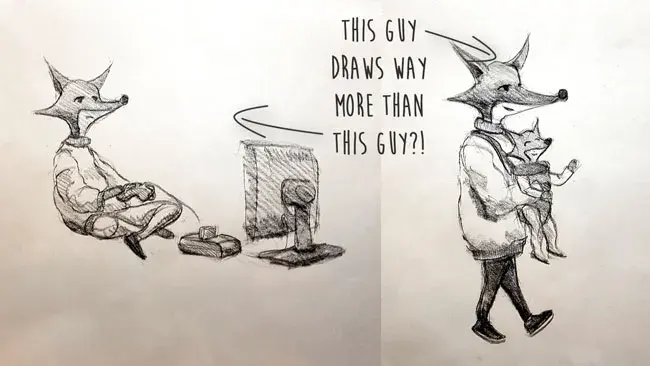
On this page
Is it too late to start drawing as an adult?
The belief that artistic talent is a fixed trait present from birth is a persistent myth that discourages many adults from picking up a pencil. In reality, drawing is a mechanical skill similar to playing a musical instrument or learning a new language. The human brain maintains neuroplasticity throughout life, meaning you can develop the hand-eye coordination and spatial reasoning required for drawing at any age.
Many renowned artists did not begin their formal training until later in life. Grandma Moses, for instance, did not start painting in earnest until she was in her late 70s, eventually becoming a celebrated American folk artist. When you begin as an adult, you bring life experience and emotional maturity to your work, which often results in more nuanced and expressive pieces than those created by younger students.
How long does it take to learn to draw?
The time required to reach proficiency depends entirely on your goals and the consistency of your practice. If you aim to sketch recognizable objects, you can see significant improvement within three to six months of daily 20-minute sessions. Mastery of complex subjects like human anatomy or architectural rendering typically requires years of dedicated study, but the process of learning is inherently rewarding.
Progress is rarely linear, and you will likely experience plateaus where your skills feel stagnant. This is a normal part of the development process for every artist, regardless of their starting age. To track your growth effectively, consider these strategies:
- Keep a dedicated sketchbook to document your work chronologically.
- Date every page to visualize your improvement over weeks and months.
- Focus on specific techniques for a week, such as shading or line weight.
- Limit your sessions to short, frequent bursts to avoid burnout.

Best drawing techniques for beginners
Starting with the fundamentals is the most efficient way to build a strong foundation. Beginners should move away from drawing what they think an object looks like and instead focus on observing the actual shapes, shadows, and angles present in reality. This shift in perception is the most critical hurdle for new artists to overcome.
Follow these initial steps to build your technical base:
- Master the basic geometric shapes, such as spheres, cubes, and cylinders.
- Practice "blind contour drawing," where you draw an object without looking at your paper.
- Learn to map out light sources to create depth through shading and value scales.
- Study the principles of one-point and two-point perspective to ground your objects in space.
By breaking down complex subjects into simple geometric components, you can draw almost anything you see. Consistent repetition of these basic exercises will eventually make the process intuitive, allowing your hand to follow your eyes automatically.

Common mistakes when learning to draw
One of the most frequent errors beginners make is focusing on intricate details before establishing the overall structure of a drawing. If the proportions or the perspective of a piece are incorrect, no amount of detailed shading will save the composition. Always start with light, loose guidelines to ensure the placement of elements is accurate before committing to darker, permanent lines.
Another common pitfall is the reliance on "symbol drawing," where you draw a simplified mental icon of an object rather than observing its unique characteristics. For example, many people draw eyes as simple almond shapes because that is the symbol they learned as children. To improve, you must consciously ignore these mental shortcuts and observe the specific curves, eyelids, and shadows of the subject in front of you. Avoiding these habits will accelerate your progress significantly.
How to stay motivated while learning
Maintaining motivation is often more difficult than mastering the technical aspects of drawing. To keep your momentum, avoid comparing your early work to the polished portfolios of professional artists with decades of experience. Instead, focus on competing only with your past self, celebrating the small victories you achieve each week.
Creating a supportive environment is essential for long-term success. Consider joining local art classes or online communities where you can share your progress and receive constructive feedback. Surrounding yourself with others who are also learning can normalize the struggles of the creative process and provide a sense of accountability. Remember that drawing is meant to be an enjoyable exploration of the world around you, so prioritize your curiosity and passion over the pressure to produce a masterpiece. By keeping your practice light and engaging, you ensure that drawing remains a lifelong hobby that brings you consistent personal fulfillment.
Key facts
- Learning to draw is a skill based on motor control and observation, not an innate talent present at birth.
- Neuroplasticity allows the adult brain to form new neural pathways, meaning you can master complex physical skills at any age.
- Drawing requires training the eye to see shapes, negative space, and light values rather than relying on symbolic memory.
- Consistency is more effective than intensity; practicing for 15 minutes daily yields better results than one four-hour session per week.
- Master artists like Grandma Moses did not begin their professional painting careers until they were in their late 70s.
- Using a graphite pencil on smooth paper is the most cost-effective way to begin developing hand-eye coordination.
The bottom line
It is never too late to learn to draw, as the process relies on developing visual perception and fine motor skills through consistent practice. By prioritizing daily habits over sporadic effort and focusing on fundamental shapes rather than complex details, any adult can achieve significant proficiency. Embrace the learning curve, remain patient with your progress, and recognize that artistic ability is a cultivated habit, not a gift.
People also ask
Do I need expensive art supplies to start learning?
No, you only need a standard HB pencil, a white vinyl eraser, and a pad of drawing paper. Expensive tools cannot replace the fundamental practice of observing proportions and light.
How long does it take to become proficient at drawing?
With dedicated daily practice, most beginners notice significant improvement in their technical control within three to six months. Mastery is a lifelong pursuit, but basic competency is achievable in under a year.
Should I start by drawing from imagination or from life?
Always start by drawing from life or high-quality photographs to train your brain to perceive reality accurately. Drawing from imagination is a secondary skill that relies on the visual library you build through observation.
Is it necessary to take formal art classes?
Formal classes provide structured feedback and accountability, which can accelerate your progress. However, many self-taught artists succeed by using structured workbooks and studying the anatomy and perspective techniques used by professionals.
What is the most common mistake beginners make?
Beginners often focus on drawing details before establishing the overall structure and proportions of their subject. Always sketch the "big shapes" first to ensure the foundation is correct before refining the edges.
How can I overcome the frustration of drawing poorly?
Accept that your early work will not match your internal vision; this gap is a normal part of the learning process. Save your early drawings to objectively track your progress over time rather than comparing yourself to professional artists.
This answer was created with the help of AI research tools and reference sources. Spotted an error? Let us know — we correct mistakes quickly. See our editorial policy.