How do you draw faster?
Short answer
Drawing faster requires mastering gesture drawing, prioritizing shapes over details, and developing muscle memory through consistent practice. By focusing on the "big picture" rather than individual lines, you reduce hesitation and over-analysis. Speed is a byproduct of confidence and structural understanding, which you achieve by simplifying complex subjects into basic geometric forms.

On this page
How to improve drawing speed
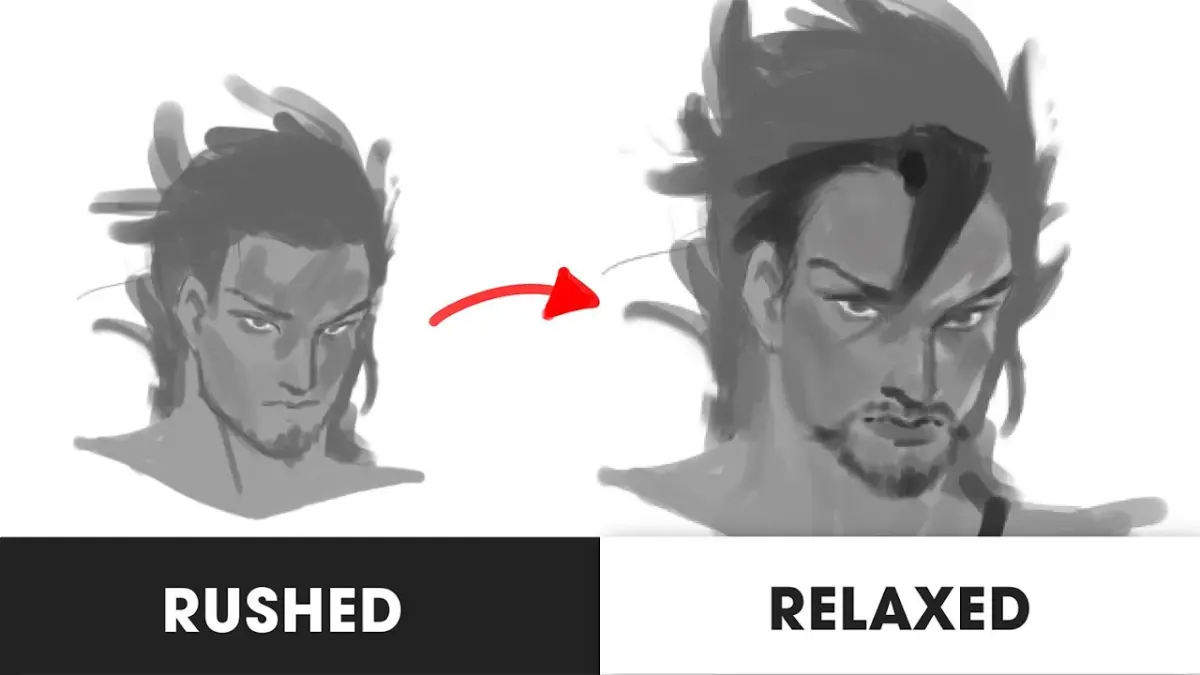
Speed in drawing is not about moving your hand quickly; it is about making fewer, more decisive marks. When you spend too much time on a single area, you often lose the overall proportions of the piece. To increase your pace, train your eye to see the primary gesture or "line of action" before you commit to any specific details. This method, popularized by animators like Preston Blair, focuses on capturing the energy and movement of a subject within a few seconds.
Practice by using timed intervals, a technique known as gesture drawing. Set a timer for 30, 60, or 120 seconds and attempt to capture the essence of a pose or object before the clock runs out. This forces your brain to prioritize essential information over decorative flourishes. As you become comfortable with these time limits, your ability to synthesize visual data will naturally accelerate, allowing you to produce more work in less time.
Why drawing slowly hinders progress
Many beginners fall into the trap of "noodling," which is the act of obsessively detailing a small section of a drawing while the rest remains unfinished. This often happens because the artist is afraid of making a mistake or is focusing on texture before establishing the underlying structure. When you focus on the details too early, you lose the ability to correct major errors in proportion or perspective, which are much harder to fix later.
Slow, hesitant lines also tend to look "hairy" or shaky because the hand lacks confidence. By forcing yourself to work faster, you encourage fluid, bold strokes that look more professional and intentional. Speed acts as a filter that removes unnecessary information, leaving only the most vital components of your subject. Embracing a faster workflow helps you build a library of visual shorthand, allowing you to represent complex forms with minimal effort.
How to simplify complex subjects
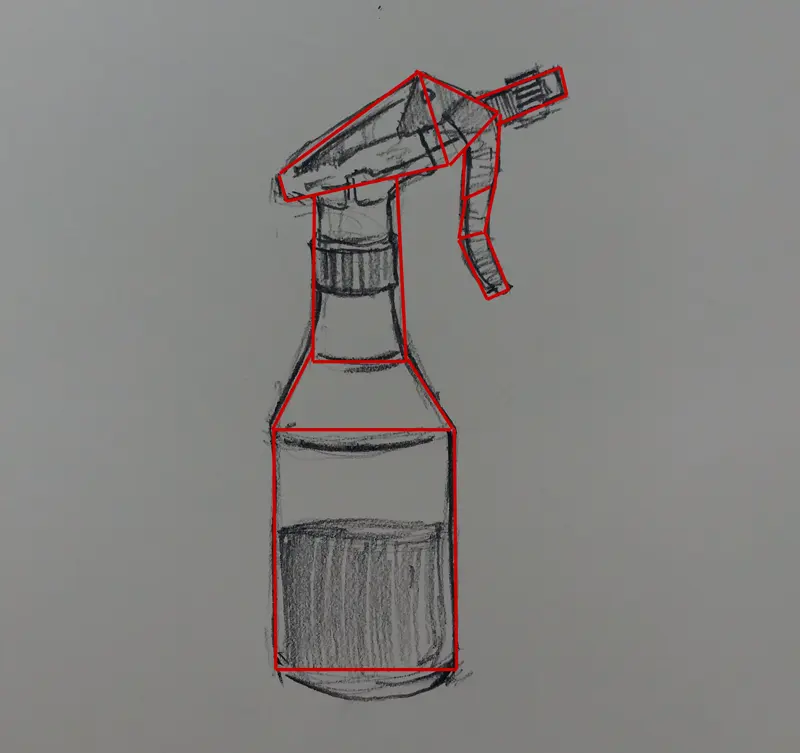
The secret to speed is abstraction. Instead of seeing a hand or a face, train yourself to see spheres, cylinders, and cubes. By breaking down any subject into these three-dimensional primitives, you bypass the need to draw every individual muscle or wrinkle. This structural approach is the foundation of the Loomis method, a system developed by Andrew Loomis in the 1940s to help illustrators construct heads and figures rapidly.
- Identify the largest shapes in your subject first.
- Connect these shapes with simple lines to establish the gesture.
- Refine the proportions by comparing the size of one shape to another.
- Add detail only after the structural foundation is secure and accurate.
By adhering to this hierarchy, you avoid the time-consuming process of erasing and redrawing. If the base structure is correct, the details will naturally fall into place without requiring excessive deliberation or constant revision.
Common mistakes when trying to draw fast
The most frequent error is sacrificing accuracy for the sake of speed. While the goal is to work quickly, you must never abandon the process of checking your proportions. A fast drawing that is fundamentally flawed is less useful than a slow drawing that is anatomically correct. Another mistake is using the wrong tools; attempting to draw fast with a blunt pencil or a pen that lacks flow can create frustration and impede your natural speed.
- Holding the pencil too close to the tip, which restricts movement to the fingers.
- Ignoring the "negative space" around an object, which helps define its shape quickly.
- Trying to finish a drawing in one sitting without taking breaks to reset your perspective.
- Using overly complex paper textures that catch the pencil and slow down your stroke.
Always maintain a light touch during the initial stages. If you press too hard, you create indentations in the paper that make it difficult to adjust your lines if you realize your proportions are off.
Best exercises for building drawing speed
Consistency is the most important factor in developing speed. Dedicate at least 15 minutes every day to "blind contour" drawing, where you draw an object without looking down at your paper. This exercise improves the connection between your eye and your hand, teaching you to trust your instincts. Additionally, try "scribble sketching," where you use continuous, loose lines to define a form without lifting your pencil from the page.
Another effective exercise is to copy master drawings from artists like Leonardo da Vinci or John Singer Sargent. Focus specifically on how they use economy of line to suggest complex textures and forms. By analyzing their work, you can learn how to omit unnecessary detail while still conveying the character of the subject. Over time, these habits will become second nature, and you will find that your hand moves with a speed and precision that once seemed impossible to achieve.
Key facts
- Use the "gesture drawing" technique, limiting yourself to 30 to 60 seconds per pose to capture movement rather than detail.
- Practice "blind contour drawing" to improve hand-eye coordination by drawing an object without looking at your paper.
- Work from the "general to the specific," blocking in large shapes and proportions before adding any fine lines or shading.
- Use a timer during practice sessions to build muscle memory and force yourself to make confident, decisive marks.
- Keep your reference images close to your drawing surface to minimize the time spent looking back and forth.
- Use larger drawing tools, like thick charcoal or soft pencils, which naturally discourage tiny, time-consuming details.
The bottom line
Drawing faster is a byproduct of deliberate practice and disciplined observation. By prioritizing the structural essence of your subject over minute details, you reduce unnecessary labor and improve your overall artistic confidence. Use timed drills to sharpen your focus and eliminate the urge to erase. Ultimately, speed emerges when you learn to trust your initial instincts and commit to every mark you place on the page.
People also ask
Does drawing faster sacrifice the quality of the artwork?
Speed and quality are not mutually exclusive when you focus on efficiency. By training your brain to identify essential shapes quickly, you produce cleaner, more intentional work that avoids the clutter of over-rendering.
How much time should I spend on daily speed drills?
Dedicating 15 to 20 minutes a day to timed gesture sketches is sufficient to see improvement. Consistent, short bursts of practice are more effective for building speed than infrequent, multi-hour sessions.
Should I use a pen instead of a pencil to draw faster?
Using ink or a non-erasable pen forces you to commit to your lines. This eliminates the habit of erasing and redrawing, which is the most common cause of slow progress.
How do I stop obsessing over small details?
Set a strict time limit for the entire piece and force yourself to move to the next section when the timer goes off. Focus on the silhouette and primary light sources to convey the subject's essence.
Is it better to draw from life or from photographs for speed?
Drawing from life is superior because it requires you to interpret three-dimensional space in real time. This mental exercise strengthens your spatial reasoning, allowing you to translate what you see to paper much faster.
What is the most common mistake beginners make when trying to speed up?
Beginners often try to draw the outline first rather than mapping out the internal structure. Focusing on the "skeleton" or basic geometry of an object allows you to build the drawing accurately and rapidly.
This answer was created with the help of AI research tools and reference sources. Spotted an error? Let us know — we correct mistakes quickly. See our editorial policy.