What is a viewfinder in drawing used for?
Short answer
A viewfinder is a simple framing tool used by artists to isolate a specific composition from a complex scene. By looking through a rectangular opening, you can evaluate proportions, simplify visual information, and determine the optimal placement of subjects on your drawing surface before committing to a final arrangement of lines.
On this page
What is a viewfinder used for in drawing?
A viewfinder acts as a portable window that helps an artist filter out the overwhelming visual clutter of the real world. When you look at a landscape or a still life, your eyes naturally wander, making it difficult to decide where the drawing should begin and end. The viewfinder restricts your field of vision, forcing you to focus on a manageable area that fits within the boundaries of your paper.
Beyond simple framing, this tool is essential for establishing the "picture plane." By holding the viewfinder at a consistent distance from your face, you can translate three-dimensional space into a two-dimensional format. This process helps you understand how objects overlap and how negative space functions within your composition. It effectively turns a chaotic environment into a structured, artistic reference point that is much easier to translate onto a blank page.
How to make a viewfinder for drawing
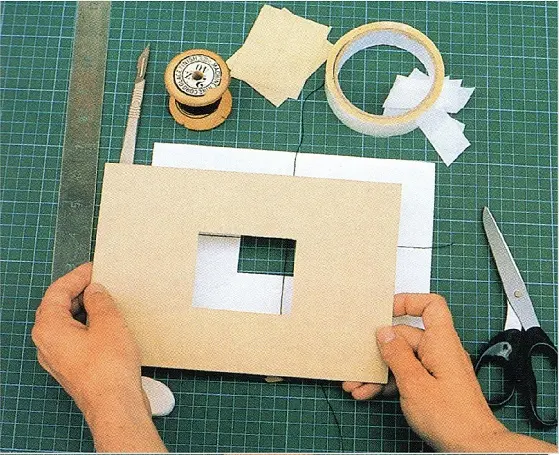
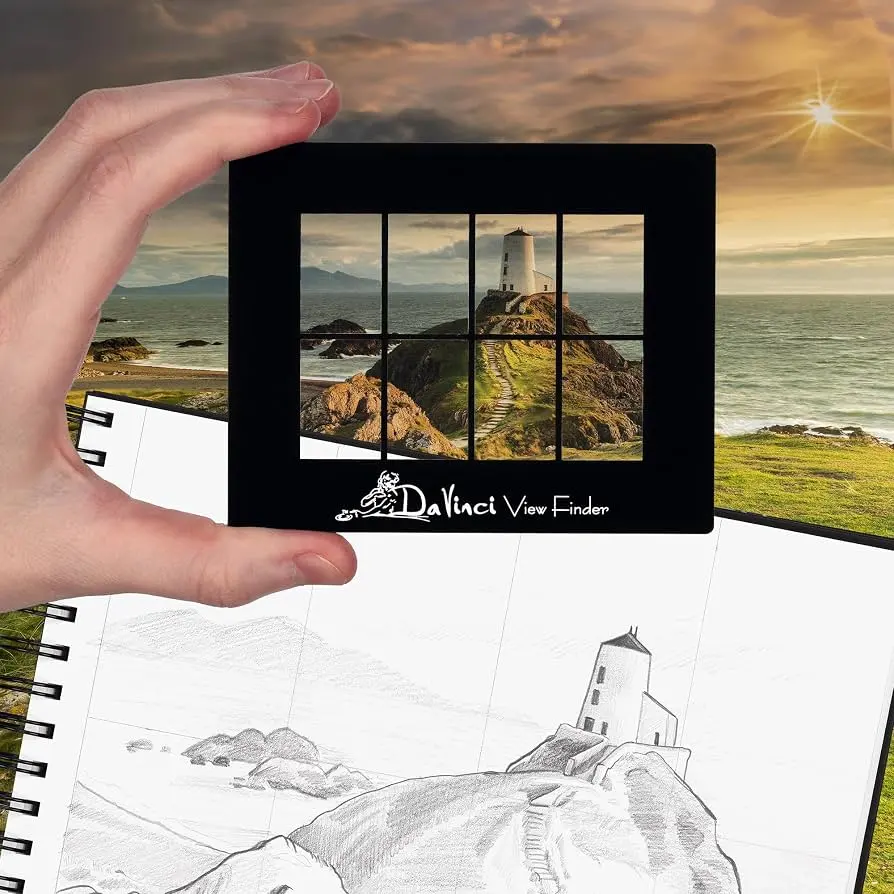
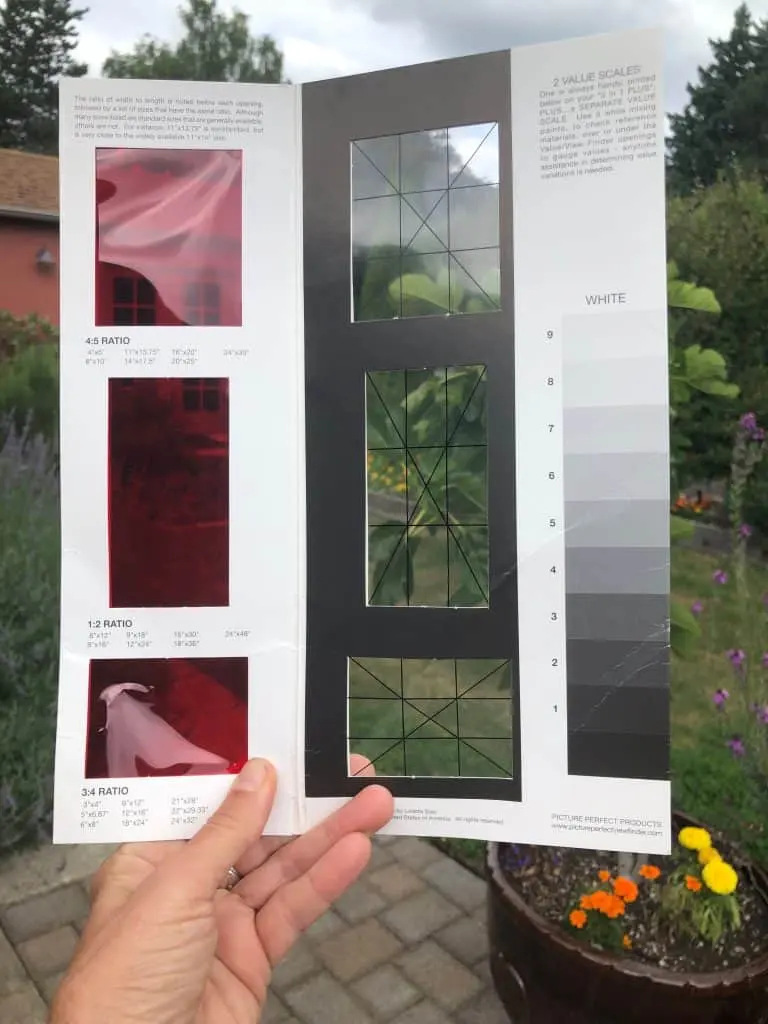
You do not need expensive equipment to create an effective viewfinder. The most common version is a simple cardstock frame with a rectangular hole cut in the center. To make one, take a piece of stiff paper or cardboard and cut a rectangular opening that matches the aspect ratio of your drawing paper. For example, if you are using an 8x10 inch sheet, your viewfinder opening should maintain similar proportions.
Many artists prefer an adjustable viewfinder, which allows them to change the shape of the frame to suit different subjects. You can construct one using two L-shaped pieces of cardboard that slide against each other. This allows you to create either a square, a landscape rectangle, or a portrait rectangle. Follow these steps to ensure your tool is effective:
- Use a neutral gray or black material to prevent color distraction.
- Ensure the cut edges are straight and clean for a precise view.
- Keep the frame thin so it does not block too much of your peripheral vision.
How to use a viewfinder effectively
Using a viewfinder requires a steady hand and a disciplined approach to observation. Hold the tool at arm’s length and close one eye to flatten the perspective. By moving the viewfinder closer to or further from your face, you can "zoom in" or "zoom out" on your subject. This allows you to experiment with different crops without moving your physical position in the room.
Once you find a composition that feels balanced, lock your arm position. You can then use the edges of the viewfinder to align vertical and horizontal lines in your scene. This is particularly helpful for checking the tilt of buildings or the horizon line. If you are struggling to capture the correct proportions, try these techniques:
- Align the top edge of the viewfinder with a prominent horizontal element in your subject.
- Compare the size of your subject to the total width of the frame.
- Use the corners to anchor the placement of key focal points.
Common mistakes when using viewfinders
One of the most frequent errors is holding the viewfinder too close to the eye, which creates a distorted, wide-angle perspective that is difficult to draw accurately. Always keep the tool at a consistent distance from your face, ideally at full arm’s length. If your arm tires, rest your elbow against your side or a nearby surface to maintain stability. Another common mistake is failing to account for the depth of the scene.
Beginners often try to include too much information within the frame, resulting in a cluttered drawing. Remember that the goal is to simplify, not to record every detail. If the composition feels too busy, zoom in further by moving the viewfinder closer to your eye or by narrowing the opening. Avoid the temptation to change your framing halfway through the drawing, as this will shift your perspective and make your measurements inconsistent. Consistency is the primary advantage of using this tool.
Why use a viewfinder instead of a camera?
While digital cameras and smartphones are convenient, they often distort reality through wide-angle lenses and automatic adjustments. A camera lens captures everything in front of it, often flattening depth and losing the subtle nuances of light that the human eye perceives. A viewfinder, by contrast, keeps you connected to the physical space you are drawing. It forces you to look at the subject directly, which improves your observational skills over time.
Furthermore, a viewfinder helps you practice "seeing" like an artist. When you look through a screen, you are often looking at a processed image; when you look through a viewfinder, you are looking at the actual subject. This helps you develop a better understanding of value, color, and texture. By relying on your own eyes rather than a digital device, you train your brain to process visual information more accurately, leading to more authentic and expressive drawings.
Key facts
- A viewfinder is a simple rectangular frame used to isolate a specific composition from a larger, complex scene.
- It helps artists determine the best aspect ratio and orientation (horizontal or vertical) before committing to a canvas.
- By looking through the frame, you can easily identify the "negative space" surrounding your primary subject.
- You can create a professional-grade viewfinder by cutting a rectangle out of a piece of stiff cardboard or heavy paper.
- Moving the viewfinder closer to or further from your eye allows you to zoom in or out to crop your view.
- Using a viewfinder prevents "visual clutter" by blocking out distracting elements that do not contribute to the focal point.
The bottom line
A viewfinder is an essential tool for any artist looking to simplify complex environments into manageable compositions. By framing your subject, you eliminate distractions and establish a clear boundary for your work. Whether you use a DIY cardboard cutout or a store-bought frame, this simple device improves your ability to see shapes, proportions, and negative space, ultimately leading to more balanced and professional-looking drawings every time.
People also ask
Can I use my hands to make a viewfinder?
Yes, you can form a frame by overlapping your index fingers and thumbs to create a rectangle. While this is convenient, a cardboard frame is more precise because it maintains a consistent shape and size.
Should the viewfinder be the same shape as my paper?
Ideally, the opening in your viewfinder should match the aspect ratio of your drawing surface. This ensures that what you see through the frame will fit perfectly onto your paper without requiring awkward adjustments.
How do I handle perspective while using a viewfinder?
Keep the viewfinder parallel to your face and the plane of your drawing surface. If you tilt the frame, you will distort the perspective of the objects you are trying to capture.
Is a viewfinder useful for drawing portraits?
It is most effective for landscapes or still-life arrangements where there is too much visual information. For portraits, it helps you focus on the placement of features within the head's overall shape.
What is the biggest mistake beginners make with a viewfinder?
The most common error is moving the viewfinder around constantly while drawing. Once you select your composition, you must keep the frame in a fixed position to ensure your reference points remain accurate.
Can I draw grid lines on my viewfinder?
Yes, many artists tape thin threads across the opening to create a grid. This helps with accurately mapping the placement of complex subjects onto your paper.
This answer was created with the help of AI research tools and reference sources. Spotted an error? Let us know — we correct mistakes quickly. See our editorial policy.