How do you draw a desert landscape?
Short answer
Drawing a desert landscape requires establishing a clear horizon line, layering organic shapes for dunes, and applying consistent light sources to create depth. By focusing on the interplay between soft, wind-swept curves and sharp, rocky textures, you can effectively capture the vast, arid atmosphere of a desert environment on paper.
On this page
How to structure a desert composition
The foundation of any successful desert drawing is a well-placed horizon line. Placing the horizon low in the frame emphasizes the vastness of the sky, while a high horizon line draws the viewer’s eye toward the intricate patterns of the sand. Once the horizon is set, establish your primary landforms by sketching large, sweeping curves that represent the crests and valleys of the dunes.
To create a sense of scale, follow these structural steps:
- Draw a faint horizon line about one-third of the way up or down the page.
- Sketch large, overlapping triangles or S-curves to define the primary dunes.
- Add smaller, secondary ridges that branch off from the main crests to create visual interest.
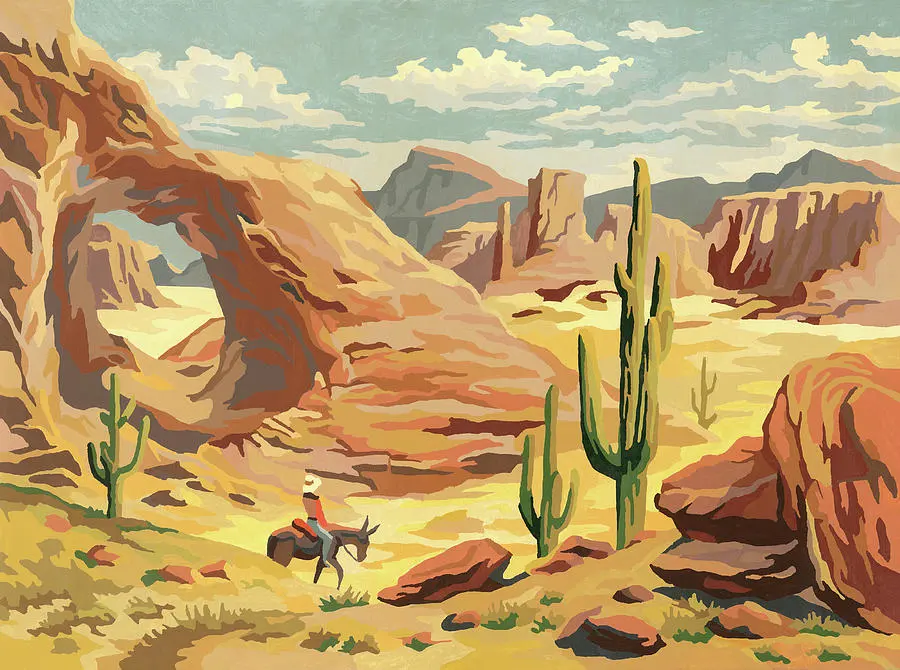
- Place a focal point, such as a solitary rock formation or a distant cactus, to break the monotony of the sand.
Avoid making your dunes perfectly symmetrical, as natural erosion and wind patterns create irregular, organic shapes that feel more authentic.
Best shading techniques for sand
Sand is defined by its texture and the way light interacts with its undulating surface. Use a soft-grade graphite pencil or charcoal to build up layers of tone, starting with light gray for the sunlit sides of the dunes. Gradually transition to darker values in the shadowed areas, ensuring the gradient remains smooth to mimic the fine, powdery nature of desert sand.
When rendering shadows, consider the position of the sun to maintain consistency across the entire landscape. Use the following techniques to enhance realism:
- Cross-hatching: Use this for rocky outcrops to show density and hardness.
- Blending stumps: Use these to soften the transitions between light and dark on the sand.
- Eraser highlights: Use a kneaded eraser to pull out thin, bright lines along the sharp crests of the dunes.
Remember that the darkest shadows often occur in the deep crevices where light cannot reach, providing the necessary contrast to make the scene pop.
How to add realistic desert details
A desert landscape can feel empty if it lacks specific environmental markers. Incorporate elements like sparse vegetation, weathered rocks, or animal tracks to provide a sense of life and history. When drawing plants, such as succulents or desert grasses, keep the shapes simple and clustered to avoid cluttering the vast open space.
Focus on these details to ground your drawing:
- Texture the sand with subtle, wavy lines that follow the contours of the dunes to suggest wind movement.
- Draw rocks with jagged, asymmetrical edges to contrast with the smooth, flowing lines of the sand.
- Add small, dark dots or dashes to represent pebbles or debris scattered near the base of dunes.
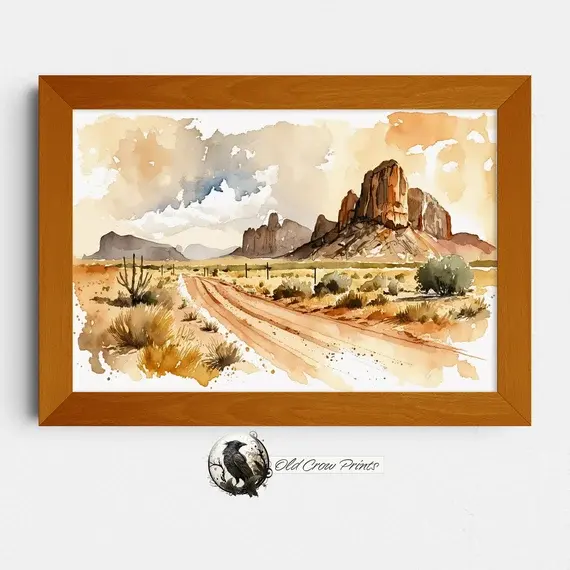
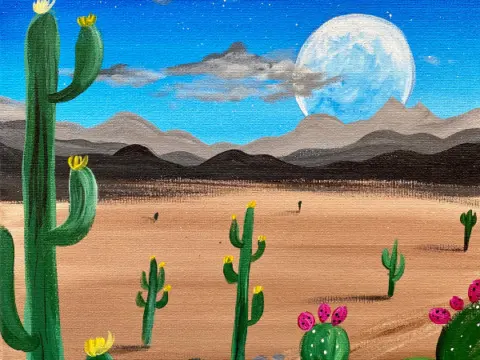
- If including a sky, add faint wisps of clouds or a distant, blurred mountain range to establish atmospheric perspective.
By adding these small, deliberate marks, you transform a generic drawing into a specific, believable location.
Common mistakes when drawing deserts
One of the most frequent errors is creating shadows that are too uniform or harsh. In a desert, light reflects off the sand, which often fills in shadows with a soft, ambient glow. Avoid using pure black for shadows unless you are depicting a very deep, enclosed crevice. Instead, use a range of mid-to-dark grays to keep the landscape looking bright and arid.
Another common mistake involves ignoring the concept of atmospheric perspective. As objects move further away from the viewer, they should become lighter, less detailed, and slightly cooler in tone. Artists often make the mistake of drawing distant dunes with the same dark, sharp lines as the foreground. This flattens the image and destroys the illusion of distance. Always keep your background elements subtle and soft to ensure the viewer understands the immense scale of the desert environment.
Why desert landscapes require patience
Capturing the essence of a desert is a study in patience because it requires layering values to achieve the right mood. Rushing the shading process often leads to muddy, uneven tones that fail to represent the clean, crisp look of a sun-drenched environment. Take your time to observe how light hits the curves of a dune, as these subtle transitions are what make the drawing feel three-dimensional and expansive.
Beyond the technical aspects, drawing deserts is an exercise in restraint. It is tempting to add too many details, but the beauty of the desert lies in its simplicity and vast, empty spaces. By carefully choosing where to place your focal points and leaving enough negative space, you allow the viewer’s eye to travel across the page. Practicing these techniques consistently will improve your ability to render complex natural textures while maintaining the serene, quiet atmosphere that defines the world's most beautiful and desolate arid landscapes.
Key facts
- Deserts are defined by low precipitation, typically receiving less than 10 inches (25 centimeters) of rainfall annually.
- Use a low horizon line to emphasize the vast, open sky, which often occupies two-thirds of the canvas in desert landscapes.
- Incorporate atmospheric perspective by making distant mountains or dunes appear lighter, cooler in tone, and less detailed than foreground elements.
- Simplify shapes to capture the undulating, rhythmic patterns of sand dunes created by prevailing wind directions.
- Use a warm color palette featuring ochre, burnt sienna, and golden yellow to convey the intense heat and sunlight characteristic of arid regions.
- Include specific flora like saguaro cacti or creosote bushes to provide scale and visual interest against the expansive, barren terrain.
The bottom line
Drawing a desert landscape requires a focus on vast, open space and the interplay of light and shadow. By keeping your horizon low, using a warm color palette, and applying atmospheric perspective to distant objects, you can effectively capture the scale of an arid environment. Focus on the rhythmic shapes of dunes and sharp, high-contrast lighting to define the unique, harsh beauty of these expansive, sun-drenched terrains.
People also ask
How do I create the illusion of depth in a desert drawing?
Overlap your sand dunes and vary their sizes, placing larger, darker shapes in the foreground and smaller, paler ones toward the horizon. This mimics the way the eye perceives distance in wide, open spaces.
What is the best way to draw realistic sand textures?
Use light, stippled marks or subtle cross-hatching to suggest the grainy surface of sand. Avoid drawing every individual grain; instead, focus on the shadows cast by ripples and ridges to define the texture.
How should I handle the lighting in a desert scene?
Deserts have harsh, direct sunlight, so use high-contrast shadows with sharp, well-defined edges. Avoid soft, diffused transitions, as these are more common in humid or cloudy environments.
What common mistakes should I avoid when drawing desert landscapes?
A frequent error is making the horizon line too high, which crowds the composition and loses the sense of scale. Another mistake is using too many colors; stick to a limited, earthy palette to maintain a cohesive, arid atmosphere.
Should I include water in my desert drawing?
While rare, oases or dry lake beds (playas) add a compelling focal point. If you include water, keep it small and reflective to emphasize the surrounding dryness and the scarcity of resources.
How do I draw mountains in the background?
Draw them as jagged, simplified silhouettes without intricate details. Keep them pale and slightly blurred to ensure they recede into the distance, preventing them from competing with your foreground subjects.
This answer was created with the help of AI research tools and reference sources. Spotted an error? Let us know — we correct mistakes quickly. See our editorial policy.