How do you draw an oasis?
Short answer
Drawing an oasis requires balancing the harsh, barren textures of a desert with the lush, organic forms of vegetation and water. Focus on creating a central focal point of blue, surrounded by dense greenery, and contrast these shapes against the sweeping, golden curves of surrounding sand dunes to establish depth.
On this page
How to structure an oasis composition
To draw a convincing oasis, you must establish a clear hierarchy of elements. Start by sketching the horizon line, then place the water source slightly off-center to create a natural, asymmetrical look. Use sweeping, gentle curves to define the sand dunes that frame your oasis, ensuring they recede into the distance to provide a sense of scale. The transition from the dry, textured desert floor to the moist, smooth surface of the water is the most critical area of your drawing.
When planning your layout, consider the following steps to ensure spatial accuracy:
- Sketch the primary shape of the pond or lake using an irregular, organic outline rather than a perfect circle.
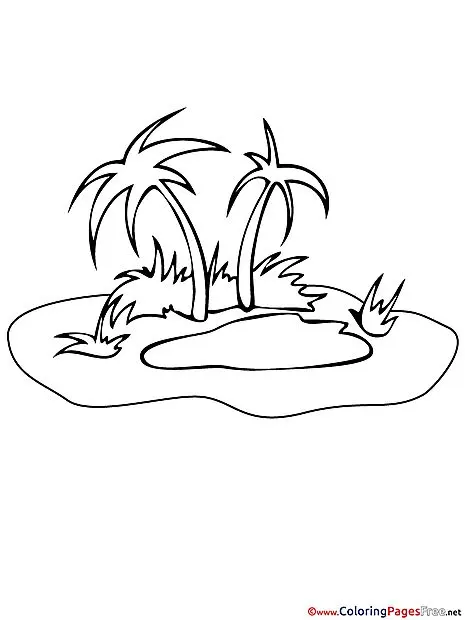
- Place the tallest vegetation, such as date palms, near the water’s edge to create a vertical anchor for the scene.
- Draw smaller shrubs and grasses closer to the shoreline to bridge the gap between the water and the sand.
- Add secondary, smaller dunes in the background to suggest an endless, vast desert landscape.
Best drawing techniques for desert textures
The desert environment is defined by its contrast between soft sand and hard, arid rock. Use long, flowing lines for dunes, varying the pressure of your pencil to create shadows that indicate the slope and height of the terrain. For the sand itself, avoid over-detailing; instead, use subtle stippling or light cross-hatching to suggest fine grains. Keep your strokes consistent with the direction of the wind to make the landscape feel alive and shifting.
For the water, use horizontal, smooth strokes to represent the surface. You can add ripples by using slightly darker, broken lines near the edges where the water meets the shore. Remember that water reflects the sky, so keep the center of the pond lighter than the edges. If you are using color, apply a deep blue for the water and transition to lighter turquoise near the banks to simulate depth. This contrast is essential for making the oasis appear refreshing and cool.
How to draw palm trees and desert plants
Palm trees are the iconic markers of an oasis, yet they are often drawn incorrectly. Start with a textured, slightly curved trunk, adding small, overlapping diamond shapes to represent the scars of old fronds. The leaves, or fronds, should fan out from the top in a radial pattern. Avoid making them perfectly symmetrical; real palm leaves droop and bend under their own weight. Use quick, sharp strokes to define the individual leaflets, varying their length to show movement.
Smaller desert flora, such as succulents or hardy grasses, should be clustered near the water. Use these plants to hide the hard transition line between the sand and the water. When drawing these, focus on:
- Clumping: Plants rarely grow in perfect isolation in an oasis.
- Variety: Mix tall, thin grasses with low, rounded bushes.
- Shadowing: Place small, dark shadows directly beneath the plants to ground them in the scene.
- Texture: Use short, jagged lines to suggest the toughness of desert-adapted leaves.

How to create depth and perspective
Depth is achieved by manipulating the size and clarity of objects as they move toward the horizon. Objects closer to the viewer, such as the foreground dunes or the immediate shoreline, should have more detail and higher contrast. As you move toward the background, decrease the level of detail and soften the edges of your lines. This atmospheric perspective mimics how air and distance blur the vision, making the oasis feel like a hidden gem within a vast space.
Use the sand dunes to lead the viewer’s eye toward the water. By drawing the ridges of the dunes so they point toward the center of the oasis, you create a natural path for the eye to follow. Ensure the shadows on the dunes are consistent, as if coming from a single light source like a high desert sun. This consistency is vital for maintaining the realism of the scene; if shadows fall in different directions, the image will lose its cohesive, three-dimensional quality.
Common mistakes when drawing an oasis
One of the most frequent errors is making the water look like a solid, flat shape without any integration into the environment. If the water appears to be "sitting on top" of the sand rather than nestled within it, the scene will look disconnected. Always ensure the shoreline has a transition zone where the sand meets the water, perhaps by adding wet-looking mud or small stones. Another common mistake is drawing the palm trees too small or too uniform, which makes the oasis look like a toy model rather than a natural feature.
Avoid these pitfalls to improve your results:
- Over-detailing the sand: Too many lines will make the desert look like a rocky wasteland rather than soft dunes.
- Perfect symmetry: Nature is rarely perfectly balanced; add a fallen branch or a slight bend in the shoreline.
- Neglecting the sky: A blank sky makes the scene feel unfinished; add a few faint clouds or a gradient to suggest the heat of the day.
- Ignoring scale: Ensure the palm trees are large enough to be a significant feature compared to the surrounding dunes.
Key facts
- Oases are isolated areas of vegetation in a desert, typically surrounding a natural spring or groundwater source.
- Start your drawing by sketching a central pool of water, which acts as the focal point for all surrounding life.
- Use a variety of palm tree shapes, such as date palms with feathery fronds, to create depth and height.
- Incorporate soft, rolling sand dunes in the background to establish the harsh desert environment surrounding the lush center.
- Add small clusters of shrubs or grasses near the water's edge to show the transition from wet soil to dry sand.
- Avoid drawing perfectly symmetrical shapes, as nature is organic and irregular, which makes the scene look more realistic.
The bottom line
To draw a convincing oasis, focus on the contrast between the lush, organic center and the vast, arid desert surroundings. By layering palm trees, adding a reflective water source, and using irregular, natural shapes, you create a sense of life emerging from a harsh environment. Remember that the beauty of an oasis lies in its role as a sanctuary, so prioritize detail near the water.
People also ask
What colors should I use for a desert oasis?
Use deep blues and teals for the water, vibrant greens for the foliage, and warm ochre or tan tones for the sand. Adding subtle shadows in cooler purples or grays helps the green trees stand out against the bright desert backdrop.
How do I make the water look realistic in a drawing?
Draw horizontal lines across the surface to suggest stillness and add reflections of the palm trees near the edges. Keep the center of the pool lighter in color to mimic depth and sunlight hitting the water.
Should I include animals in my oasis drawing?
Adding animals like camels, birds, or desert foxes adds a narrative element to your artwork. Place them near the water’s edge to emphasize that the oasis is a vital life-sustaining resource.
How can I show the scale of the oasis compared to the desert?
Draw the dunes in the background much larger and less detailed than the plants in the foreground. This atmospheric perspective creates the illusion that the oasis is a small, protected pocket within a vast landscape.
What is the most common mistake when drawing an oasis?
The most common error is making the vegetation look too uniform or evenly spaced. Real oases have dense clusters of plants near the water and sparse, dying growth as you move further away into the sand.
Do I need to draw a specific type of palm tree?
While date palms are the most iconic, you can include various shapes of trunks and leaf densities. Mixing different sizes of trees creates a more natural, overgrown appearance rather than a manicured garden look.
This answer was created with the help of AI research tools and reference sources. Spotted an error? Let us know — we correct mistakes quickly. See our editorial policy.