How do you draw an aquarium step by step?
Short answer
Drawing an aquarium involves constructing a three-dimensional glass container using linear perspective, then filling it with aquatic life and structural elements. By establishing a rectangular base, adding water depth markers, and layering plants, stones, and fish, you create a realistic scene. This process requires attention to light refraction and spatial depth.
On this page
How to draw the aquarium structure
The foundation of a realistic aquarium drawing is the rectangular glass tank. To achieve a professional look, use two-point perspective to ensure the sides of the glass recede toward vanishing points on the horizon line. This technique prevents the tank from looking flat or distorted. Start by drawing a vertical line for the nearest corner, then extend lines outward to define the top and bottom edges.
Once the frame is established, you must account for the thickness of the glass. Draw a secondary, smaller rectangle inside the front face to represent the glass pane's edge. Adding subtle highlights along these edges suggests the reflective quality of the material. Avoid drawing the frame too heavily, as the focus should remain on the contents inside the tank rather than the container itself.
- Sketch a light horizon line.
- Place two vanishing points on the far ends of the line.
- Draw the vertical front corner of the tank.
- Connect the top and bottom of the corner to the vanishing points.
- Erase unnecessary guidelines to reveal the clean, rectangular shape.
How to add water and substrate
Water adds a layer of visual complexity because it refracts light and distorts objects seen through it. To represent the water line, draw a horizontal line near the top of the tank, ensuring it remains perfectly parallel to the base. Below this line, you can add faint, wavy horizontal streaks to suggest the surface tension and movement of the water.
The substrate, or the gravel at the bottom, provides the anchor for your aquatic environment. Use small, irregular shapes to represent stones or sand particles. As you move toward the back of the tank, make these shapes smaller and more densely packed to create a sense of depth. Remember that objects submerged in water often appear slightly magnified or shifted, so adjust the scale of your gravel accordingly to enhance the illusion of a filled tank.
How to draw aquarium plants and decor
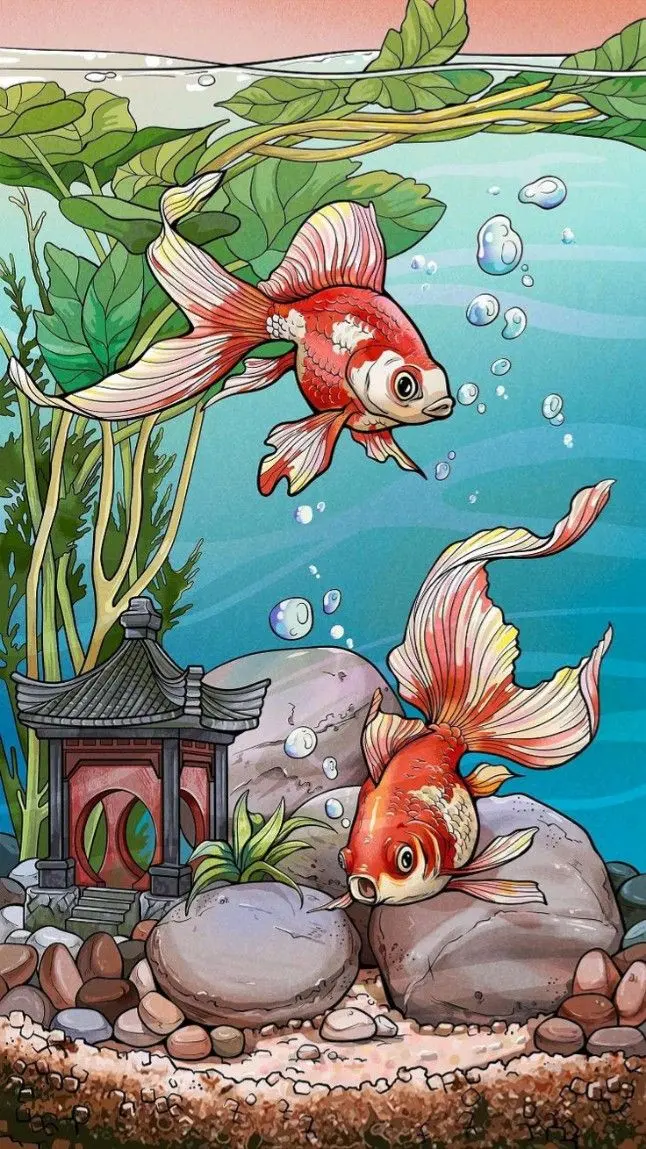
Plants are essential for creating a vibrant, living scene within your drawing. Use a variety of shapes, such as long, ribbon-like leaves for grasses and broad, rounded shapes for floating plants. Start by sketching the stems from the substrate upward, allowing them to sway slightly to mimic the natural flow of water currents. Layering is crucial here; place larger plants in the back and smaller, finer plants toward the front to establish a clear foreground and background.
Decorations like driftwood or ceramic caves add structural interest and hiding spots for fish. Draw these items with organic, jagged lines to contrast with the rigid geometry of the glass tank. When shading these elements, consider the light source coming from above, typically from a tank hood light. This creates consistent shadows on the underside of leaves and rocks, which helps ground the objects firmly within the aquatic space.
- Use long, flowing strokes for aquatic grasses.
- Vary the leaf sizes to create visual interest.
- Place driftwood in the center to create a focal point.
- Ensure plants overlap to suggest a dense, thriving environment.
- Add small bubbles rising from plants to indicate photosynthesis.
How to draw fish and aquatic life
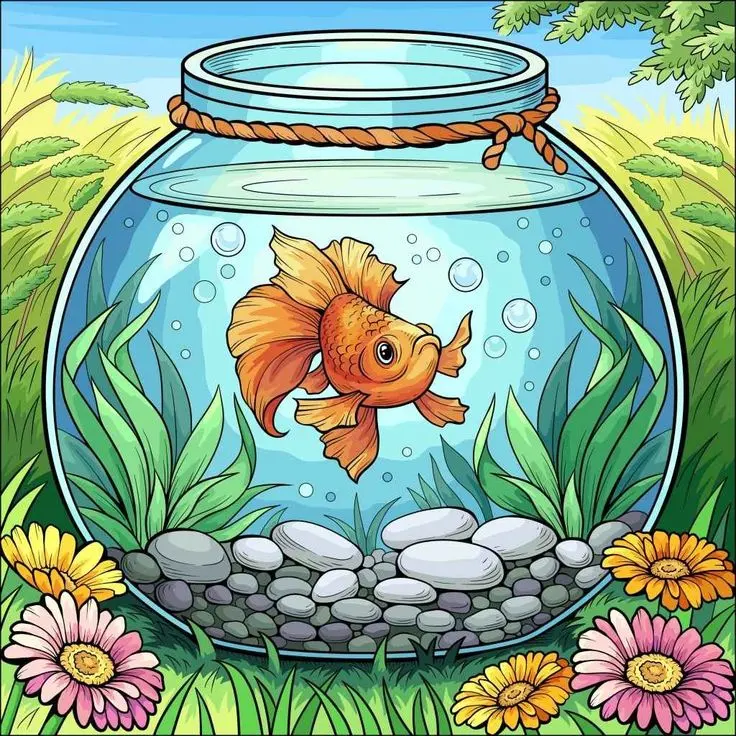
Fish bring the aquarium to life, but they must be drawn with attention to their environment. When drawing fish, keep their bodies streamlined and oval-shaped to suggest movement. Because they are behind glass and water, their outlines should be slightly softer than the foreground plants. If a fish is swimming toward the viewer, use foreshortening to make the head appear larger than the tail, which adds a dynamic sense of motion.
To enhance realism, consider how light reflects off scales. Add tiny, bright highlights on the upper curves of the fish’s body. If you are drawing a school of fish, vary their sizes and directions to avoid a repetitive, static appearance. Ensure that no fish are drawn perfectly parallel to the glass unless they are meant to be resting against it, as this helps maintain the illusion of depth within the water column.
Common mistakes when drawing an aquarium
A frequent error is ignoring the effects of refraction, which makes objects appear distorted or displaced when viewed through water. Beginners often draw fish or plants as if they were in the air, resulting in a flat, unnatural look. To correct this, ensure that items partially submerged in water appear slightly shifted at the water line. Additionally, failing to account for the glass thickness makes the tank look like a two-dimensional box rather than a solid, heavy structure.
Another common mistake is neglecting the light source. Aquariums are typically lit from above, meaning the top surfaces of rocks and plants should be the brightest, while the undersides remain in shadow. If the shading is inconsistent, the entire drawing will lose its sense of three-dimensional space. Take your time to map out the light direction before adding final details to ensure your aquatic scene remains consistent and visually compelling until the very final stroke.
Key facts
- Use a ruler to ensure the front and back glass panels are parallel, creating a consistent rectangular perspective.
- Draw the water line slightly below the top edge of the tank to allow space for lighting and equipment.
- Add depth by drawing the back glass panel slightly smaller or higher than the front to create a vanishing point.
- Include a substrate layer at the bottom, typically represented by a horizontal line about one-tenth of the total height.
- Place internal features like heaters and filters in the back corners to maintain a clean, professional composition.
- Use light blue or turquoise shading for the water, applying darker tones toward the bottom to simulate depth.
The bottom line
Drawing an aquarium requires a balance of geometric precision and fluid artistic detail. By establishing a clear rectangular frame with perspective, you create a solid foundation for the aquatic environment. Focus on layering elements like substrate, plants, and fish to build depth. With careful attention to light reflections and water refraction, you can transform a simple box into a vibrant, realistic underwater scene for your viewers.
People also ask
What is the best way to show transparency in a drawing?
Use thin, faint lines for the glass edges and add subtle white highlights or "glare" marks on the front panel. Avoid coloring the entire tank with solid opaque paint to keep the interior visible.
How do I make the fish look like they are swimming in water?
Draw fish at varying angles and sizes to create a sense of movement and distance. Use soft, blurred edges for fish positioned further back to simulate the refraction of water.
Should I draw the aquarium stand as part of the sketch?
Including a stand provides a grounded, realistic context for the tank. Keep the stand design simple, such as a basic cabinet or metal frame, so it does not distract from the aquarium contents.
How do I draw realistic aquatic plants?
Start with long, flowing vertical lines that curve slightly to mimic the movement of currents. Add broad, leaf-like shapes at the base and taper them toward the top to create a natural, lush appearance.
What common mistake should I avoid when drawing tanks?
A frequent error is forgetting to account for the thickness of the glass. Always draw a double-lined border for the frame to represent the glass pane thickness and the silicone sealant joints.
Can I add bubbles to my drawing?
Yes, draw small, varied circles rising from the bottom to the surface. Group them in clusters of different sizes to make the aeration look organic rather than uniform.
This answer was created with the help of AI research tools and reference sources. Spotted an error? Let us know — we correct mistakes quickly. See our editorial policy.