How do you draw the sun?
Short answer
Drawing the sun involves creating a central circular shape and adding radiating lines or a corona to represent light. You can use traditional art supplies like pencils and markers or digital software. Focus on varying the line weight and color intensity to convey the immense heat and energy of the star.
On this page
How to draw a realistic sun
Creating a realistic representation of the sun requires moving beyond the simple yellow circle often taught in elementary art. Start by sketching a perfect circle using a compass or a circular object to ensure symmetry. Instead of drawing solid lines for rays, consider the sun as a glowing sphere of plasma. Use a base of warm yellow, then layer oranges and reds toward the edges to simulate the temperature gradient.
To achieve a professional look, focus on the texture of the solar surface. The sun is not a smooth, flat disk; it is a turbulent environment filled with sunspots and solar flares. Use a stippling technique with fine-point pens to create a grainy, mottled texture across the surface. This adds depth and prevents the drawing from looking like a simple cartoon.
- Sketch a light circular outline with a graphite pencil.
- Apply a base layer of light yellow using colored pencils or pastels.
- Use a darker orange to add subtle, irregular patches representing solar activity.
- Soften the edges with a blending stump to create a glowing effect.
- Add a final layer of white highlights to suggest intense brilliance.
Best art supplies for drawing the sun
Choosing the right medium significantly impacts the final result. For beginners, high-quality colored pencils are ideal because they allow for precise layering and blending of warm tones. Wax-based pencils provide a smooth transition between yellow, orange, and red, which is essential for capturing the sun's fiery appearance. If you prefer a more vibrant look, soft pastels offer excellent pigment density but require a fixative spray to prevent smudging.
For those interested in digital art, tablets offer the ability to use "glow" or "bloom" effects that are difficult to replicate on paper. Digital brushes can simulate the chaotic nature of solar flares with high precision. Regardless of the medium, ensure you have a range of values from pale cream to deep crimson. Having at least five distinct shades of yellow and orange will allow you to create a convincing sense of volume and light.
- Graphite pencils for initial sketching and layout.
- A blending stump or tortillon for smooth color transitions.
- Erasers, specifically a kneaded eraser, to pull out light spots.
- High-quality drawing paper with a slight tooth to hold pigment.
- A white gel pen for adding sharp, bright highlights at the end.
Why the sun looks different in art
The sun is often depicted as yellow, but in reality, it emits all colors of the visible spectrum. When viewed from space, the sun appears white because it contains all wavelengths of light. Artists choose yellow, orange, and red because these colors are psychologically associated with heat, warmth, and the daytime sky. Using these colors helps the viewer immediately identify the subject as the sun, even without complex scientific accuracy.
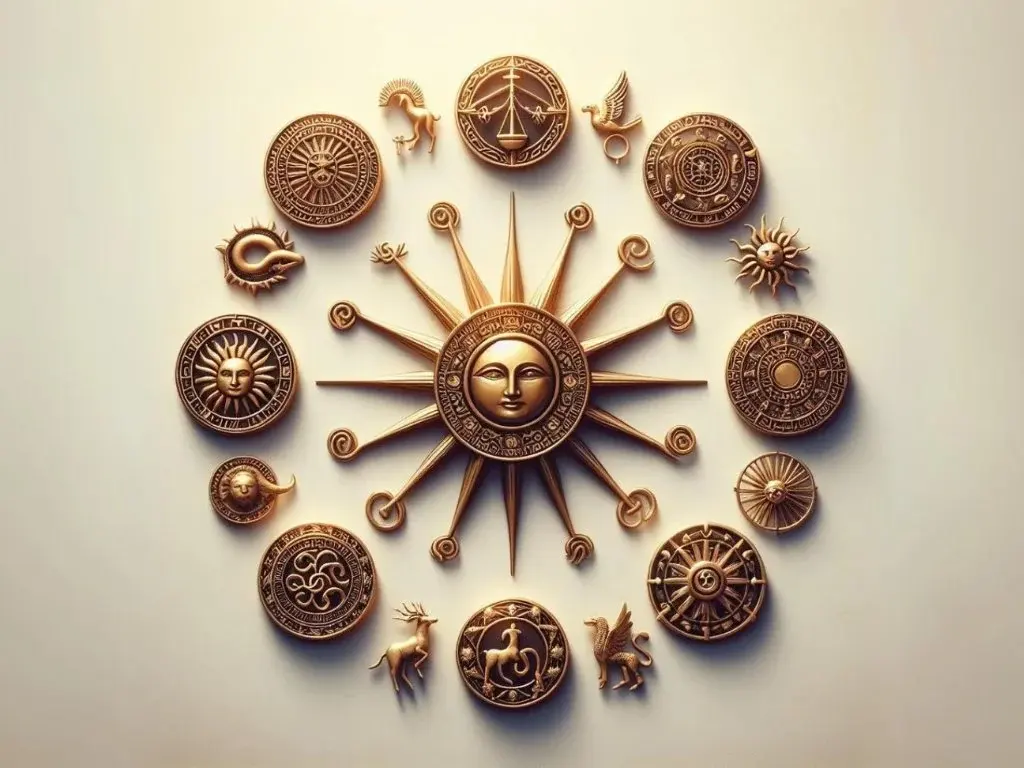
Cultural history also influences how we draw the sun. Ancient civilizations often depicted the sun with a human face or as a golden chariot, emphasizing its role as a deity. Modern art tends to focus on the sun as a physical object, often emphasizing its corona during an eclipse. By understanding these historical contexts, you can decide whether you want your drawing to be a symbolic icon or a scientific illustration of the star.
Common mistakes when drawing the sun
One of the most frequent errors is drawing the sun with a hard, black outline. In nature, the sun does not have a defined edge; it fades into the surrounding sky. Using a thick black line makes the sun look like a flat sticker rather than a massive, distant object. Instead, let the color of the sun bleed slightly into the background or use a soft, blurred edge to suggest atmospheric scattering.
Another common mistake is placing the sun in the center of the page without considering the composition. While a centered sun can work for symmetrical designs, it often creates a static, uninteresting image. Try placing the sun off-center according to the rule of thirds to create a more dynamic and professional composition. Additionally, avoid using only one shade of yellow, as this makes the drawing look flat and lifeless.
- Avoid using black ink for outlines, as it creates an unnatural border.
- Do not ignore the surrounding environment, as the sun's light should influence the colors of the horizon.
- Steer clear of perfectly straight, uniform rays, which look artificial.
- Ensure your light source remains consistent if you are drawing other objects in the same scene.
How to add light effects to your drawing
To make your sun look truly bright, you must consider the contrast between the sun and the rest of the image. A sun drawn on a white background will never look as bright as a sun drawn against a darker, contrasting sky. By darkening the surrounding sky with blues, purples, or deep grays, the yellow of the sun will appear to pop off the page. This is known as simultaneous contrast, where colors appear more intense when placed next to their complement.
You can also add "lens flare" effects to mimic the way a camera captures intense light. These are subtle, semi-transparent shapes that appear in a line originating from the center of the sun. Adding these small, glowing circles or polygons adds a sense of realism and photographic quality to your work. Always keep these effects subtle so they do not distract from the main subject, and ensure they follow a straight path away from the light source.
Key facts
- The Sun is a nearly perfect sphere of hot plasma, not a flat yellow circle.
- Use a compass or a circular object to ensure your base shape is geometrically accurate.
- Add texture by using varying shades of orange, yellow, and white to represent solar granules.
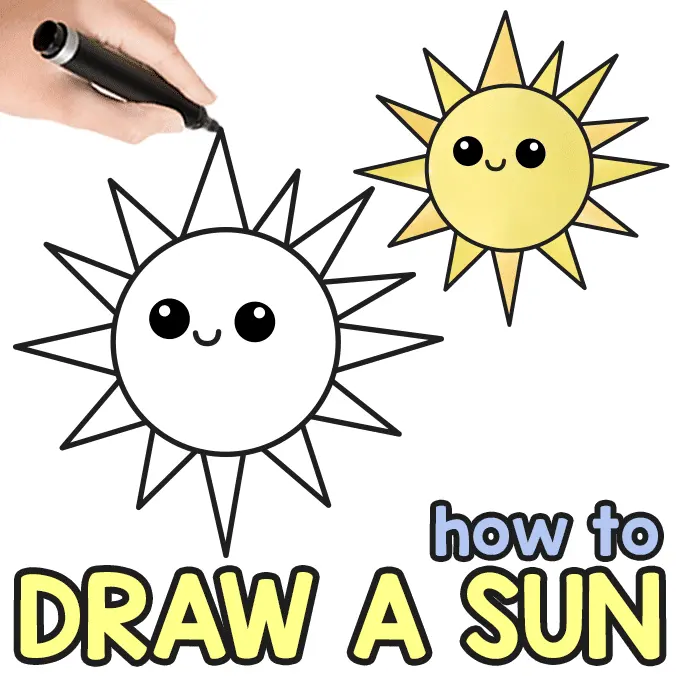
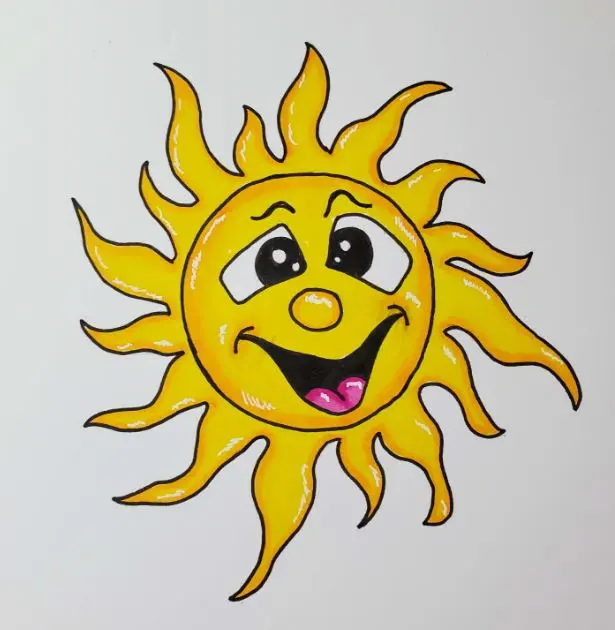
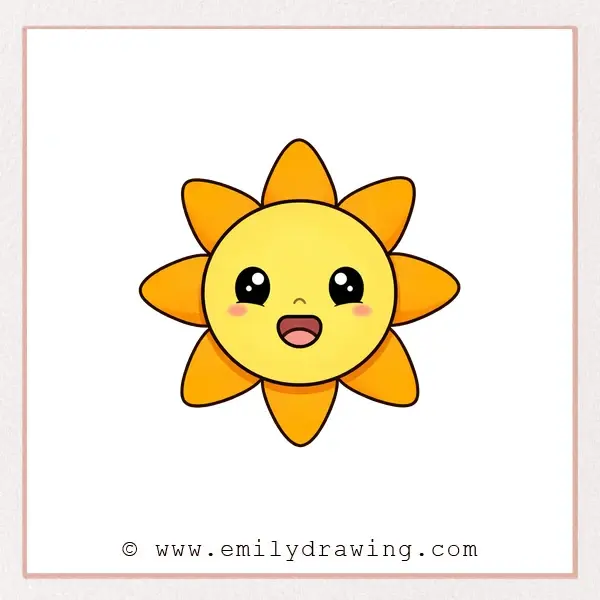
- Avoid drawing a smiley face on the Sun, as this is a stylistic convention rather than a scientific representation.
- Solar flares and sunspots are asymmetrical features that add realism to your drawing.
- A corona is the outermost layer of the Sun’s atmosphere, appearing as a faint, wispy white glow during an eclipse.
The bottom line
Drawing the Sun effectively requires moving beyond simple childhood symbols toward a more nuanced depiction of light and texture. By focusing on spherical depth, subtle color gradients, and accurate features like sunspots, you can create a representation that honors the star’s true nature. Remember that light, rather than hard outlines, defines the Sun's appearance, so prioritize soft transitions and atmospheric effects to achieve a realistic result.
People also ask
Why is the Sun often drawn as yellow when it is actually white?
The Sun emits light across all visible colors, which combine to appear white from space. Earth’s atmosphere scatters shorter blue wavelengths, making the Sun appear yellow or orange to observers on the ground.
What are sunspots and how should I draw them?
Sunspots are cooler, darker regions on the photosphere caused by intense magnetic activity. Draw them as small, irregular dark patches rather than perfect circles to reflect their natural, shifting shapes.
How do I represent the Sun's heat in a drawing?
You can suggest intense heat by using a gradient that transitions from a bright white center to deep oranges and reds at the edges. Avoid using solid black outlines, which can make the Sun look flat and cartoonish.
Should I include rays or spikes when drawing the Sun?
Rays are a symbolic way to represent light, but they do not exist as physical spikes in space. If you want a scientific look, omit the rays or replace them with a soft, glowing halo.
How can I show the scale of the Sun compared to Earth?
The Sun is roughly 109 times the diameter of Earth. If you draw the Sun as a large circle, a tiny dot representing Earth helps illustrate the immense difference in size.
Is it safe to look at the Sun while drawing it from life?
Never look directly at the Sun with the naked eye or through a telescope, as this causes permanent retinal damage. Use a solar filter or view the Sun indirectly through a projection method if you are sketching outdoors.
This answer was created with the help of AI research tools and reference sources. Spotted an error? Let us know — we correct mistakes quickly. See our editorial policy.