How do you sketch quickly?
Short answer
Sketching quickly requires focusing on essential shapes and gestures rather than fine details. By using loose, confident strokes and limiting your time per subject, you train your eye to capture the core essence of a form. Prioritize movement and proportion over perfection to build speed and improve your overall observational drawing skills.

On this page
How to sketch fast with gesture drawing
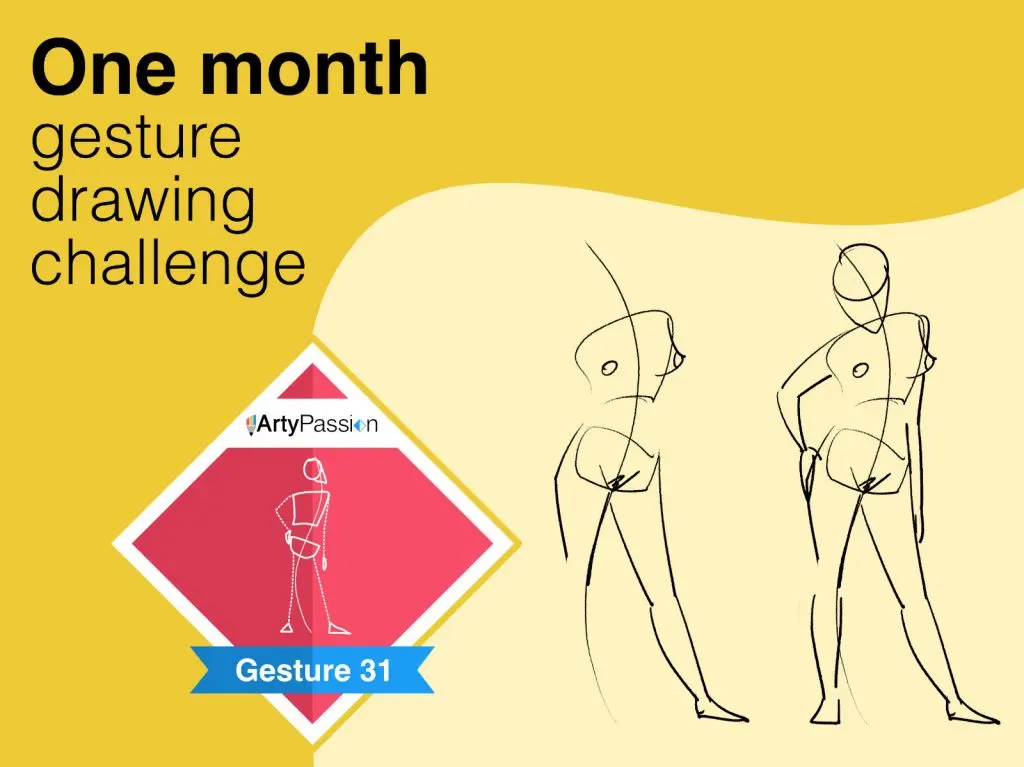
Gesture drawing is the foundational technique for rapid sketching, focusing on the action and energy of a subject rather than its outline. Instead of drawing the literal contours of an object, you aim to capture its "line of action"—the invisible flow that defines its posture or movement. This approach forces you to work quickly, as you are not preoccupied with shading or texture. By prioritizing the flow of the subject, you learn to see the big picture immediately.
To practice gesture drawing, set a timer for 30 to 60 seconds per pose. Use a loose grip on your pencil, holding it further back from the tip to encourage sweeping, fluid motions. Do not worry about mistakes or anatomical accuracy during these short bursts. The goal is to translate the subject's rhythm onto the paper before the timer expires. Over time, this builds a visual shorthand that makes longer, more detailed drawings much easier to construct.
Best tools for quick sketching
Choosing the right materials can significantly impact your speed and comfort when sketching on the go. Avoid overly soft graphite pencils that require frequent sharpening, as this interrupts your flow. Instead, opt for tools that offer consistent marks and minimal maintenance. A simple mechanical pencil or a felt-tip pen is often superior for beginners because they provide a steady line without the need for constant adjustment or erasing.
- Graphite pencils (HB or 2B): Versatile and easy to control.
- Fine-liner pens: Prevent the temptation to erase, forcing you to commit to every line.
- Sketchbook with toothy paper: Provides enough friction for confident, quick strokes.
- Charcoal sticks: Excellent for covering large areas of gesture quickly, though they are messier.
Using a sketchbook that lays flat is also essential for maintaining speed. If you are constantly fighting to keep your pages open, you lose focus on your subject. Select a portable size, such as A5 or 5x8 inches, to ensure you can carry your supplies everywhere.
How long does it take to get faster
Improving your sketching speed is a gradual process that relies on consistent, short-duration practice. You should not expect to master rapid sketching overnight; rather, view it as a form of athletic training for your hand and eye. Many artists find that dedicating just 15 minutes a day to "timed intervals" leads to noticeable progress within a few weeks. The key is to increase the difficulty by shortening the time allowed for each sketch as your confidence grows.
- Start with 5-minute sketches to get comfortable with basic proportions.
- Reduce the time to 2 minutes to force yourself to simplify shapes.
- Finally, challenge yourself with 30-second bursts to capture only the most vital lines.
By tracking your progress, you will see how your brain begins to filter out unnecessary information. You will stop trying to draw every leaf on a tree and start seeing the tree as a singular, unified mass.
Why sketching speed matters for artists
Speed is not about rushing to finish a piece, but about efficiency in visual communication. When you can sketch quickly, you become better at documenting ideas, capturing fleeting moments, and understanding complex structures. Rapid sketching prevents you from becoming "precious" about your work, which is a common psychological barrier that stops artists from taking risks. When you know a sketch only took a minute, you are less afraid to experiment with bold lines or unusual perspectives.
Furthermore, rapid sketching is the primary method for observational learning. By sketching a subject quickly multiple times from different angles, you gain a deeper understanding of its three-dimensional form than you would from one long, detailed study. This iterative process builds a "visual library" in your mind. Eventually, you will be able to draw objects from memory because you have internalized their basic construction through these fast, repeated sessions.
Common mistakes when sketching quickly
One of the most frequent errors is the tendency to "noodle," or obsess over small details before the overall structure is correct. If you spend your time drawing an eye or a button while the proportions of the head or torso are wrong, the entire sketch will fail. Always start with the largest shapes and work your way down to the details only if time permits. If the timer goes off, leave the details behind; the gesture is more important than the finish.
- Trying to erase lines: Erasing kills momentum and reinforces the habit of fearing mistakes.
- Holding the pencil too tightly: This creates stiff, shaky lines instead of fluid, confident ones.
- Focusing on contours: Beginners often trace the edges of objects rather than building them from internal structure.
- Ignoring the negative space: Sometimes the shape of the air around an object is easier to draw than the object itself.
By avoiding these pitfalls, you maintain the energy of the sketch. Remember that a fast, "ugly" sketch that captures the essence of the subject is far more valuable than a slow, stiff drawing that lacks life and movement. Keep your hand moving, keep your eyes on the subject, and trust your instincts.
Key facts
- Use a soft graphite pencil, such as a 4B or 6B, to allow for fluid, dark lines without needing heavy pressure.
- Focus on capturing the "gesture" or the overall movement of the subject rather than perfecting individual details.
- Limit your sketching time to 30 or 60 seconds per pose to force your brain to prioritize essential shapes.
- Keep your hand loose and grip the pencil further back from the tip to encourage broader, more expressive strokes.
- Simplify complex objects into basic geometric forms like spheres, cubes, and cylinders to establish perspective quickly.
- Avoid the common mistake of erasing; keep your initial "messy" lines as they provide a record of your structural process.
The bottom line
The secret to rapid sketching is prioritizing gesture and form over precision. By limiting your time per drawing and embracing loose, fluid movements, you train your eye to identify the most important visual information immediately. Avoid the urge to erase or fix minor errors; instead, focus on the rhythm of your subject. Consistent, high-volume practice is the most effective way to develop speed, confidence, and artistic intuition.
People also ask
Should I use a pen or a pencil for quick sketching?
Pencils are generally preferred for beginners because they allow for varied line weights and shading. Pens are excellent for building confidence, as they force you to commit to your lines without the temptation to erase.
How do I improve my hand-eye coordination for sketching?
Practice "blind contour drawing," where you look only at the subject and not at your paper. This exercise trains your brain to translate visual information directly to your hand movements.
What is the best paper for quick sketches?
Smooth or lightly textured newsprint or a lightweight sketchbook is ideal. Avoid expensive, heavy-weight watercolor paper, as it is unnecessary and costly for fast, iterative practice.
How can I sketch people in public without feeling self-conscious?
Use a small, pocket-sized sketchbook that is easy to hold and inconspicuous. Focus on the general posture of people rather than their facial features to maintain anonymity and speed.
Why do my quick sketches look stiff?
Stiffness often results from focusing too much on outlines rather than the internal flow of the subject. Try to draw the "line of action," which is the invisible curve that defines the subject's posture.
How many sketches should I do in a single session?
Aim for 10 to 20 short sketches in a 30-minute session. The goal is volume and repetition, which builds muscle memory faster than spending hours on a single drawing.
This answer was created with the help of AI research tools and reference sources. Spotted an error? Let us know — we correct mistakes quickly. See our editorial policy.