What is gesture drawing?
Short answer
Gesture drawing is a rapid sketching technique used to capture the essential action, movement, and fluid energy of a subject rather than its static details. By focusing on the "line of action" and rhythmic flow of a pose, artists develop a deeper understanding of anatomy, weight, and dynamic balance in their work.
On this page
What is the purpose of gesture drawing?
Gesture drawing serves as the foundational exercise for artists aiming to breathe life into their figures. Unlike a long-term anatomical study that focuses on precise contours and shading, gesture drawing prioritizes the "story" of the pose. It captures the tension, relaxation, and direction of a human form within a very brief timeframe. By stripping away the need for perfection, the artist learns to see the subject as a unified whole rather than a collection of isolated parts.
This practice is essential for animators, illustrators, and fine artists who need to convey motion. When an artist masters gesture, their drawings lose a stiff, mannequin-like quality and gain a sense of gravity and intent. It trains the eye to perceive the underlying structure of a pose instantly. This skill is vital for rapid sketching in public spaces, such as cafes or transit stations, where subjects rarely remain still for more than a few seconds.
How long does a gesture drawing take?
The duration of a gesture drawing is intentionally restricted to force the artist to prioritize speed and intuition over fine detail. Most sessions utilize a series of timed intervals to build muscle memory and observational efficiency. The goal is not to finish a drawing, but to capture the essence of the pose before the time expires.
- Thirty-second sketches: Focus exclusively on the primary line of action and the weight distribution of the torso.
- One-minute sketches: Add basic indicators for the limbs and the orientation of the head to establish perspective.
- Two-minute sketches: Refine the joints and add minor anatomical landmarks like the rib cage or pelvis.
- Five-minute sketches: Incorporate subtle overlaps and contour suggestions to define the volume of the figure.
By rotating through these intervals, the artist learns to allocate their time effectively. The shorter the time limit, the more the artist is forced to abandon trivial details in favor of the core gesture.
Best materials for gesture drawing beginners
For beginners, the best materials are those that encourage bold, sweeping lines rather than delicate, hesitant marks. Using tools that require frequent sharpening or precise control can hinder the fluid nature of gesture work. Instead, focus on media that offer a wide range of line weights and can be applied with quick, confident strokes.
- Charcoal sticks or compressed charcoal: These provide excellent coverage and allow for both broad, sweeping gestures and sharp, dark lines.
- Graphite pencils (6B or softer): Softer leads allow for darker, more expressive marks without requiring heavy pressure.
- Newsprint paper: This inexpensive, large-format paper is ideal because it allows the artist to draw without the fear of "ruining" expensive materials.
- Conté crayons: These offer a waxy, smooth consistency that is perfect for capturing the rhythm of a figure.
Avoid using ballpoint pens or hard pencils (like 2H or 4H), as these tend to encourage "scratching" and detail-oriented habits that are counterproductive to gesture drawing.
Why gesture drawing improves artistic skills
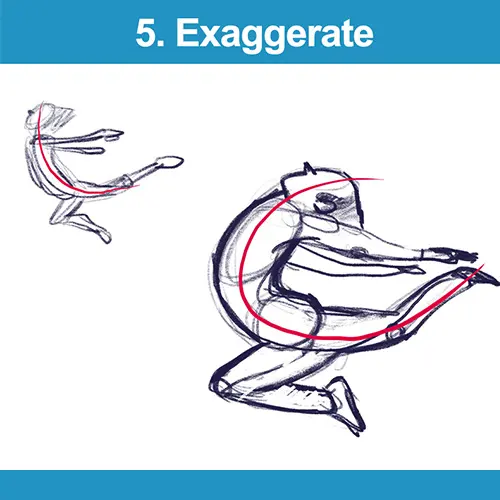
Gesture drawing acts as a form of visual shorthand, teaching the brain to synthesize complex information rapidly. When an artist practices this regularly, they develop an intuitive sense of proportion and balance. By constantly observing the relationship between the spine, the shoulders, and the hips, the artist begins to understand how the body moves through three-dimensional space. This internal knowledge eventually translates into more convincing finished works.
Furthermore, this practice helps overcome the "fear of the blank page." Because the drawings are meant to be quick and ephemeral, the pressure to create a masterpiece is removed. This freedom allows for experimentation with line quality and composition. Over time, the artist develops a unique "handwriting" or style, as the rapid nature of the exercise forces them to rely on their own natural instincts rather than copying a reference with painstaking, rigid accuracy.
Common mistakes when gesture drawing
Even experienced artists can fall into traps that stifle the energy of their work. The most frequent error is focusing on the outline or the "skin" of the subject before establishing the internal structure. If an artist starts by drawing the fingers or the toes, they lose the overall flow of the pose, resulting in a drawing that feels disjointed or "broken."
- Focusing on contours: Always start with the spine and the central mass of the torso, as these dictate the entire pose.
- Ignoring weight: Ensure that the figure has a clear sense of balance; if a character is leaning, the weight must be supported by a grounded foot.
- Over-detailing: Resist the urge to add facial features or clothing folds until the very end of the session, if at all.
- Hesitation: Avoid "chicken scratching," which involves making many short, nervous lines to find a shape; instead, commit to a single, confident stroke.
By avoiding these pitfalls, the artist ensures that every mark serves a purpose in communicating the movement and character of the subject. Consistency in practice is the ultimate key to success.
Key facts
- Gesture drawing is a technique used to capture the essential action, movement, and energy of a subject rather than its precise details.
- Artists typically use short time limits, often ranging from 30 seconds to 5 minutes, to force a focus on the "flow" of the pose.
- The primary goal is to establish the "line of action," an imaginary curve that runs through the spine or limbs to define the figure's intent.
- Common tools include charcoal, graphite, or conte crayons, which allow for quick, fluid marks without the need for constant sharpening.
- Successful gesture drawings emphasize weight distribution and balance, showing how the body supports itself in space.
- Practitioners should avoid focusing on outlines or facial features, as these distract from the overall rhythmic gesture of the form.
The bottom line
Gesture drawing is a vital practice for any artist looking to improve their ability to capture life and motion. By prioritizing the internal rhythm and weight of a subject over static details, you train your eye to see the underlying structure of reality. Embrace the speed of the process, accept imperfect marks, and focus on the flow to develop a more dynamic and expressive artistic style.
People also ask
How does gesture drawing differ from contour drawing?
Gesture drawing focuses on the internal movement and energy of a subject, while contour drawing emphasizes the external edges and outlines. Gesture is about the "what" and "why" of the pose, whereas contour is about the "where" of the physical boundary.
Should I use an eraser when practicing gesture drawing?
It is generally recommended to avoid using an eraser during gesture sessions. Erasers encourage a focus on perfection and small details, which contradicts the goal of capturing a quick, fluid impression.
What is the best way to start a gesture drawing?
Begin by identifying the longest, most dominant curve in the pose, often found in the spine. Once that line of action is established, quickly block in the placement of the head, ribcage, and pelvis to anchor the figure.
How often should I practice gesture drawing?
Consistency is more important than duration, so practicing for 15 to 30 minutes daily is highly effective. Many artists use online figure-drawing timers to cycle through poses of varying lengths to build speed and intuition.
Can I do gesture drawings of objects instead of people?
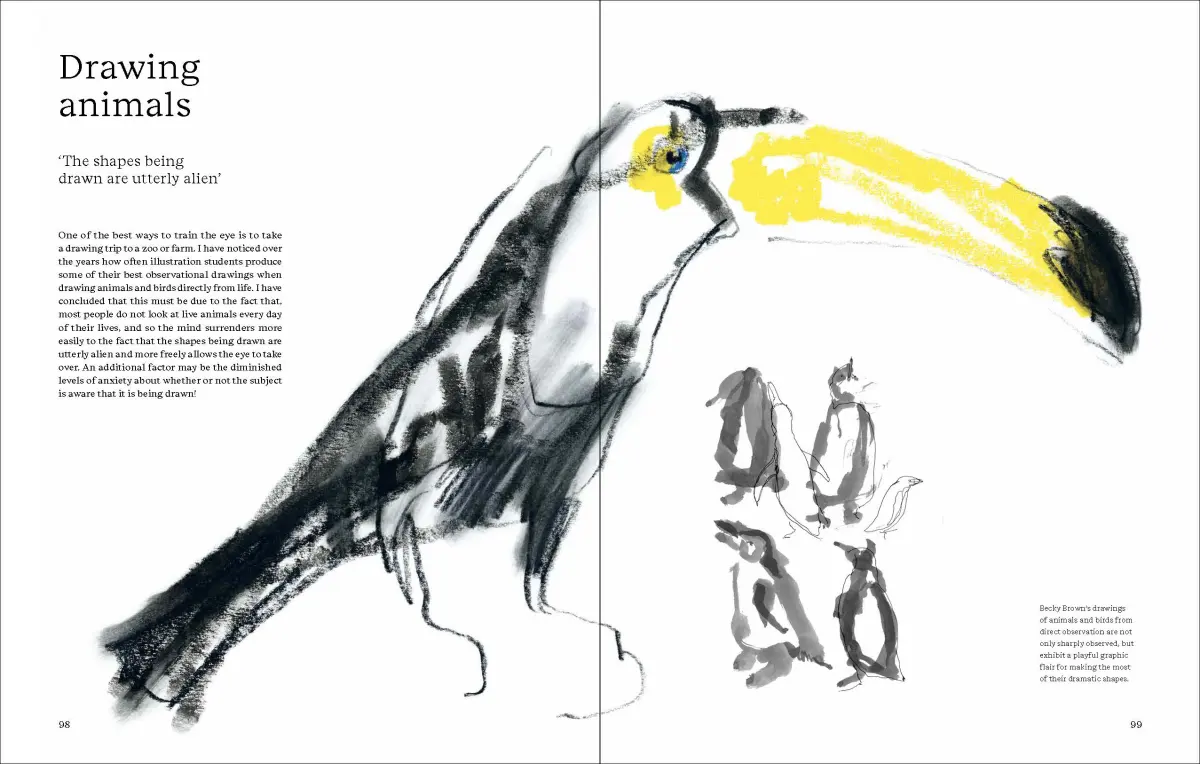
Absolutely, as gesture is about capturing the essence of any form in motion. You can practice by drawing animals, trees swaying in the wind, or even vehicles to understand how shapes occupy space and suggest movement.
Why do my gesture drawings look stiff?
Stiffness usually results from focusing too much on individual body parts rather than the connection between them. Try to draw through the joints and maintain a continuous, loose hand movement to ensure the energy flows across the entire page.
This answer was created with the help of AI research tools and reference sources. Spotted an error? Let us know — we correct mistakes quickly. See our editorial policy.