What was the Library of Alexandria?
Short answer
The Library of Alexandria was the most significant center of scholarship in the ancient world. Established in Egypt during the 3rd century BCE under the Ptolemaic dynasty, it aimed to collect all the world's knowledge. It served as a research institute for scholars, housing hundreds of thousands of papyrus scrolls until its eventual decline.
On this page
Why was the Library of Alexandria created?
The library was founded in the city of Alexandria, Egypt, by Ptolemy I Soter or his son Ptolemy II Philadelphus around 300 BCE. The Ptolemaic rulers sought to establish Alexandria as the intellectual capital of the Mediterranean, rivaling the cultural prestige of Athens. By gathering the world’s wisdom in one location, they aimed to legitimize their rule and attract the greatest minds of the era.
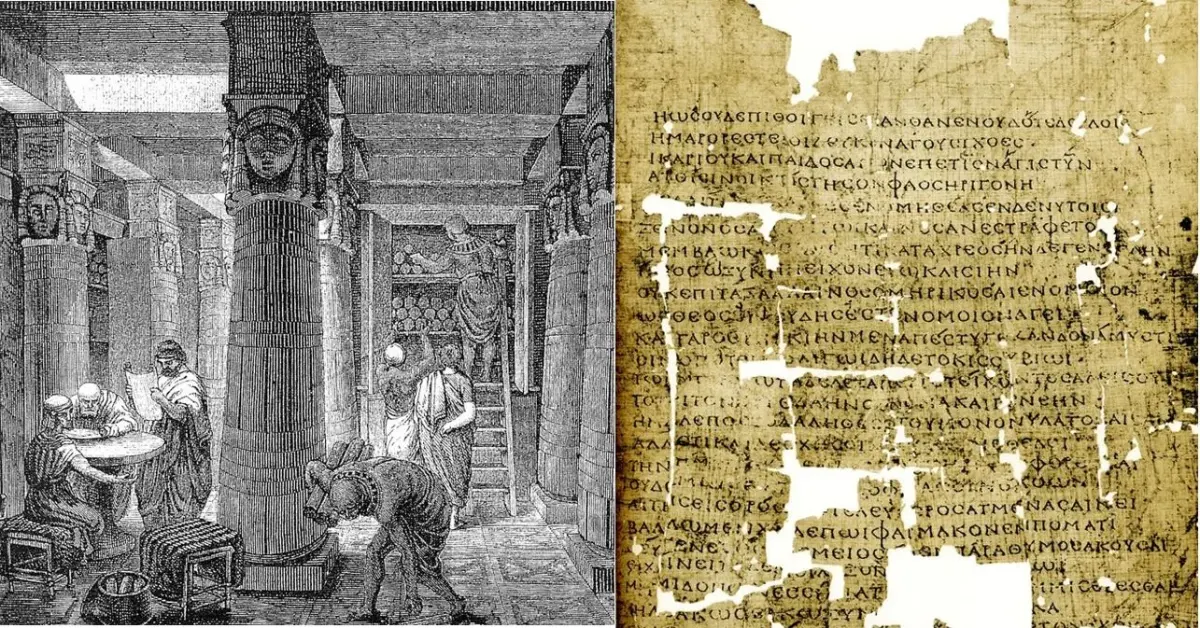
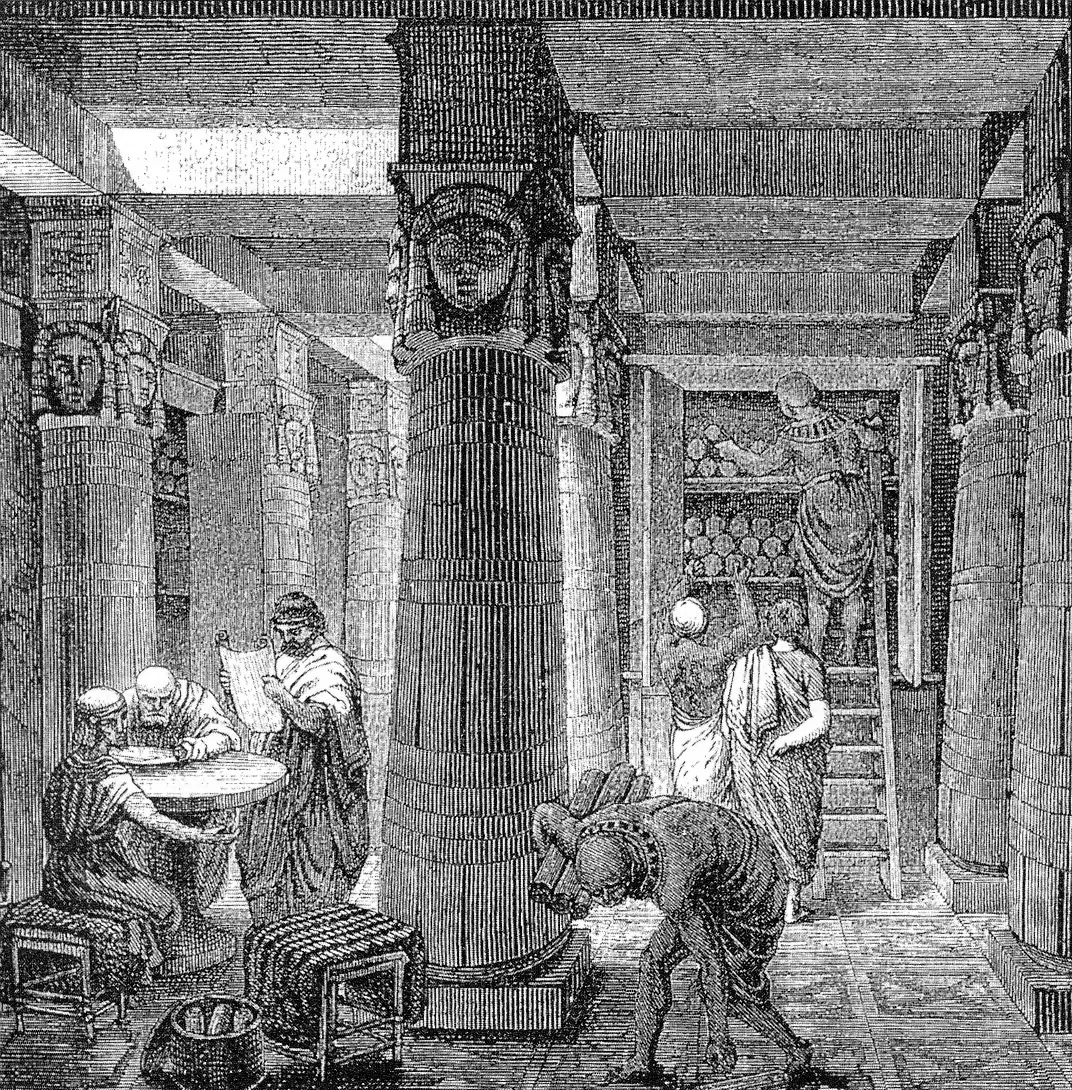
The institution was part of a larger complex known as the Mouseion, or "Temple of the Muses." This facility provided a sanctuary for scholars to live, eat, and conduct research at the state's expense. The library functioned not merely as a book repository, but as a vibrant university where mathematicians, astronomers, and poets collaborated. Key figures who studied or worked there included:
- Eratosthenes, who calculated the circumference of the Earth.
- Aristarchus of Samos, who proposed a heliocentric model of the solar system.
- Callimachus, the poet who created the first systematic library catalog, the Pinakes.
How large was the Library of Alexandria?
Estimates regarding the size of the collection vary widely among ancient sources. Most historians suggest the library held between 40,000 and 400,000 papyrus scrolls at its peak. Because each scroll contained only a portion of a long work, a single "book" might consist of multiple scrolls, making the total count of individual titles much lower than the scroll count suggests.
To build this massive collection, the Ptolemies employed aggressive acquisition tactics. They reportedly searched every ship that docked in Alexandria’s harbor. If a vessel carried books, the authorities would confiscate the originals, make copies to keep in the library, and return the duplicates to the ship owners. This systematic approach ensured that the library remained the most comprehensive archive of Greek, Egyptian, Persian, and Indian knowledge available to the ancient world.
What happened to the library?
The destruction of the library is one of history’s most debated topics, often wrongly attributed to a single catastrophic fire. In reality, the library likely suffered a slow decline over several centuries due to neglect, budget cuts, and political instability. As the Ptolemaic dynasty weakened, the state stopped funding the Mouseion, and many scholars fled to other cities.
Several specific events are often cited as contributing to the loss of the collection:
- Julius Caesar’s siege of Alexandria in 48 BCE, which resulted in a fire that may have consumed a portion of the harbor-side warehouses.
- The Aurelian invasion in the 270s CE, which caused widespread destruction in the royal quarter of the city.
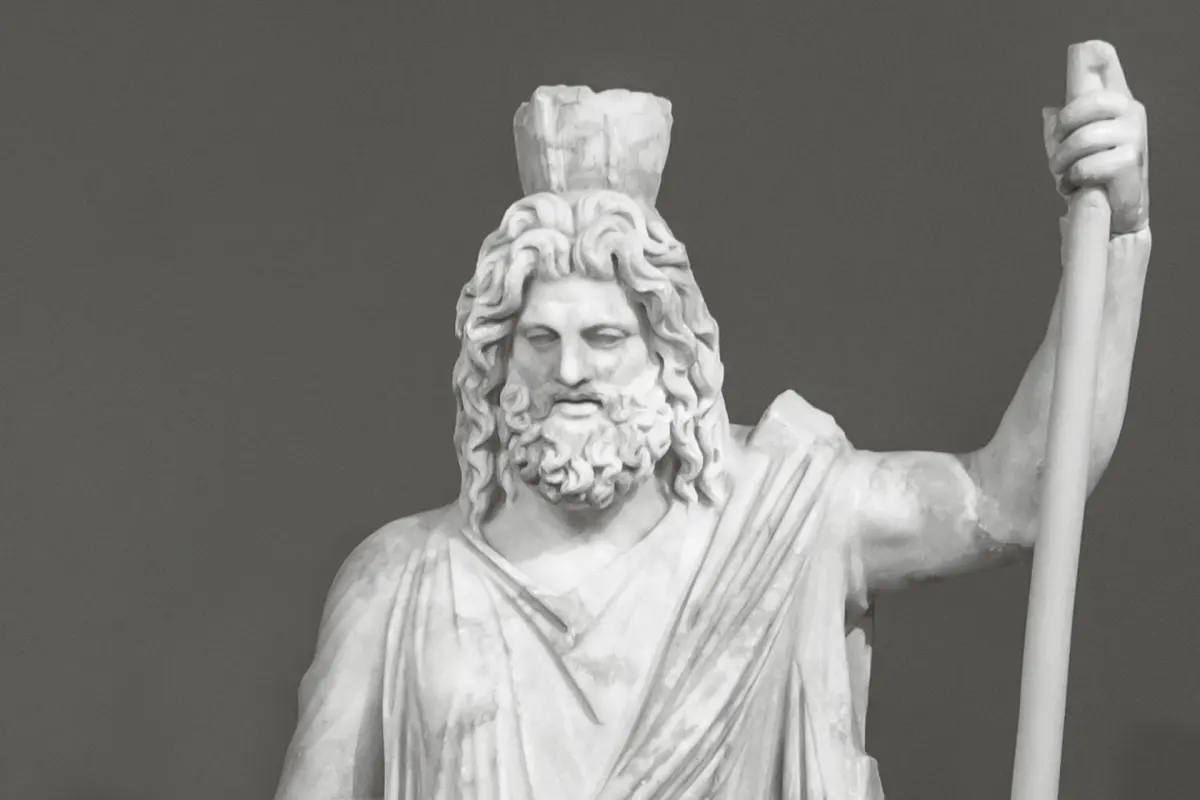
- The decree of Theodosius I in 391 CE, which led to the destruction of the Serapeum, a "daughter library" that held many remaining scrolls.
How to study ancient history effectively
When researching the library, it is common to encounter myths that blur the line between historical fact and legend. A frequent mistake is assuming that the entire library vanished overnight in one dramatic inferno. Instead, view the library’s history as a long process of institutional decay. When evaluating claims about the library, always verify if the information comes from contemporary accounts or much later, less reliable sources.
To get the most out of your research, follow these guidelines:
- Consult academic databases rather than popular media for the most recent archaeological findings.
- Pay attention to the distinction between the main library in the royal quarter and the Serapeum temple library.
- Recognize that "books" in this context refers to papyrus scrolls, which are highly susceptible to humidity, insects, and fire.
- Cross-reference multiple ancient authors, such as Strabo and Plutarch, to see where their accounts of the city’s destruction align or conflict.
Why the legacy of the library matters
The Library of Alexandria remains a powerful symbol of the human desire to organize and preserve knowledge. It demonstrated that centralized research and state-sponsored education could lead to breakthroughs in science and literature. Even though the physical scrolls were lost, the intellectual foundations laid by the scholars of Alexandria influenced the development of modern academic systems.
Today, the spirit of the ancient institution is remembered through the Bibliotheca Alexandrina, a major modern library and cultural center built near the site of the original. While we cannot recover the lost texts, the legacy of the library reminds us of the fragility of information. It highlights the necessity of maintaining archives and the importance of open access to learning for the advancement of civilization. By studying its rise and fall, we gain a deeper appreciation for the preservation of human thought and the ongoing effort to document our collective history for future generations.
Key facts
- Founded in Alexandria, Egypt, around 300 BCE by Ptolemy I Soter, the library aimed to collect all the world's knowledge.
- At its peak, the collection held an estimated 400,000 to 700,000 papyrus scrolls, representing the largest repository of ancient literature.
- Scholars like Eratosthenes used the library to calculate the Earth's circumference and map the stars.
- The library was part of the Mouseion, a research institute that provided housing and salaries for visiting poets and scientists.
- Contrary to popular myth, the library did not vanish in a single fire; it suffered from centuries of neglect, budget cuts, and political instability.
- To study ancient history effectively, prioritize primary sources over romanticized legends, as many details about the library's physical layout remain speculative.
The bottom line
The Library of Alexandria stands as history’s most ambitious attempt to centralize human knowledge. While its dramatic destruction is often exaggerated as a singular tragedy, its true legacy lies in the scholarly rigor it fostered. By cataloging the world’s wisdom, it transformed how we organize information. Today, it serves as an enduring symbol of the vital importance of preserving culture against the erosion of time.
People also ask
Did Julius Caesar burn down the entire library?
During the Siege of Alexandria in 48 BCE, Caesar set fire to his own ships, which spread to the docks and destroyed some storehouses. While this likely damaged a portion of the collection, historical evidence suggests the library continued to function for centuries afterward.
What language were the scrolls written in?
The vast majority of the scrolls were written in Ancient Greek, reflecting the cultural influence of the Ptolemaic dynasty. However, the library also housed translated works from Egyptian, Persian, and Hebrew traditions to ensure a comprehensive global archive.
How did scholars organize such a massive collection?
Callimachus, a famous librarian, created the Pinakes, a 120-volume bibliographic catalog of Greek literature. This system categorized works by author and genre, serving as the foundational ancestor for modern library classification methods.
Why was the library eventually abandoned?
The institution declined as Roman support waned and the city of Alexandria faced repeated military conflicts and economic decline. By the late 3rd century CE, the intellectual center had largely disintegrated due to a lack of funding and social upheaval.
Are any of the original scrolls still in existence?
No original scrolls from the Library of Alexandria are known to have survived to the present day. The fragile nature of papyrus, combined with the humid climate of the Mediterranean, caused the physical documents to decay over time.
Can I visit the site of the library today?
The exact location of the ancient library remains unknown to archaeologists, as the ancient city of Alexandria has subsided into the sea or been built over. You can, however, visit the Bibliotheca Alexandrina, a modern library built in 2002 to commemorate the ancient institution's legacy.
This answer was created with the help of AI research tools and reference sources. Spotted an error? Let us know — we correct mistakes quickly. See our editorial policy.