How do you draw from imagination?
Short answer
Drawing from imagination requires a foundation of visual memory built through observation and practice. By breaking complex subjects into simple geometric shapes, you can reconstruct them mentally and translate those forms onto paper. Consistent study of anatomy, perspective, and lighting provides the necessary tools to visualize and execute original creative concepts effectively.
On this page
How to build a visual library
Drawing from imagination is not about conjuring images from thin air, but rather accessing a mental database of stored visual information. Every artist builds this library through active observation of the real world. When you study how light hits a sphere or how a muscle attaches to a bone, you are filing away reference data that your brain can retrieve later.
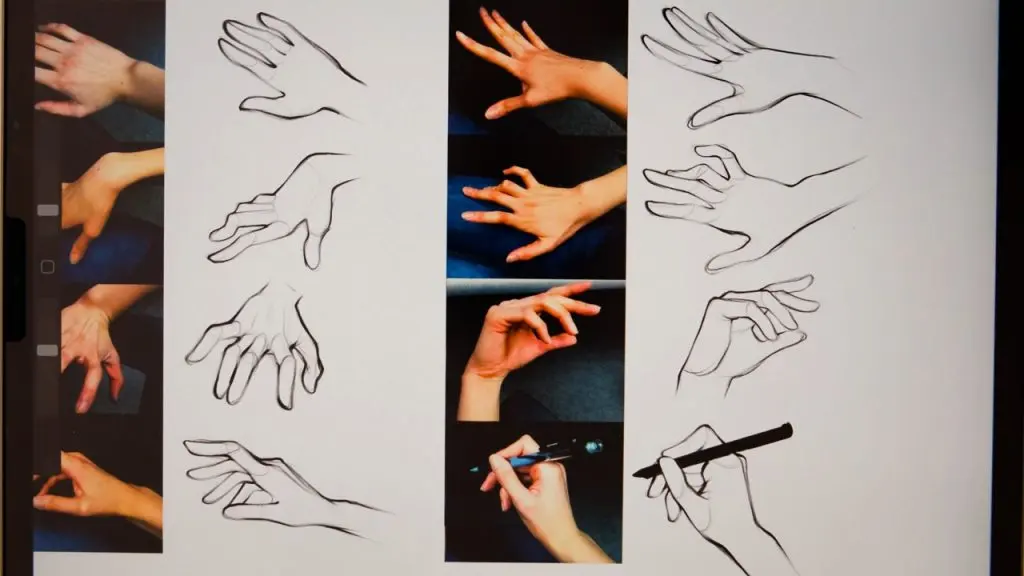
To develop your library, practice "visual note-taking." Instead of just looking at an object, analyze its construction. Ask yourself how its volume occupies space and how its shadows define its depth. Over time, these observations become intuitive shortcuts. You can supplement this by sketching from life daily, even for just fifteen minutes. This habit reinforces the connection between your eyes and your hand, ensuring that when you imagine a subject, you have the technical knowledge to render it accurately.
How to break down complex forms
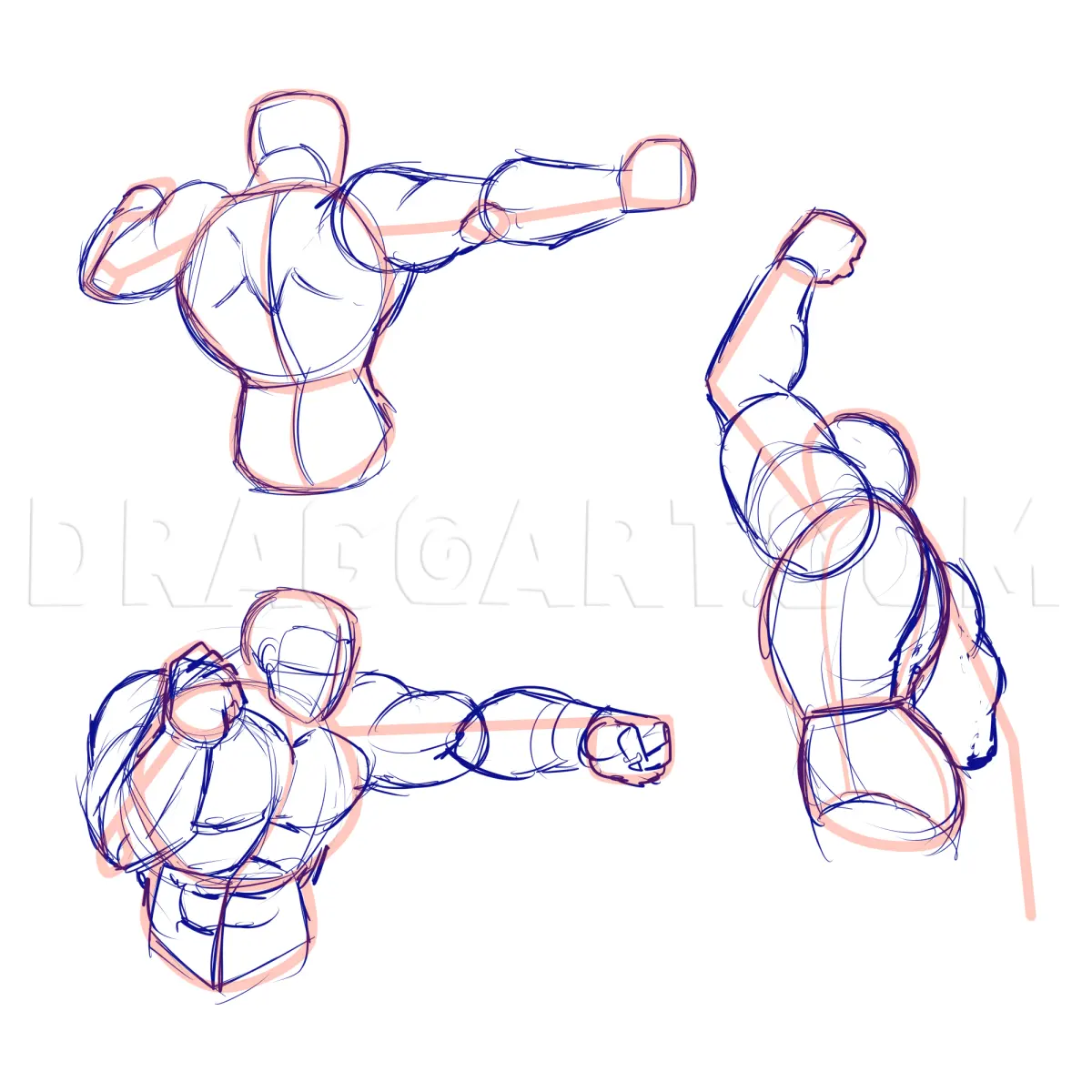
The most effective way to draw anything from memory is to simplify it into basic geometric primitives. Everything in the physical world can be reduced to cubes, cylinders, spheres, and cones. By learning to see these underlying structures, you remove the intimidation factor of complex subjects like human figures or intricate architecture.
- Identify the primary volumes of your subject.
- Sketch these shapes lightly to establish the correct proportions and perspective.
- Refine the contours by connecting the shapes with organic lines.
- Add details only after the structural foundation is solid.
This method allows you to manipulate objects in your mind. If you understand that a human arm is essentially a series of cylinders, you can rotate that arm in three-dimensional space and draw it from any angle without needing a photograph.
Why perspective and anatomy matter
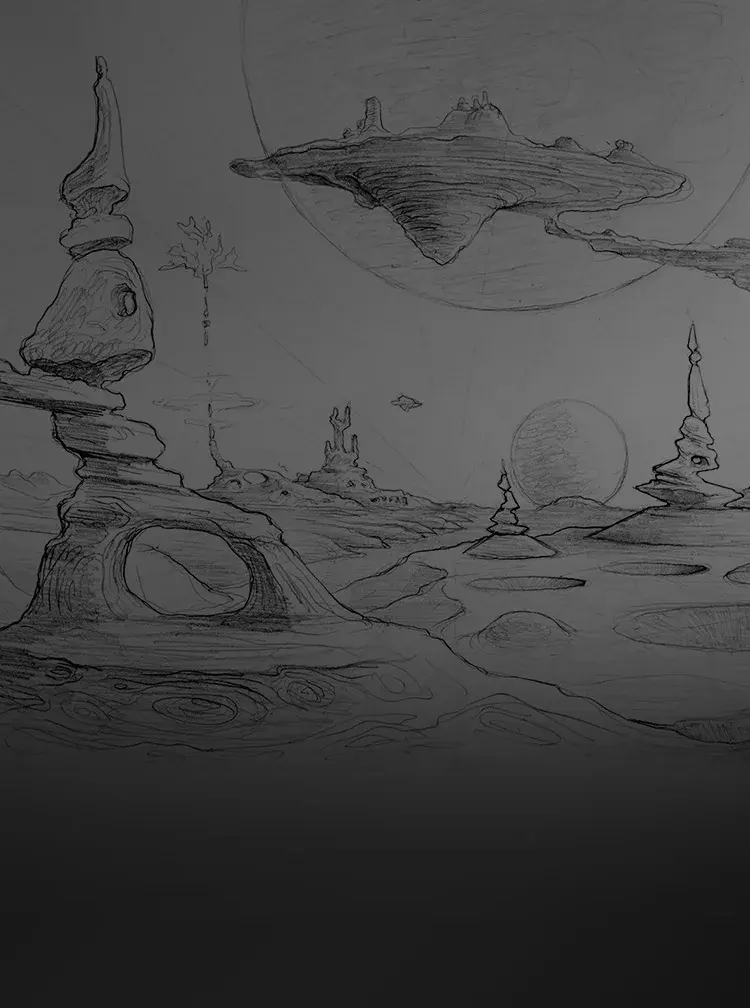
Drawing from imagination often fails when the artist lacks an understanding of universal rules like perspective and anatomy. Perspective provides the framework for your scene, ensuring that objects appear to exist within a consistent space. Without a vanishing point or a horizon line, your imagined drawings will look flat or distorted. Similarly, anatomy provides the logic for the human form. If you do not know where joints pivot or how muscles stretch, your characters will appear stiff, rubbery, or physically impossible.
Mastering these subjects requires a systematic approach. You should focus on:
- Linear perspective: Understanding how parallel lines converge at a distance.
- Foreshortening: Learning how objects appear shorter as they move toward the viewer.
- Skeletal structure: Memorizing the placement of major bones to support your drawings.
- Muscle groups: Studying how mass shifts during movement to create dynamic poses.

Common mistakes when drawing from imagination
One of the most frequent errors is attempting to draw from memory before mastering drawing from life. Many beginners jump straight to fantasy creatures or complex scenes without first understanding how light and shadow behave on simple objects. This leads to "symbol drawing," where you draw what you think an object looks like rather than what it actually is. Your brain often simplifies reality into icons, which results in generic, unconvincing artwork.
Another common mistake is neglecting the construction phase. Artists often rush to add details like hair, clothing, or textures before the underlying form is correct. If the foundation is wrong, no amount of detail will save the drawing. Always prioritize the "big shapes" first. If the silhouette and the structural volume are not working, stop and fix them before moving forward. Patience during the initial sketching phase is the hallmark of a skilled artist.
Best exercises for beginners
To improve your imaginative drawing skills, you must engage in deliberate practice. Start by drawing an object from life, then immediately try to draw it again from memory. Compare the two versions to identify where your mental model was inaccurate. This process highlights exactly what you need to study next, whether it is the curve of a jawline or the way fabric folds over a knee.
- Daily gesture drawing: Spend 30 seconds per pose to capture the movement of a subject.
- Rotation drills: Pick a simple object and draw it from five different angles.
- Master studies: Copy the work of established artists to see how they simplify complex subjects.
- Lighting experiments: Draw a basic shape and imagine a light source from different directions.
By repeating these exercises, you bridge the gap between your intent and your execution. Consistency is more important than duration; ten minutes of focused, analytical drawing every day is significantly more effective than a single three-hour session once a week. Over months, these repetitions solidify your technical foundation, allowing your imagination to flow onto the page with increasing clarity and confidence.
Key facts
- Drawing from imagination relies on a "visual library," which is the collection of real-world references stored in your memory through observation.
- Practice "visual shorthand" by sketching simple geometric primitives like cubes, spheres, and cylinders to build complex objects.
- Use the "reference-first" method: study a real object for five minutes, close your eyes, and attempt to draw it from memory to reinforce neural pathways.
- Break down complex subjects into basic shapes before adding details, as the human brain processes structure more easily than texture.
- Maintain a daily sketchbook practice, as consistent repetition improves the speed and accuracy of mental image retrieval.
- Focus on lighting and perspective rules, such as vanishing points, to ensure your imagined drawings possess spatial logic and depth.
The bottom line
Drawing from imagination is not a magical talent but a skill built upon a foundation of rigorous observation. By consistently sketching real-world objects, you populate your mind with a reliable visual library. Master basic geometric forms, apply strict perspective rules, and always prioritize structure over detail. With patient, daily practice, you will eventually gain the ability to synthesize these elements into original and convincing artistic creations.
People also ask
Is it necessary to know how to draw from life to draw from imagination?
Yes, drawing from life is essential because it provides the raw data your brain needs to construct new images. Without real-world observation, your imagination lacks the structural information required to make drawings look convincing.
How long does it take to build a reliable visual library?
Building a visual library is a lifelong process that improves with every hour of deliberate practice. Most artists notice significant improvements in their ability to draw from memory after six to twelve months of consistent daily sketching.
Should I use reference photos when drawing from imagination?
Professional artists use references constantly to verify proportions, lighting, and textures. Using a reference does not mean you are copying; it means you are gathering accurate information to fuel your creative process.
Why do my imagined drawings look flat or distorted?
Flatness usually occurs because of a lack of understanding regarding perspective and light source consistency. Study the "three-point perspective" system and practice shading basic 3D shapes to give your drawings volume.
How can I remember complex details without looking at a reference?
You do not need to memorize every detail, but rather the underlying structure and primary silhouettes. Focus on the "gesture" or the main flow of the object, as the human eye prioritizes shape over intricate surface markings.
What is the most common mistake beginners make when drawing from imagination?
The most common error is attempting to draw complex subjects without first breaking them down into simple, manageable geometric forms. Beginners often jump to details too quickly, which leads to anatomy or perspective errors that are difficult to fix later.
This answer was created with the help of AI research tools and reference sources. Spotted an error? Let us know — we correct mistakes quickly. See our editorial policy.