How long do salmon live?
Short answer
Salmon lifespans vary significantly by species and environment, typically ranging from two to eight years. Most Pacific salmon die shortly after spawning, completing a single life cycle. In contrast, some Atlantic salmon and specific populations of trout can survive to spawn multiple times, living considerably longer than their Pacific counterparts.
On this page
How long do different salmon species live?
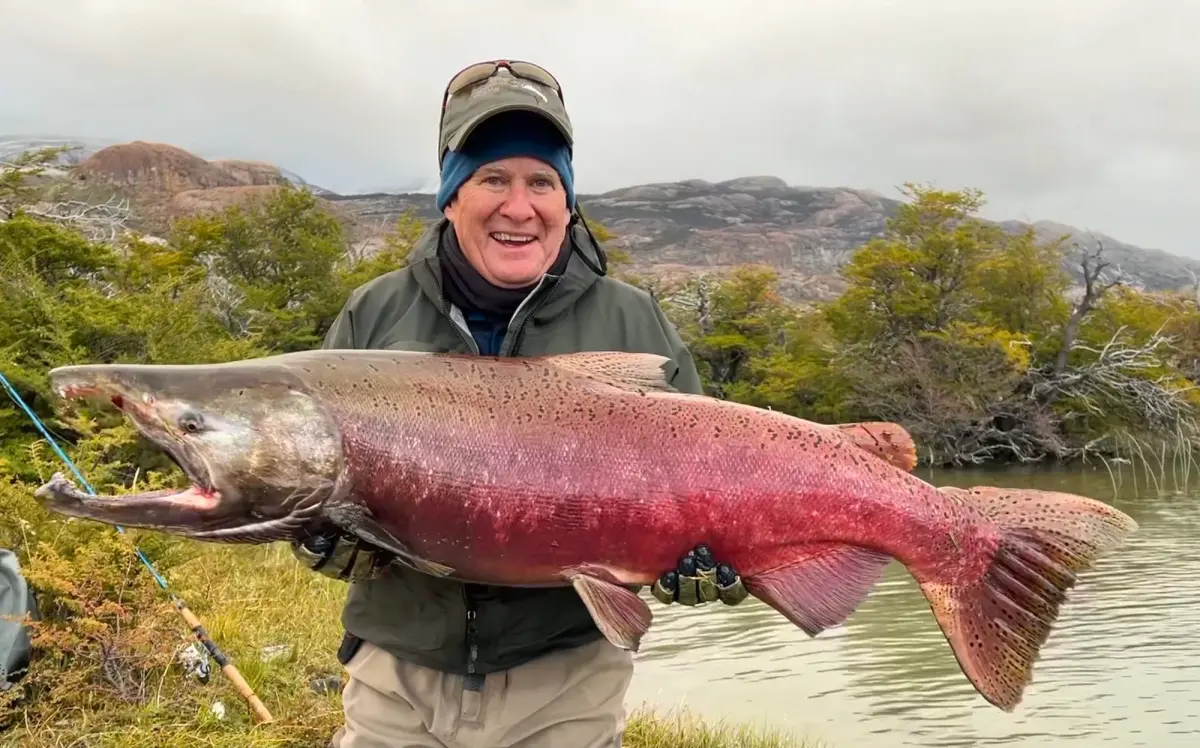
The lifespan of a salmon is primarily determined by its species and its ability to return to freshwater environments. Pacific salmon, such as the Chinook and Sockeye, are semelparous, meaning they reproduce only once before dying. These fish typically live between two and seven years, depending on how long they spend maturing in the ocean. The Chinook salmon, the largest of the Pacific species, often lives four to five years, while smaller species like the Pink salmon have a rigid two-year life cycle.
Atlantic salmon follow a different biological strategy known as iteroparity. Unlike their Pacific cousins, they do not necessarily die after their first spawning event. If they survive the physical toll of migrating upstream and reproducing, they can return to the ocean to feed and regain strength. This allows them to live for six to eight years or more. Because they can spawn multiple times, their population dynamics are less dependent on a single year-class of fish compared to Pacific salmon.
Why do salmon die after spawning?
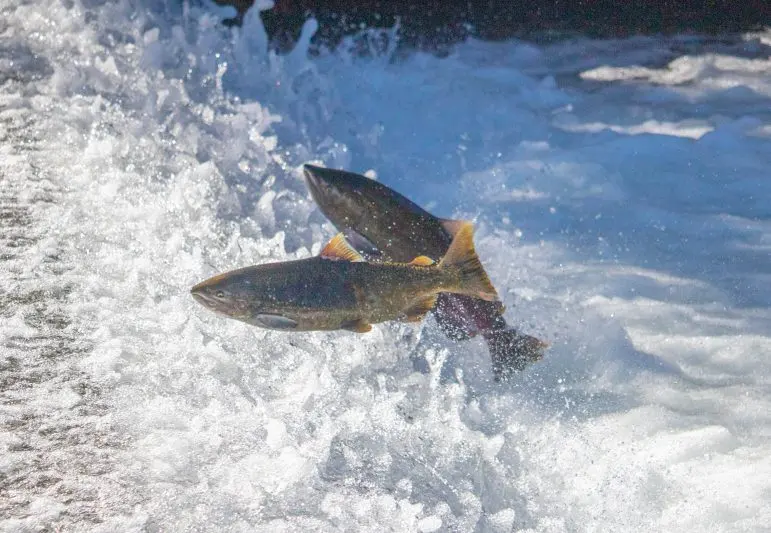
The death of Pacific salmon after spawning is a programmed physiological event. As they transition from saltwater to freshwater, their bodies undergo extreme hormonal changes. They stop eating entirely, relying on stored fat reserves to fuel their long journey upstream. By the time they reach their spawning grounds, their digestive systems have withered, and their immune systems are severely compromised, making them highly susceptible to infections and physical exhaustion.
This mass mortality serves a critical ecological function known as marine-derived nutrient cycling. When millions of salmon die in spawning streams, their decomposing bodies release massive amounts of nitrogen, phosphorus, and carbon into the water and surrounding forest soil. This "salmon subsidy" fertilizes the ecosystem, supporting the growth of aquatic insects, riparian vegetation, and various wildlife species. The death of the parents effectively provides the necessary nutrients for the next generation to survive in nutrient-poor headwater streams.
How do salmon life cycles work?
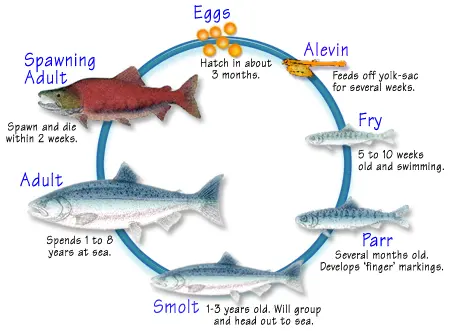
Salmon development is a complex process that involves moving between freshwater and saltwater environments. The journey begins when eggs are deposited in gravel nests called redds. After hatching, the fish progress through several distinct life stages before reaching adulthood.
- Alevin: Newly hatched fish that remain in the gravel, feeding on their attached yolk sac.
- Fry: Young salmon that emerge from the gravel and begin feeding on small plankton.
- Parr: Juvenile salmon that develop distinct vertical markings and live in freshwater streams for months or years.
- Smolt: The stage where salmon undergo physiological changes to tolerate saltwater before migrating to the ocean.
- Adult: The mature phase where salmon spend one to several years feeding in the ocean before returning to spawn.
Understanding these stages is vital for conservation efforts. Each transition point represents a period of high vulnerability where environmental changes, such as water temperature fluctuations or habitat loss, can significantly impact survival rates.
Common mistakes when tracking salmon ages
Researchers and anglers often make errors when attempting to determine the age of a salmon. A common mistake is assuming that size is a direct indicator of age. Because salmon growth rates vary based on ocean food availability and water temperature, a three-year-old fish in a nutrient-rich environment might be larger than a four-year-old fish from a poorer area. Relying solely on length can lead to inaccurate population assessments.
Another frequent error involves misinterpreting scale or otolith patterns. Scientists use these calcified structures to count growth rings, similar to tree rings. However, if a salmon experiences a period of starvation or extreme stress, the growth rings can become blurred or distorted. To avoid these mistakes, experts follow these best practices:
- Use chemical analysis of otoliths to confirm growth rings.
- Cross-reference scale samples with known tagging data from hatcheries.
- Account for regional variations in growth rates when comparing different river systems.
- Utilize genetic markers to identify specific cohorts within a mixed population.
How can we protect salmon populations?
Protecting salmon requires a holistic approach that considers every stage of their life cycle. One of the most effective methods is the restoration of riparian corridors, which provide shade and prevent erosion. Cool water temperatures are essential for salmon survival, as warmer water holds less oxygen and increases the metabolic stress on migrating adults. Efforts to remove obsolete dams and install fish ladders have also been highly successful in reconnecting spawning grounds.
Practical steps for conservation include:
- Minimizing chemical runoff from agricultural lands into spawning streams.
- Implementing sustainable fishing quotas that protect older, repeat-spawning fish.
- Restoring natural gravel beds to ensure safe egg incubation.
- Monitoring water quality to prevent pollutants from interfering with the salmon's olfactory senses, which they use to navigate back to their home streams.
By focusing on habitat connectivity and water quality, we can ensure that these fish continue to complete their life cycles for generations to come.
Key facts
- Most salmon species live between two and seven years, depending on their species and environment.
- Chinook salmon, the largest species, can live up to seven or eight years in the wild.
- Sockeye salmon typically spend one to four years in the ocean before returning to spawn.
- Pink salmon have a strict two-year life cycle, meaning they die shortly after spawning.
- Atlantic salmon are unique because they can survive spawning and return to the ocean to spawn again.
- To identify a salmon's age, biologists examine the growth rings on their scales, similar to counting rings on a tree.
The bottom line
Salmon lifespans vary significantly across species, ranging from the short two-year cycle of the Pink salmon to the eight-year potential of the Chinook. While most Pacific varieties perish after a single spawning run, Atlantic salmon possess the rare ability to survive and return to the ocean. Understanding these cycles is essential for conservation efforts, as each species requires specific environmental conditions to reach maturity and reproduce successfully.
People also ask
Do all salmon die after they spawn?
Most Pacific salmon species are semelparous, meaning they die shortly after their first and only spawning event. However, Atlantic salmon and certain trout species are iteroparous and can survive to spawn multiple times.
How can you tell how old a salmon is?
Scientists determine a salmon's age by analyzing the microscopic growth rings on their scales or their otoliths, which are small ear bones. These structures record seasonal growth patterns, allowing researchers to count the years the fish spent in freshwater versus the ocean.
Why do some salmon live longer than others?
Longevity is largely determined by genetics and the specific environment, such as water temperature and food availability. Salmon living in colder northern waters often grow more slowly and live longer than those in warmer southern regions.
What is the average lifespan of a farmed salmon?
Farmed salmon are typically harvested between two and three years of age. They are raised in controlled environments to reach market size quickly, so they rarely reach the biological age limits seen in wild populations.
Does the size of the salmon indicate its age?
Size is a general indicator of age, but it is not always accurate. A salmon's growth rate fluctuates based on the abundance of prey and the quality of its habitat, meaning two fish of the same age can have significantly different weights.
How much time do salmon spend in freshwater?
This varies by species; some, like Pink salmon, head to the ocean almost immediately after hatching. Others, such as Sockeye or Coho, may spend one to three years in rivers and lakes before migrating to the sea.
This answer was created with the help of AI research tools and reference sources. Spotted an error? Let us know — we correct mistakes quickly. See our editorial policy.