Why do salmon swim upstream?
Short answer
Salmon swim upstream to reach the specific freshwater gravel beds where they hatched. This migration is essential for reproduction, as these environments offer the high-oxygen, low-predator conditions necessary for their eggs to survive. After spawning, most Pacific salmon die, providing vital nutrients to the ecosystem that sustain their offspring's future development.
On this page
Why do salmon migrate upstream?
Salmon are anadromous fish, meaning they spend most of their adult lives in the ocean before returning to freshwater to spawn. This journey is driven by an innate biological imperative to ensure the survival of the next generation. Freshwater streams provide a safer environment for eggs and young fry compared to the vast, predator-filled ocean. By returning to the exact river of their birth, salmon utilize a proven habitat that has historically supported their ancestors, maximizing the chances that their offspring will reach maturity.
The physiological transition from saltwater to freshwater is a complex process. As salmon approach the coast, their kidneys and gills undergo chemical changes to regulate salt balance in lower-salinity water. This internal transformation is triggered by hormonal signals and environmental cues, allowing them to navigate from the open sea into the narrow, winding river systems. Without this biological shift, the fish would be unable to survive the transition into the river environments where they must eventually lay their eggs.
How do salmon find their home river?
Salmon possess a remarkable ability to navigate thousands of miles back to their natal stream using a combination of sensory inputs. Researchers have confirmed that these fish utilize the Earth’s magnetic field as a primary navigational compass to orient themselves in the open ocean. As they get closer to the coastline, they rely heavily on their acute sense of smell. Each river system has a unique chemical "fingerprint" composed of dissolved minerals, vegetation, and soil particles that the salmon imprinted upon during their early life as juveniles.
- Magnetic orientation guides them through the vast ocean toward the general coastal region.
- Olfactory memory allows them to detect the specific chemical signature of their home stream.
- Sensory tracking enables them to follow these scent trails upstream against the current.
By following these distinct chemical markers, salmon can pinpoint the exact tributary where they began their own life cycle, ensuring they return to a site with the right water temperature and flow.
What obstacles do salmon face during migration?
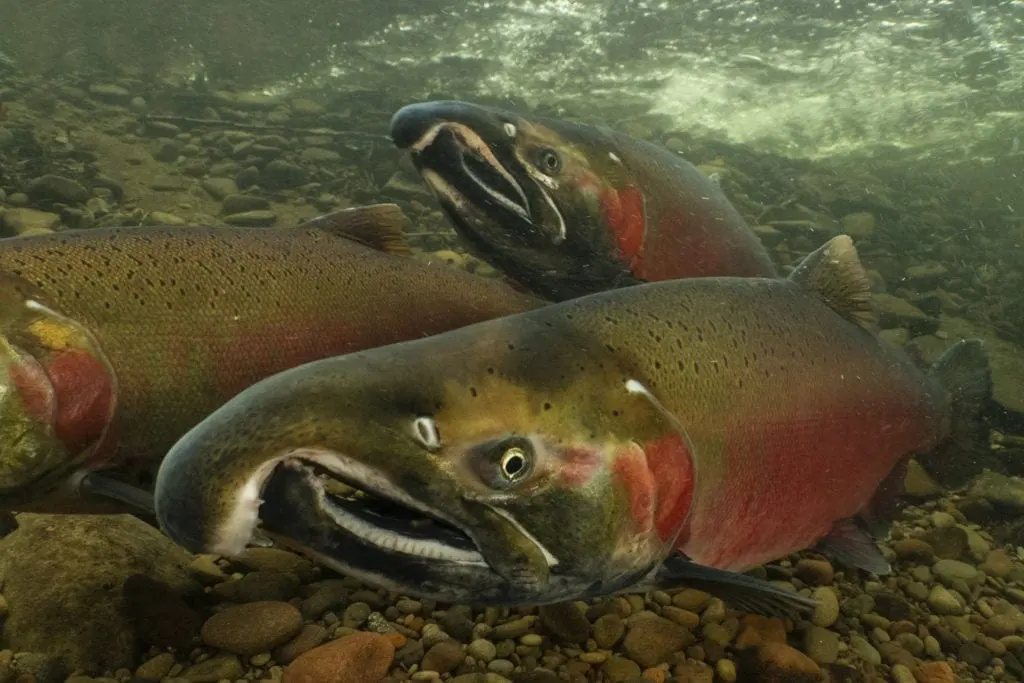
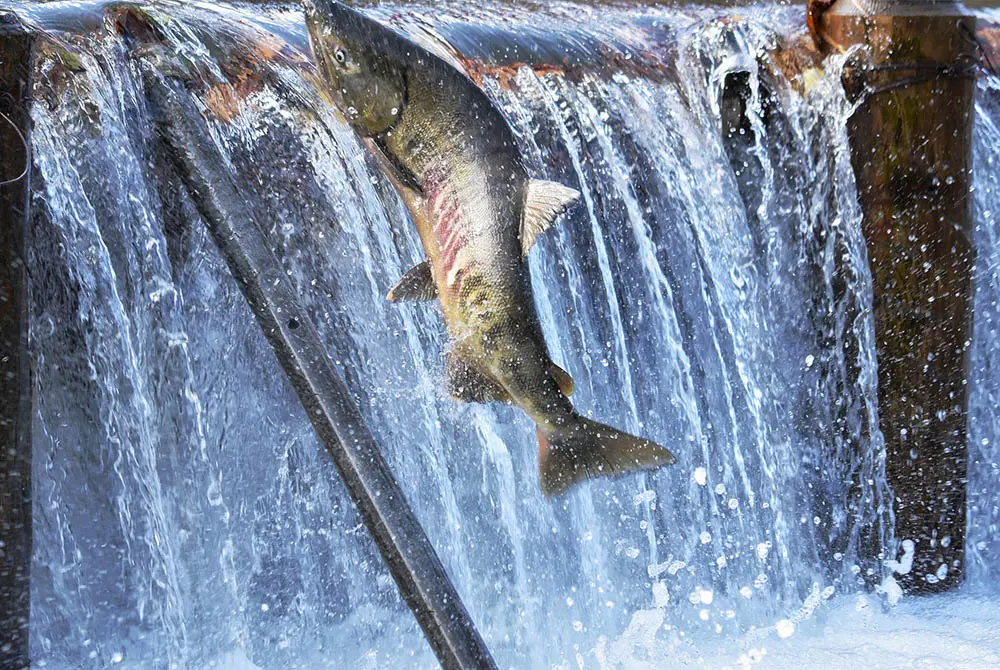
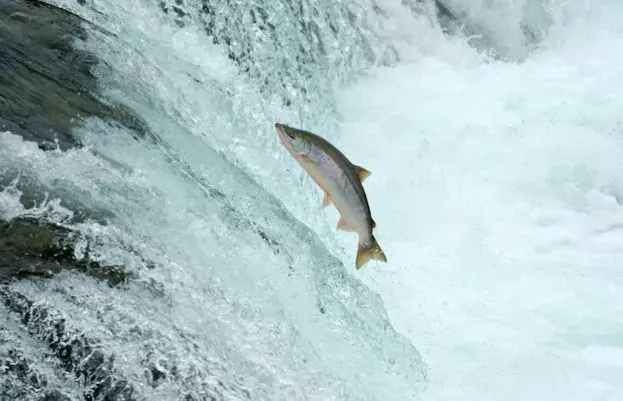
The upstream journey is physically grueling and fraught with environmental hazards. Salmon must overcome powerful currents, navigate waterfalls, and bypass man-made barriers like dams. During this time, they stop feeding entirely, relying solely on stored body fat to provide the energy required for swimming and the eventual development of reproductive organs. Their bodies undergo dramatic physical changes, including the development of hooked jaws, known as kypes, and the loss of their silvery ocean coloration in favor of vibrant spawning hues.
- Physical exhaustion from constant swimming against heavy river currents.
- Predation by bears, eagles, and other wildlife that congregate near shallow spawning grounds.
- Anthropogenic barriers such as dams and culverts that block passage or delay migration.
- Water temperature fluctuations that can cause stress or mortality if the stream becomes too warm.
These challenges result in high mortality rates, ensuring that only the strongest and most resilient fish reach the spawning grounds to pass on their genetic material.
How can humans support salmon migration?
Conservation efforts are vital to maintaining healthy salmon populations, as many species are currently threatened by habitat degradation. The most effective way to help is by protecting the integrity of riparian zones, which are the areas of vegetation along riverbanks. These zones provide shade, which keeps water temperatures cool, and prevent soil erosion that can smother spawning gravel with silt. Supporting organizations that focus on dam removal or the installation of fish ladders is another practical way to ensure salmon can reach their destination.
- Restore natural river flows by removing obsolete dams or barriers.
- Reduce chemical runoff from agriculture and urban areas that interferes with the salmon's sense of smell.
- Protect wetlands and forests that naturally filter water and maintain stable stream levels.
- Participate in local watershed monitoring programs to track population health and identify pollution sources.
Avoiding the use of pesticides near waterways is a simple step that individuals can take to protect the delicate chemical balance of the river ecosystem.
Common mistakes when observing salmon runs
Many people travel to witness the salmon run, but it is important to observe these events responsibly to avoid harming the fish. A common mistake is getting too close to the water, which can startle the salmon and cause them to waste precious energy or abandon their path. Another error is allowing pets to enter the water, as this can disturb spawning beds and crush the fragile eggs buried in the gravel. Always maintain a respectful distance and use binoculars if you want to get a closer look at the fish in action.
Do not attempt to touch or handle the salmon, as this can remove their protective slime coat and make them susceptible to fungal infections. Furthermore, avoid wading in areas where you see salmon actively spawning, as your footsteps can displace the gravel and destroy the redds, or nests, where the eggs are deposited. By practicing "leave no trace" principles and keeping your distance, you ensure that the salmon can complete their critical life cycle without unnecessary human interference or stress.
Key facts
- Salmon are anadromous, meaning they hatch in freshwater, migrate to the ocean to mature, and return to freshwater to spawn.
- They rely on a highly developed sense of smell, or olfaction, to detect the unique chemical "scent" of their home stream.
- The journey upstream is physically exhausting, often requiring salmon to leap over waterfalls and navigate strong currents.
- Most Pacific salmon species, such as the Chinook and Sockeye, die shortly after spawning, providing essential nutrients to the ecosystem.
- Salmon do not eat during their upstream migration, relying entirely on stored body fat to provide the energy needed for travel and egg production.
- To observe salmon runs, visit spawning grounds during the late summer or autumn months when water levels are typically higher.
The bottom line
Salmon swim upstream to reach the specific, low-predator environments necessary for their offspring to hatch and thrive. This instinctual journey is a feat of biological navigation, driven by the need to return to their natal waters. Despite the immense physical toll, this migration ensures the survival of the species and sustains the health of river ecosystems through the vital nutrients salmon provide upon their death.
People also ask
How do salmon find their exact home stream after years at sea?
Salmon imprint on the specific chemical signature of their natal stream as juveniles. They use this "olfactory map" to navigate back through the ocean and rivers to the exact gravel bed where they were born.
Do all salmon species die after spawning?
Most Pacific salmon are semelparous, meaning they spawn once and die. However, Atlantic salmon and some Steelhead trout are iteroparous, allowing them to survive spawning and return to the ocean to repeat the cycle.
How high can a salmon jump to overcome obstacles?
A determined salmon can leap as high as 8 to 10 feet to clear waterfalls or dams. They use their powerful tail muscles to propel themselves out of the water and into the upper stream levels.
What are the biggest threats to salmon migration?
Human-made barriers like dams, habitat destruction, and rising water temperatures are the primary threats. These factors can block access to spawning grounds or make the water too warm for the fish to survive.
How long does the upstream migration take?
The duration varies significantly depending on the species and the distance of the river. Some salmon may travel hundreds of miles over several weeks, while others reach their spawning grounds in just a few days.
Can humans help salmon during their migration?
You can help by supporting local conservation efforts, reducing chemical runoff into waterways, and respecting closed fishing seasons. Avoiding walking in spawning beds is also crucial, as human feet can crush delicate salmon eggs buried in the gravel.
This answer was created with the help of AI research tools and reference sources. Spotted an error? Let us know — we correct mistakes quickly. See our editorial policy.