Who invented the paperclip?
Short answer
There is no single inventor of the paperclip. The device evolved through dozens of patents filed in the late 19th century. While Norwegian inventor Johan Vaaler is often credited due to a persistent myth, his 1899 design lacked the double-loop structure that makes the modern Gem clip the global standard for office stationery.
On this page
Who actually invented the paperclip?
The history of the paperclip is a complex web of industrial design rather than a singular "eureka" moment. Between 1867 and 1899, the United States Patent Office received dozens of applications for wire-based paper fasteners. Early designs were often rigid, sharp, or difficult to attach, leading inventors to experiment with various coil shapes and wire thicknesses. The most successful design, known as the "Gem," never actually received a patent in the United States.
Because the Gem clip was manufactured by the Gem Manufacturing Company in Britain around the 1870s, it became the industry standard by default. It featured a double-oval shape that allowed for enough tension to hold paper without tearing it. While other inventors like Cornelius Brosnan and William Middlebrook introduced improved manufacturing machines, the Gem design remained the definitive shape. The lack of a single patent holder is why the paperclip is considered an anonymous triumph of functional engineering.
Why is Johan Vaaler often credited?
The widespread belief that Johan Vaaler invented the paperclip is largely a result of nationalistic pride and historical misinformation. In the 1920s, Norwegian encyclopedias began citing Vaaler as the inventor, claiming he created the device in 1899. This narrative gained significant traction during World War II, when Norwegians wore paperclips on their lapels as a silent symbol of national unity and resistance against the Nazi occupation.
However, historical records confirm that Vaaler’s patent was inferior to the Gem design. His version lacked the inner loop that allows the wire to slide easily over sheets of paper. By the time Vaaler secured his patent in Germany and the United States, the Gem clip was already circulating globally. Despite the lack of factual evidence supporting his role as the primary inventor, the myth persists as a point of cultural significance in Norway, where a giant paperclip statue stands in Oslo today.
How to use a paperclip effectively
Using a paperclip may seem intuitive, but improper insertion often leads to damaged documents or bent wires. To maintain the integrity of your papers, follow these steps to ensure the clip remains secure:
- Hold the stack of paper firmly so the edges are perfectly aligned.
- Slide the shorter, inner loop of the clip between the sheets of paper.
- Push the clip downward until the outer loop rests securely against the top edge of the stack.
- Ensure the clip does not exceed the capacity of the wire, which is typically 10 to 15 sheets of standard printer paper.
Common mistakes include forcing the clip onto too many pages, which permanently deforms the wire, or sliding it on at an angle. If you find the clip is slipping, you are likely using a gauge of wire that is too thin for the thickness of the document.
What are the different types of paperclips?
While the standard Gem clip dominates the market, various specialized designs have been developed to address specific filing needs. Each variation serves a unique purpose, ranging from heavy-duty binding to aesthetic organization. Understanding these types can help you choose the right tool for your specific project:
- Gem: The standard, double-oval clip used for everyday office tasks.
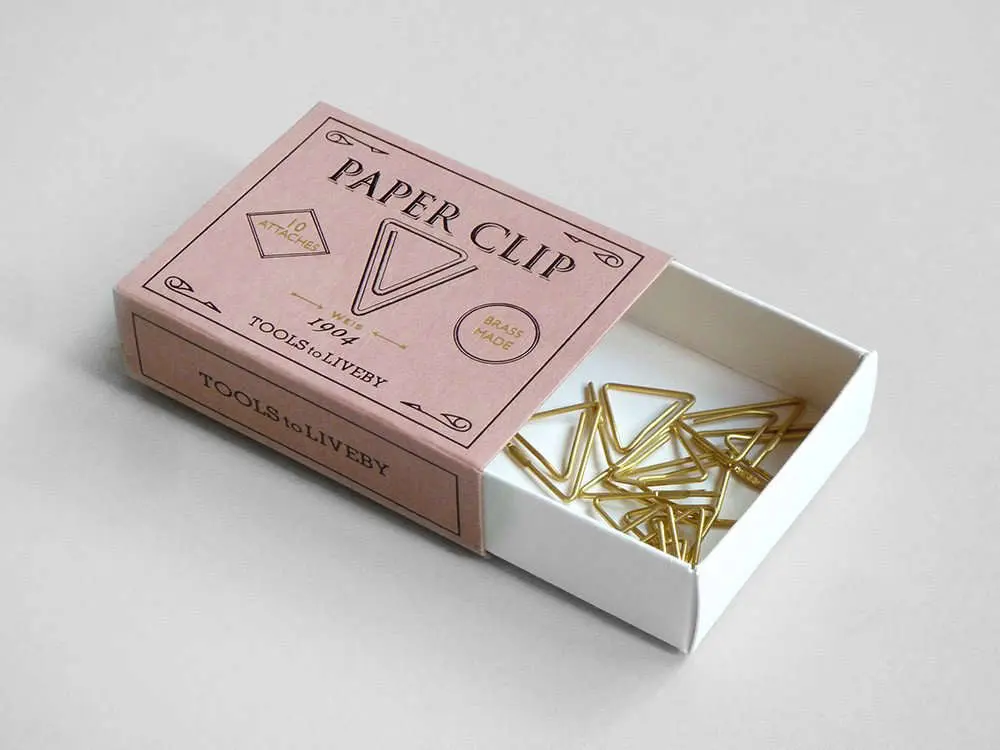
- Ideal: A triangular-shaped clip that provides a tighter grip on thicker stacks.
- Owl: A round, circular clip that prevents the corners of paper from being creased.
- Butterfly: A decorative clip designed for aesthetic appeal rather than heavy-duty binding.
- Jumbo: An oversized version of the Gem clip intended for large document bundles.
Choosing the correct type prevents the common issue of "paperclip creep," where the clip slowly migrates off the edge of the document. For professional presentations, the standard Gem remains the most unobtrusive and widely accepted choice.
Common mistakes when organizing with paperclips
One of the most frequent errors users make is leaving paperclips on documents that are destined for a scanner or a shredder. Metal clips can cause significant damage to the glass plate of a scanner or jam the blades of a high-speed shredding machine. Always remove all fasteners before processing documents through office equipment. Additionally, avoid reusing paperclips that have been stretched out or bent, as they lose their tension and are more likely to snag other papers in a file folder.
Another mistake is using paperclips for long-term archival storage. Over time, the metal—especially if it is not stainless steel or plastic-coated—can oxidize and leave rust stains on your documents. If you need to store papers for several years, consider using plastic clips or archival-grade folders instead. By selecting the right material and removing clips before scanning, you can ensure your documents remain in pristine condition for as long as they are needed.
Key facts
- No single person holds the definitive patent for the modern paperclip, as dozens of designs were patented between 1867 and 1899.
- The most recognizable design, the "Gem" clip, was never patented by its original manufacturer, Gem Office Supplies.
- Johan Vaaler, a Norwegian inventor, received a patent for a paperclip design in 1899, but his version lacked the double-loop end of the Gem.
- The Gem clip became the global standard because its double-loop geometry provides optimal tension and ease of use.
- To avoid damaging paper, slide the inner loop of the clip between pages rather than forcing it over a thick stack.
- Using a paperclip on too many sheets at once will permanently deform the wire, rendering it ineffective for future use.
The bottom line
The paperclip evolved through a series of incremental design improvements rather than a single "eureka" moment. While many inventors filed patents in the late 19th century, the iconic Gem clip emerged as the industry standard due to its superior geometry. Today, this simple yet effective tool remains an essential office staple, demonstrating how functional, minimalist engineering can withstand the test of time and technological change.
People also ask
Why is the Gem clip considered the standard design?
The Gem design is favored because its double-loop shape allows it to slide onto paper easily while maintaining enough tension to hold sheets securely. Its balanced geometry prevents it from snagging or tearing delicate documents.
Did Johan Vaaler invent the paperclip?
While often credited as the inventor, Vaaler simply patented one of many early variations. His design was less functional than the Gem clip and was never mass-produced for the global market.
What material are most paperclips made from?
Most modern paperclips are manufactured from galvanized steel wire. This material is chosen for its balance of flexibility, durability, and low production cost.
How many sheets of paper can a standard paperclip hold?
A standard-sized paperclip is designed to hold between 10 and 20 sheets of standard printer paper. Attempting to force more pages into the clip will cause the metal to stretch and lose its grip.
Are there different sizes of paperclips available?
Yes, paperclips come in various sizes, including jumbo, regular, and miniature. Jumbo clips are specifically engineered to hold larger stacks of documents that would overstretch a standard clip.
Can paperclips be recycled?
Paperclips are made of metal and are generally recyclable. However, because of their small size, they should be collected in a larger metal container before being placed in a recycling bin to ensure they are processed correctly.
This answer was created with the help of AI research tools and reference sources. Spotted an error? Let us know — we correct mistakes quickly. See our editorial policy.