Who invented the typewriter?
Short answer
The typewriter was not invented by a single individual but evolved through the contributions of many inventors over several centuries. While Henry Mill received the first patent in 1714, Christopher Latham Sholes is credited with developing the first commercially successful typewriter in 1868, which established the standard QWERTY keyboard layout still used today.
On this page
Who actually invented the typewriter?
The history of the typewriter is a complex timeline of incremental improvements rather than a solitary "eureka" moment. In 1714, an English engineer named Henry Mill received a patent for a machine intended to transcribe letters, though no evidence suggests it was ever built. Throughout the 19th century, dozens of inventors across Europe and America attempted to create functional writing devices, often focusing on helping the blind or speeding up legal documentation.
These early prototypes were often cumbersome, slow, or mechanically unreliable. Inventors experimented with various designs, including piano-style keys, circular type wheels, and index-based systems. It was not until the late 1860s that the technology matured sufficiently for mass production. By examining these early efforts, historians recognize that the typewriter was a collaborative achievement, reflecting the Industrial Revolution’s broader push toward mechanizing office labor and improving communication efficiency across global markets.
How did the QWERTY layout become standard?
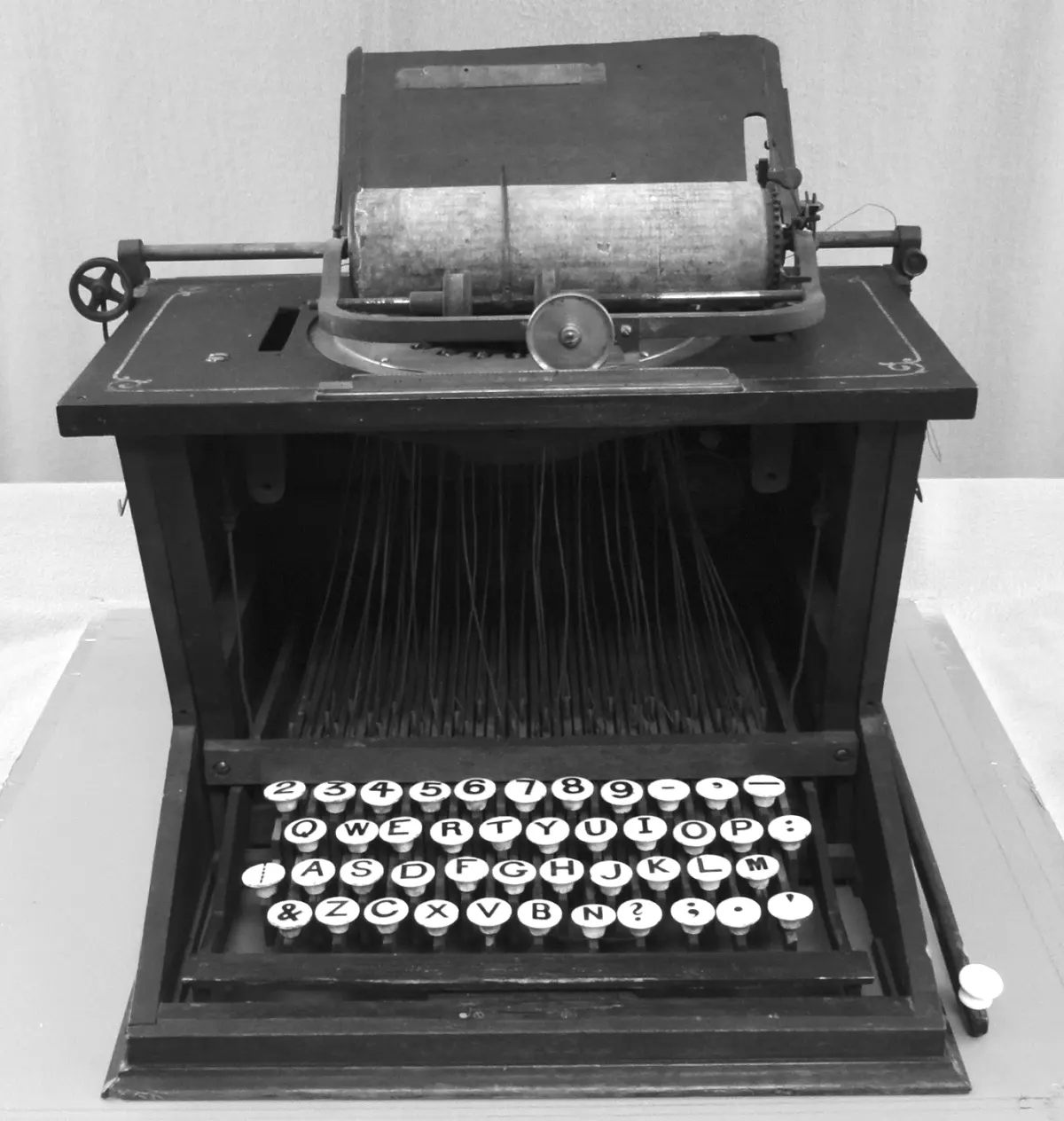
The QWERTY keyboard layout, which remains the global standard for digital devices, was developed by Christopher Latham Sholes during the refinement of his 1868 typewriter. Contrary to popular belief, the layout was not designed solely to slow down typists to prevent mechanical jamming. Instead, it was engineered to separate frequently used letter pairs, such as "TH" or "ST," to prevent the metal type bars from clashing and sticking together when struck in rapid succession.
The transition to this layout was solidified when the Remington company began mass-producing the Sholes and Glidden typewriter in 1874. As typists became trained on this specific configuration, the layout gained market dominance through sheer habit and institutional adoption. Today, the QWERTY system persists because of its ubiquity, even though modern electronic devices no longer face the physical limitations of metal type bars that necessitated its original, somewhat counterintuitive arrangement.
What were the key mechanical milestones?
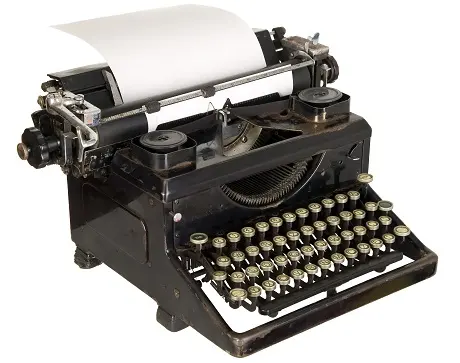
The evolution of the typewriter relied on several critical engineering breakthroughs that moved the machine from a novelty to an essential office tool. These developments allowed for consistent alignment, speed, and the ability to produce multiple copies simultaneously. The following milestones represent the most significant shifts in typewriter technology:
- The 1829 Typographer: William Austin Burt patented a machine that used a rotating wheel, which was accurate but significantly slower than handwriting.
- The 1868 Sholes and Glidden: This was the first commercially viable typewriter, featuring the QWERTY layout and a carriage return mechanism.
- The 1890s Visible Writing: Earlier models forced the typist to lift the carriage to see what they had written; newer "visible" designs allowed the user to view text as it appeared on the page.
- The 1961 IBM Selectric: This iconic machine replaced individual type bars with a rotating "golf ball" element, revolutionizing speed and allowing for interchangeable typefaces.
How to use a vintage typewriter correctly
Operating a manual typewriter requires more physical engagement than using a modern computer keyboard. Because there is no software to handle spacing or margins, the user must manage the mechanical functions of the machine manually. To ensure a smooth experience, follow these steps:
- Insert the paper behind the platen, which is the large rubber roller, and turn the knob to feed the page through.
- Set the margin stops on the back of the carriage to define where your lines begin and end.
- Strike the keys firmly and decisively to ensure the type bar hits the ribbon with enough force to leave a clear impression.
- When you reach the end of a line, push the carriage return lever to advance the paper and move the carriage back to the left margin.
Common mistakes when using a typewriter
New users often struggle with the physical demands of manual machines, leading to poor results or potential damage to the equipment. Avoiding these errors will preserve the machine and improve the quality of your typed documents. One common mistake is "ghosting," which happens when a key is struck too lightly, resulting in faint or incomplete letters. Conversely, striking the keys with excessive force can cause the type bars to tangle or punch holes through the paper.
Another frequent error involves neglecting the ribbon. If the ink ribbon becomes dry or twisted, the text will appear uneven or illegible. Always check that the ribbon is properly threaded through the vibrator mechanism before starting a long project. Finally, avoid using correction fluid excessively, as it can build up on the platen and cause the paper to slip during the typing process. Maintaining the machine by keeping it free of dust and debris is essential for long-term functionality.
Key facts
- Christopher Latham Sholes is widely credited with inventing the first commercially successful typewriter in 1868.
- The QWERTY keyboard layout was designed by Sholes to prevent common typebars from clashing and jamming.
- Henry Mill received the first patent for a machine resembling a typewriter in 1714, though no prototype was ever built.
- Early machines were often called "writing balls" or "literary pianos" before the term typewriter became standard.
- To maintain a manual typewriter, clean the type slugs with a stiff brush and ensure the ribbon is not dried out.
- A common mistake for beginners is pressing the keys too lightly; manual machines require a firm, rhythmic strike to ensure the letter prints clearly.
The bottom line
The invention of the typewriter was not the work of a single person, but rather a long evolution of mechanical design. While early patents date back to the 18th century, Christopher Latham Sholes transformed the concept into a practical tool for commerce. His 1868 invention and the subsequent QWERTY layout fundamentally changed how the world communicated, setting the standard for modern text input systems used today.
People also ask
Why is the keyboard layout called QWERTY?
It is named after the first six letters appearing on the top row of the keyboard. This arrangement was standardized to separate frequently used letter pairs, reducing the mechanical interference that occurred when typing quickly.
Did Mark Twain really use a typewriter?
Yes, Mark Twain was one of the first authors to submit a typewritten manuscript to a publisher. He famously purchased a Remington No. 2 in 1874, though he found the machine temperamental and often frustrating to operate.
What was the Sholes and Glidden typewriter?
This was the first machine to be mass-produced and marketed successfully starting in 1873. It featured the iconic QWERTY layout and was manufactured by the E. Remington and Sons firearms company.
How did the shift key change typing?
Before the shift key was introduced, typewriters required a separate set of keys for uppercase and lowercase letters. The shift key allowed a single key to print two different characters, significantly reducing the size and complexity of the machine.
What is a daisy wheel typewriter?
Developed in the 1970s, this device used a circular print element shaped like a daisy. Each petal held a character, which would strike the ribbon to produce high-quality text, marking a transition toward electronic printing.
Can you still buy ribbons for vintage typewriters?
Yes, many specialty retailers still manufacture and sell universal typewriter ribbons. When purchasing, ensure you know the spool size and ink type required for your specific model to avoid compatibility issues.
This answer was created with the help of AI research tools and reference sources. Spotted an error? Let us know — we correct mistakes quickly. See our editorial policy.