Who invented the digital camera?
Short answer
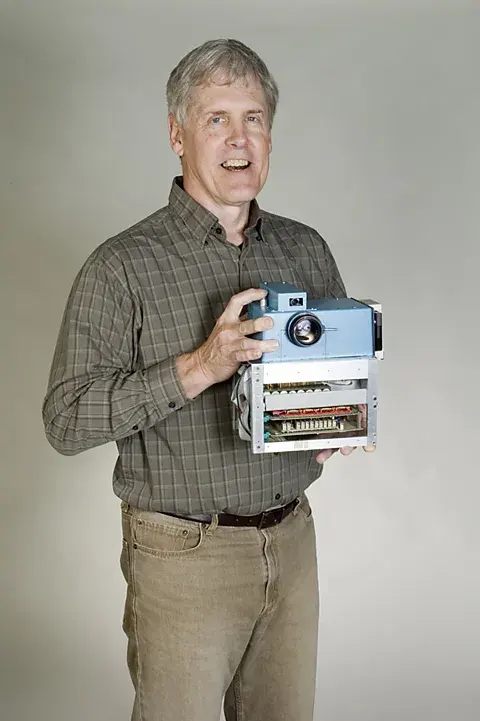
Steven Sasson, an electrical engineer at Eastman Kodak, invented the first digital camera in 1975. His prototype was a portable device weighing 8 pounds that captured black-and-white images onto a standard cassette tape. It featured a CCD sensor and took 23 seconds to record a single image to the digital medium.
On this page
Who invented the digital camera?
The invention of the digital camera is credited to Steven Sasson, who worked at Eastman Kodak in Rochester, New York. In 1975, he successfully combined a Fairchild Semiconductor charge-coupled device (CCD) sensor with a portable recording system. The resulting device was a bulky, hand-built prototype that required 16 nickel-cadmium batteries to function. It lacked a traditional viewfinder, forcing the user to rely on guessing the frame.
Despite its primitive nature, the device proved that images could be converted into digital data and stored electronically. Sasson’s prototype captured images at a resolution of 0.01 megapixels, or 100 by 100 pixels. While the company did not immediately pursue the technology for consumer markets, Sasson’s work laid the essential foundation for the transition from chemical film to digital sensors in photography.
How did the first digital camera work?
The process of capturing an image in 1975 was significantly different from modern smartphone photography. When the shutter button was pressed, the CCD sensor converted light into an analog signal. This signal was then digitized and written onto a standard magnetic cassette tape. Because the camera had no internal display, users had to connect the tape player to a television set to view the recorded image.
The technical workflow involved several distinct steps:
- The CCD sensor captured the light intensity of the scene.
- Analog-to-digital converters transformed the light data into binary code.
- The data was buffered in memory before being written to the cassette.
- The cassette was removed and placed into a separate playback unit for viewing.
This rudimentary system took 23 seconds to write a single image to the tape. The entire process demonstrated the feasibility of filmless photography, though it remained a laboratory curiosity for many years.
What were the major milestones in digital camera development?
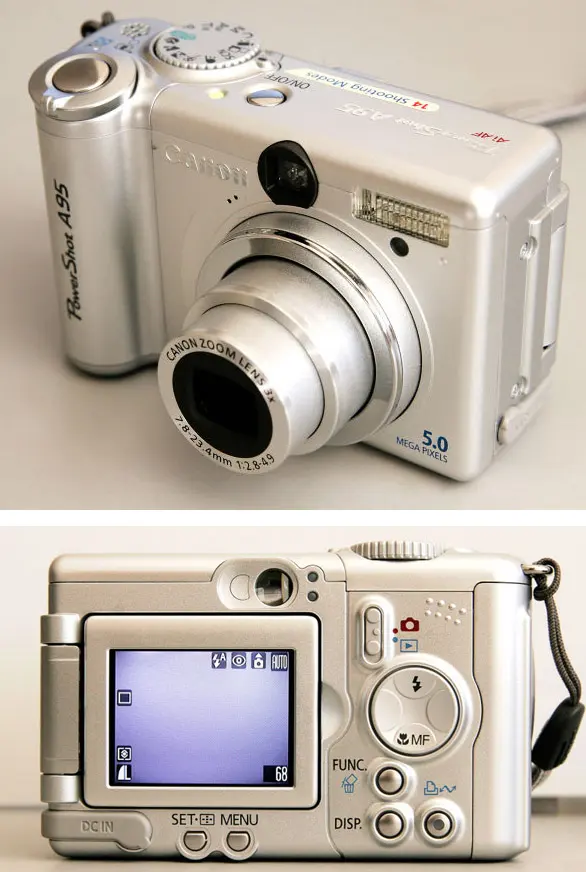
Following Sasson’s invention, several companies raced to refine the technology for professional and consumer use. In 1981, Sony introduced the Mavica, which recorded images onto a floppy disk, though it was technically an analog video camera rather than a true digital device. By the late 1980s, companies like Fuji and Dycam began releasing cameras that stored images in digital memory, marking the true start of the digital era.
The evolution of digital imaging progressed through several key phases:
- 1975: Steven Sasson creates the first digital camera prototype at Kodak.
- 1986: Kodak scientists invent the first megapixel sensor.
- 1991: The Kodak DCS 100 becomes the first professional digital SLR available for purchase.
- 1995: The Casio QV-10 introduces the rear-facing LCD screen, allowing users to preview shots.
- 1999: Nikon releases the D1, the first digital SLR designed entirely by a single manufacturer.
These advancements made digital photography faster, higher in resolution, and more accessible to the general public.
How to choose a digital camera for beginners
When selecting a camera today, beginners should focus on usability rather than just high resolution. Mirrorless cameras are currently the industry standard, offering a balance of compact size and professional-grade image quality. Before purchasing, consider the type of photography you intend to pursue, such as landscape, portrait, or street photography. A camera with an interchangeable lens system provides the most room for growth as your skills improve.
Common mistakes to avoid when buying your first camera include:
- Overspending on a body while ignoring the quality of the lens.
- Buying a camera that is too heavy or complex for your daily needs.
- Ignoring the importance of battery life and storage card compatibility.
- Failing to check if the camera system has a wide range of affordable lenses.
Always handle the camera in person to ensure the grip feels comfortable and the menu interface is intuitive enough for your learning style.
Why digital cameras replaced film
The shift from film to digital was driven by convenience, cost, and the immediacy of feedback. In the film era, photographers had to wait hours or days for chemical processing to see if their shots were successful. Digital cameras removed this bottleneck, allowing for instant review and deletion of unwanted photos. This efficiency transformed journalism, personal photography, and commercial advertising by drastically reducing the time between capture and publication.
Additionally, the cost of digital photography dropped significantly once the initial investment in the camera was made. Users no longer needed to purchase rolls of film or pay for expensive chemical development services. While film still retains a niche following for its unique aesthetic and physical characteristics, digital technology offers superior control over color, exposure, and editing. The ability to store thousands of high-resolution images on a single memory card solidified the digital camera's position as the primary tool for modern visual documentation.
Key facts
- Steven Sasson, an engineer at Eastman Kodak, invented the first digital camera in 1975.
- The prototype weighed 8 pounds and captured black-and-white images on a cassette tape.
- It took 23 seconds to record a single image and another 23 seconds to display it on a television.
- The device had a resolution of only 0.01 megapixels, a far cry from modern sensors.
- When capturing photos, avoid moving the camera during the long write-time to prevent image blurring.
- Digital photography works by using a charge-coupled device (CCD) to convert light into electrical signals.
The bottom line
The invention of the digital camera was a landmark moment in engineering history, pioneered by Steven Sasson at Kodak in 1975. Although his initial prototype was cumbersome and slow, it laid the essential groundwork for the modern imaging technology we use today. By transitioning from chemical film to electronic sensors, digital photography revolutionized how we capture, store, and share memories across the entire globe.
People also ask
How did the first digital camera store images?
The original Kodak prototype used a standard digital cassette tape to save data. It took nearly half a minute to write the image information onto the magnetic tape.
Why did Kodak not immediately release the digital camera?
Kodak feared that digital technology would cannibalize their highly profitable film business. As a result, they kept the invention largely internal for many years.
What was the first commercially available digital camera?
The Dycam Model 1, released in 1990, is widely considered the first digital camera sold to consumers. It featured a small black-and-white sensor and connected directly to a computer.
How do modern digital cameras differ from the first prototype?
Modern cameras use CMOS sensors that process data almost instantaneously. They store images on high-speed flash memory cards rather than magnetic tape.
Did anyone else contribute to digital camera technology?
While Sasson created the first self-contained unit, researchers like Willard Boyle and George Smith at Bell Labs invented the CCD sensor in 1969. This sensor is the fundamental component that makes digital imaging possible.
Are digital cameras better than film cameras?
Digital cameras offer instant feedback and cost-effective shooting, while film is often preferred for its unique aesthetic and archival qualities. The choice depends on the specific needs of the photographer.
This answer was created with the help of AI research tools and reference sources. Spotted an error? Let us know — we correct mistakes quickly. See our editorial policy.